
A review of tillage and seeding equipment
Having the right tillage and seeding equipment is critical to accurate crop establishment and strong early growth. From full cultivation to minimum tillage and direct drilling, this feature reviews the latest machines available to New Zealand farmers and contractors.
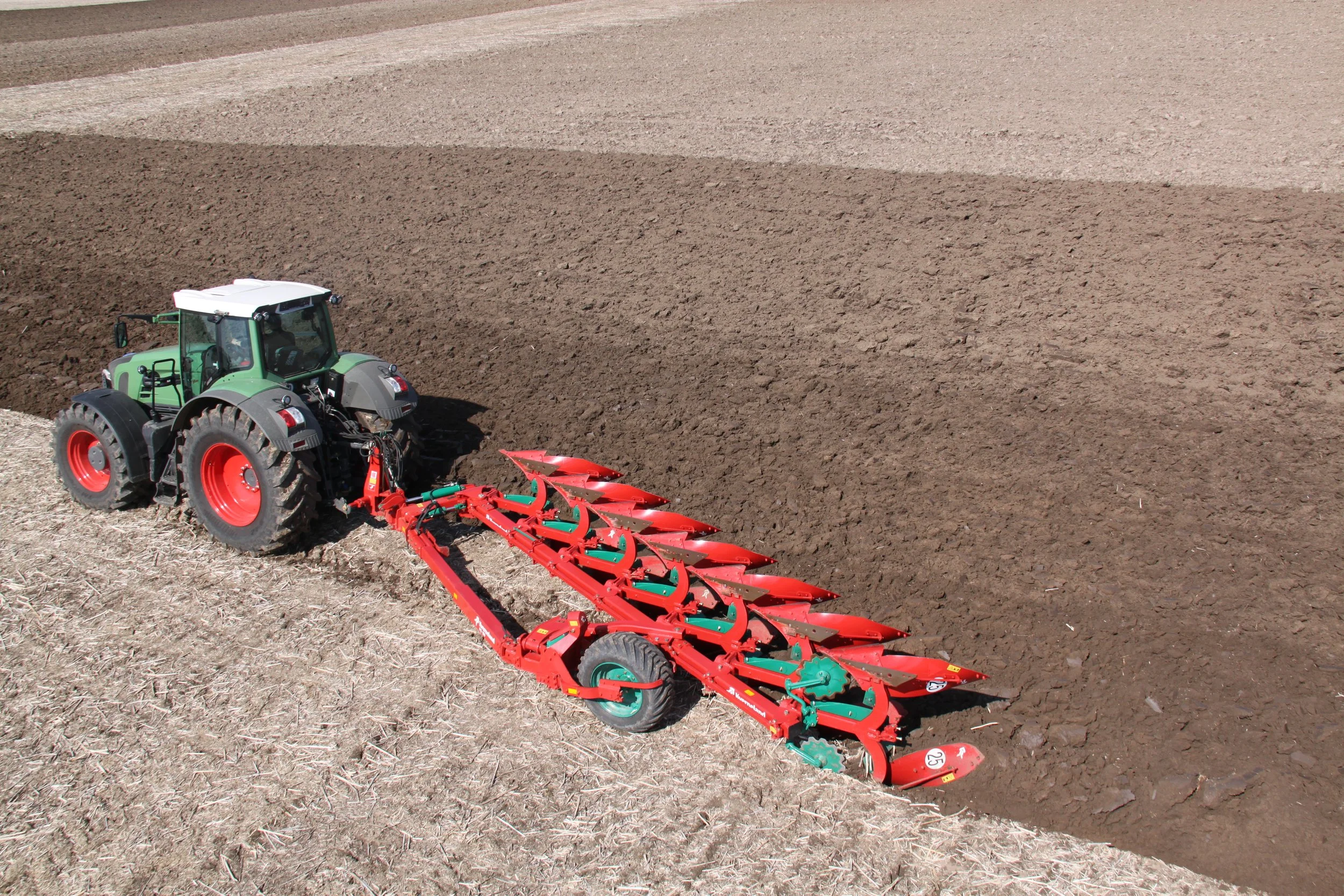
Kverneland
The demands on cultivation equipment continue to shift across New Zealand, as operators look for tools that deliver strength and consistency while still protecting fuel efficiency and soil structure. This is where the Kverneland PG semi-mounted plough has carved out a solid reputation because it suits the wide range of soils operators face, from volcanic ash to heavier clays, and it copes well with the changing pressures of modern farming. Tight weather windows, heavier tractors and rising operating costs all place more weight on machinery that can work cleanly and predictably across long days, and the PG model reflects Kverneland’s long-standing focus on durability, flexibility and an easy working rhythm from one paddock to the next.
What stands out first is how manageable this plough feels in the field, because the central wheel position and compact headstock allow tight turns on narrow headlands. This matters when paddocks are irregular and operators want to maintain flow without the awkward manoeuvring that costs time and increases fatigue. The plough tracks well behind the tractor, and the overall geometry makes it straightforward to work close to fencelines or drains, giving operators more usable working width and a cleaner finish.
The PG uses the Variomat system, which allows operators to adjust furrow width on the move from thirty five to fifty centimetres. This level of flexibility remains one of the most practical features on a modern plough, because it lets the tractor pull more freely in tougher ground while increasing output when the soil allows. The Variomat cylinder is housed inside the towing tube, protecting it from stones and debris and keeping the system simple, durable and easy to use. Quick adjustment from the cab also helps contractors maintain efficiency when soil conditions shift several times within a single paddock.
The PG uses Kverneland’s auto-reset system, which is valued in stony or variable soils because each body reacts independently when it strikes an obstacle. This independence reduces stress on the frame and keeps the job moving in conditions where other ploughs would be forced to stop. This option is proven, and it suits the land users face most often when conditions are unpredictable and reliability matters.
Despite its size, the PG remains surprisingly easy to pull. Smooth draft lines, steady turnover and well-balanced weight distribution contribute to that ease, and Kverneland’s induction heat-treated steel gives the frame the strength needed for large-scale work without unnecessary weight. This balance reduces fuel consumption and wear, which is increasingly important as operating costs continue to rise. Contractors who move between different tractors across a season also appreciate equipment that pulls consistently, because it helps maintain a predictable workload and a smoother day for operators.
Underbeam clearance has become more important as modern cropping systems create higher residue loads. The PG offers seventy or seventy five centimetres of clearance, giving plenty of space for trash flow in fields where stubble is long or cover crops are dense. Good clearance reduces blockages, maintains depth control and keeps the job flowing, and these practical advantages are often the deciding factor for contractors working across varied rotations.
Adjustability across the machine remains straightforward, which is something long-time Kverneland users value. Front-furrow alignment can be set mechanically or hydraulically, depending on preference, and depth settings follow established Kverneland logic that keeps operation simple, even for staff who are new to the plough. Variomat adjustments hold their stability across the run and the wheel geometry helps maintain balance whether working narrow or wide, giving operators confidence on rolling ground and uneven soil.
Optional equipment allows the PG to be tailored to suit regional soil types and crop systems. A wide range of bodies, skimmers, discs and accessories makes this plough adaptable to conditions that can change dramatically within a single day, and this flexibility has long been one of the reasons Kverneland retains such a strong following among contractors.
For operators seeking a plough that delivers a reliable finish, minimal downtime and the flexibility to adapt to changing soil conditions, the Kverneland PG model offers a well-balanced combination of strength and simplicity. It is built for the pressures of modern contracting, where efficiency matters and soil structure must still be respected. In a market that continues to shift with new crop systems and unpredictable seasons, the PG remains a dependable tool capable of supporting large-scale farming across New Zealand with confidence and consistency.
Amazone
Cirrus
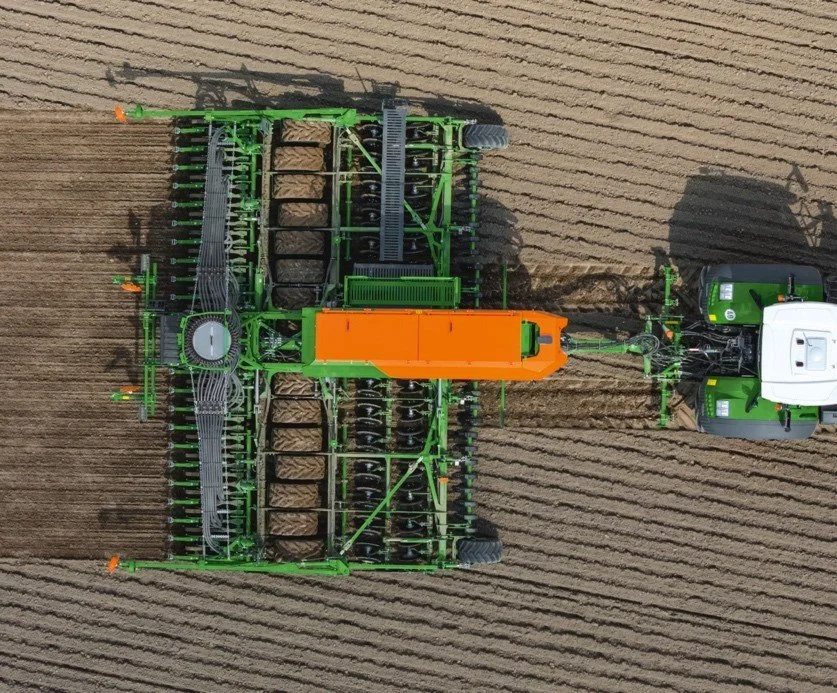
Flexibility and precision are becoming increasingly important as farms and contracting businesses look to cover more ground in fewer passes while maintaining consistent establishment across a wide range of crops. That is the thinking behind the latest addition to the Amazone Cirrus Grand range, with the introduction of the Cirrus 8004-2C Grand, an 8 metre large area seed drill designed for high-output operations running tractors from around 280 horsepower.
As a trailed cultivator drill, the Cirrus Grand is aimed squarely at large farms and contractors who need one machine to suit multiple establishment systems. Its strength lies in the combination of precision placement and operational flexibility, made possible through the simultaneous metering of different products via a newly developed three-chamber hopper. This allows operators to tailor each pass to soil conditions, crop type and input strategy without compromising accuracy.
At the centre of the update is the triple-chamber hopper with a total capacity of 5,900 litres. By combining three chambers into a single hopper, Amazone has created a system that is both highly flexible and easy to access from an operator’s point of view. Up to three different products can be individually metered at ratios of 40, 50 and 10 percent, opening the door to a range of establishment methods. Rape, fertiliser and slug pellets can be applied in a single pass using the Single-Shoot process, while cereals such as wheat can be sown alongside fertiliser and micro-granules at the same time. All products are delivered precisely to the same point in the seed furrow, ensuring efficient placement and consistent crop emergence.
Distribution accuracy is supported by a large distributor head and the Smart plus equipment level, which together ensure uniform lateral spread across the full working width. Individual row shut-off is standard, reducing waste of seed and fertiliser on headlands and in wedge-shaped paddocks. Tramline control can be set symmetrically, asymmetrically or flexibly and is selected directly via the Isobus terminal, with the distributor head adjusting automatically. This intelligent setup means the working width of the drill is independent of the chosen tramline system, and individual rows can be deactivated where required. One practical advantage of this is the ability to sow crops such as rape at double row spacing without changing hardware.
Row spacing options further extend the machine’s versatility. Alongside the conventional 16.6 centimetre spacing, the Cirrus 8004-2C Grand can also be specified with a narrower 12.5 centimetre spacing. This option is particularly well suited to spring sowing and farms dealing with high weed pressure, as the tighter spacing allows crops to cover the soil more quickly. Faster canopy closure reduces weed emergence, leading to cleaner crops and in many cases a reduced reliance on herbicides.
Precision on headlands has also been improved through the integration of Amazone’s AutoPoint automatic measuring system. A sensor in the seed coulter measures the conveying time of seed as it travels from the metering unit to the coulter and automatically adjusts the switch-on and switch-off points at the headland. By continuously refining Section Control timing, AutoPoint reduces misses and overlaps, improving sowing accuracy and contributing to better field hygiene across the paddock.
The range of front tools available for the Cirrus Grand has also been expanded to better suit different soil conditions and cultivation strategies. In addition to the T-Pack front tyre packer, a newly developed Crushboard with outlying guide wheels is available for heavy or cloddy soils. The Crushboard levels the surface and breaks up clods, producing a more even seedbed particularly after ploughing or rough primary cultivation. The guide wheels at the outer edges of the machine ensure smooth guidance and prevent the wings from sinking. For farms that carry out full seedbed preparation ahead of drilling, the Cirrus Grand can also be specified with guide wheels only in front of the disc element removing the need for a front tool altogether.
Operational flexibility is further enhanced by the option of an on-board hydraulic system driven by a push-on PTO pump. This allows the drill to be operated with tractors that have limited hydraulic capacity, broadening the range of suitable power units. An optional air pre-heater is also available, designed to ensure reliable operation in damp conditions by increasing airflow temperature by around eight degrees. This reduces condensation and prevents seed dressing or fertiliser dust from sticking within the conveying system.
These updates are not limited to the new 8 metre model. All of the new features and equipment options are also available for the Cirrus 9004-2C Grand with its 9 metre working width, delivering further gains in efficiency and output for operators working at the top end of large-scale arable systems.
Taken together the three-chamber hopper, AutoPoint system with individual row shut-off and integrated tramline control combine to make the Cirrus Grand a highly adaptable drilling platform. It is a machine built to suit modern establishment strategies where flexibility, accuracy and productivity must work hand in hand. To find out how the Cirrus 8004-2C Grand or its 9 metre counterpart could fit into your operation, talk to a member of your local Claas Harvest Centre team.
Cenius
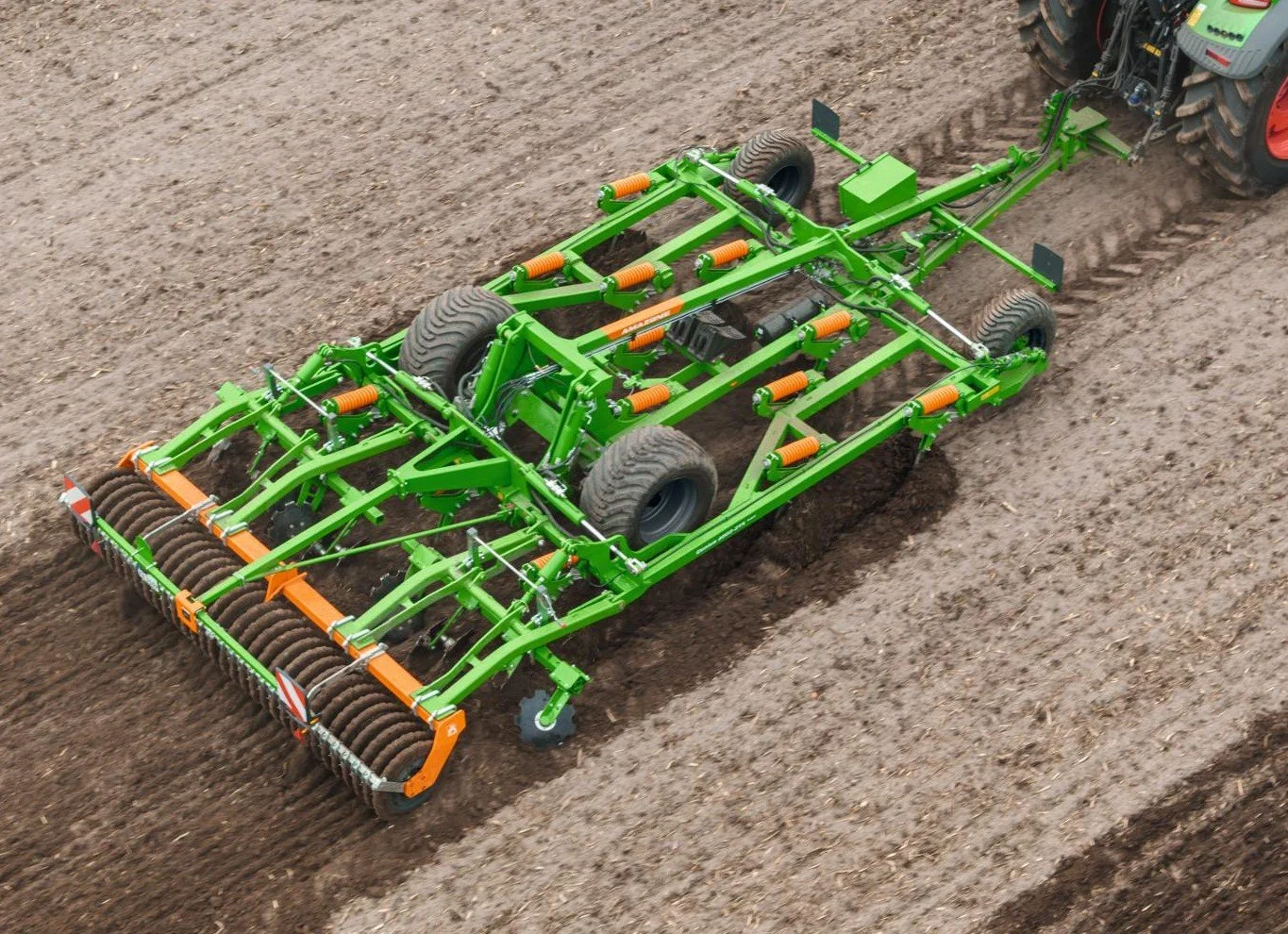
For soil tillage applications that demand both intensive loosening and effective incorporation, the Amazone Cenius-2TX trailed cultivator has been developed to deliver versatility, reliability and strong cost-effectiveness across a wide range of farming systems. Designed for operators who need one machine to handle everything from shallow stubble work through to deeper topsoil loosening, the Cenius-2TX offers working widths from 4 to 7 metres and is equally at home working lightly or digging in where conditions demand it.
The performance of the Cenius is shaped by its tine stagger and carefully engineered angle of attack which together ensure consistent soil flow, thorough mixing and controlled loosening across the full working width. This layout allows the machine to operate efficiently across varying depths while maintaining stable pulling characteristics, an important factor for large farms and contractors looking to balance output with fuel efficiency.
Cenius trailed cultivators are well regarded for their robustness and ease of pull, with power requirements starting at around 80 horsepower per metre. Optional traction control further enhances grip and stability, particularly in more challenging conditions allowing the machine to work effectively while reducing wheel slip. The result is not only improved work quality but also tangible fuel savings over long working days.
At the heart of the machine’s durability is the C-Mix share system, which allows the cultivator to adapt to virtually any soil type, whether working shallow for residue incorporation or deeper for loosening compacted layers. The strength of the C-Mix Ultra tine system becomes especially apparent in demanding soils with medium to large stones, where overload protection is regularly triggered. In these situations, the tines are able to deflect without compromising frame integrity or working depth.
For conditions where overload events are less frequent, C-Mix Super tines with pressure spring overload protection provide effective safeguarding of the frame, automatically resetting after deflection. Working depth adjustment is infinitely variable and can be set mechanically or fully hydraulically, with depth control managed via the rear roller and support wheels on the Cenius-2TX.
Where hydraulic ultra overload protection is specified, trigger forces can be set between 500 and 800 kilograms ensuring that working depth is reliably maintained even under the toughest soil conditions. This allows the tines to deflect as often as necessary, even at depths of up to 35 centimetres while a central hydraulic accumulator damps the return movement of the tines significantly reducing wear on the overload protection system.
Strength is engineered right down to the tip, with the Cenius able to be fitted with a range of different shares and share points to suit soil type and cultivation goal. Regardless of configuration, the high-strength shares ensure reliable penetration into the soil along with intensive mixing and loosening. Combined with a choice of levelling tools and rear rollers and working depths ranging from 5 to 35 centimetres, the Cenius becomes a highly flexible soil tillage tool that can be used throughout the year.
That flexibility allows the implement to cover a wide range of applications, from shallow stubble cultivation and aggressive incorporation of harvest residues through to topsoil deep loosening and final seedbed preparation. For farms and contractors aiming to simplify their machinery lineup, the Cenius offers the ability to adapt to seasonal demands without the need to change implements.
Ease of use and low maintenance have also been central to the design. Tool-free mechanical or hydraulic adjustment of working depth and the levelling unit makes setup quick and straightforward. A strong sturdy frame with a generous frame height of 80 centimetres and a tine spacing of 28 centimetres ensures blockage-free operation, even when working in heavy residues. The high underframe clearance promotes uninterrupted material flow where large volumes of straw are present, while the following levelling tools leave behind an even, well-finished surface.
Maintenance demands are further reduced through the use of maintenance-free disc bearings, significantly cutting overall servicing time. The proven face seal technology used in Amazone tillage equipment for almost 25 years continues to play a key role here, having demonstrated its reliability in a wide range of conditions around the world.
As Roger Nehoff explains, the Cenius also fits neatly into broader cultivation and establishment strategies.
“The Amazone Cenius is great for use on the first pass to open up and dry out wet conditions. Combine the trailed soil tillage range with an optimum seeding system like the Catros speed disc for a secondary high-speed pass with the option of a 200 or 500 litre green drill mounted on the frame, catch crops can be sown directly or during soil tillage,” he says.
Taken together, the Cenius-2TX offers a well-balanced combination of strength, flexibility and efficiency, making it a practical choice for operators who need reliable soil tillage performance across changing conditions and seasons.
Catros
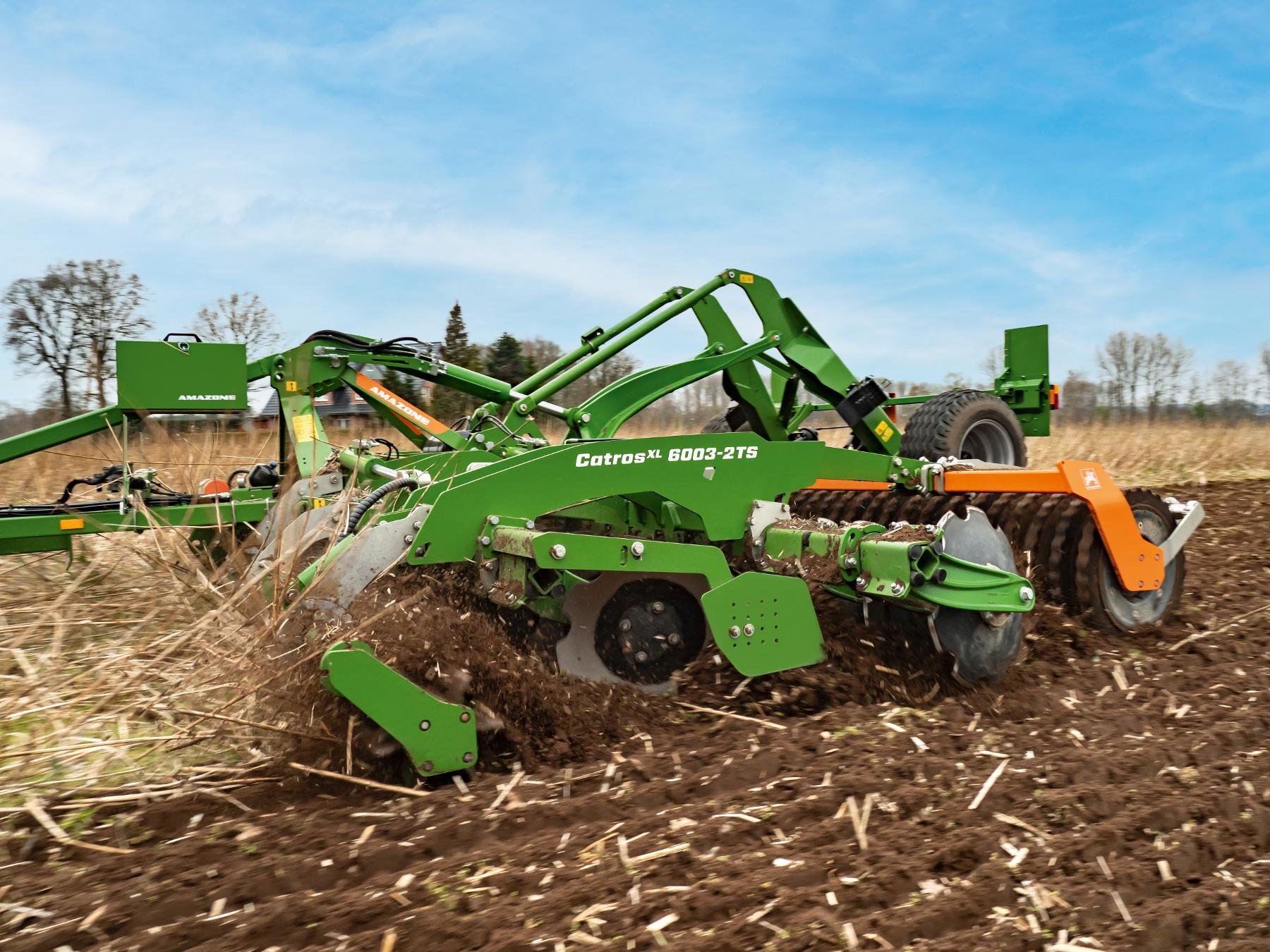
Heavy cultivation exposes the true capability of a machine, because it demands strength, penetration and the ability to keep moving when soils are tight but the real test for many contractors often comes at the other end of the spectrum where speed, residue management and timeliness define the job. This is where the Amazone Catros finds its place, because it has been engineered as a fast, efficient compact disc harrow designed for shallow to medium cultivation, stubble mixing and seedbed preparation across a wide range of New Zealand systems. Contractors working behind cereals, grass, maize or catch crops know how important it is to break down residues quickly and create a uniform finish and the Catros is built to make that process smooth, consistent and economical to run.
Unlike deeper working machines that are designed to rip and reset soil structure, the Catros specialises in rapid shallow cultivation down to twelve centimetres, which suits the move toward reduced tillage and timely stubble management. The heart of the machine lies in its serrated concave discs available in (510 or 610) diameters which are set at an aggressive angle to slice into residues and mix them through the topsoil. This creates a fast decomposition layer that helps support the next crop cycle, improves soil biology and reduces the risk of pests or weeds surviving in surface trash. Because the discs are arranged in two rows, the Catros achieves full-width coverage even at high speeds and leaves behind a level, well mixed finish suited for either drilling or further consolidation.
A key feature that sets the Catros apart is the independent suspension of each disc, mounted on durable rubber buffer blocks that allow the discs to follow ground contours while maintaining working depth and pressure. This is particularly important in New Zealand where operators may move from rolling paddocks to stony river flats or heavier silt loams within the same day. The Catros maintains consistent penetration across uneven terrain and the rubber blocks act as natural overload protection, reducing stress on the frame and minimising downtime from impacts with hidden stones.
The machine’s ability to operate at speeds of up to eighteen kilometres an hour is one of its defining advantages, because fast forward travel combined with shallow working depth makes the Catros extremely productive across large areas. High ground speed also improves mixing quality and when conditions allow, it enables contractors to complete the first pass behind harvest much sooner setting up the land for follow-up operations or drilling. With modern contracting seasons often dictated by tight weather windows, this speed and efficiency make the Catros a valuable tool for keeping work moving.
The Catros also benefits from a compact well-balanced frame that makes the machine easy to handle, transport and turn at headlands. Its central running gear design provides stability while moving between blocks and ensures smooth transitions into and out of work. Hydraulic depth adjustment, visible scales and simple mechanical settings allow operators to make quick adjustments from the cab which is particularly helpful when multiple staff are operating the machine throughout a busy season.
Another strength of the Catros is the openness of its disc layout. This allows large volumes of surface trash to flow through the machine without blocking, which is essential when working behind thick straw or tall cover crops. The ability to maintain consistent flow not only preserves speed but also ensures a uniform mix, helping residues break down faster and improving soil structure over time. Optional equipment such as front knives or straw harrow attachments can increase residue breakdown even further, depending on the farming system and crop rotation.
For seedbed preparation, the Catros excels at creating a fine level finish suitable for modern drills. The machine’s design encourages good soil consolidation when paired with a range of rear rollers including wedge ring, tooth packer or rubber profiles each suited to different soil types and moisture conditions. These rollers improve seed-to-soil contact, retain moisture and leave behind a firm consistent surface that supports uniform germination.
Maintenance has been kept to a minimum which contractors will appreciate because the sealed bearings, durable disc arms and protected hydraulic components reduce service intervals and ensure long-term reliability. The lighter overall design compared with heavier cultivators also contributes to reduced fuel use, making the Catros an economical option for large-scale stubble and seedbed work.
In a typical New Zealand contracting season the Catros can play multiple roles, from a first pass behind harvest through to breaking down autumn cover crops or preparing a seedbed in spring. Its ability to cover ground quickly without sacrificing quality means contractors can work efficiently across mixed rotations and varied soil conditions. When timeliness matters and residue needs to be incorporated consistently, the Catros offers a level of speed and precision that fits naturally with modern systems.
The Amazone Catros is ultimately a machine for operators who want reliable shallow cultivation, fast stubble management and the confidence that the machine will deliver a consistent finish across demanding workloads. In landscapes where weather windows are short and residues are heavy, the Catros has proven itself as a dependable compact disc system capable of preparing ground efficiently and supporting strong crop establishment across a wide range of New Zealand farming operations. It is a machine built for pace, built for performance and built for the evolving demands of New Zealand contracting.
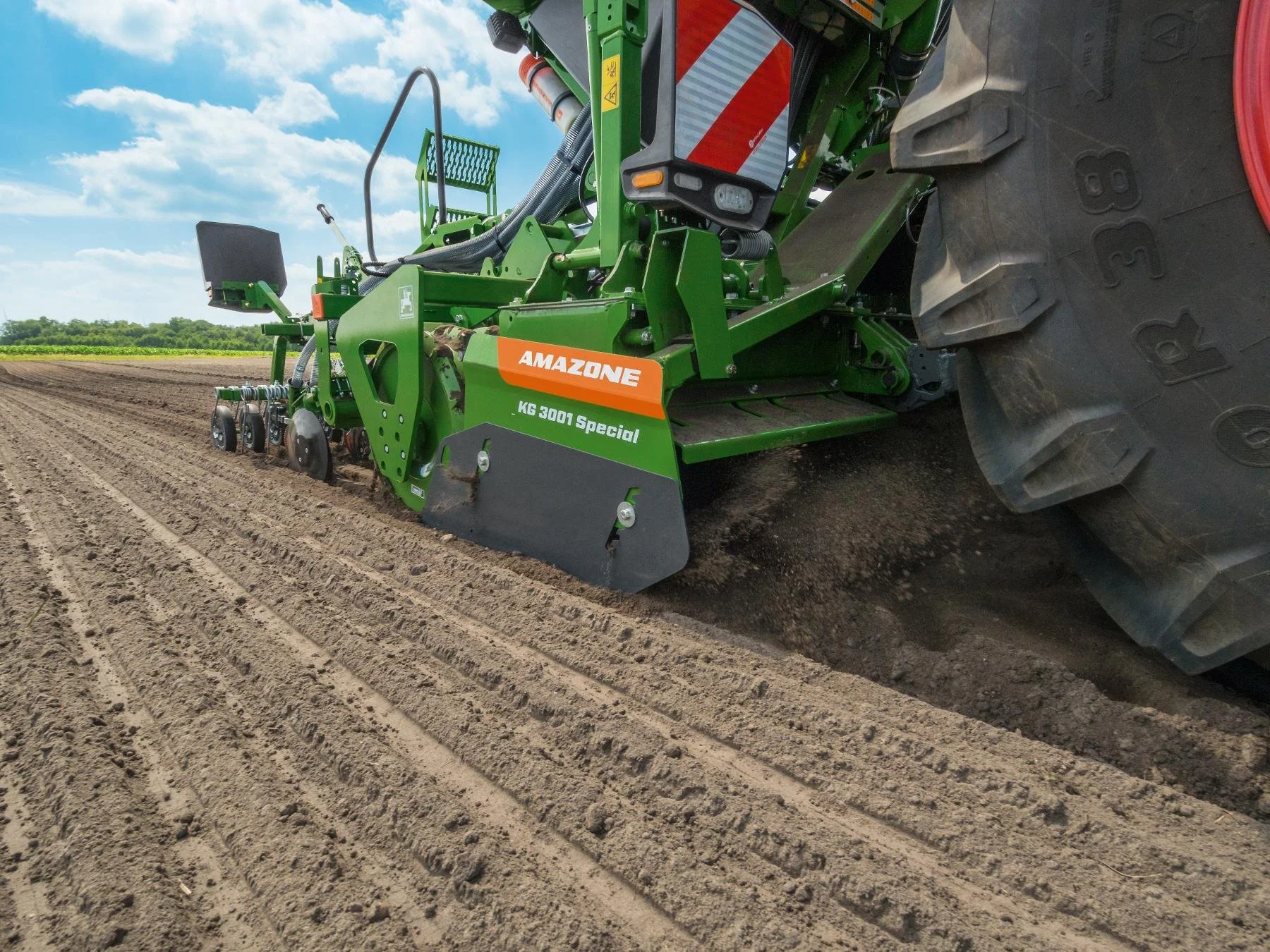
KG rotary power harrow
Power harrows remain one of the most versatile all-rounders when it comes to seedbed preparation. Used in combination with a mounted or harrow-mounted seed drill, they continue to be the right solution for many farms where consistency, reliability and soil finish matter. The Amazone KG rotary power harrow has built a strong reputation in this space, recognised for its robust construction and its ability to mix and condition soil effectively across a wide range of conditions.
At the heart of the KG’s performance is the tine layout. The tines are arranged in a specific offset position towards each other, which guarantees even soil crumbling while also delivering smoother machine running. According to Amazone product specialist Roger Nehoff, this layout plays a significant role in reducing mechanical stress.
“The KG lowers incidents of vibration and peak loading. The machine suffers less stress and the power and fuel requirements are reduced,” he says, highlighting how design detail translates directly into operating efficiency.
Soil engagement is another area where the KG stands apart. The rotary cultivator tines are arranged in what Amazone refers to as a ‘grip-on’ configuration within the Cultimix system, meaning the tines actively pull themselves into the soil and break it up from below. This approach prevents the smearing that can occur with implements using trailing tines, particularly in heavier or moisture-sensitive soils. As Roger explains, organic residue is thoroughly mixed into the soil while the surface is levelled and reconsolidated by the packer roller, leaving behind an ideal seedbed rather than a worked surface that still needs further correction.
The quality of the seedbed produced by the KG is especially evident in the working profile. Fine soil is created in the lower half of the working horizon at seed placement depth, while coarser soil particles are left closer to the surface. This structure creates ideal germination conditions, improves water infiltration and supports better gaseous exchange. The deep frame design and long tines also provide exceptionally high clearance between components, allowing unobstructed soil flow and high through-passage even when working with large clods or significant volumes of straw.
Durability and long-term reliability are addressed through Amazone’s Long-Life-Drive system, which is standard across its rotary cultivator range. Gear wheels and bearings run in a single oil bath, making the system maintenance-free with no grease nipples required. This not only extends operating life but also ensures smooth running and contributes to strong resale value over time.
Day-to-day usability has not been overlooked either. The KG power harrow is designed for minimal maintenance, with a robust gearbox, hardened steel componentry and a heavy-duty build that stands up to demanding workloads. Tool-less tine changes are standard, supported by overload protection to safeguard driveline components. Tines are pushed directly into the sockets of the tine carrier and secured with a lynch pin, eliminating the need for fixing bolts that require retightening. Switching between grip-on and trailing tine configurations is quick and straightforward, and the tines themselves are forged from special hardened steel that remains elastic while delivering high wear resistance.
Stone protection is integrated into the tine fixing system, allowing the tines to yield when stones are encountered. The tine is firmly clamped through the centre of the carrier with the socket widening towards the outside so the horizontal part of the tine can twist out of position on impact. This design absorbs much of the shock when the tine tip strikes a stone, ensuring reliable operation in stony soils and allowing grip-on tines to be used with confidence.
For operators looking to further extend service life, Amazone also offers HD pro tines with a hard metal coating that can extend tine life by up to eight times. These reduce running costs and minimise time lost to readjustment and tine replacement, particularly in abrasive soil conditions.
“The heavy-duty KG power harrow is a user-friendly, high-performing machine with a robust design suitable for all soil conditions,” says Roger, summing up the balance Amazone has struck between performance, durability and ease of use. Amazone’s broader range of soil tillage machinery is tailored precisely to the needs of individual farms, ensuring there is a practical solution for different systems and soil types.
To find out more about seedbed preparation options and how the KG power harrow could fit into your operation, talk to a member of your local Claas Harvest Centre team.
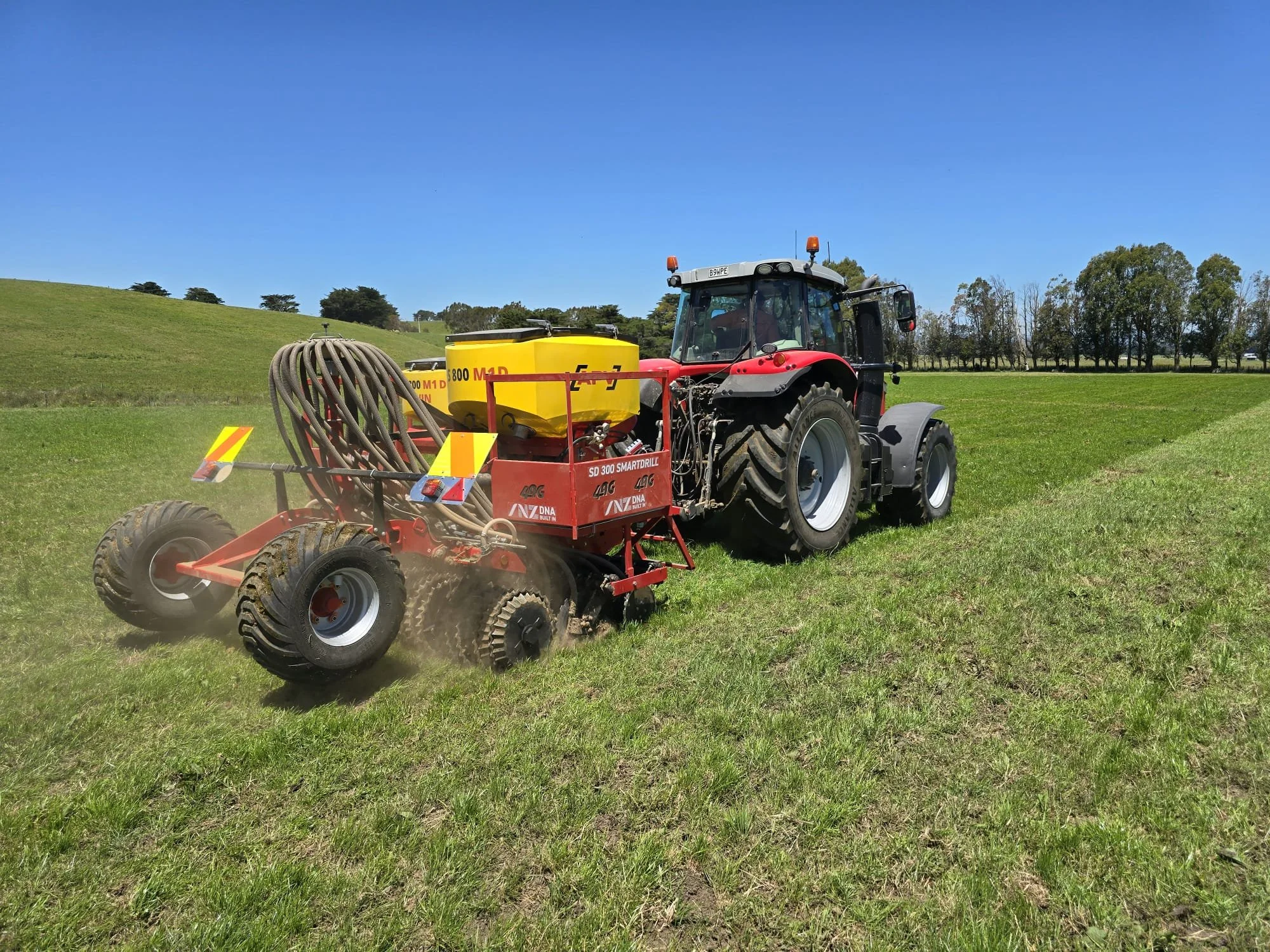
4AG
Pugging is one of those issues every farmer recognises instantly. Hoof marks pressed deep into the soil, smeared surfaces, damaged pasture and water sitting where it should not be are all clear signs of a paddock that has taken a hit. It is visible, frustrating and costly. What is often overlooked, however, is what happens next. In many cases the drilling method chosen after stock leave the paddock either helps the soil recover or quietly compounds the damage that is already there.
Beyond what can be seen on the surface, pugging leaves a legacy that lingers long after the paddock looks dry enough to work. Pugging holes often fill with water and grow no grass at all. Compaction layers form below the surface, soil structure becomes smeared and aeration and drainage are compromised. Perhaps most importantly, the effective growing area is reduced. In a paddock where 30 to 40 percent of the surface has been heavily pugged, production is reduced by the same margin meaning a one hectare paddock is effectively operating as a 0.6 hectare paddock. Even when the surface dries out and looks workable, these issues remain beneath the tyres directly affecting how well seed can be placed and how successfully it can establish.
This is where drilling choice becomes critical. Tine drills rely on a consistent and even surface to create an effective seedbed, and in pugged or damaged ground that consistency simply is not there. In these conditions tine drills tend to smear wet soil further, glazing both sides of the slot and making root penetration more difficult. They can tear out sods or islands of grass that were still growing but lacked support around them, removing productive plants rather than preserving them. The spring action of tines also causes them to bounce and jump across uneven ground, leading to highly variable seed depth and placement.
Without a rear roller high points are often left unrolled, leaving paddocks rough and less drivable for shifting breaks, fertiliser spreading and general day-to-day management. Rather than repairing the paddock, stitching in with a tine drill often just delays the inevitable, with full cultivation in spring and a complete re-sow becoming the only real option.
Once soil structure has been damaged, adding more disturbance rarely speeds up recovery. In most cases it does the opposite. That is where drilling systems designed to minimise disturbance can make a meaningful difference. The 4AG Smart Drill is built around the idea of doing just enough to re-establish pasture without worsening existing damage. Using a single disc, it cuts a narrow slot through damaged ground while avoiding unnecessary disturbance of sods that are already growing. Seed placement remains consistent because disc depth is controlled, and the slot is firmed immediately after drilling. The roller then plays a crucial role rejuvenating the remaining sward, knocking high spots back into pugging holes and leaving behind a smoother, more level paddock that is easier to manage.
Rather than trying to fix pugging by working the ground harder, this approach allows pasture to re-establish while the soil recovers naturally. The result is faster and more even regrowth, improved ground conditions and a quicker return to grazing without locking the paddock into a longer and more expensive recovery cycle.
Pugging is sometimes unavoidable, particularly in tough seasons where weather windows are narrow and grazing decisions are pressured. Making the damage worse is not. Drilling pugged paddocks with high disturbance tine systems can extend the problem and push recovery further down the track. Choosing a drilling approach that avoids compounding existing damage gives the paddock its best chance to bounce back, delivering a smoother, level and rejuvenated finish with the Smart Drill and setting it up for better performance through the rest of the season.
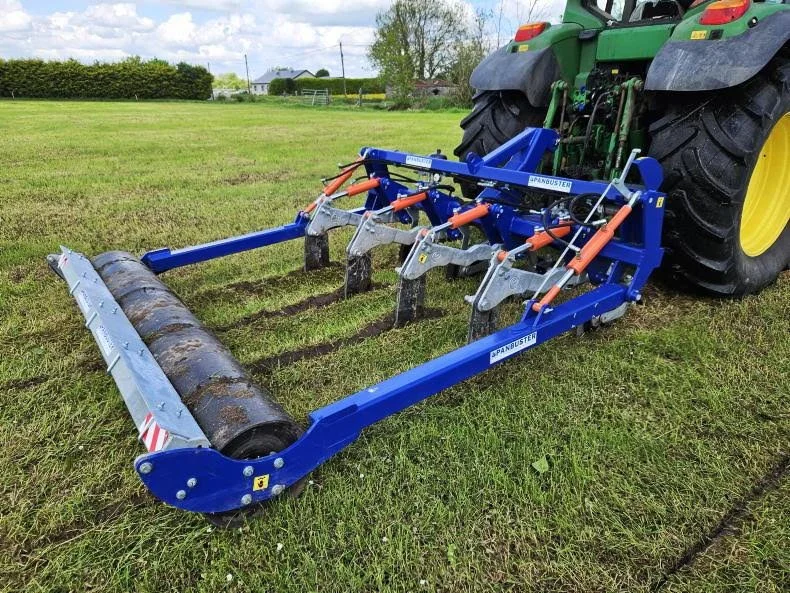
Ag & Civil
Erth Panbuster
Most farmers understand compaction in the broad sense, but what often gets missed is how compaction behaves in real pasture systems and why so many subsoiling passes look impressive on the day yet deliver mixed results six months later.
In grassland, compaction rarely starts deep and works its way up. It begins at the surface and progressively builds down, with traffic, grazing pressure and wet conditions combining to seal pores, slow water transfer and restrict rooting depth. The outcome is familiar across New Zealand: less grass growth, less palatable feed, wetter paddocks that hang onto water when you need them to drain and a soil profile that becomes increasingly anaerobic when it should be breathing.
The Erth Panbuster range, supplied here by Ag and Civil Machinery Direct Ltd, is designed to tackle that problem with a deliberate engineering approach that prioritises controlled lift and crack formation in the top zone, without tearing a paddock apart.
At the heart of the Panbuster concept is low disturbance subsoiling with a high finish. That immediately separates it from machines built for arable work that have been adapted into pasture systems. The Panbuster is built around the idea that grass subsoiling needs a different outcome, because there is limited value in high shatter at depth if you have low shatter nearer the surface where the compaction begins.
What Erth is aiming for is a “wave action” through the soil profile, lifting and opening cracks where it matters most, then settling the surface back down cleanly behind the pass. In a New Zealand context, especially on livestock farms, the aim is often not to rebuild a paddock from scratch but to restore drainage and aeration while keeping pasture intact.
One of the more interesting technology decisions in the Panbuster design is its leg layout. Rather than staggering legs to overcome design limitations, Erth places the legs in line to maximise lift and then gives the operator control through top link adjustment. In practical terms, it means the machine can be tuned to conditions quickly and wear can be managed sensibly because as points wear, lift and penetration can be maintained by shortening the top link.
Erth makes the claim that a three-leg Panbuster can often outperform staggered four-leg alternatives because it delivers more efficient lift and consistent cracking. That is not simply a marketing line. It is basic soil physics, because if the machine is lifting properly and the cracks are forming evenly the agronomic result can often be achieved with fewer legs and reduced drag.
The reset system is another strong piece of engineering and it feels designed for real paddocks rather than perfect demo plots. The Panbuster auto-reset system is described as having three safety functions: high lift, side swing and shear-bolt protection. Its trip action is designed to move up and back to reduce stress while bringing fewer stones to the surface.
For farms dealing with stony ground or variable profiles, that matters. A subsoiler that drags forward aggressively can boil stone up through the turf and create a problem that lasts long after the job is finished. The Panbuster’s trip behaviour is intended to reduce that risk while still allowing the machine to operate at a consistent depth and load.
On the higher specification Panbuster X models, the technology becomes more advanced again through the hydraulic reset and accumulator arrangement. Erth describes a fully enclosed system using an accumulator with a secondary bladder accumulator, designed to control break-back pressure while improving reliability.
Break-back pressure can be varied to suit conditions, which means an operator can run enough pressure to maintain performance but still allow the legs to protect themselves when conditions change. Importantly, the X machines use accumulators on each side of the reset rams with a secondary unit designed to eliminate the breather and reduce moisture or condensation in the rams.
That detail is easy to overlook but moisture in a hydraulic system is a long-term reliability issue, particularly on machines that spend their lives outdoors and work hard in winter conditions.
Depth control is another area where the Panbuster reflects a practical approach. Hydraulic depth control with an indicator is standard, allowing depth to be adjusted on the move. That is not just convenience. In pasture work, conditions can shift within a single run. A tighter patch, a wet hollow or a headland can all require a slightly different approach if you want the benefits without the damage.
The Panbuster’s hydraulic roller arrangement also allows the machine to be lifted out at the end of a pass and roll the exits cleanly, leaving a tidy finish that matters when paddocks are going straight back into grazing.
Erth has also put attention into wear management and serviceability, which is where the best machinery tends to prove itself over time. The machine uses a hook and pin shin that is reversible, secured with a single roll pin, allowing fast change-outs and maximum use from each wear component.
There is also a patent pending Slot-Cam tilt function that enables point pitch to be optimised for lift and wear performance across different soils. Pitch angle matters more than many people realise. Too aggressive and you waste horsepower and increase disturbance. Too passive and you struggle for penetration, especially in harder or drier conditions. Having the ability to tune that relationship is a genuine advantage.
Structurally, the Panbuster is built for longevity in high stress areas, using 400 Brinell material where it counts, along with bushed load bearing points and large pins. Marine spec Nikrom ram rods are listed, alongside sprung loaded disks to help manage surface finish.
The Panbuster platform also extends beyond pasture with arable configurations available and a modular approach to packers, drill kits and specialist options such as mole plough legs.
In the end, the technology in the Erth Panbuster sits in the places that matter: the way the legs create lift, the way the reset system protects the machine without compromising performance, the ability to adjust depth on the move and the way wear and pitch are managed to suit different soils.
It is a subsoiler that treats pasture compaction as a surface-driven issue and builds its entire design around reversing that process, delivering the kind of controlled, tidy improvement that makes sense in New Zealand paddocks.
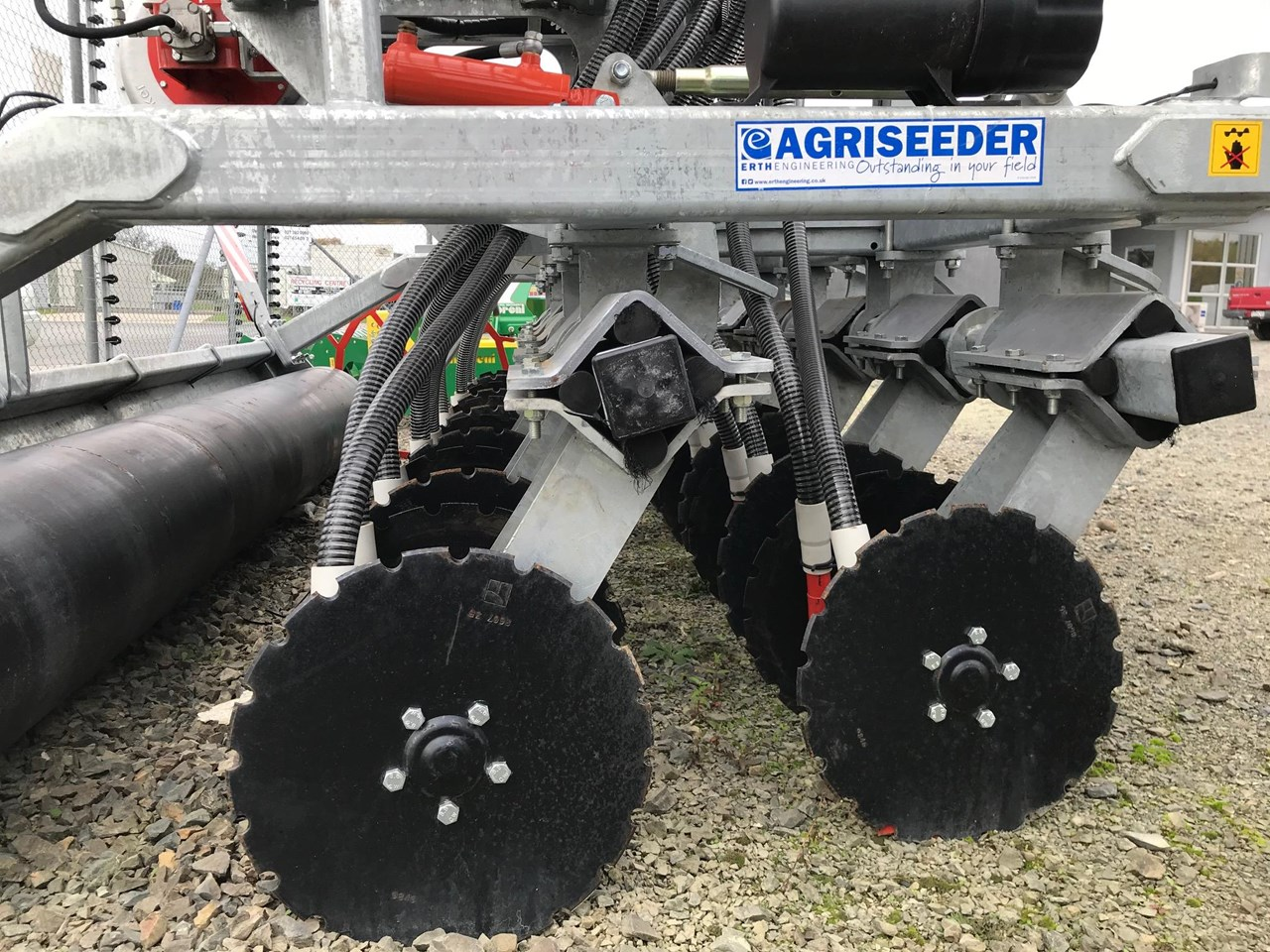
Erth Agriseeder
Direct drilling has been around long enough that most farmers have either tried it, watched a neighbour try it or formed an opinion based on the finish they saw from the road. Some drills cut a slot and walk away. Some disturb too much, drag rubbish, lift stones and leave a paddock looking like it has been pulled apart. The challenge for any direct drill in New Zealand is that our pasture paddocks are rarely uniform, the soils can change within a single run and the job is often about fast turnaround rather than perfection. That is where the Erth Agriseeder stands out as a purpose-built system rather than a one-trick slot seeder. It is a drill that has evolved from a grass drill into a multifunctional machine designed to sow practically any crop in a wide range of conditions and the technology behind it is aimed at getting consistency across real paddocks, not flat trial plots.
The Agriseeder’s story matters because it explains why the drill is built the way it is. From its beginnings as a grass drill in 2014 it has developed into a platform capable of handling clover, grass, fodder crops, cover crops, cereals, companion crops and even low-rate products like microfert or slug pellets either as a single product or in combination. That range is important for New Zealand, where more farmers are lifting sward and soil performance through diverse species and seasonal cropping, but the real point is how the drill achieves establishment without turning soil management into a mess.
A key principle of the Agriseeder is slit seeding and it is based on one simple truth. Moisture drives germination. The drill cuts a slit that acts as a natural moisture trap, protecting seed during the early stages and helping it anchor roots directly into the soil profile. Too deep and seedlings can struggle to emerge. Too shallow and you lose the benefit of the slit. That is why depth control becomes the defining technology in this kind of drill. It is not about being clever, it is about getting an even cut when the paddock rolls away under you because every contour change is a chance for a rigid drill to plant too deep in a hollow or miss seed placement over a rise.
This is where Erth’s Autocontour system becomes the centrepiece. Most drills try to cope with undulations using a spring-loaded approach, but the weakness of that design is that the downforce needed for a drill to do its job can reduce flexibility and compromise depth control, concentrating weight across several coulters and creating uneven seeding. Autocontour takes a different approach by building a secondary suspension system into the drill so the frame can flex more freely. The drill frames are partitioned into eight-coulter sections and each section receives its downforce through a hydraulic ram. The rams are linked so the downforce equalises across the machine as the contours change, and that means the cut remains consistent as it travels up and down the field.
That equalised loading does more than improve seed depth. It reduces stress across the whole bottom end because bearings, rubbers and other wear points are not being hammered unevenly every time the drill crosses a hump or drops into a swale. It also widens the machine’s working window because even loading per coulter allows it to operate in hard dry conditions and wet soft conditions, which is exactly the spread most New Zealand farmers deal with depending on region and season.
The drill’s bottom-end design is another part of the package that shows Erth is thinking beyond simply cutting a line in the soil. The Agriseeder uses a single disc running at a pronounced angle, which reduces pressure on the seed coulter and helps achieve a good finish. Rather than leaving a tight slit that closes instantly, the slot opens into a small band and the flexing of the soil produces a degree of tilth in the slot giving young seedlings a better environment to establish and flourish. That is an important detail because a direct drill can only be judged properly weeks later, not immediately after drilling and establishment quality depends on whether the seed has both moisture and a workable seedbed around it.
Erth also backs the Agriseeder with component choices that point to reliability and repeatability. The drill is built on a galvanised frame and fitted with genuine Kverneland metering with two speeds, normal and micrometering with simple calibration and an area clock to track work completed. For metering and airflow the drill uses a Punker fan powered by a Casappa motor, with a high volume return system for reliability. Distribution is handled through a head designed to give even spread across all coulters even when drilling across slopes or up and down hills, with a clear dome so the operator can visually check seed flow.
The bottom end is specified with Forge de Niaux blades, SKF greaseable bearings and galvanised coulters, plus front and rear lights and a standard 14-inch steel barrel roller with other options available. That list may look like a brochure checklist but it is the kind of specification that matters to contractors and farmers because it influences downtime, wear cost and ease of ownership.
The Agriseeder range has been structured to match different farm scales and tractor sizes and it is not locked into a single format. The E Series is a simplified 24-row 3m chassis with a low-level 170L plastic hopper designed for grass, cover crops, fodder crops and clover using micrometering, an electric fan, a fully Autocontouring disc system and galvanised coulters. The Pro and Pro X models move into larger hopper capacity options with the modular chassis able to take 400L or 900L plastic hoppers or a 1000L steel hopper, while the Pro X allows different roller options. There is also a 4m folding model that brings the same features with E-drive as standard, rams that lock up and down and a transport width of 2.8m which suits operators wanting more output without transport headaches.
The drill’s ability to handle multi-product sowing is another standout technology piece. Erth’s in-house designed secondary hopper is stainless steel and built for precise delivery of small quantities and can handle grass, microfert, pellets and peas with the ability to sow very low rates. Product can be fed down the slot through the venturi or broadcast on the surface, allowing combinations like grass down the slot with clover on top, peas down the slot with clover on top, fodder crops down the slot with slug pellets on the surface or seed and fertiliser together in the slot. That kind of flexibility matches the direction many New Zealand farmers are heading, where establishment is becoming as much about system design as it is about seed placement.