
Fendt VarioGrip puts more power to the ground
Tyre pressure has a direct influence on how effectively a tractor transfers power to the ground, but operators moving regularly between paddock and road work have traditionally had to compromise between the lower pressures needed for traction and soil protection and the higher pressures better suited to transport.
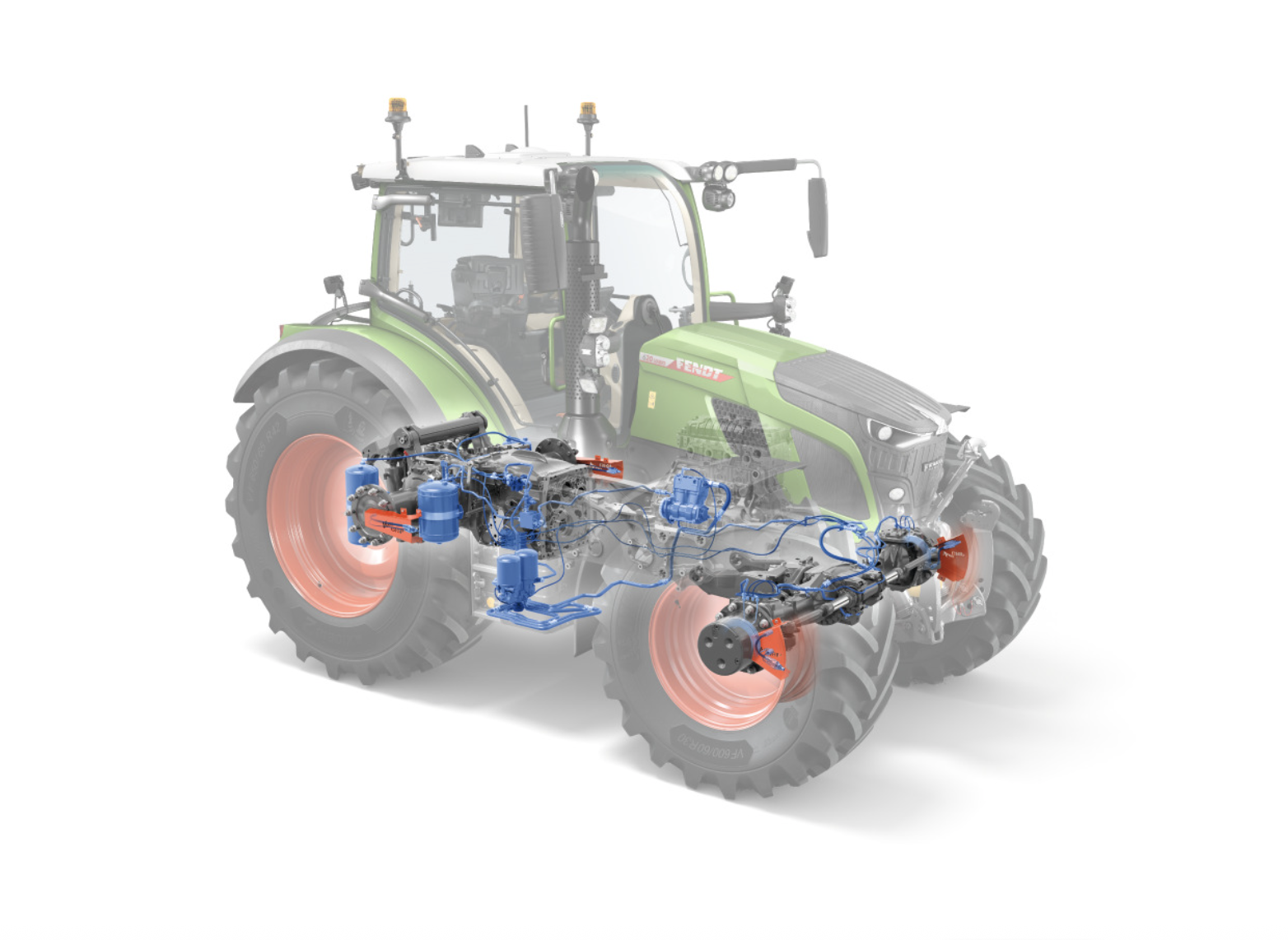
Fendt VarioGrip is designed to remove that compromise by allowing tyre pressures to be adjusted from the cab through the VarioTerminal, enabling operators to change settings as working conditions change.
In the paddock, lower tyre pressures increase the contact area between the tyre and the soil, improving traction and reducing wheel slip. On the road, higher pressures reduce rolling resistance and improve stability, allowing the same tractor to be set up more appropriately for each part of the job.
Fendt Mid HP Product Marketing Manager Mark Hamilton-Manns says the ability to make those changes from the cab helps operators get more from the tractor without adding another manual task to the day.
“Farmers are under constant pressure to do more with less. The ability to optimise tyre pressure from the cab means operators can quickly adapt the tractor to the job at hand without sacrificing productivity, fuel efficiency or soil protection,” says Hamilton-Manns.
The principle behind VarioGrip is relatively straightforward. Lower inflation pressure allows the tyre to spread over a larger area, increasing its footprint and helping more of the tractor's available power reach the ground. As wheel slip falls, less energy is lost and the tractor can maintain output without using fuel simply to spin the tyres.
“One of the most noticeable benefits operators report is how much more efficiently the tractor transfers power to the ground,” says Hamilton-Manns.
“When wheel slip is reduced, you’re not wasting horsepower. The tractor works more effectively, fuel use drops and overall productivity increases,” says Hamilton-Manns.
The same change in footprint has implications below the tyre. Increasing the area over which the tractor's weight is distributed reduces peak ground pressure, helping limit rutting and compaction.
That becomes increasingly important as tractor size and horsepower increase, particularly where high-powered machines are being used for cultivation, drilling, slurry application or other field work that places significant load through a relatively small number of tyre contact patches.
Soil compaction can restrict root development and water infiltration, making tyre pressure management part of the broader effort to protect soil structure rather than simply a machinery setting.
“As an industry, we’re becoming increasingly aware that protecting soil structure is just as important as improving machine performance,” says Hamilton-Manns.
“VarioGrip allows operators to achieve both goals simultaneously, which is a significant advantage for modern farming operations.”
Where VarioGrip differs from many conventional central tyre inflation systems is in its integration into the tractor.
Rather than relying on external air lines running around the wheel rim, Fendt routes compressed air internally through the axle stub and wheel hub before it reaches the tyre through integrated rotary unions. Keeping much of the system within the axle and hub assembly helps protect components from damage in field conditions.
The system uses a high-capacity, water-cooled compressor to alter pressure, with the adjustment made without the operator having to leave the cab. Target pressures can be programmed through the VarioTerminal, allowing field and road settings to be selected as the tractor moves between jobs.
“The integrated design is a major differentiator,” says Hamilton-Manns.
“By routing air internally through the axle and hub assembly, Fendt has created a system that is robust, well protected and designed to withstand the realities of day-to-day agricultural work.”
Correct tyre pressure also influences tyre wear and operating efficiency. Excessive slip in the paddock wastes energy and can accelerate wear, while running unnecessarily low pressures during high-speed road transport increases casing flex, heat build-up and rolling resistance.
Fendt says testing with optimised tyre pressures has recorded productivity improvements of up to 8% and fuel savings of up to 8% in field operations compared with operating at fixed transport pressures.
The road benefits work in the opposite direction. Increasing tyre pressure for transport reduces deformation of the tyre, lowers rolling resistance and improves steering response and vehicle stability at speed.
For large tractors, the gains can become more significant simply because of the amount of power being transmitted through the tyres. Models including the Fendt 700 Gen7, 800 Vario, 900 Vario and 1000 Vario are capable of delivering substantial horsepower, making the relationship between inflation pressure, traction and wheel slip increasingly important.
“With today’s high-powered tractors, tyre pressure is no longer a minor adjustment. It’s a critical performance setting,” says Hamilton-Manns.
“When you can actively manage tyre pressure to suit the task, you’re unlocking more of the machine’s potential while reducing its impact on the soil.”
That ability to alter pressures without leaving the tractor is particularly relevant for contractors and larger farming operations where road travel forms a significant part of the working day.
A tractor may leave the yard at transport pressure, travel several kilometres by road and then require a considerably lower setting once it reaches the paddock. When the job is finished, the process can be reversed before returning to the road.
Without an integrated system, the temptation is often to leave the tyres at a compromise pressure rather than repeatedly stop and adjust them manually. VarioGrip is intended to make the correct setting easier to use in practice, rather than something that only exists as a theoretical optimum.
Fendt has continued developing the system to reduce inflation and deflation times, limiting the delay as operators move between road and field settings.
For work such as cultivation, drilling, slurry application and harvesting support, this gives the operator greater scope to match the tractor to the surface and task rather than accepting the same tyre pressure throughout the day.
“VarioGrip is one of those technologies where the benefits are measurable every day,” says Hamilton-Manns.
“Whether it’s improved traction, lower fuel consumption, reduced soil compaction or better transport performance, operators can see the difference in both machine performance and operating costs.”
The value of the system ultimately comes from making tyre pressure a setting that can be changed as readily as other tractor functions.
For farmers and contractors moving regularly between field and road work, that means the tractor can operate at lower pressures where traction and soil protection matter, then return to higher pressures where road efficiency and stability become the priority.
Rather than asking one tyre pressure to perform both jobs, VarioGrip allows the tractor to be set up for each.