
Mechanical Weeding, Re-Engineered for Modern Farming
As herbicide costs climb and resistance pressures increase, many New Zealand growers are revisiting mechanical weed control - not as a step backwards but as a smarter, more flexible way forward. The Lemken Thulit weed harrow is a good example of how modern engineering has reshaped a traditional concept into a precise, crop-friendly tool suited to today’s farming systems.
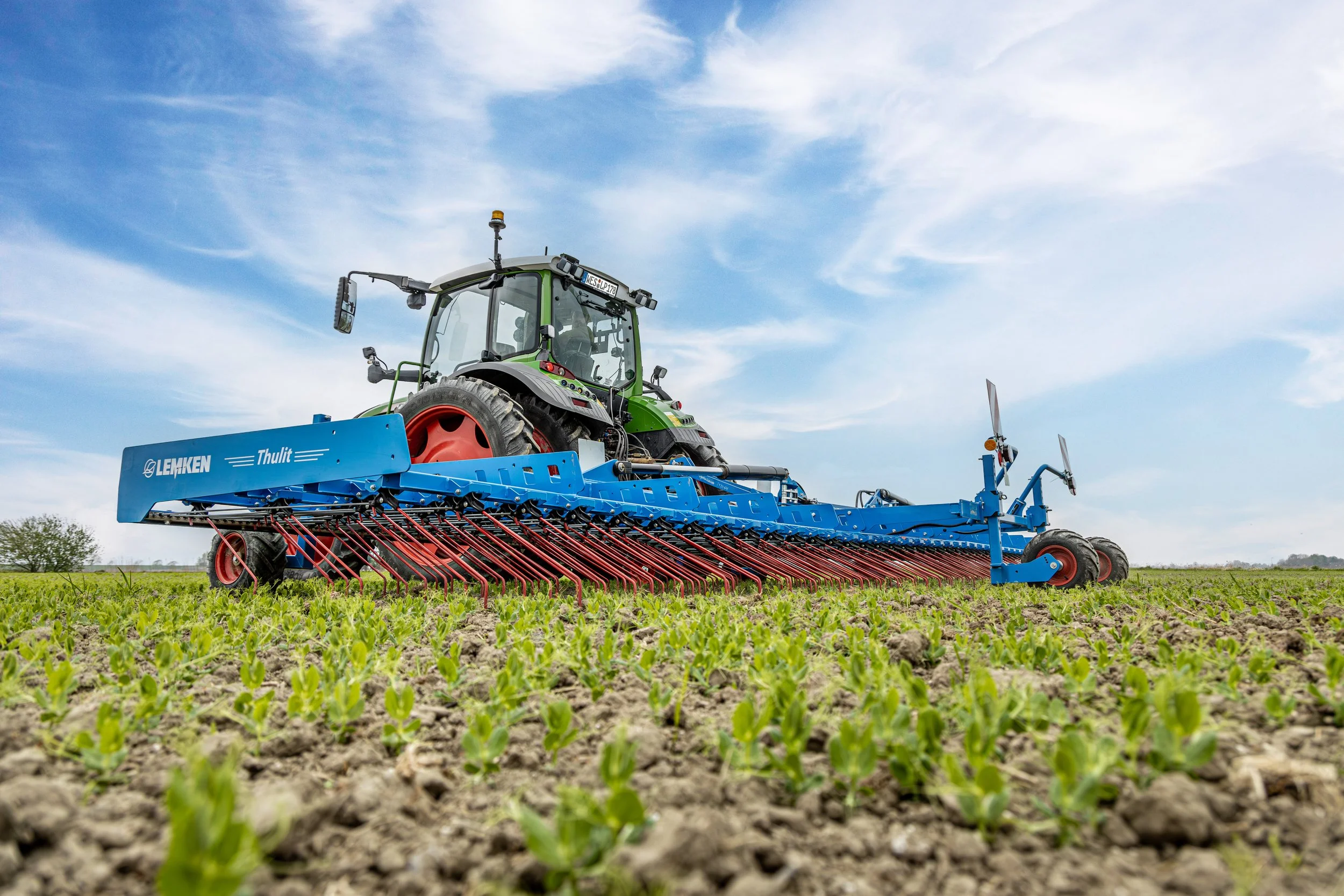
Rather than relying on brute force the Thulit focuses on timing, consistency and adjustability, exactly what’s required when conditions change paddock by paddock and season by season.
Designed to Work With the Crop, Not Against It the Thulit is a lightweight but stable frame design that allows it to operate early and often. Available in 6 m, 9 m and 12 m working widths, it suits everything from smaller mixed farms through to large-scale arable and vegetable operations. Low tractor power requirements remain modest, meaning most farms can run the machine without changing their existing fleet.
What sets the Thulit apart is how evenly it works across the full width. Tight 31.25 mm tine spacing over 8 rows of tines ensures consistent soil contact, while generous underframe clearance allows it to pass cleanly through cereals, maize, vegetables and ridge crops without blockages. This makes it particularly useful during fast spring growth when timing is critical.
The key to successful mechanical weeding is control and this is where the Thulit excels. Its in-cab hydraulic OptiTine adjustment allows tine pressure to be modified on the move, ranging from very light contact (0.1 kg per tine) for young crops to more aggressive action (5 kg per tine) (Photo-Pressure adjustment) as weeds become established. This versatility means a single machine can be used multiple times throughout a crop’s growth stages, rather than being limited to a single pass. Consistent pressure across every tine achieved through the closed hydraulic system ensures weeds are uprooted evenly, rather than being scratched in patches.
Ben Harris, Regional Service Manager NZ explains, “For growers dealing with variable soil types which is a common reality across New Zealand farms, this level of control can be the difference between effective weed suppression and wasted diesel.”
With Thulit machines already in operation across New Zealand, we are seeing very beneficial results in that the Thulit doesn’t just remove weeds - it actively improves soil conditions. Light surface cultivation breaks crusting, enhances aeration and creates a loose welcoming seedbed, this in turn supports faster crop establishment.
By targeting weeds at the white thread stage the Thulit reduces early competition for nutrients and light setting crops up for stronger, more uniform growth. For many growers, this also translates into fewer chemical applications later in the season which is a major advantage.
Whether you’re farming conventionally, transitioning systems, or operating organically mechanical weed control has a clear place in modern rotations. The Thulit doesn’t aim to replace herbicides entirely, instead it gives farmers another reliable tool that reduces reliance, spreads risk and improves overall system resilience.
Reach out to your local Lemken dealer for further information or visit Lemken.com