
Practical guidance not paperwork
Rural contractors have been assured by WorkSafe that its focus on support over enforcement is here to stay.
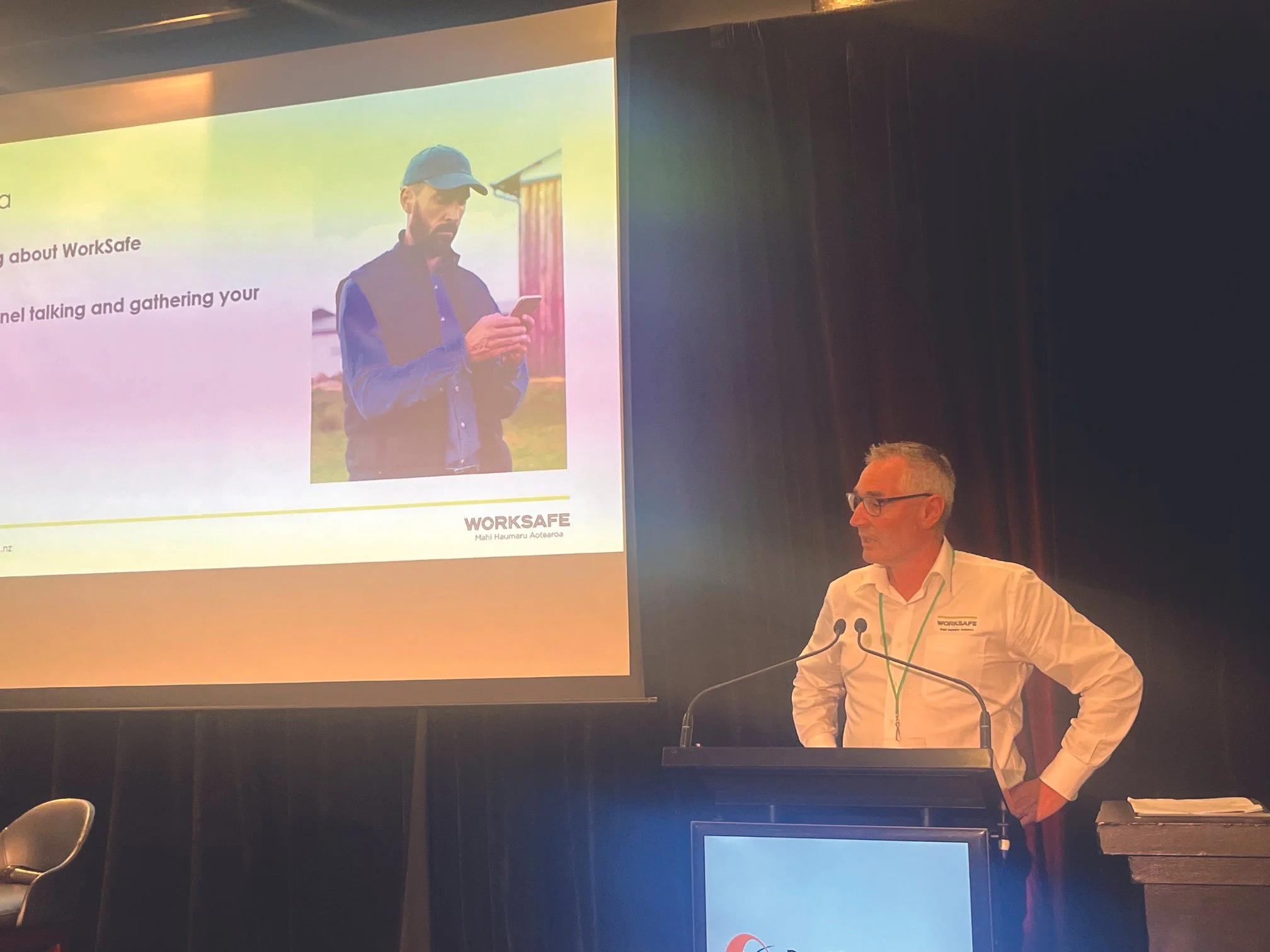
WorkSafe Southern Regional Manager, Adrian van Dyk, acknowledged to the RCNZ conference that the organisation is still bedding in changes following a strategic reset in 2024.
He said WorkSafe’s role is to influence businesses and workers to carry out their responsibilities – and to hold them to account if they don’t.
“Enforcement is the last piece, if there’s no improvement.”
He said last year WorkSafe visited 91 rural contracting businesses and only 34% saw any enforcement.
“Mostly we are about practical guidance.”
The key insights were that the critical gaps in rural contracting are machinery guarding (notably PTO shafts) and managing agrichemicals.
WorkSafe is currently developing two new codes of practice in agriculture – one covering safe farm vehicle operation, and the other for roles and responsibilities in agriculture. Both are due to be delivered for ministerial approval this month.
RCNZ CEO Andrew Olsen said he’d submitted on the draft codes. He said when finalised they should give rural contractors a ‘safe harbour’ to operate within and relieve some of the stress for members.
One contractor said he’d recently had his first WorkSafe visit for 21 years and offered a bouquet for how that went.
Another asked how WorkSafe would look at a business if it did all the required training and pre-starts but still missed something, despite having a 150-page health and safety management plan.
“Who’s reading that? A pile of paperwork isn’t fixing a problem.”
Adrian van Dyk said in any incident involving a rural contractor, WorkSafe would be looking for all ‘reasonably practicable steps’ taken to prevent injury.
"If you have a good health and safety system, we'd take that into account," he said.
He added that WorkSafe often sees good systems in place on paper, but that gaps can still emerge in how those systems are supervised, reinforced, or followed through on the ground.
Sherry Peck, a WorkSafe inspector in Canterbury, said her first question on a site is: what are the biggest health and safety risks and how are these managed?
“I don’t ask to see the 150 pages. At the end of the day, that 150 pages isn’t going to stop someone putting their hand in an auger.”
Peck says she gives her business card to every rural contractor she visits.