
Protecting forage before quality is lost
Every tonne of hay or silage carries a finite amount of energy and protein that has been produced through months of crop growth. The moment forage is cut, however, biological processes begin working against that feed value. Naturally occurring yeasts, fungi and undesirable bacteria immediately start consuming plant sugars, generating heat and gradually reducing the nutritional quality of the crop before it ever reaches livestock.
Modern forage preservation is increasingly focused on interrupting those biological processes as early as possible. Rather than simply preserving forage for storage, today's biological preservatives are designed to retain metabolisable energy (ME), digestibility and protein that would otherwise be lost through spoilage. It is an approach that has seen significant development over the past three decades, with Biostart refining products specifically for New Zealand and Australian farming systems while adapting application technology to suit increasingly sophisticated harvesting equipment. Recent additions to the range include high-volume formulations for contractors using integrated or other high-capacity applicator systems, recognising the larger machinery now operating throughout the industry.
The technology behind hay preservation centres on controlling the organisms responsible for heating. HayKing uses microbial fermentation extracts that inhibit spoilage yeasts and fungi before they become established within the bale. That matters because these organisms consume the soluble sugars that provide valuable energy for livestock. As temperatures continue to rise inside the bale, proteins begin to denature, reducing both digestibility and palatability. Once those biological changes have occurred, they cannot be reversed, making preservation at the point of baling critical to maintaining feed quality throughout storage.
Trial work demonstrates how significant those changes can be. Monitoring carried out during the first four weeks after baling showed hay treated with HayKing remained consistently cooler, while untreated bales experienced a substantial increase in temperature approximately two weeks after baling and remained significantly warmer for around 14 days. Feed analysis of those same bales showed treated hay retained higher levels of ME, digestibility and crude protein than untreated hay, confirming that limiting microbial activity also preserves nutritional value.
The practical benefit for contractors is that greater biological control also creates greater operational flexibility. Applying a preservative allows hay to be baled at slightly higher moisture contents without compromising the finished product, helping crews make better use of available harvesting opportunities. During a busy season, that can mean starting earlier in the day, working later into the evening and making productive use of marginal weather conditions that might otherwise bring operations to a halt.
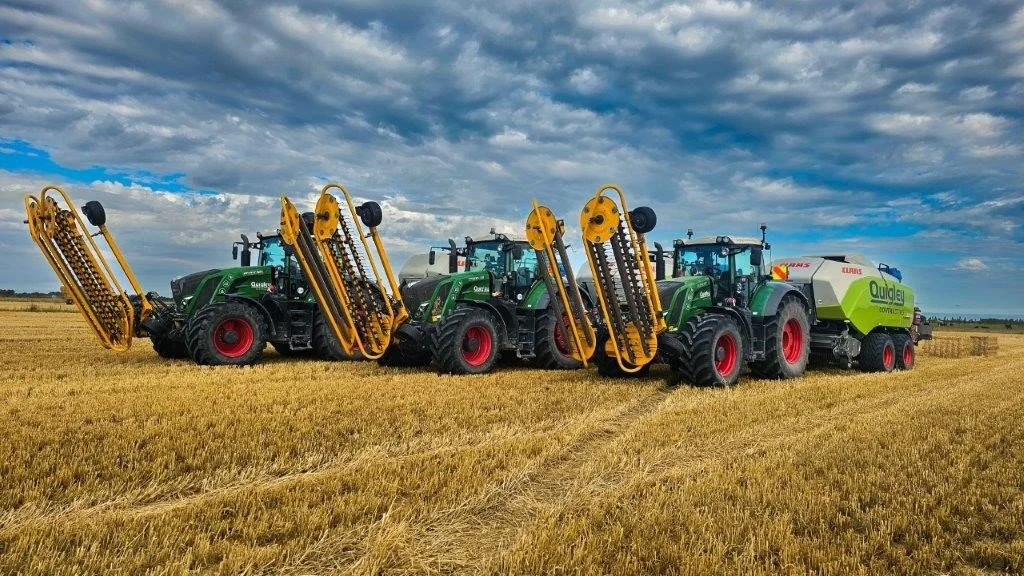
Canterbury-based Quigley Contracting has incorporated HayKing into its baling operation for exactly that reason. General Manager Rob Raisbeck says the biological preservative has become an important component of maintaining productivity while continuing to produce premium quality hay and straw.
"Using Biostart's HayKing has been a key component in allowing us to be more productive and efficient when baling hay and straw during the busy season. The ability to apply a biological preservative when needed enables us to produce consistently high-quality feed."
Raisbeck says the business was looking for a preservative that was straightforward to use, gentle on machinery and capable of consistently delivering results while integrating with the company's modern baling equipment and live moisture monitoring systems.
Silage preservation relies on different biological processes, but the objective remains the same: retaining as much feed value as possible. SilageKing works through a two-stage biological mechanism that first stimulates naturally occurring lactic and acetic acid bacteria responsible for efficient fermentation. Rapid establishment of these beneficial bacteria allows the crop to reach stable preservation more quickly while creating conditions that suppress undesirable yeasts and fungi responsible for heating and spoilage. Reducing those spoilage organisms also lowers the risk of mycotoxins developing within the silage, an important consideration for both animal health and production performance.
Independent trial work has consistently demonstrated improvements across key feed quality indicators when SilageKing is used. Dry matter retention, ME and digestibility all showed measurable gains across both lower and higher quality forage, illustrating that preserving biological stability during fermentation translates directly into improved nutritional performance at feeding. Rather than simply reducing spoilage losses, the process protects more of the feed value originally harvested from the paddock.
Biostart applies the same biological principles to maize through MaizeKing, modifying the formulation to suit the different fermentation characteristics of maize silage while maintaining the objective of producing a rapid, stable fermentation with minimal nutrient loss. Both MaizeKing and SilageKing are now available in high-volume formulations, allowing contractors operating larger forage harvesters and integrated application systems to use the same biological technology without compromising application rates or harvesting efficiency.
Application technology has become almost as important as the preservative itself. Modern harvesting operations cannot afford products that require complicated mixing or interrupt workflow. Biostart's systems are designed for direct application during baling or chopping, with accurate in-cab rate control and seamless integration into existing machinery. The introduction of high-volume formulations reflects the continuing evolution of contracting businesses towards larger equipment, higher throughput and greater automation across the harvesting process.
The science behind biological forage preservation is ultimately straightforward. Every yeast cell prevented from consuming plant sugars, every degree of unnecessary heating avoided and every percentage point of digestibility retained represents feed value that remains available to livestock instead of being lost during storage. Preserving forage has therefore become less about simply preventing spoilage and increasingly about protecting the nutritional performance of the crop from the moment it leaves the paddock until it reaches the feed face. For contractors and farmers alike, that represents another example of biological technology delivering measurable gains through a better understanding of the processes taking place inside every bale and every silage stack.