
A century of carrying New Zealand’s rural heartland
Sandfords Rural Carriers is one of those rare rural businesses that seems to grow out of the landscape itself, because its history stretches back so far and through so many changes in farming life that it becomes difficult to separate the company from the communities it has served for more than a century.
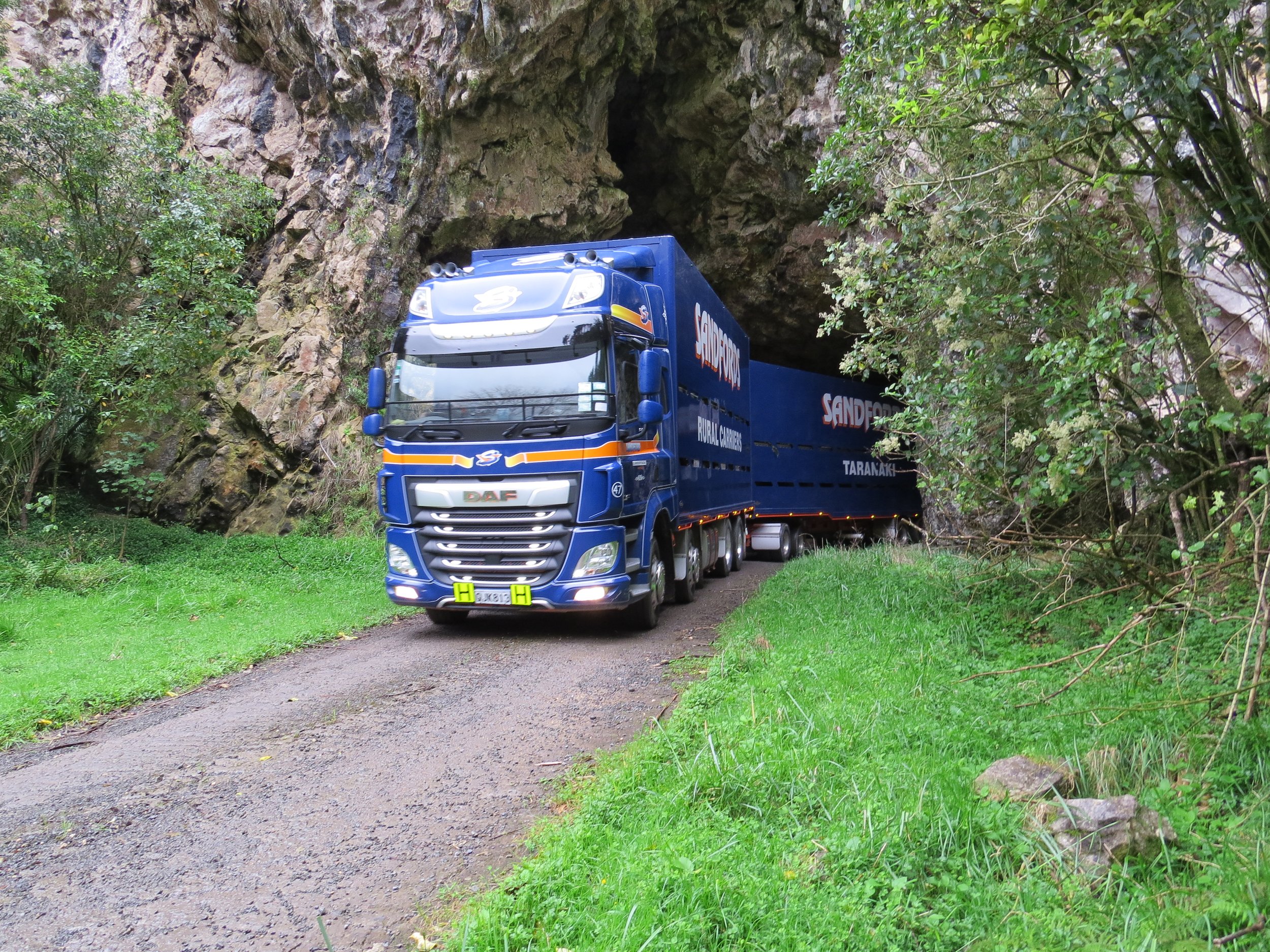
Sandfords Rural Carriers has become a familiar part of rural life across the lower North Island, supporting farming and contracting communities through generations of change.
When you look at the roads that cross the lower North Island and picture the trucks that have travelled them for generations carrying fertiliser and stock and metal and concrete, you quickly realise that Sandfords is more than a transport business because it has become part of the rhythm of rural life and part of the continuity that binds farming families to the land. Its story begins in 1923 in the most modest and practical way, with a Chevrolet truck working the Auroa plains in coastal Taranaki and it has grown steadily ever since through tough years and good years and all the seasons in between.
In those earliest days E F Sandford began carting metal and goods for neighbours and local farms because the district needed someone with a reliable truck and a willingness to help and the Chevrolet soon became a familiar sight rattling down unsealed roads, carrying whatever needed moving from one gate to the next. E F Sandford was Ebenezer Fredrick Sandford, known to all as “Ebby” and the practical spirit that sat behind that nickname still feels woven into the company’s identity today. Rural life in the 1920s was built on personal relationships and mutual support and a good truck and a good operator were invaluable in a region that was expanding its farming footprint. As the years passed the scale of local farming increased, and the railway line that pushed through between Te Roti and Ōpunake in 1927 created new opportunities and demands for more structured cartage. Sandford saw the opportunity early and built a depot at Auroa, which became the first real anchor point of the business and the heart of its early growth.
A year later a building was moved in sections from Manaia to the corner of Auroa and Skeet Roads and that building served as both a home and an office for decades. It remained a symbol of the early enterprise; a reminder of how far the company had come and how much of it had grown through sheer determination and a desire to serve the farming community. It was in 1928 that Ebby shifted operations to the corner of Skeet and Auroa Roads and it is that move that underpins the centenary the company will celebrate in 2028. In the 1930s Sandfords diversified in ways that reflected the needs of rural families, offering a blacksmith shop for repairs to tools and horseshoeing and supplying petrol first in drums and later through proper tanks. They even used their vehicles as school buses and generations of children travelled to and from Auroa School in Sandford vehicles, which strengthened the connection between the family business and the farming community in a way that shaped the culture of the business for decades.
When E F Sandford passed away in 1959 his sons took over and in 1960 formalised the business as Sandford Bros Ltd with a fleet of five trucks and three school buses. It is almost quaint to imagine now compared to the scale of the modern operation, but at the time it was a substantial operation in a rural district that was steadily intensifying and modernising. The 1960s and 1970s brought new pressures and opportunities with the growth of fertiliser use across New Zealand farming, which transformed the way rural carriers operated. Farmers needed reliable bulk fertiliser delivery and a system that could manage the increasing volumes moving into the district and Sandfords once again responded by purchasing a former dairy factory and converting it into a bulk store, which became the hub for a new fertiliser spreading division known as Sandford Spreaders Ltd.
This shift from simply carrying goods to providing onfarm services marked a significant evolution in the business and it aligned perfectly with the practical needs of the district. Fertiliser spreading required specialised machinery and skilled operators and it positioned Sandfords as a business that could deliver both the product and the service, which deepened trust among local farmers. As fertiliser use continued to grow, so did the fleet and the company’s reputation for reliability and efficiency.
The early 1980s brought another major challenge with the deregulation of the transport industry, which opened the market to new competitors and forced many operators to rethink their business models. For some rural carriers this period created significant strain with rising costs and intensified competition, but Sandfords navigated it with characteristic pragmatism by investing in a more modern and standardised fleet which reduced maintenance costs and improved reliability. This proved invaluable during the economic downturn of 1987, when businesses across many sectors were under pressure, because Sandfords had already taken the steps needed to operate efficiently and sustainably.
In 1984 the company expanded again through the purchase of Ian Lord Transport, which brought a depot at Normanby and further strengthened Sandfords’ livestock capabilities. The company was already involved in livestock transport before this purchase, but bringing Ian Lord Transport into the fold added further capacity and increased the strength of the livestock fleet at a time when demand and expectations were rising. Stock cartage is a demanding line of work, requiring not only careful handling and an understanding of animal welfare but also flexibility and responsiveness to the rhythms of farming life. This purchase broadened the company’s service offering and strengthened its relationship with farmers, who now had a single operator capable of moving everything from fertiliser and metal to livestock and feed. Livestock drivers became familiar figures on farms across the region and the work required long hours and commitment in all conditions, which suited the company’s culture of service.
Around the same time Sandfords moved into the metal and aggregate business by installing crushing and washing equipment and adding loaders and excavators to their machinery fleet. This opened up new avenues of work in supplying metal for farm races, laneways, construction and civil works. The demand for aggregate was rising, particularly as farms began to upgrade infrastructure to improve access and reduce the impact of heavy rainfall and Sandfords proved nimble in building capacity to meet this need. The metal business provided the company with another strong service line that complemented its growing fleet of trucks and created year round work.
By 1991 the quarrying and aggregate operations had grown to such an extent that they were formalised under Sandford Quarries Ltd. The quarry itself required substantial investment and redevelopment, which the company undertook over several years upgrading machinery, improving product quality and introducing environmental restoration practices that were ahead of their time. Rehabilitation work on exhausted sites reflected a growing awareness of environmental responsibility and it reinforced the long term approach that had always guided the company.
In 1998 the business added ready mix concrete to its portfolio, which created yet another link between Sandfords and the development of rural properties. Concrete is a staple of farming infrastructure, used for yards, feed pads, shed floors and tracks and adding this service strengthened the company’s ability to support rural construction and renovation. The concrete division grew steadily and today remains an important part of the wider company.
Throughout all these decades of expansion the company remained firmly family owned, with Bert and Bob Sandford guiding operations and their children stepping into roles that helped steer the business into the modern era. Keith played a key role in livestock transport and Phil returned from engineering to take on operational responsibilities and eventually leadership within the company. This continuity of family involvement helped preserve the core values of the business, which centred on reliability, practicality and a willingness to adapt while still respecting the traditions of the past.
As the 2000s progressed Sandfords expanded its geographic reach significantly, establishing depots in Hawera, Waitara, Piopio, Waverley, Whanganui, Bulls, Featherston and Napier. This broadened network strengthened the company’s presence across the lower North Island and allowed it to support a wider range of customers, including farmers, contractors, civil construction teams and regional councils. Each depot became a local hub for employment, customer service, fleet maintenance and the company’s ability to operate across such a wide area further cemented its reputation for reliability and capability.
Today Sandfords operates approximately ninety six trucks and employs around one hundred and thirty people across its various divisions, which include bulk fertiliser and metal cartage, stock feed transport, silo storage, livestock hauling, general freight, concrete supply and rural supplies distribution. This diversity is one of the company’s greatest strengths because it allows Sandfords to maintain consistent employment for staff while offering customers a full range of services throughout the year. When one division experiences seasonal slowdown, another often ramps up, allowing the company to remain stable and productive in all conditions.
The sense of connection between Sandfords and the rural communities it serves remains as strong as ever. Many farming families have relied on the company for generations and the headquarters at Auroa still evokes the spirit of those early years when the business was rooted deeply in the Taranaki soil and shaped by the needs of the land. Even as the company has grown and modernised there is a distinct familiarity to the way it operates and a sense that long term relationships matter just as much as commercial efficiency. Customers know the company and the company knows its customers and that mutual understanding continues to shape the service it provides.
Leadership has transitioned smoothly into the present era, with Phil Sandford now guiding the company following the passing of his father Bert in 2020 and with the next generation stepping into key roles. Tom Sandford is now operations manager for the business, ensuring the day to day flow of people, trucks and commitments remains steady and responsive, while his younger brother Hamish manages the workshop, carrying the responsibility of keeping the fleet well maintained and dependable across multiple depots and long distances. The involvement of younger family members signals a future that remains firmly grounded in the founding values of the business.
Modern technology has become embedded across every part of the operation, from GPS tracking to communication systems inside each vehicle and digital platforms that support scheduling, compliance and customer service. Workshops across the depots maintain the fleet to a high standard, and health and safety practices are now integrated into daily operations in a way that reflects both industry expectations and the company’s commitment to looking after its people. Despite these advances the underlying character of the business remains unchanged because Sandfords continues to provide practical solutions to practical problems and to respond quickly when customers need support.
The company’s longevity is particularly significant in an era when many rural carriers have struggled under increasing compliance costs, complex regulations and fluctuating market conditions. Sandfords has managed to remain not only stable but steadily expanding, by shaping its services around the needs of farmers and rural contractors and by investing in people, equipment and depots in a balanced and sustainable way. The deep trust placed in the company by its customers reflects decades of consistent service and careful stewardship.
A business is only as good as the people in it and Sandfords’ story has always been defined not just by trucks and depots, but by the individuals who have shown up day after day and carried the workload with pride and professionalism. Over the years the company has had some outstanding employees who have helped shape its culture and service, including Jack Mischefski, Bill Davis, Arlene Peacock, Merryn Clouston, Alan Lord, Les Southcombe and Murray Simpson to name a few. Their contribution sits quietly behind the business’s reputation because in rural transport it is the people who build trust and keep relationships strong over time. Murray Sandford has also been helping as needed for many years, and Phil’s wife Jen plays an important role behind the scenes by doing health checks and supporting the business in many ways.
Looking ahead Sandfords is well positioned to navigate the challenges and opportunities that will arise across the rural economy. Farming continues to evolve driven by technology, environmental considerations and changing market conditions and carriers will need to be increasingly flexible and responsive. Sandfords’ century long history demonstrates that it is more than capable of adapting to shifting circumstances and that its culture of problem solving, innovation and practical reliability provides a solid foundation for whatever comes next.
A hundred years after that first Chevrolet truck made its way down the rural roads of Auroa the company remains a vital part of the rural supply chain and a trusted partner for farmers, contractors, builders and communities across the lower North Island. It has grown by meeting the needs of the people it serves and by maintaining a deep connection to the land, and the livelihoods that depend on reliable transport and support services. It has developed a broad network of depots, a large capable fleet and a skilled workforce, without losing its grounding in the values of hard work and service that defined its early years.
Sandfords Rural Carriers stands today as a symbol of continuity and resilience in rural New Zealand because it carries not only freight, but a heritage of service spanning four generations and countless kilometres travelled through every kind of weather and season. It remains steady, adaptable and deeply rooted in the communities that have grown alongside it and as farming continues to evolve and the demands on rural infrastructure increase, the company is poised to continue its journey well into the future carrying the same spirit that has driven it for more than a century.