
What the new XAG Rover means for the future of crop farming
Technological change in agriculture usually arrives slowly, inching its way from research to trial plots before finding its place in commercial operations. Every so often though, something emerges that feels immediately relevant to the pressures growers face.
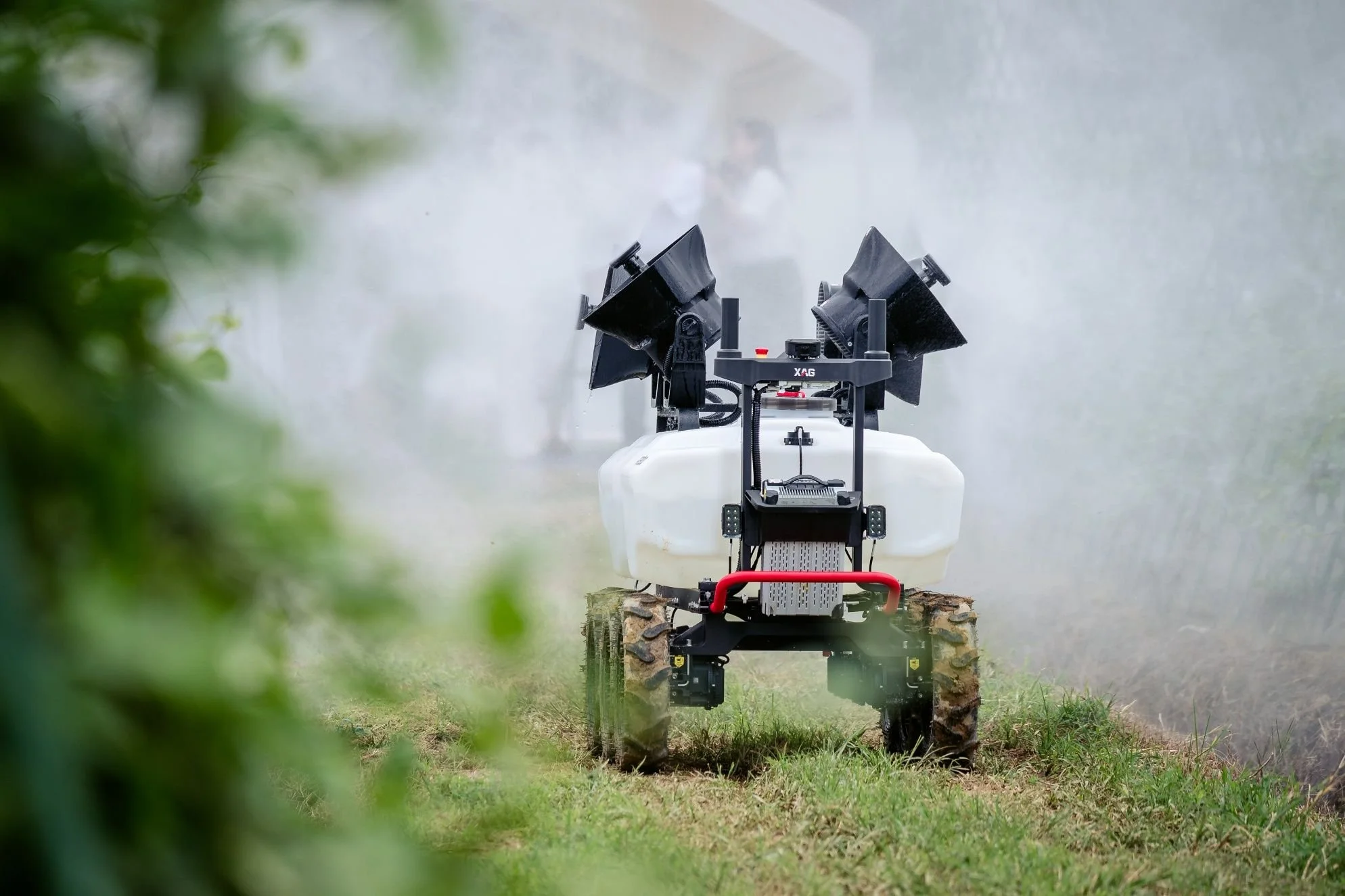
With precision navigation, remote operation and a focus on accurate spray application, the R Series signals the next step in automation for specialty crops, helping growers lift efficiency while reducing exposure and improving consistency.
The launch of XAG’s new R Series Agricultural Rover sits firmly in that category. It is not a theoretical showcase or an engineering flex. It is a machine designed for the practical everyday demands of orchards, vineyards and greenhouses where labour is tight, workloads are heavy and the margins for error are shrinking.
Growers all over the world are feeling the strain of labour scarcity. Specialty crops such as fruits, vegetables and protected horticulture are high-value enterprises, yet they are also among the most labour-intensive.
Thinning, pruning, canopy work and crop protection require hours of human effort at precisely the right time. The industry has adapted for decades through seasonal labour schemes, migrant workers and increasingly complex rostering but the underlying challenge remains.
As XAG notes, labour accounts for close to 40 percent of production costs in many specialty crop systems, a figure that mirrors the experience of growers across New Zealand.
The R Series arrives against this backdrop. Ground robotics are not new, yet few machines have been designed so specifically for the spatial realities of modern horticulture.
The R100 and R200 models take XAG’s established strengths in agricultural drones and bring them to ground level where a robot can navigate tight rows, manage crop protection and repeat tasks with consistent accuracy.
Instead of asking growers to reshape their systems to suit the machine, the machine has been engineered to suit the crop environment.
At the heart of the rover’s capability is its precision spraying system. XAG’s JetSprayer technology produces fine, uniform droplets and aims to reduce drift while improving coverage.
In crops where residues, resistance, timing and canopy penetration all matter this type of control offers obvious benefits. Better application accuracy reduces waste and minimises environmental impact, and it also protects the bottom line.
Chemical inputs are expensive and growers increasingly need to justify every litre used on farm.
The rover’s physical design reinforces its practicality. The R100 weighs about 80 kilograms and fits comfortably through compact greenhouse lanes.
The R200, built for orchards and vineyards handles wider rows but still moves lightly across the ground.
An operating width of around 80 centimetres means the machine can move without disturbing young canopy growth or damaging sensitive beds.
XAG is clear about the intention behind these dimensions. The goal is to make automation available in environments where traditional tractors or sprayers simply cannot operate safely or efficiently.
Automation does not work without intelligence, and the R Series is equipped with a suite of navigation and operation modes designed to reduce the mental load on growers.
RealTerra mapping allows the rover to understand its environment, while Cruise Mode Path Tracking and Repeat Mode allow the machine to follow consistent routes without direct input.
The system is controlled remotely, keeping the operator away from spray zones and reducing exposure to chemicals. Safety, efficiency and repeatability sit at the core of the design.
This type of technology will raise natural questions for growers who have watched many innovations come and go.
The concerns are familiar: cost, reliability, training requirements, connectivity and the fear of depending on a machine at critical stages of the season. Those concerns are legitimate.
The adoption of robotics cannot be taken lightly, especially for smaller operators. Yet it is also clear that the traditional labour model is under unprecedented strain.
In many regions the choice is no longer between people and machines but between machines and missed opportunities.
One of the more compelling aspects of agricultural robotics is the way they change the nature of work.
Robots are not replacing decisions about pruning strategy, canopy management or harvest timing. They are designed to take on the repetitive, physical tasks that drain hours from a grower’s day.
When automation handles spraying, mapping or repetitive passes through the orchard growers are free to focus on the decisions that require judgement, experience and intuition.
In that sense the technology does not diminish human skill; it protects it.
New Zealand’s growers may find particular value in this shift.
Labour shortages have become routine across horticulture, and the unpredictability of seasonal flows has made planning harder.
Higher compliance costs, visa restrictions, rising wages and increased competition for workers all put pressure on production systems.
A robot that can reliably handle repetitive tasks during the busiest periods is not simply a convenience. It is a strategic tool that stabilises the entire operation.
There is also a broader evolution underway in how farms manage information.
Machines like the R Series collect data as they work, feeding insights back into the broader management framework.
Coverage maps, route data and operational logs contribute to a more informed approach to crop protection and resource use.
Over time this type of digital integration leads to smarter decisions, reduced waste and better environmental outcomes.
Precision horticulture is already a priority for many New Zealand growers, and robotics will accelerate that movement.
The economic case for technology adoption will vary from farm to farm.
Some growers will see immediate value, while others will take a slower path.
What is clear is that ground robotics are no longer speculative. They are practical tools entering mainstream use in Europe, North America and Asia and New Zealand will not sit outside that trend.
As more growers look for ways to stabilise labour demands and improve efficiency, the appeal of machines that can work consistently, safely and without fatigue will only grow.
Every generation of farmers has seen its share of transformative tools.
Tractors replaced teams of horses. GPS guidance replaced the guesswork of straight lines. Drones changed how crops are monitored.
Robots on the ground are simply the next step in that progression.
The XAG R Series shows that the technology has matured beyond prototypes and pilot programmes.
It is now entering the phase where growers can weigh its benefits in the same way they would any other piece of specialised equipment.
The real story of automation in horticulture is not about machines taking over but about giving growers more control.
More control over timing, over labour costs, over crop protection and over the economic uncertainty that comes with relying on seasonal workers who may or may not arrive.
A robot that can take on repetitive work ultimately supports the people who remain on farm and strengthens the resilience of the wider industry.
As pressure on horticulture continues to rise through market demands, environmental expectations and labour shortages, technology like the R Series offers growers a chance to redesign how work is organised.
The opportunity is not just to do the same jobs differently but to structure the entire production system in a way that is more efficient and more sustainable.
If robotics can shoulder the strain of repetitive work, growers can direct their time and energy back into the decisions that shape quality and long term success.