
A review of hay and silage consumables
Contractors who follow best practice and use the latest technology can meet their customers’ demand for high quality silage and hay. In this feature we review some of the key products helping farmers and contractors produce and protect top quality feed all year round.
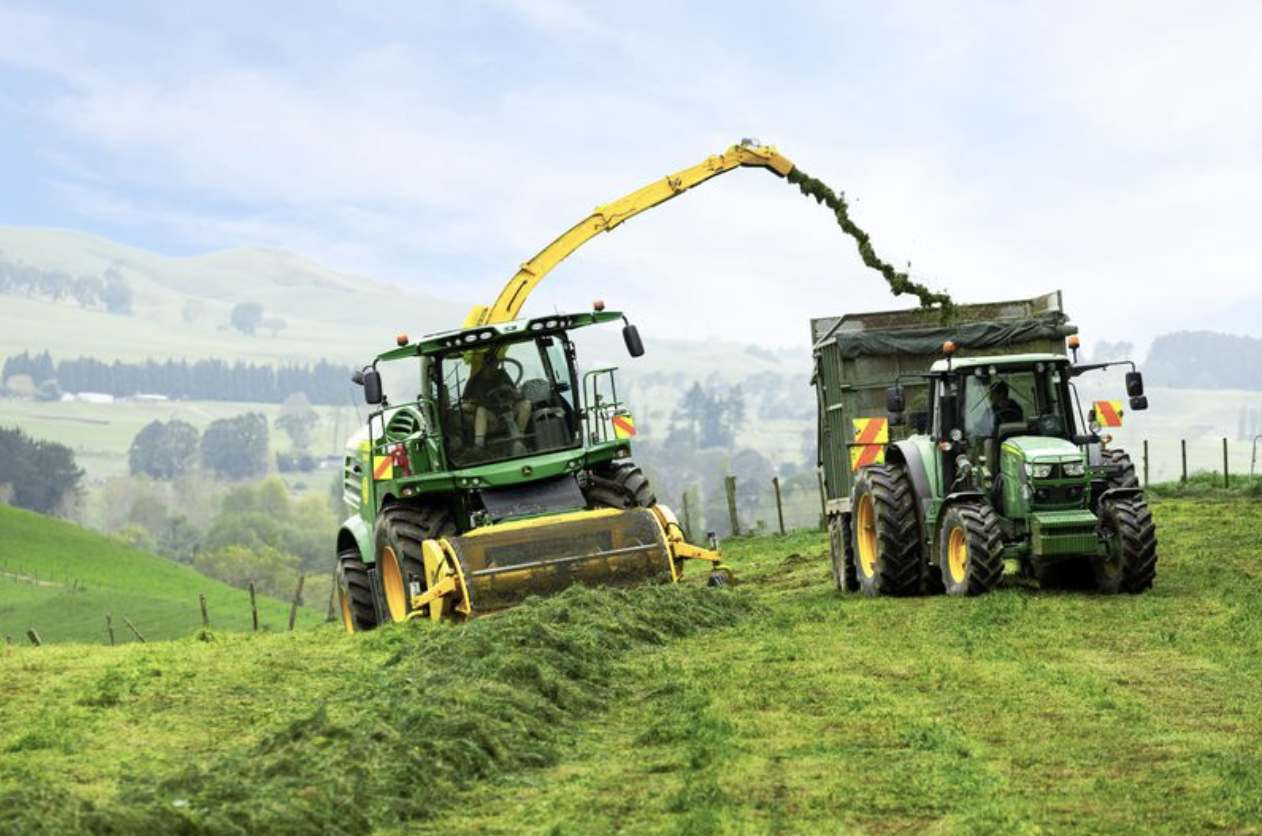
Pioneer
Increasing seasonal variability across New Zealand, from prolonged dry periods through to extended rainfall events, is putting greater emphasis on the value of high-quality silage. With supplementary feed representing a significant investment, preserving as much of the quality harvested from the paddock as possible can make an important contribution to animal performance and farm profitability.
Some loss of dry matter, nutrients and energy is inevitable during silage fermentation, but the speed and quality of that fermentation can have a significant influence on how much feed value is retained. The faster beneficial bacteria dominate the fermentation process, the greater the opportunity to preserve nutrients for animal production.
This is where the choice of silage inoculant becomes important. While there are numerous products available, differences in bacterial strains, application rates and supporting research mean inoculants should not necessarily be considered interchangeable.
Pioneer silage inoculants contain selected bacterial strains designed to rapidly outcompete naturally occurring microbes and improve fermentation efficiency. The objective is to reduce losses during ensiling and retain more of the feed quality present in the crop when it was harvested.
Aerobic stability is another consideration, particularly during warmer conditions or where silage may be exposed to air for longer periods during feed-out. Once oxygen enters silage, yeasts and moulds can become active, generating heat and contributing to spoilage and the loss of valuable feed.
Selected strains of Lactobacillus buchneri are used to improve aerobic stability by restricting the activity of yeasts and moulds, helping silage remain stable for longer after exposure to air.
When comparing inoculants, the bacterial species listed on the label tells only part of the story. Different strains within the same bacterial species can perform differently, making the research behind individual strains an important consideration.
The bacterial strains used in Pioneer inoculants have been developed through research and testing, with data examining fermentation, aerobic stability and subsequent animal performance. New Zealand research and experience are also relevant because local forage crops, climatic conditions and silage systems can differ from those encountered overseas.
Manufacturing and handling are equally important. Silage inoculants contain living organisms, so maintaining bacterial viability through manufacture, storage and application is necessary if the required number of bacteria is to reach the crop. Pioneer inoculants are manufactured under quality assurance systems intended to ensure the specified bacterial strains are delivered at the required application rates.
Rather than relying on a single product for every situation, Pioneer offers crop-specific inoculants for different forage types and fermentation requirements.
Pioneer brand 1127 inoculant has been developed specifically for pasture silage and contains crop-specific lactic acid bacteria. Independent research cited by Pioneer shows pasture silage treated with 1127 achieved more than 2.9% greater dry matter recovery than untreated silage.*
The value of retaining that additional feed ultimately depends on how it performs when fed to livestock. Animal performance trials cited by Pioneer recorded an additional 30 L of milk or an 81 g increase in average daily beef liveweight gain per wet tonne of 1127-treated pasture silage ensiled compared with untreated silage.*
Where aerobic stability is a greater priority, Pioneer brand 11G33RR contains a blend of patented strains of Lactobacillus plantarum and Lactobacillus buchneri. It is designed to improve silage quality while providing a desirable volatile fatty acid profile to reduce fermentation losses and improve aerobic stability.
Trials cited for the product recorded a 3.3% improvement in dry matter recovery and an additional 90.7 hours before treated silage began to heat compared with the untreated control.* For farms feeding silage during warmer weather or where the silage face remains exposed for longer periods, extending the time before heating begins can help reduce spoilage during feed-out.
Pioneer brand 1174 provides a lower-cost option across multiple crops. It is designed to improve silage quality while reducing fermentation and shrinkage losses. Pioneer says trial results show an average 2.1% improvement in dry matter recovery, along with improved fibre digestibility to make more of the nutrients contained in the silage available to the animal.*
With feed costs continuing to put pressure on farm businesses, the economics of silage extend well beyond the cost of harvesting the crop. Growing, mowing, harvesting, transporting, storing and eventually feeding that forage all represent an investment. Losing dry matter or feed quality during fermentation and storage means losing some of that investment before the feed reaches the animal.
Choosing an inoculant therefore comes down to understanding the crop being ensiled, the storage system, likely feed-out conditions and the outcome required. The cheapest product is not necessarily the most cost-effective, just as the most sophisticated inoculant may not be necessary for every crop.
The objective is to match the inoculant to the job and preserve as much as possible of what has already been grown and harvested. When every tonne of supplementary feed carries a considerable cost, even relatively small improvements in dry matter recovery, stability and utilisation can become meaningful across an entire season.
For more information on Pioneer inoculants and selecting an inoculant for individual crops and silage systems, visit the Pioneer website or speak with a local area manager.
*Trial data supporting the figures cited is available from Pioneer on request.
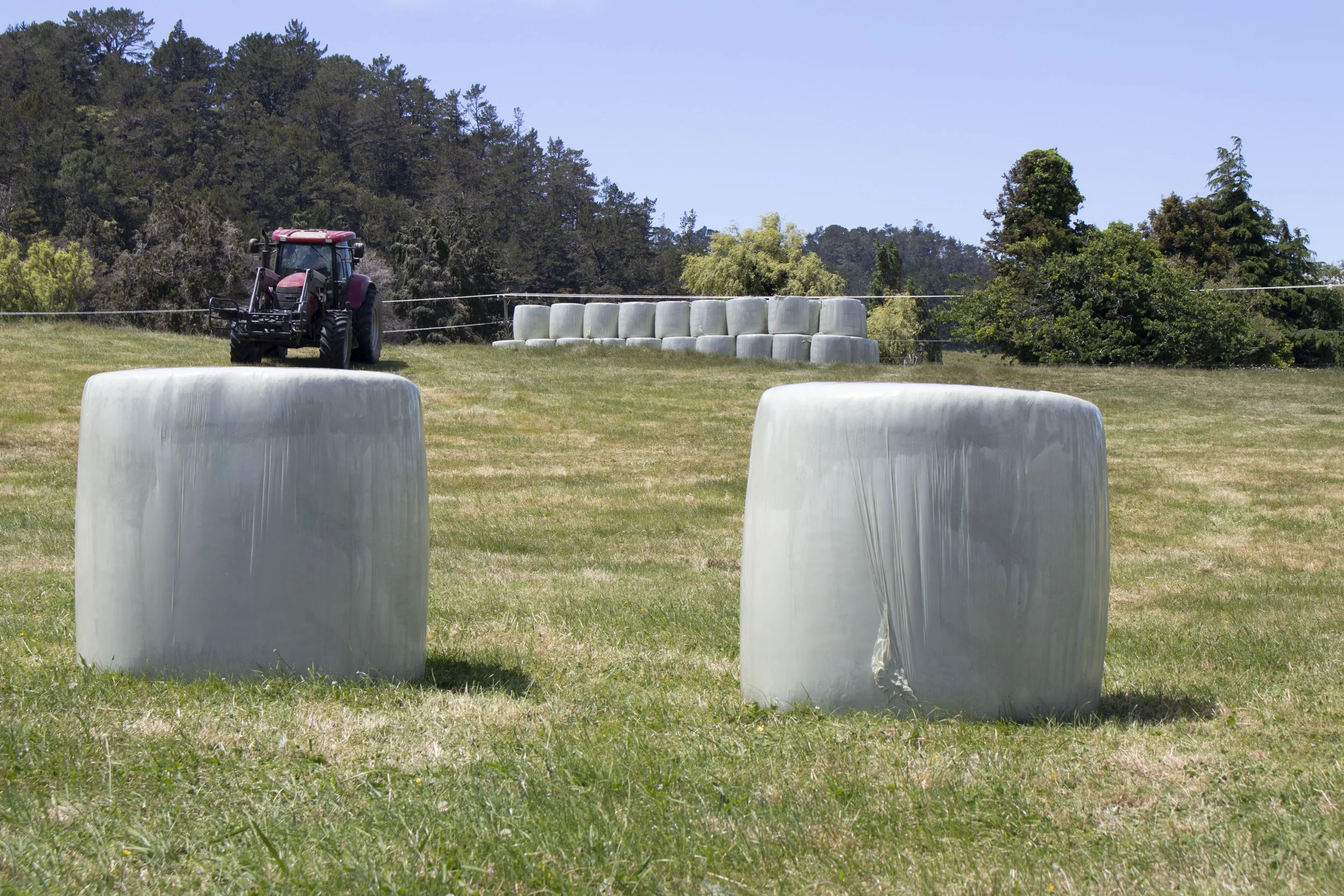
Tama
For farmers and contractors, crop packaging is more than a consumable. When the pressure is on and the weather window is tight, the reliability of twine, netwrap and balewrap can have a direct impact on productivity, forage quality and ultimately profitability.
As of September this year, the two leading crop packaging suppliers, Donaghys Crop and Agpac, have come together operating as Tama New Zealand. The move gives Kiwi farmers and contractors direct access to crop packaging technologies backed by the knowledge, research and manufacturing capability of the global company that develops them.
At the forefront are Tama’s globally manufactured products, TamaTwine+ Impax, TamaNet+ and EZ Web, alongside a balewrap portfolio built through long-standing relationships with some of the world’s leading balewrap manufacturers. What sets Tama apart is that these products don't simply arrive in New Zealand after being developed for another market. New Zealand is part of their development.
A new Tama product typically spends no less than four years progressing from initial concept to commercial launch. Throughout that process, products are subjected to extensive development and field trials across different crops, machines, climates and farming systems around the world.
New Zealand is an important part of that global testing programme, with products trialled here every season under genuine commercial conditions. These products are developed with New Zealand farmers and contractors, for New Zealand farmers and contractors, and proven here in New Zealand.
TamaTwine+ Impax is engineered for today’s high-performance large square balers, where increasing bale density and plunger pressure place significant demands on both twine and knotter systems. Its strength and consistency are designed to help operators maximise baler capability while reducing the risk of failures that can cost valuable time during harvest.
TamaNet+ brings the same focus on reliability to round baling. Consistent spreading and dependable bale coverage help produce well-formed, securely wrapped bales while supporting efficient operation in the paddock.
The latest addition, EZ Web, demonstrates how Tama’s product development is evolving to meet another challenge for agriculture: sustainability. Developed to help address the industry’s need to reduce the environmental impact associated with crop packaging, EZ Web represents the next generation of Tama innovation, combining practical in-field performance with a greater focus on what happens beyond the baler.
Tama’s commitment to supplying crop packaging extends beyond the products it manufactures itself. Globally, Tama holds distribution relationships with bale wrap manufacturers, while in New Zealand this builds on the long-term supplier relationships previously held by Donaghys Crop and Agpac.
With the establishment of Tama New Zealand, those relationships continue. Leading balewrap brands including Silotite, Trioplus and SuperGrass have established strong positions within the New Zealand market, giving farmers and contractors access to proven balewrap technologies designed to protect valuable forage and support consistent silage quality.
For customers, continuity matters. The transition to Tama New Zealand combines established products and supplier relationships with the resources, technical knowledge and international reach of the wider Tama organisation.
Importantly, the establishment of Tama New Zealand changes more than the name above the door. It gives New Zealand farmers, contractors and retailers a closer connection to the manufacturer itself.
That connection creates a direct pathway between the people using Tama products in New Zealand and the teams developing them globally. Feedback from the paddock contributes to product development, while customers gain access to specialist product knowledge, technical support and practical advice from a business whose expertise is built around crop packaging.
For Tama, innovation doesn't begin in a laboratory and finish at the factory gate. It begins by understanding what farmers and contractors need, proving solutions in the environments where they will actually be used and continuing to support those products once they reach the market.
For New Zealand agriculture, that means access to globally proven technology without losing the importance of local experience. Industry-leading products, developed and tested for New Zealand conditions and backed by industry-leading service, is the commitment behind Tama New Zealand.
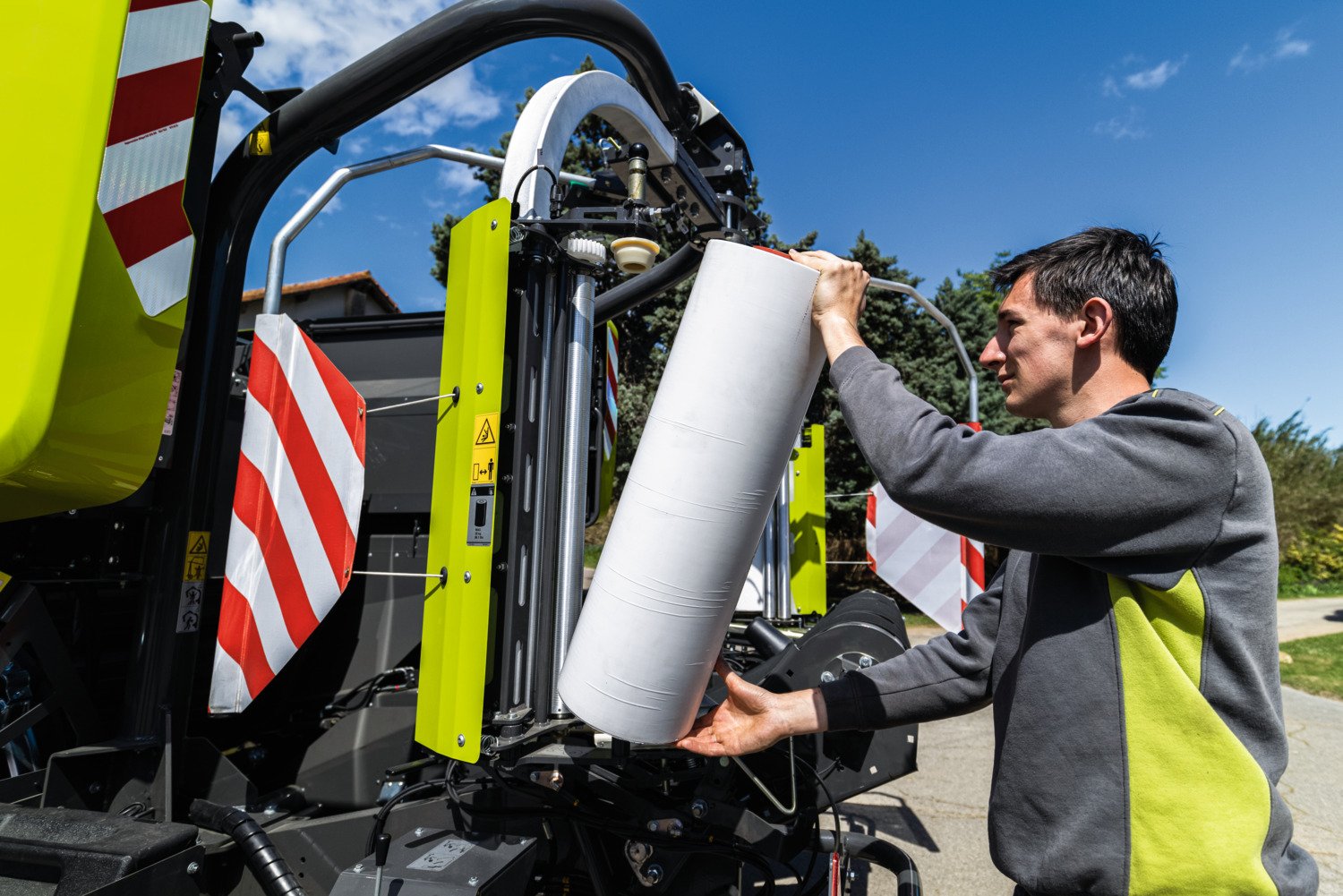
Claas Crop packaging
Bale quality depends on more than the machine producing it, with netwrap, twine and stretch film all playing a part in protecting the crop through handling, storage and feeding.
Claas offers a range of crop packaging products through Claas Harvest Centres, including Rollatex Pro netwrap, Quadotex and Baletex twine and Wrapex stretch film.
Distributed by Tama Farm Grown Solutions, the range covers both round and square baling applications, with a focus on strength, consistency and reducing the amount of packaging material required.
Rollatex Pro is Claas's netwrap option, available in 2,500, 3,150 and 3,800 m rolls.
The netwrap is designed to maintain consistent strength and coverage while providing longer roll lengths at a manageable roll weight, reducing the number of roll changes required during a day's baling.
Rollatex Pro also uses Claas's Bale+ technology to reduce the amount of plastic used per bale.
Claas says this can save 218 kg of plastic for every 5,000 1.7 m diameter bales using three wraps, compared with standard netwrap.
The manufacturing process produces zero waste and the rolls are packaged using post-consumer recycled material.
Several features are designed to make loading and using the netwrap easier. An asymmetrical zebra pattern identifies the correct direction for loading the roll and later unrolling the bale, while a warning stripe indicates when the roll is nearing its end.
An EnterNet tag assists with feeding a new roll into the baler and the specified roll length is a guaranteed minimum rather than a plus or minus average. Carry handles are also incorporated into the rolls.
Claas Covered is designed to maintain the width of the netwrap as it is applied to the bale, providing full coverage across its surface.
Maintaining that coverage helps preserve bale shape, reduce crop losses and make the finished bale easier to handle and store.
For square balers, Claas offers the Quadotex and Baletex twine ranges.
Quadotex has been developed for high-density square baling, including Claas Quadrant balers where high throughput and bale density place considerable load on the twine and knotting system.
The emphasis is on tensile strength and knot security to keep high-density bales intact during handling and storage.
Baletex is aimed at more conventional medium and large square baling applications and is also compatible with the Claas Quadrant range.
Longer spools allow more bales to be produced between twine changes, combining spool length with the strength required for standard baling applications.
The twine also incorporates UV protection for bales stored outside.
Claas says the Baletex design uses 25% less plastic per bale by producing a stronger, lighter twine. The Baletex Care manufacturing process also focuses on zero production waste and reduced energy use.
Completing the crop packaging range is Wrapex stretch film for silage bales.
Wrapex is a multi-layer blown film designed to combine stretch with strong adhesive properties, maintaining tack as the film is stretched during wrapping.
That combination is important in creating the seal needed for effective silage fermentation and protecting the crop once the bale leaves the wrapper.
Wrapex can be used with both round and square bale wrappers and is designed for a range of ensiled crops.
Together, Rollatex Pro, Quadotex, Baletex and Wrapex give Claas a crop packaging range covering the bale from formation through to wrapping, handling and storage.
The products are available through Claas Harvest Centres.
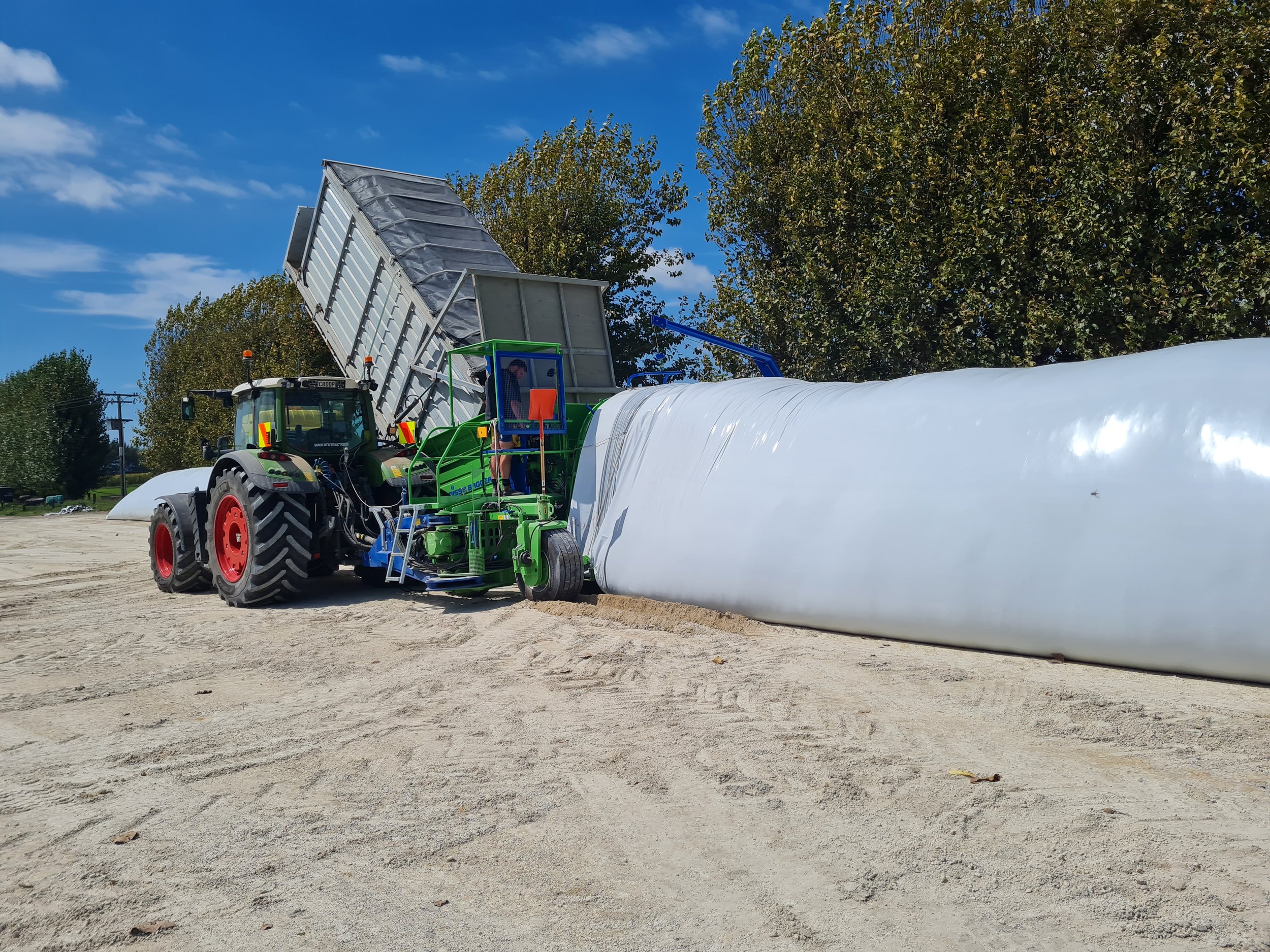
Webbline
Webbline offers a broad range of crop packaging consumables designed to protect supplementary feed through harvest, storage and feed-out.
Over more than 25 years, the company has sourced and tested products to determine what is best suited to New Zealand farming and contracting conditions. The current range includes products from manufacturers such as Budissa Bag, Cotesi, Mima Films and Rani, alongside Webbline’s own crop packaging products.
The range extends from bale wrap, netwrap and baling twine through to silage stack covers, grain and silage bags and temporary covers for hay and straw. With different crops, machinery and storage systems requiring different approaches, Webbline’s product specialists can help farmers and contractors select products suited to their individual operation.
Webbline holds crop packaging stock across its four branches in Hamilton, Feilding, Ashburton and Gore, supported by a range of delivery options. During the pressure of harvest, when running out of wrap, net or twine can quickly bring work to a halt, additional supplies can also be delivered using Webbline’s fleet of self-unloading trailers.
Webbline Bale Wrap combines puncture and tear resistance with a 70% stretch rating and tack structure designed to provide an airtight bale while reducing tails during wrapping in varying weather conditions. High UV stability also makes the wrap suitable for New Zealand conditions and for bales stored outside.
Webbline Supercover Netwrap is UV stabilised and designed to provide full edge-to-edge coverage of the bale. A colour-coded loading indicator assists operators when fitting rolls, and the netwrap is suitable for balers working in both baleage and straw.
Mimarap film
Mimarap is a triple-layered film manufactured from 100% virgin raw materials and has been used on New Zealand farms for more than 25 years. The film carries a 12-month guarantee against UV degradation, while extended-length rolls provide the puncture resistance of standard Mimarap with the ability to wrap up to 20% more bales per roll.
Net Replacement Film (NRF) has become another development in modern baleage production. Rather than applying conventional netwrap to bind the bale before wrapping, NRF uses film for the binding process, allowing the film to become part of the overall bale wrapping system.
Mimarap NRF is designed to provide high compression and hold the bale tightly after it leaves the chamber. Its compression memory helps maintain bale shape while the additional film layer contributes to the oxygen seal around the forage. Limiting oxygen ingress is important to the fermentation process and can help reduce the risk of mould and subsequent feed losses.
For contractors producing large numbers of silage bales, the combination of bale compression, film strength and consistent application makes NRF another option when the priority is producing dense, well-sealed bales while protecting the quality of the forage inside.
Rani
RaniWrap is designed to protect the nutritional value and quality of forage by limiting oxygen ingress into the finished bale. Its oxygen barrier technology is intended to reduce the potential for spoilage, mould growth and nutrient losses, while UV stabilisation provides protection for bales stored in New Zealand conditions.
RaniWrap Xtra Easy Pack provides longer roll lengths, reducing the number of roll changes required during the working day. For contractors and larger farming operations producing significant bale numbers, fewer stops to change film can contribute to improved hourly output.
RaniSilo Black/White silage covers use 150-micron, seven-layer construction and are manufactured from 100% virgin raw materials. The covers are designed to provide resistance to perforation and distortion while protecting the forage stored beneath them.
Another development in the range is the RaniSilo2 silage stack cover. Rather than using the traditional system of an oxygen barrier film beneath a separate black-and-white silage cover, RaniSilo2 combines both functions within a single seven-layer film.
Despite being the same thickness as a conventional silage stack cover, RaniSilo2 is designed to provide considerably greater protection against oxygen transmission while retaining the strength required for use over a silage stack. Testing cited by the manufacturer shows oxygen barrier performance up to 100 times greater than conventional covers, helping limit spoilage and support fermentation throughout the stack.
The single-sheet system also simplifies installation by removing the need to position and handle two separate covers. For farmers and contractors, this provides another option for improving the oxygen barrier over stored silage without adding another layer to the covering process.
Cotesi
Webbline stocks a range of Cotesi products, including X-Pand Netwrap and several baling twine options.
Cotesi X-Pand Netwrap features a double-weft construction designed to cope with higher bale pressures while maintaining coverage around the bale. The additional strength is intended to help protect bales during handling, stacking and transport.
The Cotesi baling twine range provides options for different square balers and can be used across silage, straw and hay applications.
Budissa silage and grain bags
Budissa Bag has more than 30 years of experience manufacturing bags for the temporary storage of maize silage and cereal grains.
The company’s bags are UV stabilised and manufactured from 100% virgin raw materials, with the objective of maintaining the quality of the stored crop while providing farmers with a flexible alternative to permanent storage infrastructure.
Performer hay tarps
With demand for flexible and temporary storage of hay and straw, Webbline has offered the Performer range of hay tarps for the past three years.
Performer tarps are manufactured from UV-stable woven polyethylene and use rot-resistant poly rope. They are supplied with the Super Cinch tie-down system, designed to provide water and wind resistance when covering stacks stored outside.
For farmers and contractors, crop packaging is ultimately the final stage in protecting the investment already made in producing supplementary feed. Bale density, oxygen exclusion, UV protection and resistance to physical damage all have a role in determining how well that feed reaches the animals when it is eventually required.
With products covering baled forage, silage stacks, grain and temporary bale storage, Webbline’s crop packaging range provides a number of options according to the crop, machinery and storage system being used.
For more information, contact Webbline on 0800 WEBBLINE (0800 932 254) or email sales@webbline.co.nz
Independent Wrap
Change is inevitable in agriculture and the industry continues to evolve as market conditions, operating costs and farming systems change. For Independent Wrap, that means continuing to look for products and practical solutions that respond to those changes while meeting the needs of contractors and farmers.
This season brings several new additions to the Independent Wrap range, including products trialled during the previous season. Those trials have provided useful feedback and helped identify products the company knows are well suited to New Zealand conditions.
The focus remains on providing a balanced range rather than assuming one product will suit every operation. Every business is different and seasonal conditions can quickly change what contractors and farmers require, so having a range of options provides greater flexibility when balancing performance, reliability and cost.
Among the new products for this season are two silage wrap lines, Ultra7 and BaleTec. Both will be available in 1,500 m and 1,900 m rolls, providing additional options at a time when contractors and farmers continue to face pressure from increasing operating costs.
The objective is to provide different price and performance options without losing sight of what the wrap ultimately needs to achieve. Silage represents a considerable investment by the time grass has been grown, cut, wilted, baled and wrapped, making reliable crop packaging an important part of protecting the feed inside.
BaleTec also introduces a different approach to packaging the rolls themselves. Rather than being supplied in conventional cardboard boxes, each roll is protected by a snug-fitting plastic sleeve that can be easily removed. For contractors working through large quantities of wrap during the season, that helps reduce the pile of cardboard packaging that can quickly accumulate around the operation.
Netwrap is another area where Independent Wrap has continued to develop its offering. Following positive feedback on the Top Net 1.23 m x 3,800 m product introduced previously, the company has developed X Net specifically with the requirements of New Zealand contractors in mind.
Available in a 1.23 m x 3,600 m roll, X Net features a reinforced centre designed to provide additional strength through the area where pressure on the net is greatest.
Instead of relying on the more traditional zig-zag arrangement of strands, X Net incorporates an X pattern, creating reinforcement in both directions through the centre of the net. The design is intended to provide good bale coverage while running smoothly through the baler.
Independent Wrap will also trial 1.25 m and 1.3 m widths during the coming season, providing an opportunity to assess demand for wider net options under New Zealand conditions. Contractors interested in either width are encouraged to contact the company as those trials progress.
Two new European Net Replacement Film (NRF) options are also joining the range this season, with both available in 1.28 m and 1.38 m widths. NRF provides an alternative to conventional netwrap, helping produce well-formed bales while adding an additional film layer beneath the silage wrap.
One of the options builds on Independent Wrap’s existing experience with NRF. The new range includes Fiber Tornado, a fibre-reinforced option trialled last season, providing additional strength while allowing a longer length of film on the roll. Together with another European manufactured NRF gives contractors and farmers further choice when moving from conventional netwrap to film binding.
Pit silage remains another important part of the crop packaging range. Independent Wrap continues to offer two levels of oxygen barrier, allowing customers to select an option according to the level of protection required and the economics of their individual operation.
Oxygen management is particularly important once a silage stack is sealed. The investment made in producing quality forage can quickly be undermined if air enters the stack during storage, making the choice of cover part of the wider discussion around protecting feed quality.
Offering two oxygen barrier options allows the differences to be considered alongside the cost of each system rather than treating pit cover as a one-size-fits-all product.
Independent Wrap is also expanding into some of the smaller products associated with crop packaging. A new repair tape will be introduced this season, providing contractors and farmers with another option for dealing with damage to wrapped bales. The tape can be torn to the required length without a knife, making repairs simpler when working around the yard or paddock. Territory managers will have samples available for customers wanting to assess the product themselves.
Behind the expanding range is Independent Wrap’s focus on remaining directly involved with the people using its products. Knowledge gained from contractors and farmers during the season helps determine which products are retained, developed or trialled for the following year.
As a 100% New Zealand-owned and operated family business, Independent Wrap also deals directly with manufacturers before supplying products directly to customers. The company sees that relatively simple supply chain as important in maintaining both value and service, particularly as contractors and farmers continue to scrutinise input costs.
The additions of Ultra7, BaleTec and X Net, alongside the two new NRF options, trials of wider netwrap and the new repair tape, broaden those choices for the season ahead.
Ultimately, crop packaging is about protecting the value already created in the paddock. Whether that crop ends up in a bale or beneath a pit cover, the objective remains the same: preserve as much of the feed quality as possible until the day it is required.
Further information is available from Independent Wrap territory managers or by calling 0800 4 U 2 WRAP.
ProAg
More bales between stops with Protect 5
For agricultural contractors, crop packaging has to do more than protect feed. It also needs to perform reliably when the pressure is on and every stop costs time.
Feilding-based ProAg Products supplies crop packaging products to farmers and agricultural contractors throughout New Zealand, with its range including products for baling and feed storage.
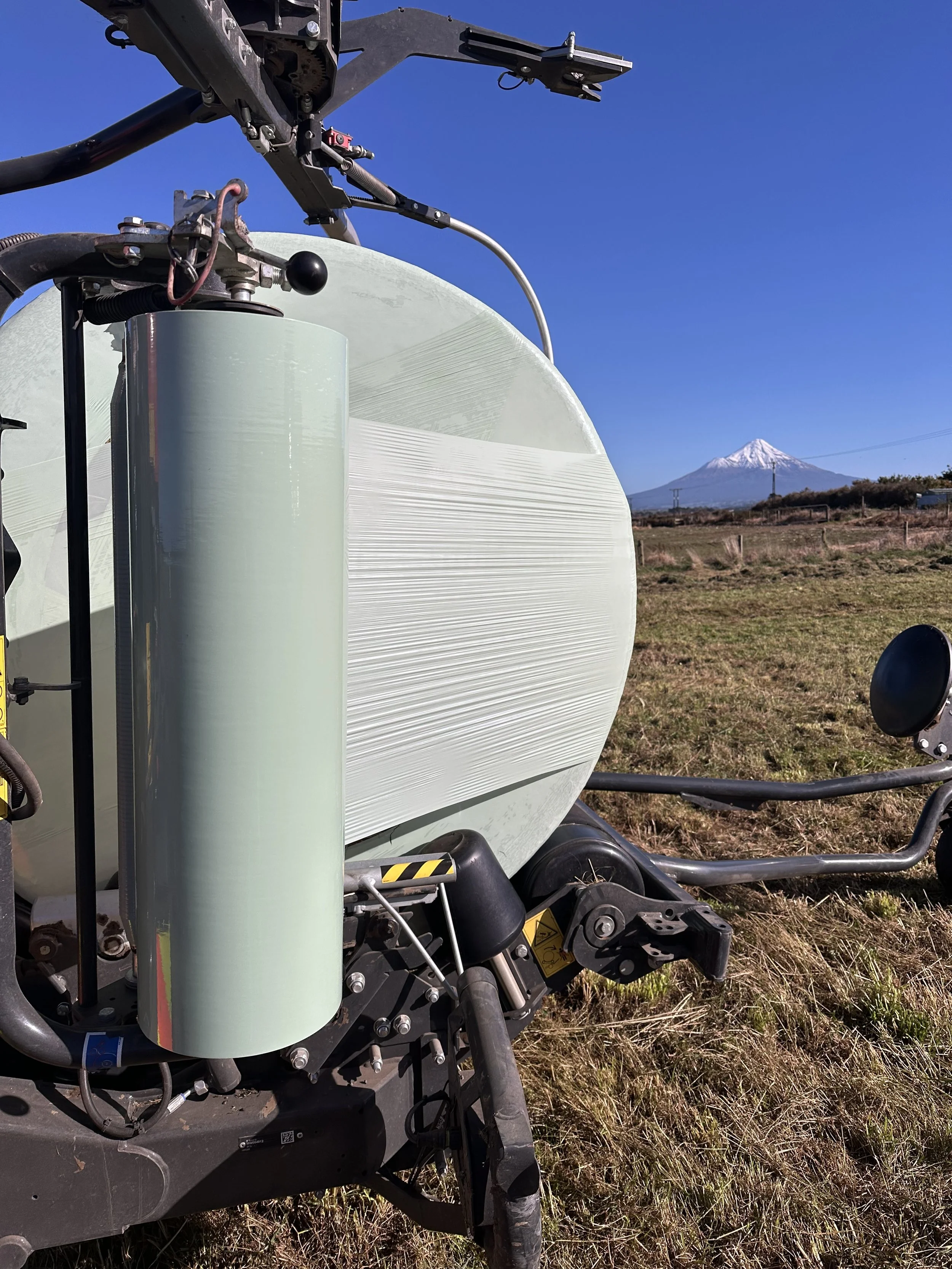
Among them is Protect 5, a five-layer, 23-micron silage film manufactured in Europe and supplied in 1800m rolls. The longer roll is designed to reduce the number of roll changes required during the working day while retaining the mechanical strength needed for wrapping, handling and storing bales.
Dannevirke agricultural contractor Scott Simmons of Simmons Ag Limited used Protect 5 last season and has purchased it again this year. For his operation, the most noticeable benefit has been the additional number of bales wrapped between roll changes.
“With the longer rolls, we’re getting around 50 bales before we need to stop, compared with about 42 previously,” says Simmons.
“It means fewer stops in a day and more time on the tractor.”
The additional capacity also means more bales' worth of wrap can be carried on the machine. During busy periods, reducing interruptions can help keep the baler and wrapper moving and increase the amount of productive time available during the day.
Simmons says Protect 5 has also compared favourably with standard-length film on price.
“The price is pretty comparable between the two, so we’re getting those extra bales out of a roll for a similar price,” says Simmons.
For a contracting operation, the value of silage film extends beyond the initial cost of each roll. The number of bales wrapped, time spent changing rolls and ability to keep working when conditions are suitable all contribute to the overall cost of the job.
Simmons says the longer roll has not created reliability issues, with Protect 5 performing well throughout the season. He could not recall experiencing tearing beyond occasional problems caused by a nick to a roll.
Protect 5 is also supplied without an outer cardboard box, reducing the amount of packaging that needs to be handled once the film has been used.
“There are no boxes to get rid of or recycle,” says Simmons.
For contractors working through large numbers of bales, these relatively small efficiencies can accumulate across a season. Fewer roll changes reduce downtime, while the longer rolls mean less packaging needs to be transported and handled for a given number of bales.
The light green Protect 5 film is designed to provide an oxygen barrier to support forage preservation during storage. It is available in 750mm-wide, 1800m rolls with a cardboard core.
For more information, contact ProAg Products on 06 323 4670 or visit wearparts.co.nz.