
Five generations of contracting keeps Rose Ag moving with Marlborough
Few contracting businesses can trace their history back through five generations, and fewer still have changed almost completely with the region around them while remaining on the same patch of ground.
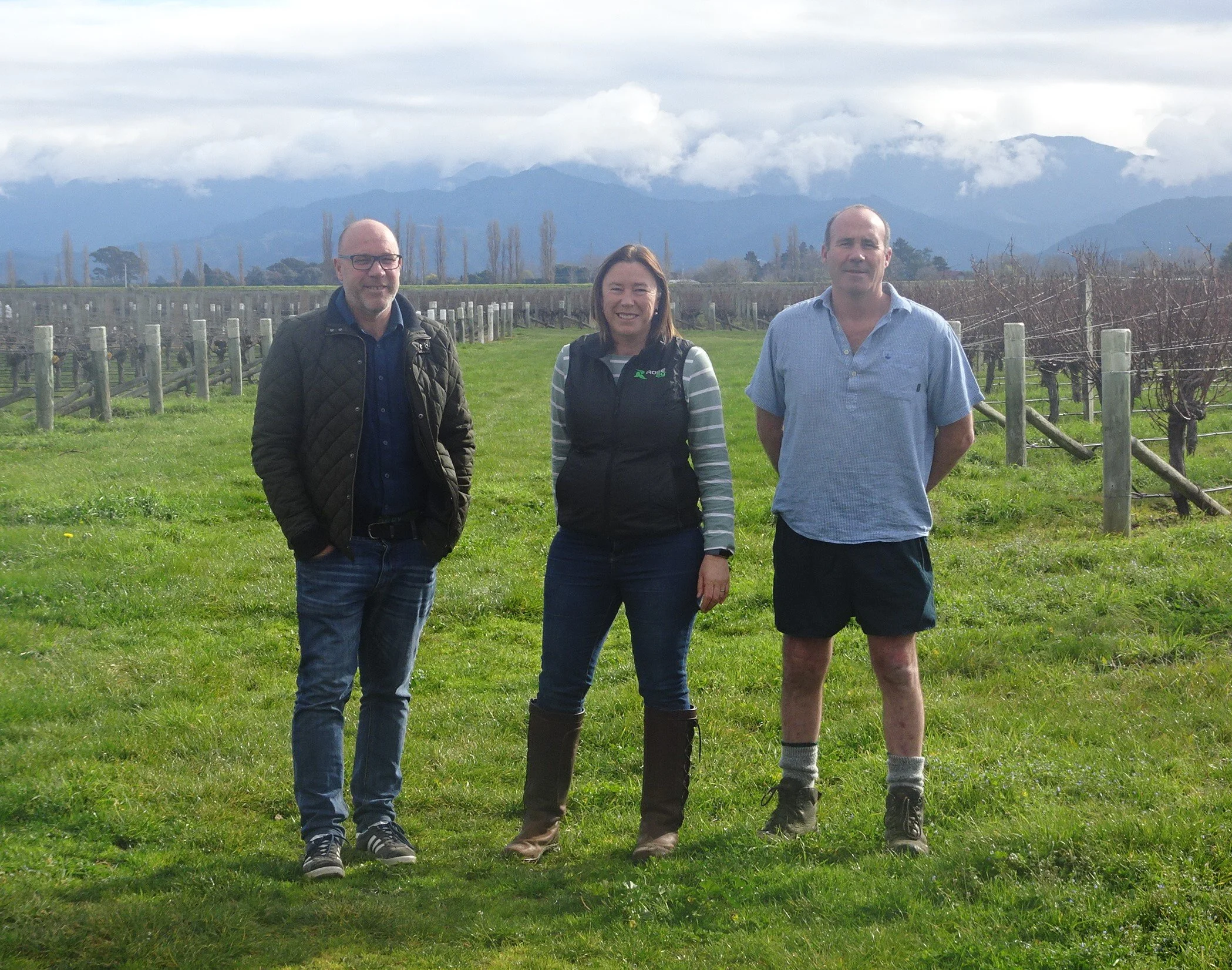
For Marlborough-based Rose Ag, contracting has been part of the Rose family story since horses provided the horsepower. Grain harvesting, conventional hay baling and ploughing eventually gave way to silage equipment, drilling and broadacre spraying. Lime and fertiliser spreading followed, before the rapid development of Marlborough's wine industry created an entirely different contracting opportunity.
Today the machinery may include GPS-equipped spreaders and Pellenc grape harvesters rather than horses and conventional balers, but Rose Ag remains a family operation based at St Leonards Road in Blenheim and is led by fifth-generation family members Tim Rose, Tracy Rose-Russell and Vaughan Rose.
It is a history stretching back to 1858, when John Rose arrived in New Zealand as one of Marlborough's early settlers. He purchased the family farm, Kegworth, in 1870 and acquired the St Leonards Road land where Rose Ag is now based in 1903. Contracting became part of the farming operation early on, initially using horses before mechanisation began changing what contractors could achieve.
By the 1930s, NES Rose Contracting was operating in Marlborough carrying out grain harvesting, conventional hay baling and cultivation work including ploughing. That combination of farming and contracting established a pattern the family has maintained in different forms ever since. Rose Ag has not simply operated machinery for other farmers and growers. Its own farming and, more recently, vineyard interests have given the family first-hand experience of many of the jobs it carries out for clients.
The modern company began taking shape in 1968 when David Rose took over the business. Rose Agricultural Ltd was incorporated that year and David continued expanding beyond the contracting work undertaken by previous generations. The company operated silage equipment and one of the area's early medium square balers before broadening its tractor work into drilling and broadacre spraying.
What happened next proved considerably more important to the future direction of the business.
Marlborough was beginning a transformation of its own and vineyards were becoming an increasingly important part of the region's productive landscape. Rather than remaining solely an agricultural contractor, the Rose family moved with that change.
David was among the first contractors in Marlborough to operate a mechanical grape harvester. In 1981 he imported a Chisholm Ryder machine from the United States after assessing the available options through Polaroid photographs. It is difficult to imagine buying such a specialised and expensive machine that way today, but the decision put the business into grape harvesting during the formative years of an industry that would ultimately reshape Marlborough.
That willingness to move early was significant. The family was not abandoning agriculture so much as recognising where its machinery and contracting experience could be applied next.
The relationship went deeper than contracting. The Rose family was also among the early Marlborough growers to plant vines during the early 1980s and today Rose Family Vineyards Limited, an associated family business, holds around 110ha of vineyards. Rose Ag's contracting activities and the family's own vineyard operation have consequently developed alongside one another.
That gives the business a slightly different perspective from a contractor working solely for outside customers. Machinery purchases, vineyard development techniques and operational decisions can be assessed on the family's own properties before that experience is carried into client work.
The contracting business has continued changing as a result. While agricultural work remains part of Rose Ag's background, its operations today include vineyard development and redevelopment, lime and fertiliser spreading, vineyard services, groundwork and cartage, alongside a scaled-back grape harvesting operation.
There is still a strong agricultural thread running through the business, particularly through spreading, but the machinery fleet reflects the specialised requirements of working among vines as much as it does conventional paddock work.
Spreading is one of the areas where that crossover is most obvious.
Rose Ag has been involved in the Marlborough spreading industry for more than 50 years and operates across both vineyards and pasture. The business is Spreadmark accredited and its spreading equipment is regularly tested, while operators are trained to Spreadmark standards. Rose Ag is also a member of the New Zealand Groundspread Fertilisers Association.
The fleet has been developed to cover quite different operating environments. Two 12-tonne feeder trucks can deliver product directly to spreaders while they are working, reducing the need to drop fertiliser on the ground during loading. A 6-tonne 4x4 spreader on flotation tyres handles vineyard and farm development work, including lime, dolomite and gypsum, while smaller 4x4 spreaders with 2.5-tonne capacity can operate in vineyard rows from 2.4m to 3m as well as lifestyle blocks, parks, reserves and individual farm paddocks.
For tighter vineyard situations, Rose Ag also operates a tractor-drawn narrow-row spreader suited to row widths from 2m to 2.2m and work on hills or in areas inaccessible to larger machines.
While the machinery has become more specialised, information about what the machine has done is increasingly as important as the application itself.
Rose Ag's spreading vehicles are GPS equipped and use computerised proof of placement, providing mapping and job records and allowing variable-rate spreading where required. The business also has capacity to temporarily store up to 200 tonnes of bulk fertiliser and handle one-tonne bags. For organic applications, it operates under BioGro requirements, with trucks cleaned before use.
That progression from simply putting fertiliser through a spreader to being able to document exactly where it went is indicative of how contracting has changed during the lifespan of the company. The customer is increasingly buying information and traceability alongside the machine and operator.
Grape harvesting has historically been a significant part of Rose Ag’s operation, although the business has scaled this side of its contracting work back in recent years. It remains part of the operation and places a different set of demands on the business, particularly because the contractor sits between grower and winery during one of the most time-critical parts of the season.
Rose Ag currently operates one Pellenc Optimum grape harvester, fitted with Pellenc's Selectiv Process sorting system, which destems harvested material before it leaves the machine.
A range of gondolas from four to 10 tonnes allows the harvesting system to be configured around individual vineyard and winery requirements. Tracmap GPS systems provide live information on machinery location and performance and generate completed job data.
But the harvester itself is only one component of vintage.
Rose Ag maintains a support crew providing around-the-clock coverage during harvest, coordinating bookings between growers, wineries and the harvesting team. Cartage can also be incorporated so fruit moves from the vineyard through to the winery as part of the same operation.
Tracy Rose-Russell has been central to that coordination for more than two decades. A University of Canterbury Bachelor of Commerce graduate, Rose-Russell began scheduling staff and machinery during grape harvest in 1999. After returning from overseas travel in 2001 she joined Rose Ag permanently and is now operations manager, overseeing client requirements, staff and the organisation of work across the business.
The significance of that role is easy to underestimate when looking at a machinery fleet. During vintage, several moving parts have to come together at the right time. A harvester has to be available when the grower and winery want the fruit picked, operators and support staff need to be in place and transport has to keep harvested fruit moving. A breakdown or scheduling delay can affect considerably more than one machine.
Rose-Russell's experience now stretches across more than 25 vintages, giving the fifth generation of the family direct involvement in one of the contracting activities that her father helped pioneer in Marlborough four decades earlier.
Vineyard redevelopment has become another substantial part of Rose Ag's workload. As Marlborough's vineyards have matured, contracting is no longer solely about establishing new blocks. Existing vineyards need to be removed, reconfigured or replanted as vines age, varieties change or owners reconsider how a property should be laid out.
Rose Ag works across both small and large vineyard redevelopment projects and can either carry out individual stages or manage a project more broadly. Its work extends from planning and vine lifting and removal through to groundwork and fertiliser spreading. Where specialist work is required, the company works with other contractors to deliver a completed redevelopment.
Again, the family's own vineyard holdings have played a role in developing that capability. Experience gained redeveloping its own properties gives Rose Ag an opportunity to assess the practical and financial implications of different approaches from an owner's perspective rather than treating redevelopment simply as another contracting job.
That capability has become particularly relevant as Marlborough's wine sector matures. Tim Rose was part of the 2026 WinePro programme discussing immediate decisions facing vineyard businesses, where his perspective was specifically around vineyard exit and reconfiguration strategies.
Tim's route back into the family business was considerably different from that of a conventional agricultural contractor.
Originally trained as a valuer, he became registered in Blenheim and worked across residential and commercial property as well as vineyards and wineries. After working in London, he moved to Dubai in 2004 and spent 14 years there, including leading a real estate property fund that eventually listed on the Nasdaq Dubai Exchange.
He became more actively involved with Rose Ag after returning to New Zealand in 2018. Tim now combines his role in the family business with governance and advisory work, including serving on the board of New Zealand Winegrowers and as chair of Seasonal Solutions, an RSE business.
That property and governance background adds another dimension to a family business that has increasingly had to make decisions around substantial vineyard assets as well as contracting machinery.
Vaughan Rose provides another part of the fifth-generation leadership, with his involvement closely associated with the practical contracting and machinery side of Rose Ag. The continued growth and specialisation of the fleet recently created a fairly straightforward problem: the machinery had outgrown the storage available to it.
For years some equipment had been stored in leased premises in town, while an older barn on the family property no longer provided the height or space required by modern machinery.
Rose Ag subsequently invested in a new clearspan machinery shed, providing a 20m by 24m main structure with a 6m by 20m lean-to. The project was about more than simply putting another roof over equipment. Specialist grape harvesting and contracting machinery represents a considerable investment and much of it spends part of the year out of work, making suitable off-season storage increasingly important.
“It was time to bite the bullet; it was time to move forward and actually have a decent shed for storage that was rodent-proof as well,” says Rose.
It is a small comment in the context of a business stretching back five generations, but it illustrates one of the recurring themes in the Rose Ag story. Each generation has had to decide when the old way of doing something has run its course and investment is needed for the next stage.
For David Rose, one of those decisions involved ordering a grape harvester from America after looking at Polaroid photographs. For the current generation it can mean investing in GPS, variable-rate application, modern harvesting technology, specialist vineyard machinery or simply constructing facilities capable of looking after an increasingly valuable fleet.
The same adaptability can be seen in the breadth of work Rose Ag undertakes across its contracting and spreading operations. Vineyard services include trimming and leaf plucking, mechanical shaking, mowing and mulching, groundwork and post replacement.
The company's cartage fleet supports both its own operations and outside work, with trucks capable of carrying fertiliser, lime and grapes along with flat-deck and bin work. Water tanks from 11,000 to 15,000 litres provide another option for vineyard water cartage.
What ties those services together is not that they require the same machinery. They don't. It is that they are jobs required by the farming and vineyard businesses Rose Ag works alongside.
That is perhaps the biggest change from the contracting operation that existed at Kegworth in the 1930s. Then, grain harvesting, hay baling and ploughing reflected what surrounding farms needed. Today grape harvesting, vineyard redevelopment, precision spreading and specialised vineyard services reflect what modern Marlborough requires.
The underlying contracting principle is remarkably similar.
There is also continuity in the relationship between owning land and contracting for others. Rose Ag's associated vineyard business means the family remains exposed to the same seasonal conditions, operating costs and production decisions as many of its customers. With more than 100ha of family-owned vineyards, contracting decisions are being made alongside decisions about its own productive land.
That matters when considering the longevity of the operation.
Plenty of contracting businesses have disappeared as the work they were established to perform changed or ceased to exist. Rose Ag's response has repeatedly been to move with the productive base around it. When agriculture mechanised, the family mechanised. When contracting moved beyond harvesting and cultivation, the business added drilling, spraying and spreading. When vines began replacing parts of Marlborough's traditional farming landscape, it invested in grape harvesting and eventually vineyard services and redevelopment.
In 2019, Tim, Tracy and Vaughan were recognised with a New Zealand Century Farm award marking more than a century of the family farming at Kegworth. By then the business bearing the Rose name looked very different from the one their forebears had operated with horses, but the connection to the land and contracting had remained.
Rose Ag itself has now been incorporated for more than half a century, while the family's contracting history stretches considerably further back.
There is something fitting about a business that started with grain harvesting having gone on to make grape harvesting such a significant part of its contracting history. Both are seasonal jobs where machinery capacity, timing and reliability determine whether a contractor delivers when the customer needs them. The technology has changed almost beyond recognition, but the pressure on the operator to get the job done has not.
For Rose Ag, the ability to keep changing has arguably been as important as any individual machine it has bought.
Five generations after John Rose established the family's place in Marlborough, Tim Rose, Tracy Rose-Russell and Vaughan Rose are running a contracting operation shaped by a region their family has watched transform around them. The horses, conventional balers and ploughs have largely disappeared, while grape harvesters, vineyard equipment and GPS-controlled spreaders have taken their place.
But Rose Ag remains on St Leonards Road, still farming, still operating machinery for other landowners and still adapting the business around what Marlborough produces.
After more than a century of contracting, that ability to change without losing sight of where the business came from may be the most enduring part of the Rose family story.