
A Review of - Maize and Fodder Beet Equipment
Maize and fodder beet remain crucial crops in New Zealand agriculture, providing reliable dry matter yields to fill feed gaps through winter. Both crops require true precision at sowing and harvest, with dedicated planters and specialist machinery delivering the best results. In this feature we look at the latest maize and beet technology available to contractors.
AMAZONE
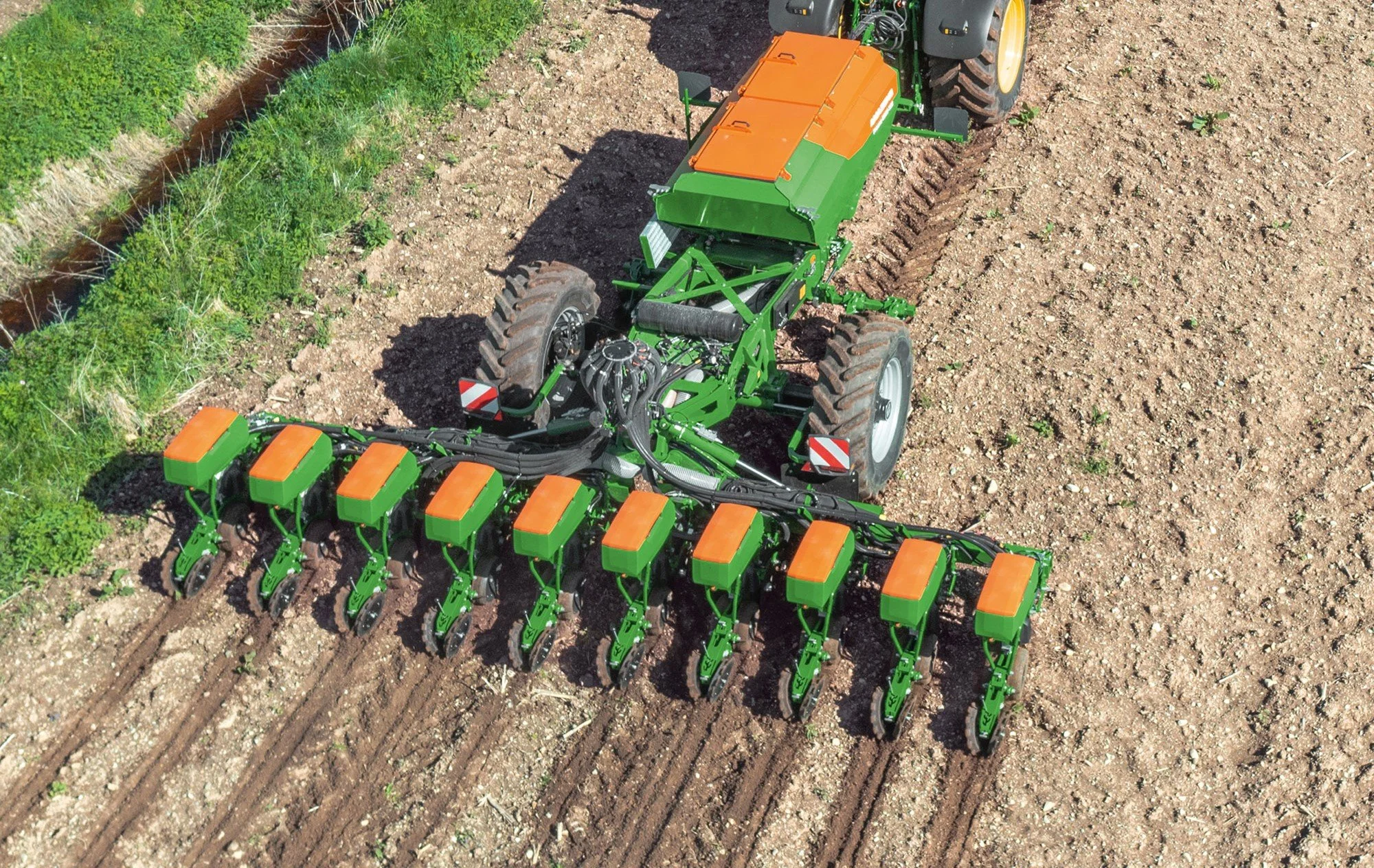
Amazone has introduced the new Precea 7500-TCC precision air seeder, featuring a 3,000-litre hopper and a 7.5-metre working width. It’s available in two versions, mirroring the design of the Precea 6000-TCC with its 6-metre working width. Taking seeding machinery to new levels with leading star clearers, twin tyres, and CurveControl intelligence, the Precea 7500-TCC is now being demonstrated across New Zealand.
The 7500, with its 850-litre central seed hopper and Central Seed Supply (CSS) system, stores seed centrally and feeds it to individual sowing units as needed. Centralised filling via Big Bags and the generous hopper capacity make it a high-performing option for large farms and contractors covering extensive areas. For smaller setups, Amazone offers the Precea 7500-TCC with 70-litre seed hoppers on each sowing unit. These are ideal for smaller blocks requiring frequent seed changes or variety trials.
Amazone will extend the new features of the Precea 7500 across its other trailed precision seeders for the coming spring season. Key innovations include leading star clearers, twin tyres, CurveControl intelligence, and FertiSpot fertiliser dosing technology.
The leading star clearers come in manual or pneumatic adjustment options and are mounted in front of the fertiliser and seed openers to prevent organic matter pressing into the seed furrow. This keeps the seedbed optimal and the furrow clean and precise. The clearers’ own weight and wide guide rollers provide stable guidance and consistent clearing. Manual versions adjust with a tool and lock via a quadrant system, while pneumatic versions allow central adjustment from the implement and can be deactivated as needed. Pneumatic pressure control maintains smooth operation at high speeds.
For 2025 spring, Amazone has equipped trailed precision air seeders with twin tyres on models with narrower row spacings of 45 cm and 50 cm. The four tyres (270/95 R44) run precisely between seed rows, ensuring uniform sowing conditions for crops like oilseed rape, beet, and soya. This method confines soil reconsolidation between rows, keeping the seed zone perfectly conditioned for emergence.
CurveControl is an intelligent system that uses an electric metering drive on each row to maintain accurate seed spacing across the full working width, even on bends. It ensures optimal seed placement and even plant spacing, improving nutrient access and crop uniformity. The custom software harmonises machine and driver operation for accuracy and ease of use.
FertiSpot is Amazone’s latest fertiliser dosing system for the coupled fertiliser coulter, available on trailed Precea models and future mounted versions. It delivers fertiliser either directly under the seed or between seeds in precise portions, saving up to 25% of usual under-root fertiliser without yield loss. Concentrating fertiliser beneath maize seeds ensures immediate availability, allowing reduced rates with maintained performance.
FertiSpot is integrated into Isobus software and adjustable from the tractor cab, letting the driver choose spot mode, multi-spot mode, or band application. For instance, spots can be placed between beet seeds to prevent root scorch, or multiple small doses can be applied beneath oilseed rape to boost early nutrient availability.
These innovations mark a significant step forward in precision seeding and nutrient management, offering real efficiency gains for contractors and growers. The combination of intelligent control, adaptable hardware, and refined seed and fertiliser delivery gives the Precea 7500-TCC versatility across New Zealand’s varied farming systems.
To see the Precea in action this spring, contact your local Claas Harvest Centre for a demonstration.
Claas Jaguar
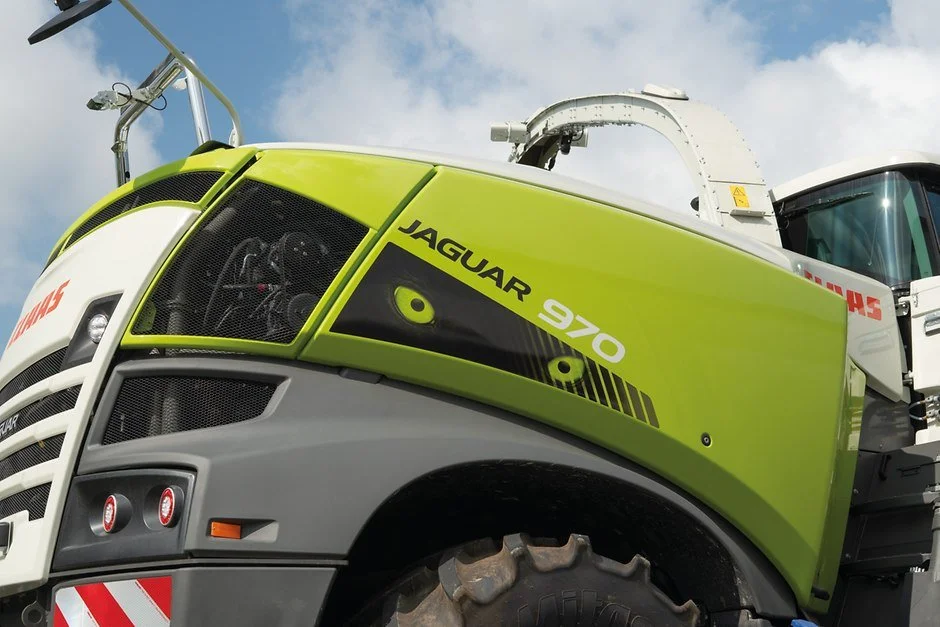
Claas is kicking off the next harvest season with a new level of precision and performance through its Green Eye equipment package for the Jaguar 900 and 800 series, a special edition designed to deliver maximum comfort, top chopping quality and reduced wear while keeping the operator firmly at the centre of the experience. The package brings together premium features such as the high grade crop flow arrangement with the carbide shear bar, a fully equipped cab and a range of performance enhancing solutions that collectively aim to lift throughput and consistency across long working days.
For the Jaguar 900 the Green Eye specification goes even further with the inclusion of the V Flex chopping cylinder that offers a wide range of cutting length variability while also extending service life, matched with a variable hydrostat front attachment drive that helps operators tailor their setup to changing crop conditions. Customers working predominantly in grass can also opt for a two stage front attachment drive in conjunction with the Pick Up to extract even more performance from the system. Machines fitted with the Green Eye equipment are easy to recognise thanks to distinctive decals on both side panels and on the cab door which make the special edition stand out in the paddock.
While the Green Eye package marks an upgrade in comfort and crop flow, Claas is also introducing a set of innovations for 2025 and 2026 that push the Jaguar range deeper into smart automation. The first of these is Cemos Auto Knife Condition for the Jaguar 900, the first production ready assistance system designed to monitor knife wear on the chopping cylinder and trigger grinding only when genuinely required rather than at predetermined intervals. The system uses two reluctance sensors mounted above the crop channel which track knife geometry using a static magnetic field and remain safely outside the crop flow. The operator selects the degree of sharpening and grinding strategy through the Cebis terminal and the system then notifies the driver as soon as the knives should be ground, meaning grinding occurs earlier in abrasive crop conditions and later in periods of lighter wear. This keeps forage quality and chopping efficiency consistently high while significantly extending knife life and reducing fuel consumption. In addition the system enables area specific documentation of knife wear in Claas Connect which allows contractors to itemise wear related costs and refine their upstream processes accordingly.
Jaguar 900 models fitted with a Corncracker now add another layer of intelligence through kernel processing analysis which effectively puts a laboratory in the operator’s pocket. Using the Claas Connect app, the driver can capture an image of a chopped sample placed in the one litre quality cup on a blue tray and obtain a corn silage processing score generated by AI based software. These results allow immediate fine tuning of the machine during harvest and provide laboratory grade accuracy without the delay or cost of external testing.
Following its introduction on the newest Jaguar 1000 the latest generation Nutrimeter NIR sensor is now available on both the Jaguar 900 and 800. The sensor measures dry matter and key ingredients such as starch, crude protein, crude fibre and sugar directly in the paddock enabling precise silage additive dosing, automatic chop length adjustment and highly accurate yield mapping. The goal is simple yet crucial: consistent forage quality regardless of dry matter variation and optimum compaction in the stack. The Nutrimeter is designed as an Isobus device which makes it easy to move between machines and the data it collects is stored and analysed alongside Jaguar machine data in Claas Connect. Live yield mapping through the Cemis 1200 is planned from 2026 which will give contractors and farmers instant access to spatial yield variation for better planning and management.
A new tyre pressure control system for the steering axle will also be introduced for Jaguar 900 and 900 Terra Trac models from the 2026 product year. Using a three line layout, the system delivers faster inflation times with strengthened reliability which results in gentler ground contact and improved traction in all conditions. As with the existing front axle system, the changeover from road to field pressure and back again remains automatic and individual pressure settings can be saved in Cebis ahead of time.
Together these updates reinforce the position of the Jaguar range as one of the most advanced forage harvesting platforms available. Claas has not only focused on raw power and throughput but has pushed automation and operator assistance into areas that reduce wear, save fuel, protect soil conditions and improve forage quality. For contractors working under narrow weather windows and high pressure seasonal demand, the combination of the Green Eye package and the new Cemos and Nutrimeter technologies creates a machine that is easier to run, smarter in the field and better suited to the environmental expectations that now shape modern forage harvesting.
Kverneland
Kverneland’s Geoforce system is now available on all SX models of the Optima range, offering on-the-go automatic pressure control for an even sowing depth in precision seeding. Short time windows, variable weather and soil conditions as well as high workloads require maximum efficiency, and contractors and farmers are increasingly asking for sowing technology that offers automatic adjustments for optimal performance, precise seed placement and maximum user comfort.
An even germination, field emergence and crop development increase the efficiency of fertilisation, weeding and harvesting which leads to higher yield quality and quantity. Kverneland Optima with Geoforce delivers precise and efficient operation with comfort as each individual Optima sowing unit is automatically pressurised, adjusting to changing soil conditions or forward speeds on the go. The automatic constant pressure control ensures optimal seed placement at an even seed horizon which results in uniform seed germination and field emergence, and studies with field trials under various conditions show that an even seed horizon has a significant influence and ensures higher yields.
Smaller seeds like rape, which need a shallower sowing depth, benefit greatly from the release option of Geoforce, and the system also prevents the bulldozing effect or the formation of ridges. Developed for precise seed placement in changing field conditions, Geoforce automatically adjusts the row pressure in real time with each sowing unit monitored individually and regulated on the go to ensure a constant downforce or press release for a uniform seeding depth even across compacted areas such as wheel tracks or tramlines.
“Geoforce takes the guesswork out of precision sowing,” says Constantin Homann, Product Manager for Precision Seeding at Kverneland Group. “It improves efficiency and reduces operator workload. Accurate seed placement at an even sowing depth—especially for smaller seeds like rape seed—will ensure an even germination, field emergence and crop development for high yields.”
Soil conditions can vary widely across a field, and while light soils need minimal pressure, heavier soils require more force for proper penetration. If the pressure is too low, there is a risk of furrow collapse and inconsistent seeding depth, while excessive pressure can cause sidewall compaction which might hinder root development and makes it more difficult to close the furrow.
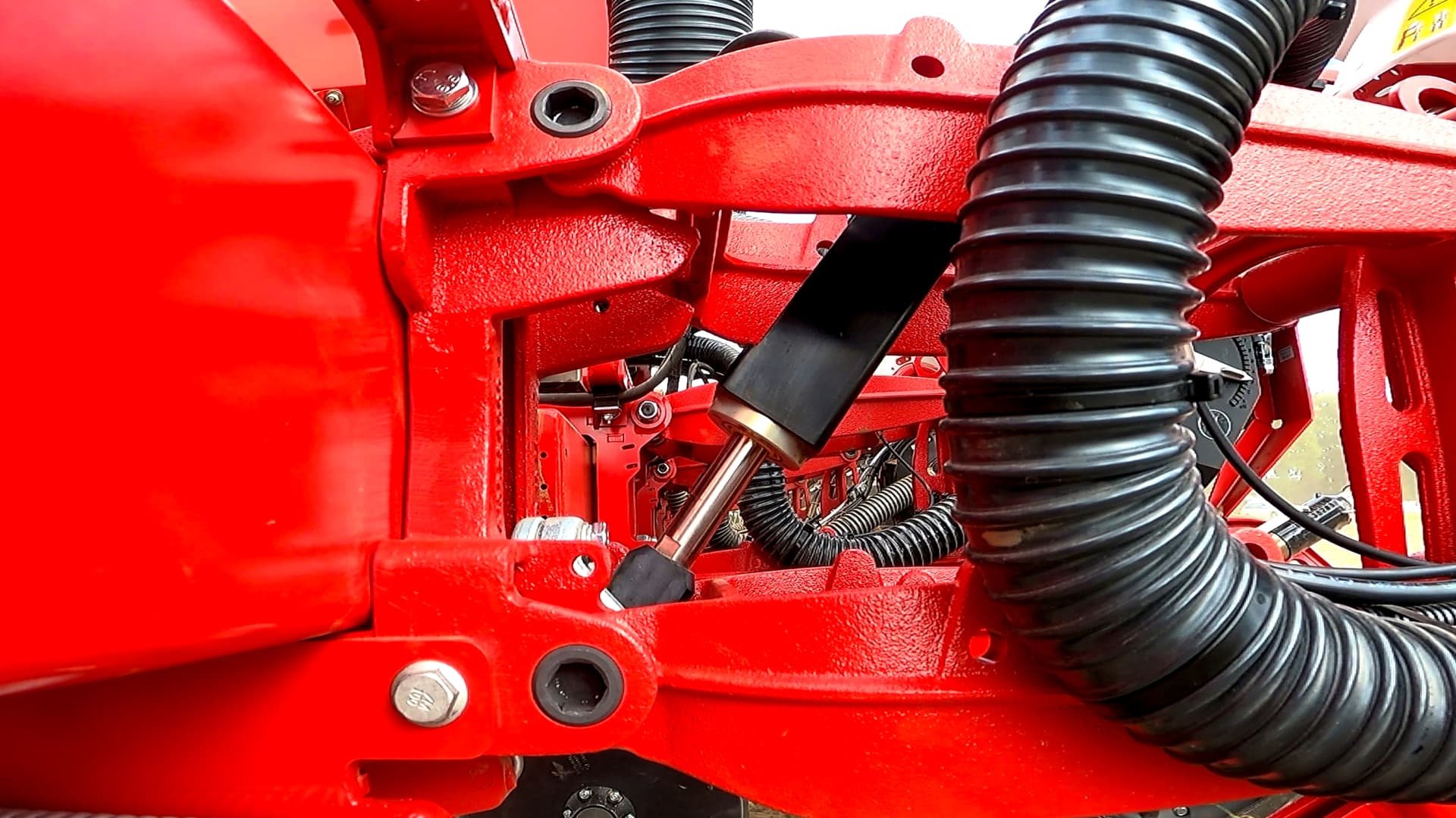
At the core of Geoforce is a smart sensor system and double acting hydraulic cylinder that automatically adjusts downforce or releases pressure row by row. The result is no more bulldozing, fewer weeds, less seed loss and improved performance at higher speeds. It lowers wear on components, reduces fuel use and supports more sustainable farming by enabling more targeted applications and a complete lifting of one or more rows is also possible when working on headlands or odd-shaped fields or when creating tramlines.
After a successful initial rollout in 2024, Kverneland is now making Geoforce available across its full Optima SX precision drill range. Farmers and contractors can now benefit from this fully automated Isobus compatible solution regardless of their chosen configuration, so speak to your nearest Power Farming for more information.
Power Farming
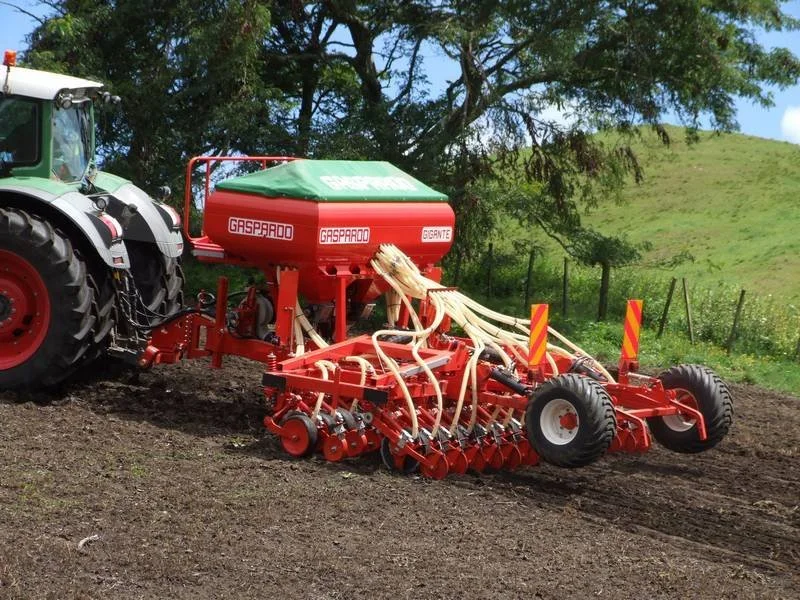
In an age when every hectare, every litre of fuel and every minute in the field matters, arable operators and large-scale contractors are turning to machines that lift efficiency, maintain soil health and deliver reliable performance across a demanding season. The Gaspardo Gigante Pressure direct drill falls firmly into that category, bringing together heavy-duty engineering, strong penetration, minimal disturbance and user-friendly technology at a time when New Zealand farmers are under pressure to sow faster, reduce costs and protect soil structure.
Across the country more growers are moving toward systems that require fewer passes and offer better accuracy in difficult conditions, and early users of the Gigante Pressure have been quick to notice the gains. For contractors covering large areas or juggling tight windows between weather changes, those kinds of efficiencies are transformative. Lower fuel burn, less tyre wear, fewer passes and better moisture retention all stack up across a long season.
A major strength of the Gigante Pressure sits in its ability to maintain consistent penetration in tough or variable soils. The disc openers deliver strong downforce to break into hard or compacted ground, pushing through residue and placing seed at a uniform depth even when the surface is uneven or crusted. For contractors working between stony flats, heavy silt loams and rolling dryland paddocks, the reassurance that each row unit can do its job without constant adjustment is a genuine advantage. The pressurised dual hopper adds another level of efficiency, allowing operators to sow seed and fertiliser simultaneously and cut out extra passes, while placing nutrients exactly where the crop needs them.
Durability has clearly been a priority in the machine’s design. The frame, linkages and pivot points have been strengthened to withstand long hours and heavy workloads, and that rugged construction will appeal to contractors who expect their gear to absorb punishment without compromising performance. Those who run mixed fleets or who frequently shift between implements will also appreciate the machine’s straightforward servicing, with centralised greasing points, sensible layout and a clean overall design that makes daily checks quick and simple.
Ease of use has also been brought to the forefront. Isobus compatibility means operators can run the drill directly through the tractor’s screen rather than installing additional monitors, reducing cab clutter and making it easier for seasonal staff or relief drivers to get comfortable with the system. Simple folding mechanisms and manageable transport widths make road movements straightforward, and the machine’s low centre of gravity gives a stable, balanced ride even when working across rough terrain or towing fully loaded.
For contractors and large farms, the numbers behind the Gigante Pressure’s performance are compelling. Time savings convert directly into fuel savings and reduced labour costs, while the long-term benefits of less soil disturbance, improved soil biology and better moisture retention flow through the rest of the rotation. Many operators pursuing reduced-tillage or regenerative approaches have found the drill a good fit for their systems, noting that paddocks sown with it often retain structure more effectively and recover faster after wet spells. That broader improvement in soil health supports stronger establishment, better resilience and ultimately better yields.
From a practical, day-to-day perspective, reliability underpins the machine’s appeal. Contractors need gear that starts every morning and keeps moving until the weather closes in, and the Gigante Pressure has been engineered with that in mind. With a choice of working widths and row configurations available, it can be matched to the size of the operation, the type of tractor available and the kinds of rotations being run. Whether drilling pasture, cereals or brassicas, the machine maintains accuracy, consistency and a clean well-formed slot that supports confident establishment.
Support on the ground is another essential piece of the puzzle, and the drill’s strong dealer backing in New Zealand ensures operators have access to parts, service and advice throughout the season. When weather windows narrow and downtime becomes costly, that reassurance matters. A machine of this calibre is an investment in both productivity and resilience, and reliable support helps protect that investment across its working life.
In the end the Gigante Pressure direct drill offers exactly what modern New Zealand arable operations are seeking: a combination of speed, accuracy, toughness and thoughtful design that fits the realities of busy contracting seasons. It is not simply a machine that drills seed; it is a tool that helps reduce passes, lower costs, cut fuel use, protect soil and deliver a more consistent result across a wide range of conditions. For contractors and farmers wanting to bring together performance and practicality in a single package, it stands as a compelling option for the seasons ahead.
Ag & Civil Machinery
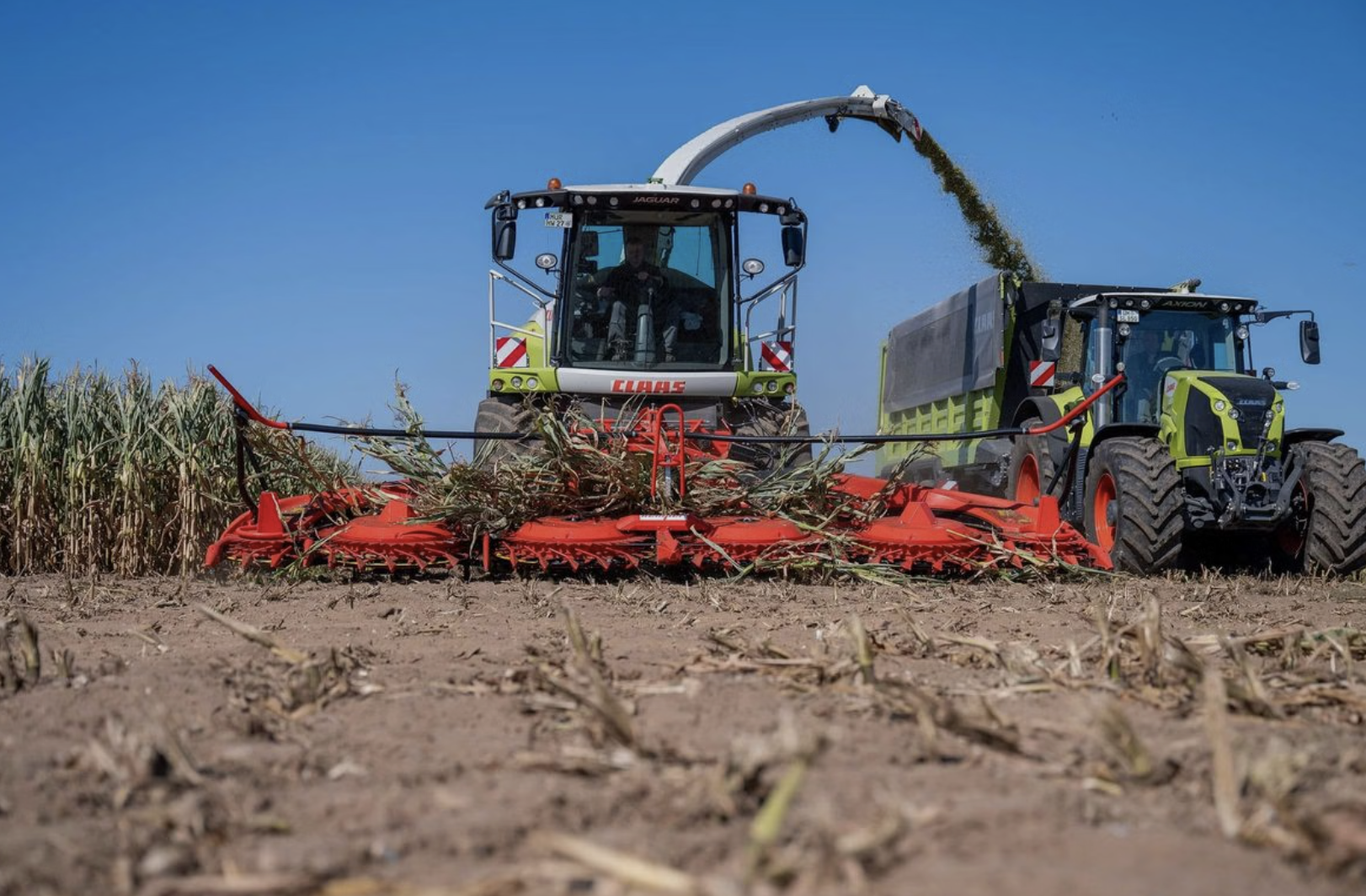
Kemper maize headers
Reliability and versatility are the hallmarks of the Kemper 400 Pro Series maize headers, designed to help contractors and growers tackle the full range of New Zealand conditions. Available here in the 460 Pro, 475 Pro and 490 Pro models and backed by a full three-year factory warranty, these German-built headers combine high-speed cutting precision with robust engineering and the kind of attention to detail that has made Kemper a worldwide front runner for forager headers and it is easy to see why once you look closely at how the 400 Pro Series has been developed.
At the heart of each model is a row-independent, big-drum harvesting system that ensures a consistent crop flow whether the maize is standing tall, tangled, or flattened by weather. The 460 Pro covers a working width of six metres, the 475 Pro extends that to seven and a half and the flagship 490 Pro reaches a full nine metres for high-acreage work. All three are engineered for a smooth transition of material into the forager, with identical-sized feed drums and a cross-feed channel that widens toward the centre to eliminate bottlenecks and ensure even distribution across the chopping unit. That even feed is crucial to maintaining uniform chop length and feed quality for dairy or livestock operations, one of the design goals that set the Pro Series apart from the earlier Plus Series.
Kemper’s engineers have re-worked almost every aspect of crop intake. The new tooth geometry on the gatherer drums holds and latches plants more positively, reducing losses and keeping throughput steady even in down crops. Leaner divider points and new guiding sheets between the rotors improve crop guidance and prevent accumulation in narrow rows or under wet conditions, a common problem in heavy New Zealand maize. The open-frame design allows residue to fall away rather than wrapping or clogging, keeping crop flow clean and reducing downtime. Inside the header the high-speed saw-type rotors use replaceable tooth segments with dedicated cleaner fingers, maintaining a sharp cut across the full working width and enabling trouble-free harvesting even when crop moisture varies from one paddock to the next.
Operators often talk about the 400 Pro Series as a set of machines that simply get on with the job. The gearboxes are oil-immersed with integrated torque limiters, while the transmission layout minimises transition points for smooth power delivery and long component life. Each header benefits from Kemper’s heavy-duty wear package, which includes Hardox-lined feed drums and strengthened divider points to lower the overall cost of ownership. A new knife-rotor speed profile extends the service life of cleaners and blades without compromising cutting quality, and redesigned removable drum covers make cleaning easier when working in sticky or dusty crops. These small improvements add up to real-world gains in reliability and time saved when the weather window is short and the tonnes per hour are high.
For contractors chasing efficiency, the Pro Series introduces a four-speed MultiSpeed gearbox that lets the operator adjust header speed to suit the chosen chop length or crop condition, with or without variable drive. The low-profile design of the 460 Pro and 475 Pro allows gentle handling of lodged maize, drawing plants onto the large feed drums without crushing or pushing them ahead of the machine, which means fewer reverses and less operator fatigue. Active header-height and lateral-float sensors maintain an even cutting plane over uneven ground, while the shallow approach angle reduces soil intake and contamination in the silage pit. In particularly dusty or brittle crops the sealed drum layout and strong suction effect keep material moving, preventing losses and maintaining feed consistency.
For those who must deal with stalk borer pressure, the 460 Pro StalkBuster variant integrates Kemper’s patented stubble-shattering system beneath the main frame. Each flail unit floats independently, following ground contours through an air-pressure system to smash stubble before the forager tyres pass over it. The design requires less than four horsepower per row and adds only around 600 kilograms to the header while maintaining a transport width of just 3.3 metres. It is an elegant solution that not only tidies the paddock but directly reduces the overwintering of borer larvae and potential yield loss in the next season.
Practicality on the road has not been forgotten. All Kemper 400 Pro Series headers fold quickly to around three metres transport width (3.3 metres on the 475 Pro), with automatic lighting and excellent visibility from the cab. The low centre of gravity makes folding safe even on slopes and optional auxiliary chassis kits can be hitched or unhitched without leaving the seat. In the paddock, the electro-hydraulic flotation system gives excellent ground-hugging ability for a uniform stubble and optional rigid lifter tips make light work of flattened maize or multi-crop mixes.
Perhaps what best defines the Kemper 400 Pro Series is how it balances strength with finesse. The build quality is unmistakably German: a combination of heavy-duty square-tube frames, precision machining and design born from more than a century of engineering in Stadtlohn. Yet every refinement, from the cleaner crop flow to the improved push-bar visibility and simplified component range, is aimed squarely at making life easier for the contractor in the cab. Add in the three-year factory warranty now offered on all New Zealand models, and it becomes a hard package to overlook for anyone wanting a header that performs season after season with minimal fuss.
4Ag
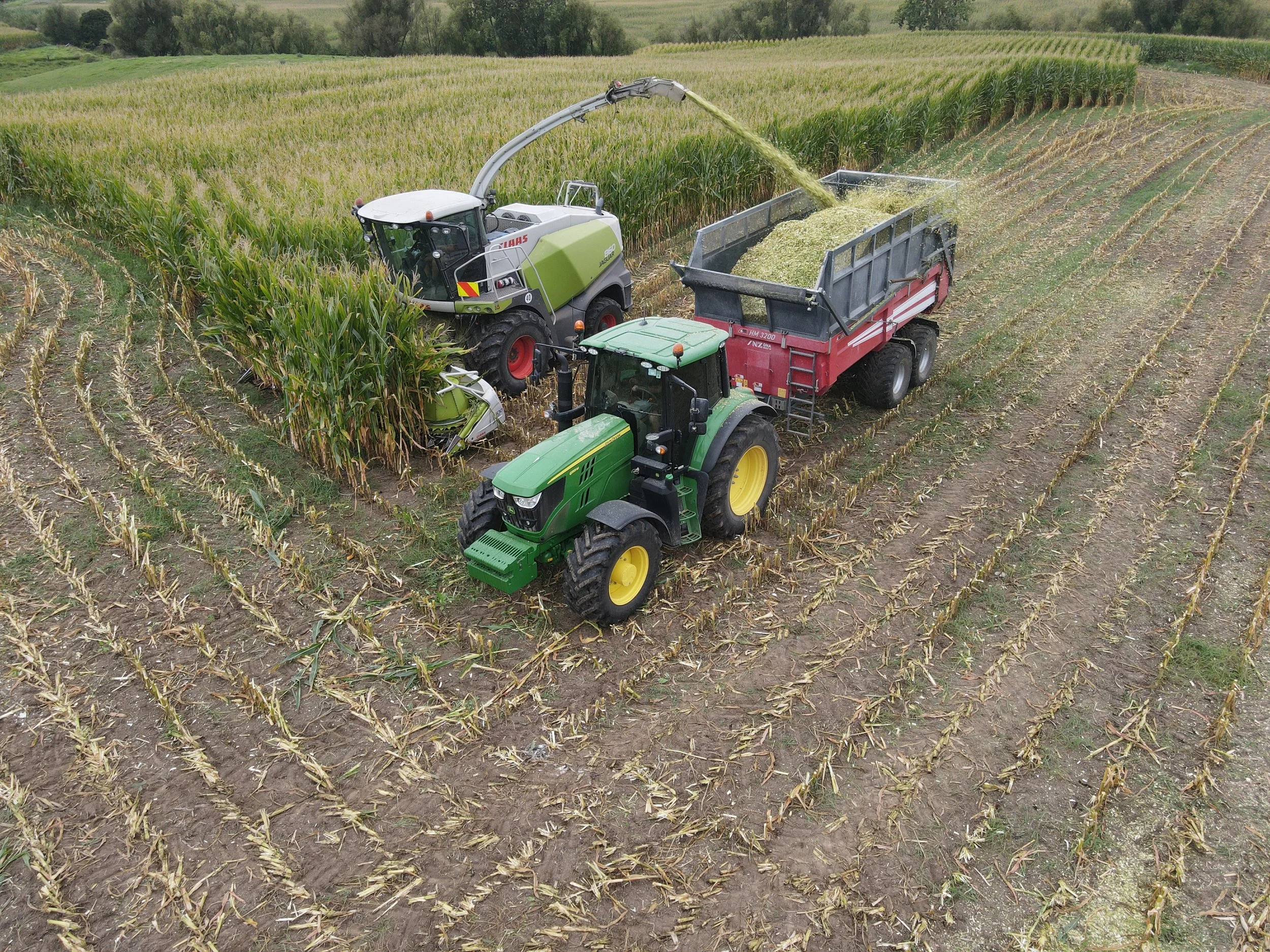
The pressure on New Zealand contractors has never eased, not with harvest windows tightening, payloads increasing and farmers expecting faster turnarounds with fewer machines on the job. Trailers that once coped comfortably with the season now find themselves pushed to their limits—especially in high-yielding districts where grass, maize and bulk materials move continuously from paddock to stack. Into this reality comes the next generation of 4AG design, the HM3200 Silage/Dirt Series launching this coming Autumn 2026 and already signalling a meaningful step up for operators who want more capacity, more stability and more user-friendly engineering.
The HM3200 follows the proven HM3000 lineage but pushes the concept further with a 32-cubic-metre bin designed for today’s heavy crops while retaining the versatility to handle aggregate, dirt and general cartage across the year. Its 16-tonne payload means more material per load and fewer trips to the pit, which is where the hours are saved and the efficiencies begin to stack up. Alongside the new bin sits an upgraded silage cage system with stronger framing and improved airflow, yet 4AG has deliberately kept the operator-friendly quick-unfit system that clients value: J-hooks and hydraulic quick couplers that allow fast bin removal without the fighting, prying or awkward lifting gear that slows down other designs.
When 4AG began shaping the new series, much of the work happened well before the metal was cut. At the early design stage the company asked New Zealand operators to be brutally honest about the grizzles they had with existing trailers. The feedback went straight to the European factory and the result is a trailer built not from a drawing board but from contractors’ real-world frustrations. Those conversations directly shaped features that make the HM3200 easier, safer and more efficient to use in the heat of the season.
One of the biggest advantages comes from the tyre footprint. At 2650 mm wide, the HM3200 offers one of the broadest stances of any imported trailer giving superior stability on sidelings and noticeably better behaviour at road speed. Operators have already commented that this wider footprint makes them feel more confident, especially when towing heavy loads across rolling terrain or soft spring paddocks. Stability translates into trust, and trust is what keeps machines working longer hours with less fatigue.
Ride comfort and drawbar protection have also been addressed through a leaf-sprung drawbar suspension system. With no top or bottom limit in the leaf spring assembly, the drawbar stays in float rather than constantly bottoming out as some coil-spring systems tend to do. This avoids the repeated impacts that slowly weaken drawbars over time and gives operators a smoother ride at higher speeds with far less shunting in the cab. It is one of those details that shows someone has listened to the people spending 14-hour days behind the wheel.
The hydraulic parking stand is another example of operator-friendly thinking. Integrated under the drawbar, it eliminates the winding of manual jacks and reduces fatigue while saving valuable minutes each time the trailer is dropped off or hooked on. It also allows operators to tare just the trailer weight on a weighbridge by lowering the stand until the load comes fully off the tractor, improving accuracy for compliance and billing.
Underneath, the HM3200 runs on full-width solid axles mounted to an agricultural bogie leaf-spring suspension, not a truck-style system adapted for farm work. This gives the axles the vertical travel needed to cope with rough tracks and uneven paddocks, protecting the chassis and bin from shock loads and extending the life of the trailer. Limit stops on each axle prevent sideways slump on slopes, another nod to the terrain contractors deal with daily. Add in the updated 650/50 26.5-inch tyres and the trailer gains flotation that reduces compaction and keeps work flowing when the ground softens during unsettled spring or autumn weather.
As any operator knows, visibility and safety matter just as much as capacity. With LED lighting throughout, including three amber sidelights running the length of the trailer, drivers gain better visibility in dusty or low-light conditions and approaching traffic has a clear sense of the trailer’s full length when contractors pull onto the road at night.
The tapered monocoque bin with an 80 mm taper from rear to front ensures sticky material exits predictably every time. The dedicated rear rock door paired with a separate silage door means the trailer behaves like a true silage unit rather than relying on bolt-on additions. For contractors shifting between crops, dirt and feed, having the right door for the job improves unloading speed, reduces hang-up and keeps the workflow continuous.
Quick-change capability remains one of 4AG’s defining advantages. With J-hooks all around and hydraulic quick-release couplers on the door rams, operators can remove or swap the bin in as little as an hour with two people—a significant time saver and a practical solution for businesses that need their investment working year-round rather than parked up between seasons. A trailer that adapts quickly becomes a trailer that earns its keep.
Much of the HM3200’s design exists to help contractors move more material with fewer holdups, and that philosophy runs through every component of the build. From the gimbal-aligned underbody hoist that lifts cleanly under load to the wide wheel track that improves stability when fully heaped, every element contributes to a smoother, safer and more efficient day’s work. As contractors contend with tighter weather windows and heavier crops, the performance of a trailer becomes just as important as the output of the chopper or loader wagon feeding it.
As with all 4AG equipment, the HM3200 has been shaped by New Zealand conditions. Contractors in this country deal with volcanic soils, clay, slopes, soft spots and large dairying operations that require both reliability and speed. A trailer that performs well in Europe can struggle here, but 4AG has long built for the quirks of local contracting, drawing directly on feedback from operators who cart bulk materials day in and day out. The HM3200 stands confidently in that tradition, offering greater capacity, more stability, better ride comfort and easier changeovers than its predecessor.
With demand growing for trailers that can handle silage, dirt and general cartage in one package, the HM3200 arrives at the right moment for contracting businesses heading into the 2026 season. Built strong, designed smart and refined around the operator it represents the next step in 4AG’s commitment to gear that works with the people who use it—not against them.
In a sector where downtime costs money and efficiency wins seasons, the HM3200 is built ready for the job.
Diesel-Tech Machinery
Mascar has built its reputation in Northern Italy as a premium manufacturer of round balers and precision planters that deliver reliability, strength and long-term value. With decades of experience designing and producing machinery for both its own brand and for some of the world’s best-known manufacturers, Mascar has become a name synonymous with quality engineering and dependable performance. Its entry into the New Zealand market through Diesel Tech Machinery gives contractors and large-scale growers access to a planter designed for serious work and proven in the demanding conditions of European agriculture.
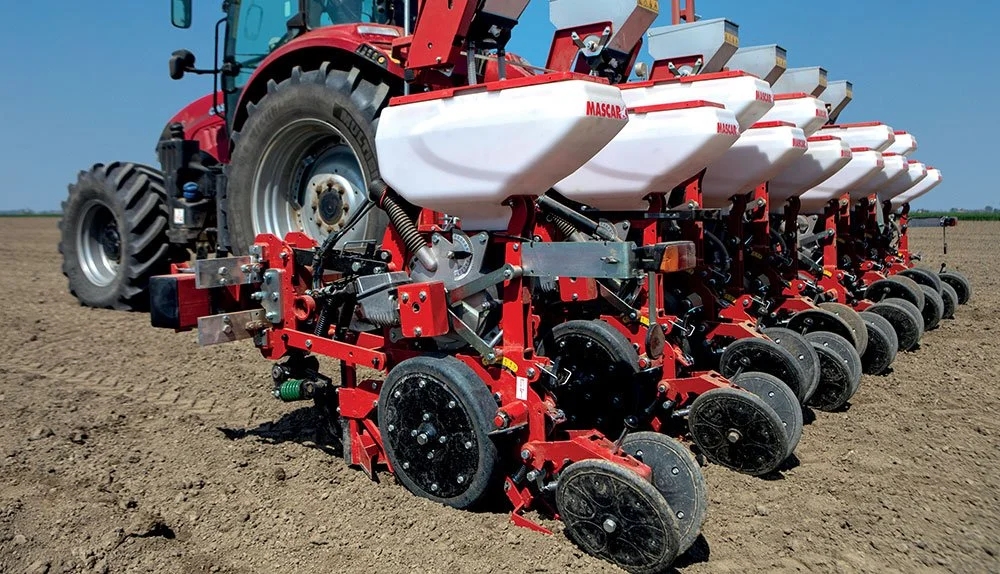
The Mascar Multiflex precision planter sits at the top of the company’s range and has been developed to manage high-output, professional applications with an emphasis on consistent seed placement and robust construction. It combines Italian engineering with modern control systems, including section control to deliver uniform spacing, excellent depth control and efficient operation in both maize and fodder beet crops. The availability of a 12-row planter with adjustable row spacings from 375mm up to 800mm, providing versatility to match a wide range of crop requirements, reflects Mascar’s philosophy of precision and practicality where every component serves a purpose and durability is a priority.
At the heart of the Multiflex is Mascar’s Cromia-SD seed unit, which forms the foundation of its precision metering system. Each sowing unit operates independently, maintaining exact seed spacing across the full working width even when conditions vary. This consistency is critical for achieving even crop emergence and maximising yield potential. The vacuum seed-distribution system ensures accurate placement whether operating at high speeds or in less-than-ideal soil conditions. The seed discs and metering components are manufactured to tight tolerances, reducing wear and maintaining accuracy over time.
The frame of the Mascar Multiflex is heavy-duty sliding rail designed to handle a wide range of working environments, from stony soils to cultivated seedbeds. Each Multiflex with Mascar’s Cromia-SD row unit features parallel linkage with an integrated shock absorber to maintain constant pressure on the ground. With up to 280kg of downforce, the unit ensures accurate depth control even across undulating terrain. The simplicity of the mechanical design means adjustments for seed rate, row width, or depth are straightforward, giving operators flexibility without unnecessary complexity. For New Zealand operators working across diverse soil types and varying conditions, this adaptability makes the Multiflex an extremely capable tool for both maize and fodder beet establishment.
One of the standout features of Mascar’s approach is its focus on reliability and low maintenance. The company’s manufacturing standards are evident in the attention to detail throughout the Multiflex’s construction, from precision-welded frames and high-grade bearings to corrosion-resistant finishes. This focus translates into reduced downtime, such as a quick toolless seed disk replacement allowing for fluid transitions between different crops, key considerations for contractors who need machines that can be flexible and run day after day throughout the busy season.
Mascar’s engineers have also integrated smart, intuitive technologies and versatile input systems to make operation easier and more efficient. The planter is available with a range of electronic monitoring systems that allow operators to track population rate, seed flow and row performance in real time. These systems provide instant feedback to help fine-tune performance and ensure every hectare is planted to specification. Fertiliser delivery options include front tank, on-frame and microgranular configurations, providing flexibility for different cropping programmes. For those running modern tractor fleets with Isobus connectivity, the electronic control systems integrate seamlessly giving operators full visibility and adjustment capability directly from the cab display.
In keeping with Mascar’s confidence in its machinery, all planters distributed in New Zealand come with a three-year factory warranty as standard. This commitment demonstrates both the manufacturer’s trust in the build quality of its machines and its recognition that entering a new market requires more than just strong specifications. It gives New Zealand contractors and growers the confidence that they are investing in a machine designed to last and supported by the factory for the long term.
The partnership with Diesel Tech Machinery ensures that local support, service and parts availability match the quality of the equipment. Based in New Zealand and focused on providing machinery solutions for professional contractors and farmers, Diesel Tech brings a high level of technical understanding and after-sales care to the Mascar brand. Their experience across a wide range of European agricultural machinery gives them the ability to back the product properly and ensure operators get the most from their investment.
The Multiflex is part of a full range of Mascar planters available through Diesel Tech, covering everything from mechanical to pneumatic systems and designed for various crop types and field conditions. This breadth of range means there is a model suited to every contracting or large-scale farming requirement, from precision vegetable seeding to high-output maize establishment. Across all models, the focus remains the same: efficiency, reliability and accuracy.
Mascar’s commitment to continuous product improvement and development is evident in every detail of the Multiflex. Feedback from operators and dealers around the world feeds directly into the company’s design and testing process, ensuring each new generation incorporates refinements that enhance performance and reliability. For farmers and contractors looking for a planter that combines modern technology with proven mechanical integrity, the Multiflex stands out as a compelling option.
Ultimately, the measure of a planter’s value lies in its ability to perform season after season with minimal fuss and consistent results. The Multiflex with Cromia-SD unit achieves exactly that, combining Italian craftsmanship with the reliability and flexibility demanded by New Zealand operators. It offers the precision of an intuitive electronic system, the strength of a heavy-duty build and the simplicity of a design that is easy to maintain. Backed by a three-year warranty and supported locally by Diesel Tech Machinery, it provides a genuine alternative in the high-performance precision planting market and is well positioned to make its mark on New Zealand paddocks this coming season.