
Keeping it in the Family: The Evolution of Hughes Contracting
When Brian Hughes first set out contracting across Southland in the mid-1980s, there was little time to think about where the road might lead.
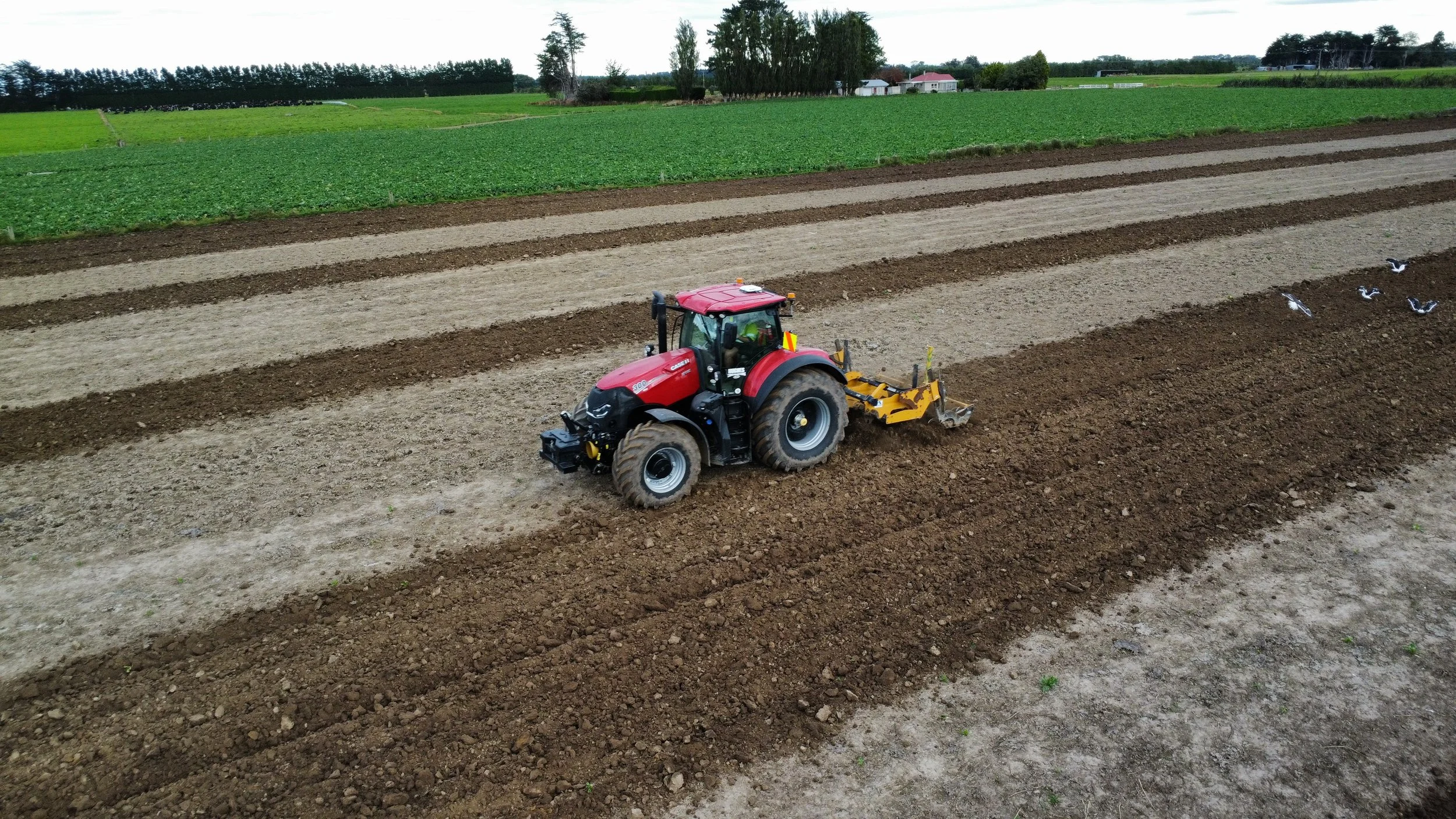
The work was hard, the hours long and the margins thin. It was a time when most jobs were won on handshakes and reputation, when the smell of diesel and freshly cut grass carried a certain pride and when every new season demanded another leap of faith. Yet even then Brian understood that real success in contracting would never come from chasing the cheapest job.
“It costs a certain amount of money to do a job,” he said at the time. “If you do it for less, you end up struggling. You are just working for wages. You might as well work for someone else because you are not going to be there in the long run.”
Those words spoken more than two decades ago, still sit at the heart of Hughes Contracting.
What began as one man with a tractor and a belief in doing things properly has grown into one of Southland’s most respected rural contracting operations, employing up to forty people during the peak season. From modest beginnings on the eastern outskirts of Invercargill, the business now operates out of depots in both Waimatua and Browns, reaching clients across the province with a full suite of cultivation, planting, harvesting, cartage, excavation and effluent services.
The name on the door remains the same, but these days it is Brian’s son Chris who leads the charge. For Chris, contracting was never a question of if, but when. He left school to live the dream as an agricultural contractor, following the same path that had shaped his father’s life, but carving it through a world transformed by technology and scale. Where Brian’s early years were defined by mechanical instinct and determination, Chris’s generation has grown up with guidance systems, GPS tracking and precision application. He knows firsthand how far the industry has come and what it takes to stay ahead.
“Technology has had a major impact on the industry since I started,” Chris says. “GPS tracking and guidance are a major plus for accuracy and fuel savings and newer, more efficient machinery ensures the job is completed on time and to a high standard.”
That focus on quality is no accident. Brian’s philosophy has always been that you build a business by standing behind your work, not by cutting corners.
“Machinery depreciates from the day you buy it,” he said in those earlier years. “Land is the opposite, which is why we have also heavily invested in highly productive farmland that is a perfect fit for an ag contracting business.”
True to that belief, Brian and his wife Lyn invested profits into farmland rather than trying to be the biggest contractor around. Those farms still play a key role today, growing high-quality pasture for silage, baleage or hay that Hughes Contracting sells on to local farmers.
A few clients winter cows and R1 calves on the Hughes properties, continuing a relationship that stretches back through decades of trust.
It is that ability to see beyond the next season that has kept the business both grounded and growing. Diversifying into farming gave stability through the quieter months and allowed the company to hold on to skilled staff. That same foresight carries into Chris’s tenure, where a team of experienced managers handle different sides of the business with a depth of expertise few can match.
Among them is Matt McCartney, who oversees baling and cultivation. Matt has been with Hughes Contracting for over 5 years and has plenty of hands-on experience behind the wheel. Matt brings the same commitment to service that Brian once spoke of, making sure every paddock is left tidy and every bale sealed right.
In the silage corner, Sam Oliver has become a familiar face across Southland. Originally from Northern Ireland, Sam joined over two decades ago and has been part of the family ever since. He knows local conditions as well as anyone and manages a fleet that can handle everything from mowing and tedding to raking and harvesting. With three large capacity Claas forage harvesters at the company’s disposal, Sam and his crew can move fast when the weather turns and every hour counts.
“Claas is a market leader when it comes to self-propelled machines,” Brian once said. Hughes Contracting has just purchased the latest 950 Claas Jaguar for the season which will increase reliability and performance.
The comfort and precision of modern machines would have been hard to imagine in those early years, yet the core of the job is the same: long hours, short weather windows and the satisfaction of a well-made stack.
As Chris puts it, “You can have all the technology in the world, but when the weather closes in it still comes down to people willing to get the job done. That has not changed and never will.”
Hughes Contracting today stretches well beyond forage and cultivation. The team provides excavation and lane construction, muck spreading and general cartage. An umbilical slurry system can pump effluent up to 2.5 kilometres, applying valuable nutrients to paddocks that once sat outside irrigation reach. Flow meters ensure accurate application, turning a waste challenge into a soil asset. With thirteen and twenty-one tonne diggers and experienced operators on hand, the company also takes care of farm drainage, site works and dairy effluent pond construction. It is a natural evolution for a business that has always looked to solve problems for clients rather than simply offer a list of services.
For Chris, that variety is part of the appeal. No two days are the same. One minute the crew is harvesting silage, the next they are carting rock or planting beet. The aim is simple: help people make their farms work better.
On the feed front, Hughes Contracting has become a one-stop shop. With five farms producing high-quality silage and baleage, the company can supply, harvest and transport feed from paddock to pit.
Certified mobile weighbridges give accuracy and assurance, while oxygen barrier pit covers help protect quality through to feeding out. It is a far cry from the days when a single buck rake tractor and a few hired trucks had to keep pace with the mowers. Today, truck and trailer units handle bulk transport, which also carry out a variety of other general transport needs.
A heavy transporter for machinery moves up to twenty-five tonne and shifts the excavators and other equipment as and when required, keeping tractor time on the road to a minimum.
As the company has grown, the importance of people has only increased. Southland’s contracting sector relies on experience and Hughes Contracting has built a reputation for holding on to good operators by investing in them. Seasonal staff return year after year, drawn by the camaraderie and professionalism that come from a well-run outfit. The Browns depot, under Norman Allan’s watch, ensures clients across northern and central Southland receive the same reliable service that has become the company’s hallmark. The footprint reflects a balance between scale and service, large enough to tackle the biggest jobs, close enough to know every gate and gravel road.
Through all that change Brian remains involved as director, keeping a steady eye on the business he built from scratch. Though no longer in day-to-day management, his influence runs deep. He still believes in the same fundamentals: look after your people, invest wisely and never forget that reputation is everything. Service and backup were the reasons the business stuck with certain brand partners in the past and that loyalty has been repaid many times over. Local dealers stepped up when needed, including after an accident on the road years ago that could have crippled a smaller outfit. Relationships matter in Southland. They always have.
Succession is never straightforward in contracting. The industry has changed since Brian’s early days, with rising costs, compliance rules and environmental pressures adding new layers of complexity. The Hughes family has managed the transition with the same pragmatism that built the business. Chris leads from the cab not the office, keeping a hands-on understanding of every job.
“You can’t sit in an office all day and get a feel for what is going on around the province, you have to be actively out and about seeing what is going on in your surrounds, whether it be checking on operators at a job or having a chat to a farmer on the side of the road.”
He has surrounded himself with a team who share his drive and passion.
“We have some excellent staff who keep the wheels of our business in motion, without excellent staff you are buggered. They are the face of our company and I expect them to take the same pride in each job as I would do.”
Which means the company’s future rests not only on a family name but on a culture of excellence and trust.
He knows the challenges ahead, the squeeze on margins, the volatility of seasons and the constant expectation to do more with less. He also sees opportunity. A new generation of farmers is coming through who value service, reliability and innovation. They want contractors who can work with them, not just turn up. That is where the business fits in. Experience matters, gear matters, attitude matters.
Looking ahead, Chris is optimistic. He sees automation and data shaping the future but not replacing the instincts that good contractors rely on. Technology will keep changing, but you will always need people who care about doing the job right. That is what Brian taught him, and it still stands today.
“Our farmers are world leaders in their field, they are grasping the smarter not harder attitude and our business needs to follow that mantra as well or we will inevitably be left behind, do the same thing get the same results doesn’t cut it anymore. We are always looking at ways to perfect and better our business.”
The effluent and excavation work has become a quiet cornerstone. Many farms now expect accurate nutrient application and tidy site works as standard. The umbilical system allows application at scale without chewing up lanes and paddocks, and the vacuum tanker gives the team flexibility where pumping is not possible. Side discharge and rear discharge muck spreaders provide an even pattern that farmers can trust. It is practical, it is efficient and it speaks to the way the business has evolved, not flashy just effective.
Feed supply has grown in the same pragmatic way. Owning and managing pastureland gives control over quality and timing. Dry matter testing gives clients confidence, and the weighbridge confirms what is on the docket. Some seasons the Hughes team will harvest and sell to longstanding clients, other seasons they will step in to fill gaps when weather knocks a plan off track. Having that buffer has helped many customers bridge shortfalls and has helped keep staff busy through the full year.
On the cultivation side, experience counts. From ploughing and power harrowing to direct drilling and rolling, the team matches method to soil and season. Precision planters deliver beet and swede with the spacing and depth that set crops up for success. Air seeders cover ground for grass with a steady even spread. It is the quiet detail that makes the difference, the set up in the yard before daybreak, the check on seed and fertiliser, the tidy pass at the headland. Farming notices the small things and so does contracting.
Chris gives a lot of credit to the crew. It takes skill to rake heavy Southland crops into neat rows, judgement to balance trucks and trailers to keep a chopper fed without queuing and patience to build a pit that will feed out clean in August. It takes the same care to shape a lane that will carry stock and tankers without pooling, or to build an effluent pond that will stand up to the years. The best operators bring pride to the job, and they teach it to the next person. That is how a business becomes more than one season deep.
Community has always been part of the story. The company supports local events and charities as well as sponsoring two local rugby clubs’ Woodlands and Riverton and pitches in when the district needs a hand. Staff bring their families to end of season functions and clients often drop by for a coffee when the rush is over. The business has grown, but the culture has stayed small and approachable. That matters when you are working at pace under pressure. Problems get solved faster when people know each other and trust each other.
For Brian, watching Chris lead has been a mix of pride and perspective. He sees the tools his son has at hand, from GPS maps to telematics and remote diagnostics and he recognises the same stubborn streak that kept the wheels turning in lean years. The game has changed, but the stakes have not. Get the crop in on time. Leave the paddock tidy. Stand behind your word.
There is also a wider responsibility that comes with succession. The next generation is inheriting more than iron; they are inheriting relationships and expectations. Farmers have relied on Hughes Contracting for decades because the family has earned that trust the hard way. Chris understands that the brand on the door is only as strong as the job you do today. That is why he still leads from the front and why he still takes the phone at odd hours when a weather window opens and plans need to shuffle.
The Southland economy has always leaned on people who can turn weather and willpower into productive days. Contractors sit in the middle of that story. They take on the risk of big machines and small margins so that farmers can focus on stock and soil. When things go right a district moves forward. When things go wrong, the fixes are practical and swift. It is a system built on mutual dependence and respect. Hughes Contracting has played its part for nearly forty years and intends to keep doing so.
Some of Brian’s early lines have aged very well.
“Making good silage is not rocket science,” he said. “The biggest secret is you have to start with good product.”
The same is true of running a business. Start with good people, give them good tools and hold a clear line on quality. The rest follows. Another line rings familiar today.
“Machinery depreciates from the day you buy it. Land is the opposite.”
That simple truth helped shape the company’s direction and helped it ride out tough seasons. It also created the platform for Chris to grow a bigger, broader service without losing focus.
In the end, the measure of a contracting business is not how many machines it owns but how many farmers trust it.
Hughes Contracting doesn’t want to be the biggest it wants to be the best, the best it can be for its clients, for its staff and for its community.
On that score Hughes Contracting sits in a good place. The team understands Southland weather and Southland expectations. The phones still ring for the same reasons they did in the 1980s. People want a job done properly by people who know what they are doing and who will be there next year when the cycle begins again.
Nearly forty years on from those early days, Hughes Contracting stands as proof that experience counts not only in knowing how to get a job done, but in understanding what makes a business last. The next generation may do it with GPS screens and telematics, but the heartbeat remains red and steady just as it always was. And for all the change across New Zealand agriculture, that heartbeat is still what keeps the grass down, the pits full and the wheels turning when the weather gives you a narrow chance and the district needs you to take it.