
A Review of - Precision Agriculture
GPS technology is transforming modern agriculture, helping farmers lift yields, reduce inputs and protect the environment. In this feature, leading manufacturers and distributors of precision farming technology outline their latest guidance systems, section control, mapping, telematics, data management and other advanced tools driving greater accuracy and efficiency on-farm.
PTx Trimble
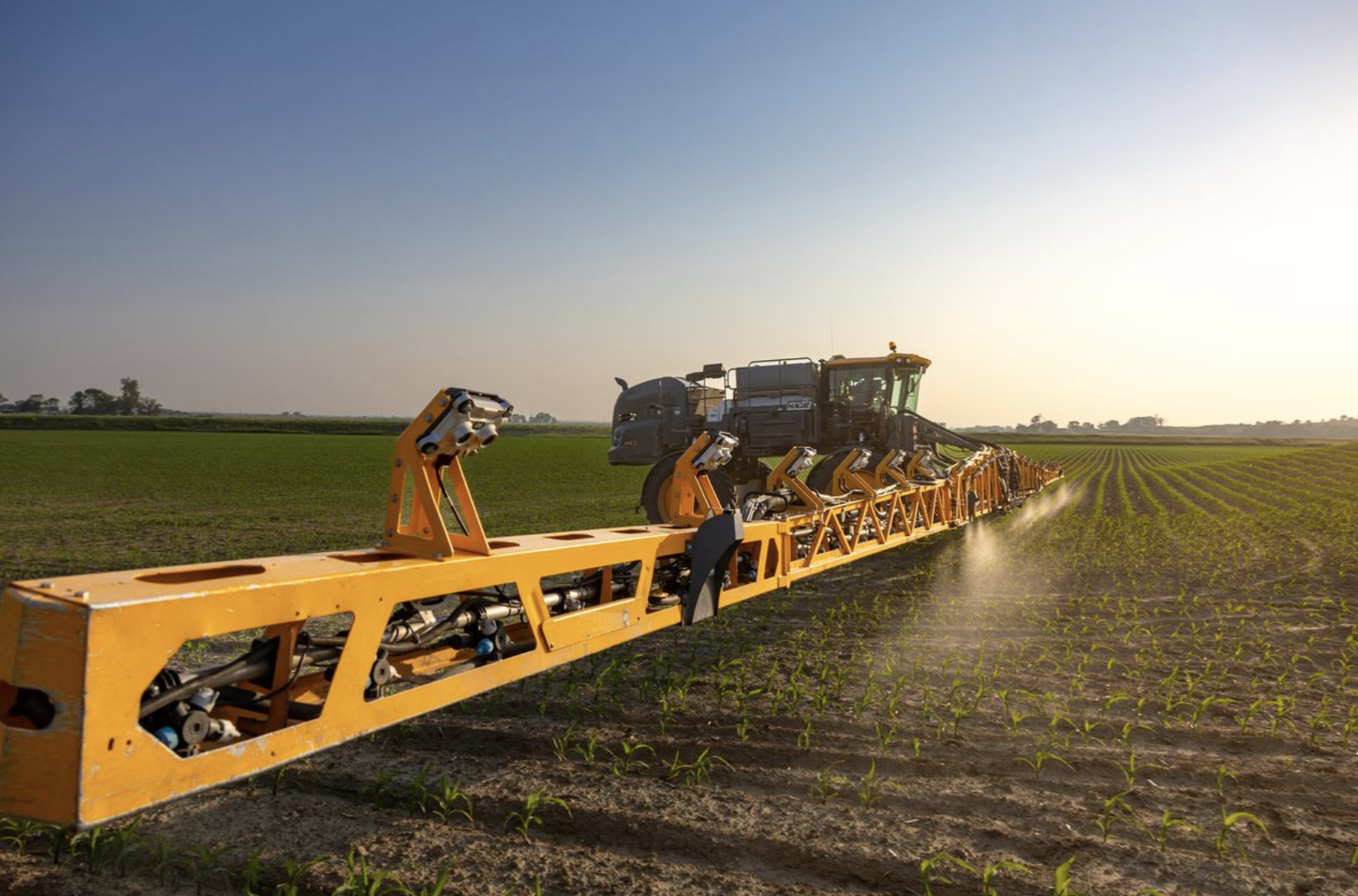
The Trimble Field-IQ Isobus crop input control system sits at the heart of modern precision-agriculture workflows and presents a compelling option for New Zealand farmers and contractors intent on reducing wasteful input use and raising productivity per hectare. From seed placement through fertiliser and chemical application, the system brings a level of control that moves beyond simply “doing the job” and into doing the job with precision and intelligence. Operators managing high-output planting, spreading, or spraying will find Field-IQ Isobus gives them tools to fine-tune inputs and confidence that every paddock pass is tracked, recorded, and optimised.
One key feature is its ability to combine variable-rate application control with automatic section control and seed-monitoring functionality in one interface. Working via compatible Trimble displays like the GFX Series TMX-2050 or FmX platforms, the system lets operators adjust seed populations, fertiliser rates, or spray volumes across multiple materials while dynamically switching row or section control on and off to avoid overlap or skips. Whether planting maize on a 3,000-hectare block or spraying fodder beet on an intensive support farm, the same toolset applies. Handling up to six materials simultaneously offers large-scale users multi-channel control once found only in top-tier precision-ag systems.
For spray and spread operations, the automatic section control is a major advantage. Overlapping chemicals or fertilisers is not just costly but an environmental risk and regulatory headache in New Zealand’s compliance-driven landscape. Managing up to 48 rows or boom sections lets operators cover headlands, irregular paddocks, and variable-shape blocks without wasting product or spraying beyond targets. This reduces input costs while protecting yield potential since plant populations, crop nutrition, and canopy health aren’t compromised by over-application.
Seed-monitoring adds another layer of assurance. Real-time feedback on population, singulation, skips, multiples, and row-to-row variation lets operators fine-tune setups in the field rather than waiting for harvest results. This is crucial for maize or fodder beet, where precise row spacing, seed placement, and uniform emergence drive throughput and crop quality. For contractors working tight machine hours and narrow season windows, detecting planter clutch faults or air-seeder blockages and fixing them immediately makes a real difference.
Field-IQ Isobus’s modular and expandable design suits New Zealand operations that often mix brands or evolve over time. Supporting Isobus compatibility means the system isn’t tied to one implement maker. Contractors with diverse fleets can deploy one precision-control interface across tractors, planters, and sprayers. Farmers or contractors can start with core functions and expand to features like prescription mapping, GreenSeeker optical sensors, or zonal management tools as budgets or farm needs grow.
From a support and downtime view, Field-IQ Isobus fits New Zealand’s long seasons and remote operations. Less overlap means less waste and fewer passes, which lowers machine hours, reduces soil compaction, and cuts wear on gear. Real-time monitoring and as-applied mapping simplify post-operation audits, improve fertiliser tracking, and clear documentation for compliance or farm reviews. For contractors running machines day after day through spring or autumn, the system’s reliability and control offer peace of mind.
Integration with farm-management systems adds value. Linking Field-IQ data with field mapping, yield monitoring, or soil variability systems gives operators or managers a full picture of what went into the paddock, when, where, and how well. This insight means decisions for the next season rely on solid data, allowing seed, fertiliser, and chemical budgets to be managed precisely. With input costs rising, growers focused on ROI from every machine hour will find correlating input data with yield and output essential.
In New Zealand’s specialised cropping systems, where maize and fodder beet dominate and paddock conditions vary, variable-rate application, section shutoff in headlands or waterways, and row-by-row seed monitoring bring big advantages. Contractors moving between farms appreciate the system’s brand-agnostic, transfer-friendly design, reducing training time, simplifying handovers, and keeping consistency across operations.
From a user perspective, the value is clear: better control cuts input waste, improves margins, fewer overlaps reduce passes and machine wear, real-time monitoring spots and fixes problems fast, and modular design lets users scale features without expensive lock-in. Backed by a trusted name in precision-ag and a global support network, Field-IQ Isobus offers New Zealand farmers and contractors a powerful tool to boost efficiency and productivity.
Vantage New Zealand
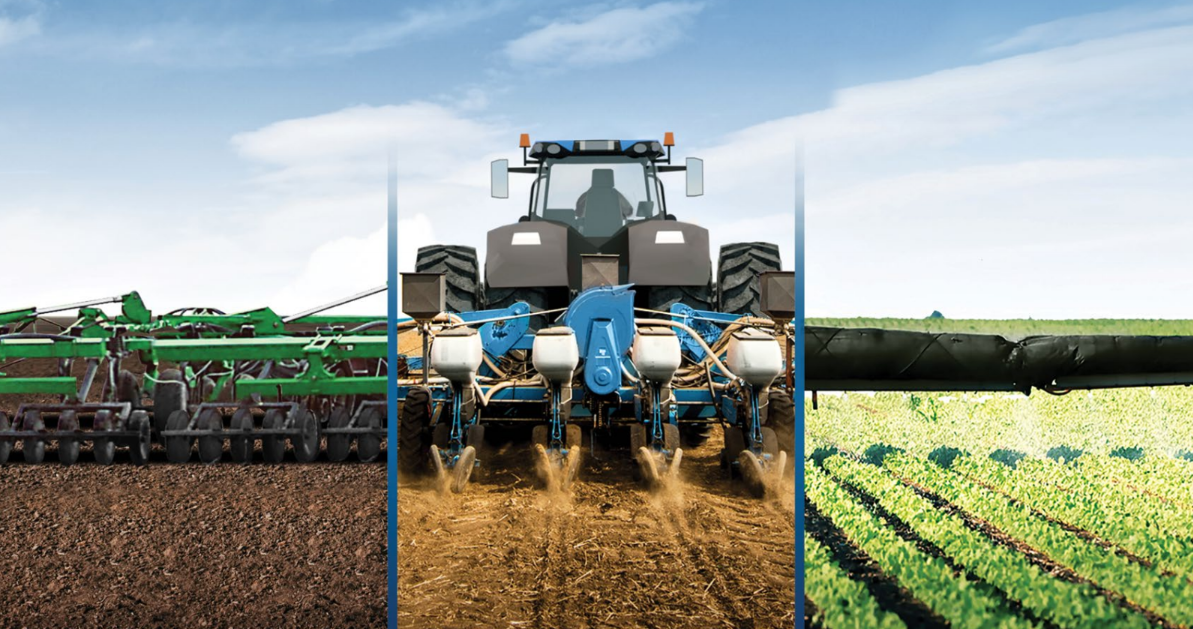
Vantage New Zealand is helping contractors and farmers move confidently into a new era of precision spraying. Based in Mid Canterbury and supported by a nationwide team, the business delivers technology and expertise that improve efficiency and reduce waste. It also helps ensure consistent application across every paddock at a time when compliance pressures are rising and input costs continue to climb. Accurate application and the ability to prove it has never mattered more.
Vantage offers a wide suite of precision agriculture tools. These range from simple displays through to high-performance GNSS receivers and advanced steering systems that can run hands-free or fully autonomously. The aim is to help operators fine-tune seed, fertiliser and pesticide application, monitor soil moisture and weather more closely and use detailed soil surveying and EM mapping to build variable-rate plans for each paddock. The company also supports industry-leading correction services, data-driven agronomy tools and feature unlocks that allow users to refine their approach season by season. Protection plans, updates and training keep systems performing as they should.
A key strength is how easily the technology moves across different machines and brands. Contractors often work between mixed fleets and Vantage makes that transition seamless. Guidance lines, implement data and proof-of-placement records move cleanly between machines and back to the office which trims out friction and keeps work flowing. Wireless transfer of boundaries, job files, implement settings and application records cuts out manual handling and the mistakes that come with it. Reports go straight to managers or farm offices which improves compliance and speeds up billing. For operators covering big areas or working quickly ahead of weather, that smoother data flow saves time and fuel and reduces stress.
Environmental requirements continue to tighten so accurate records are becoming essential. Vantage systems automatically generate spray maps, job summaries and proof-of-placement files for every pass. These link directly with nutrient management and agronomy platforms which helps with spray diaries, audits and wider reporting. For contractors working in regulated catchments or those who want greater transparency, digital accuracy is shifting from a useful extra to a basic requirement.
On the implement side, Vantage brings smart control to sprayers, spreaders and seeders. Automatic section control and overlap reduction help lower chemical and fertiliser use while improving consistency. Even on long days this level of control holds application quality steady and gives operators the confidence that every run is completed as intended. With scrutiny increasing around chemical use and placement, being able to achieve more with fewer inputs gives contractors a clear advantage.
Vantage also supports precision steering beyond tractors and sprayers. Spreading and haulage fleets can use the same accuracy and repeatability for truck operations. Consistent tracks and better product placement reduce waste and help busy fleets run more efficiently. For multiple-operator teams, reliable steering can also lift safety and simplify training which makes a noticeable difference during pressure periods.
Ease of use remains a major focus. Seasonal staff and relief drivers can quickly adapt to familiar screens and simple menus which reduces downtime. When machines behave predictably operators stay focused on field work instead of fighting with controls. The nationwide support network means help is never far away and local technicians can respond quickly during critical spraying windows. Fast problem-solving protects the season and the investment.
Vantage offers contractors a practical and scalable path into precision spraying. No business needs the highest-end system from day one because capability can grow over time. Compliance reporting, better connectivity, improved machine control and enhanced steering can all be added as priorities shift.
Spraying will always require balancing weather, timing, speed and coverage. Vantage’s tools make that balance easier with more control, greater efficiency and clearer verification. Better accuracy and reduced waste follow, along with a higher standard of service for farmers who rely on timely and reliable application.
At a time when expectations keep rising and margins continue to tighten, Vantage stands out as a partner that helps contractors deliver more hectares with fewer errors, stronger proof-of-placement and better business outcomes. The industry is becoming more data-driven which means those who combine accuracy, connectivity and strong compliance reporting will move ahead. Vantage is not simply supplying equipment. It is providing a framework for smarter, more resilient and more accountable operations.
With regulations tightening and customer expectations increasing, producing precise and verifiable application records is becoming essential. By pairing proven technology with local expertise, Vantage helps contractors meet today’s demands while preparing for tomorrow. For those committed to lifting the standard of application, compliance and service, Vantage brings clarity, capability and confidence to every pass across the paddock.
Ag Leader
At the southern edge of New Zealand, where rolling green hills give way to wide open plains, Blair Drysdale works the cool soils of Southland growing a diverse range of crops. His family’s farm near Gore has long produced cereals, sheep and beef, but in recent years Blair has pivoted towards speciality seed crops such as seed peas, Asian brassicas, silver beet and even tulips, seeking new ways to stay ahead as margins tighten and efficiency becomes increasingly important.
Running such a varied enterprise demands precision and for Blair that precision began the day his old lightbar guidance system finally gave up.
“I went from using foam markers to a lightbar,” he says. “When the lightbar died, I called Paul. He said, ‘You need this. I’ll bring it out tonight.’”
Paul Sinclair was not just any dealer; he had been a mate for more than two decades. The two first met playing rugby around the year 2000 and over the years Paul came to know Blair’s farm, his standards and the way he liked things done.
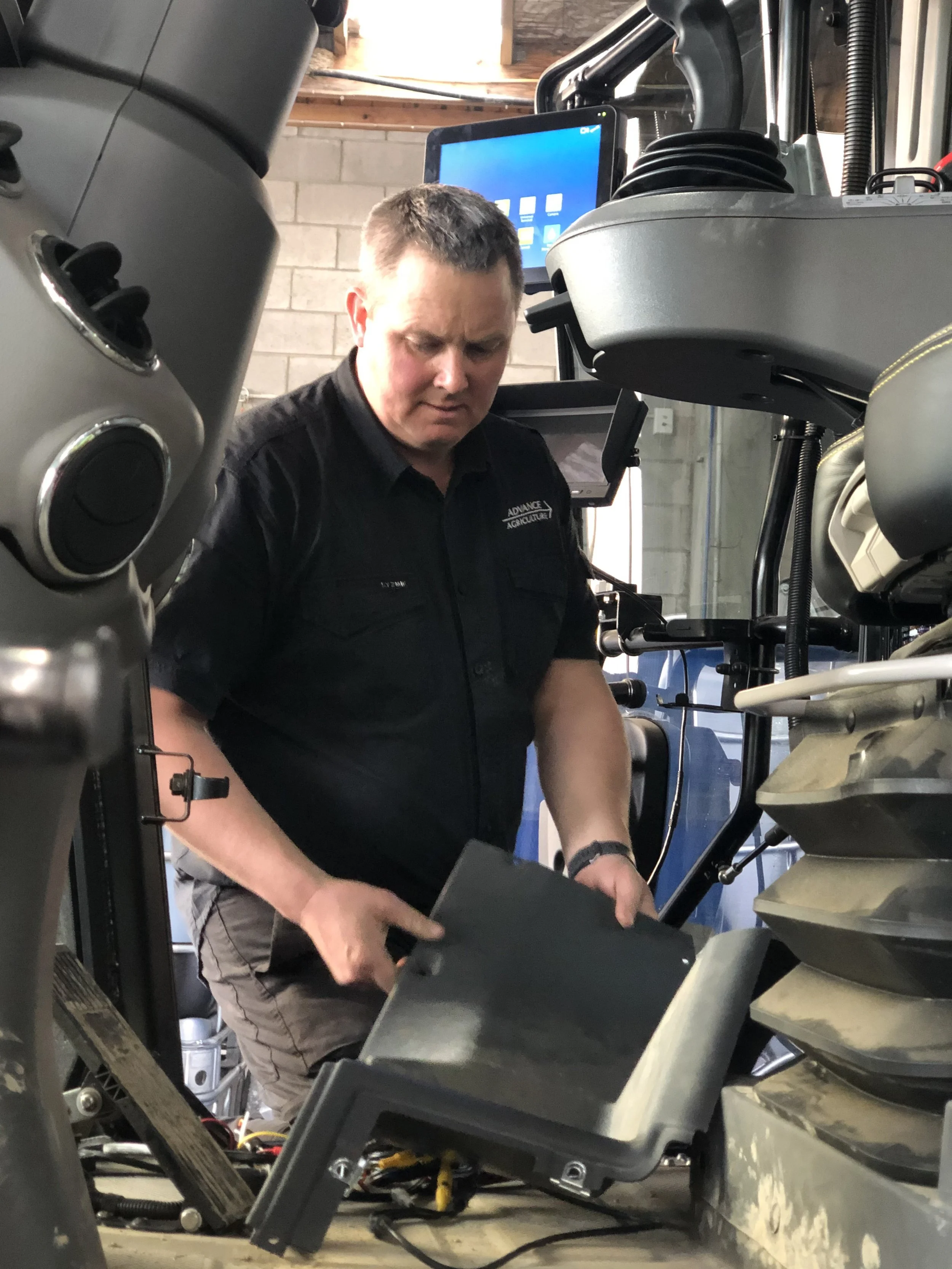
As head of the precision agriculture division at Advance Agriculture in Gore, Paul has spent much of the last decade helping Southland farmers step into modern guidance and application technology. “There was an Ag Leader Compass display sitting on the bench one day,” Paul recalls. “The boss said, ‘If you can sell it, have a go.’ I picked it up, did a bit of training and away it went.”
From those early days tinkering with electronics, he has built a business helping farmers like Blair move into equipment such as Ag Leader’s OnTrac3 assisted steering system, which is what he installed that night in 2017. OnTrac3 simplified guidance immediately, reducing fatigue without requiring hydraulic connections and Blair quickly saw the benefit. He has since upgraded to SteadySteer, Ag Leader’s latest assisted steering system, running through the InCommand display in his Case IH Puma 185.
SteadySteer is an economical way to add assisted steering without relying on hydraulics, offering accuracy from WAAS through to RTK and providing an all-in-one solution for steering, planting, application and harvest. The system is easy to install, easy to transfer between vehicles using optional switch kits and gives Blair the consistency he needs through the busiest parts of the season.
The difference was immediate.
“Before with a lightbar, after a 12-hour day spraying I was mentally wrecked,” he says. “Now with full steering, I can work longer hours and not be drained. It lets me focus on what’s happening behind me - the sprayer, the spreader, the drill and make sure it’s all running properly. You’re not staring at the front wheel trying to stay straight anymore.”
That shift in focus has delivered real results.
“The accuracy of seed, chemical and fertiliser placement has improved dramatically,” Blair says. “No more overlaps, no more guesswork.”
For Paul, experiences like this are exactly why he is passionate about the work.
“Autosteer gives farmers the quickest return on investment,” he says. “You save time, fuel and inputs but more than that it makes life easier. It takes the pressure off and in today’s world when it’s hard to find skilled labour, that’s worth a lot.”
Blair agrees wholeheartedly. The impact of the technology has gone far beyond simply using it. It has been significant enough that he now works with Ag Leader to test new features for SteadySteer. As part of this collaboration he has trialled TurnPath, a tool that enables hands-free, repeatable end-of-row turns providing important feedback during development. Next he will trial RightPath, Ag Leader’s recently launched passive implement steering solution using the new InCommand Go 16 display, the next generation of the InCommand line. RightPath keeps equipment perfectly aligned with the guidance line, bringing another layer of accuracy to Blair’s operation.
As Blair continued refining his guidance system, accuracy became just as important as ease of use, which led to the next major step on the farm. A few years later Paul helped him upgrade to an NTRIP correction system, providing centimetre-level accuracy for autosteer without the high cost of traditional RTK subscriptions.
“We’ve got a good local network called LINZ,” Paul explains. “Once you’ve invested in the receiver, the correction is basically free. It’s an economical way to get high accuracy.”
For Blair, those gains stack up fast. On his 400-hectare operation every saved pass matters.
“In the first year I used autosteer with the drill, I saved around 1,200 litres of diesel,” he says. “You stop overlapping half a metre every run and it adds up quickly. That’s fuel, wear and tear and time saved.”
But beyond the numbers sits something equally important - the support.
“If I’ve got a problem, I ring Sinky,” Blair says. “He’ll talk me through it over the phone. I’ve even rebuilt a whole implement setup that way. Now with AgFiniti Remote Support, he can see my display and make changes from the dealership. That’s huge.”
Paul agrees wholeheartedly.
“The technology’s great, but it’s the support that sells it. Farmers won’t invest in something they can’t get help with. Good service and good relationships, that’s what keep people coming back.”
As costs rise and margins tighten these efficiencies have become essential.
“Our biggest challenge right now is margin,” Blair says. “Diesel and fertiliser prices have doubled, but grain prices haven’t moved. GPS and autosteer help us find efficiencies we wouldn’t get otherwise.”
Both men believe the future of the technology in New Zealand is bright.
“Autosteer is like electric windows in cars,” Paul says. “It started as an option, but soon you won’t be able to buy a tractor without it. It’ll just be standard.”
For Blair the next step is adding autosteer to his combine, the last major piece of machinery on the farm that still requires manual steering. Beyond that, he is content to let the system take care of the straight lines so that he can focus on the bigger picture.
“Technology’s made my life a whole lot easier,” he says. “Less stress, more accuracy and more time to focus on what really matters.”
Amazone
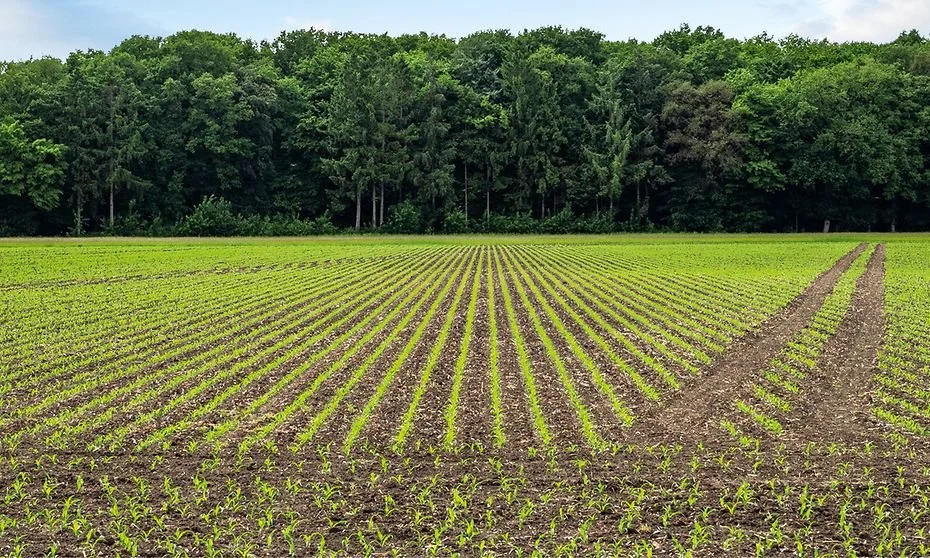
Being released at Agritechnica this year, Amazone’s new EasyTram application allows tramlines to be planned and created with centimetre precision in a one-off application map, ensuring they run in exactly the same place year after year. The system opens up new possibilities, from sowing on the angle for erosion protection on inclines to sowing in directions independent of the tramlines. It’s particularly effective for crops sown at low seed rates such as oilseed rape, where sowing on the angle with shut-off directly at the tramline prevents plants being run over during crop care and maximises plant distribution.
The technology is both user-friendly and innovative. It allows simple generation of tramline maps via browser access to the AmaConnect data platform. Using a plug-and-play principle, these maps can be transferred easily to the tractor’s operator terminal and used like any other application map. The system unburdens the driver by completely taking over tramline generation, preventing both errors and track deviation.
With this development, Amazone brings precision farming to another level. It enables all farms with Amazone seed drills equipped with the MultiSwitch single-row control system to use the technology without any mechanical modifications. Application maps can be generated on the AmaConnect platform and transferred via the AmaConnect unit, AmaTron Share App, or a USB memory stick to the tractor’s AmaTron 4 Isobus terminal. The result is a fully automated tramline setup that reduces driver stress and prevents sowing errors. One-off pre-planning and simple map transfer make the process quick and efficient.
Sowing on the angle has long been recognised as an effective way to minimise soil erosion. On inclines between six and eight degrees, it improves erosion control by reducing the slope gradient and making sown rows less susceptible to surface water run-off. The soil holds better after emergence, and plants act as a natural barrier to rainwater flow. The direction of tramlines remains unchanged, ensuring subsequent crop care can be carried out efficiently while angled sowing reduces soil washout in otherwise unsown tramlines.
Low seed rate crops such as oilseed rape can now be sown right up to the tramlines, reducing plant losses on the wheelings. Until now, farmers often sowed on the angle without tramlines to achieve higher plant density but then had to drive over the fully sown area without guides for crop care. This new system solves that problem. Tramlines can be established precisely, maintaining plant density across the field while saving around three per cent on seed and fertiliser and preventing secondary growth. Based on average seed and fertiliser costs of about NZ $270 per hectare and an annual sowing area of 1,000 hectares, that translates to savings of around NZ $8,000 a year.
Further savings come through Amazone’s MultiSwitch single-row control system, which reduces overlaps at headlands or in wedge-shaped fields from five per cent to less than one per cent. By generating application maps for tramlines, farmers gain an exact overview of the area to be sown and the true net field size—the actual area minus tramlines. This data can be integrated directly into seed planning avoiding over-ordering and reducing waste, saving both costs and resources.
The application also offers new potential for farms using mechanical weed control or organic fertilisation. It allows creation of special narrow hoeing and harrow wheelings, or wider ones for slurry tankers operating between main tramlines. For example, a layout with tramlines every 24 metres and additional crop-care wheelings every 12 metres can be planned in advance with the seed drill managing them automatically, whether sowing parallel or on an angle. Farms with irrigation systems can also create targeted tracks to optimise coverage and efficiency.
The same principle applies to precision sowing with the Precea, where rows switch off exactly before the planned tramlines and leave them unsown, regardless of sowing direction. This already makes possible future techniques such as sowing maize in specific directions to optimise sunlight while maintaining efficient tramlines for crop care.
Set-up begins with a one-off field survey recording geometry and obstacles, often completed with a standard tractor. If boundary data already exists, it can be used directly. The field boundary, A-B lines and curve tracks are imported into the EasyTram planning tool on the AmaConnect platform, tramlines are defined once and the finished map is exported and transferred to the tractor terminal. From there, sowing can begin immediately. The seed drill’s MultiSwitch single-row control automatically switches tramlines off ensuring precise, repeatable results year after year.
The system also integrates seamlessly into digital farm management. Connection via the AmaConnect Unit allows all machinery to be networked, simplifying documentation and saving time. GPS guidelines, A-B lines and curve lines can also be embedded into the application map offering navigation support not just during sowing but throughout crop care operations.
Amazone’s latest innovation will be available on the Cirrus04 Grand and Precea models from next year’s production run and is set to reach the Trans-Tasman market through Claas Harvest Centre dealerships in late 2026. It’s designed to deliver measurable benefits to a wide range of operators, including farms and contractors using Amazone MultiSwitch seed drills, those running multiple seed drills on one area, operations in erosion-prone regions, organic farms with hoeing or harrowing tracks and those with tramlines for irrigation or manure spreading.
Total Ag Control
When precision agriculture works as it should, the technology fades into the background and the results speak for themselves. That’s exactly what Total Ag Control delivers - seamless integration of advanced spreading, spraying and steering systems that make complex operations simpler, smarter and more accurate.
With years of experience behind them, Tony and Nev have built Total Ag Control into one of New Zealand’s most trusted names in precision application technology. Based in Ashburton and working nationwide, they’ve earned that reputation by combining deep technical knowledge with practical field experience ensuring every system performs perfectly where it matters most.
As Advanced GPS Ag steps back, Total Ag Control has taken on a leading role as a national Topcon Agriculture dealer providing continuity, support and access to cutting-edge control systems backed by local expertise.
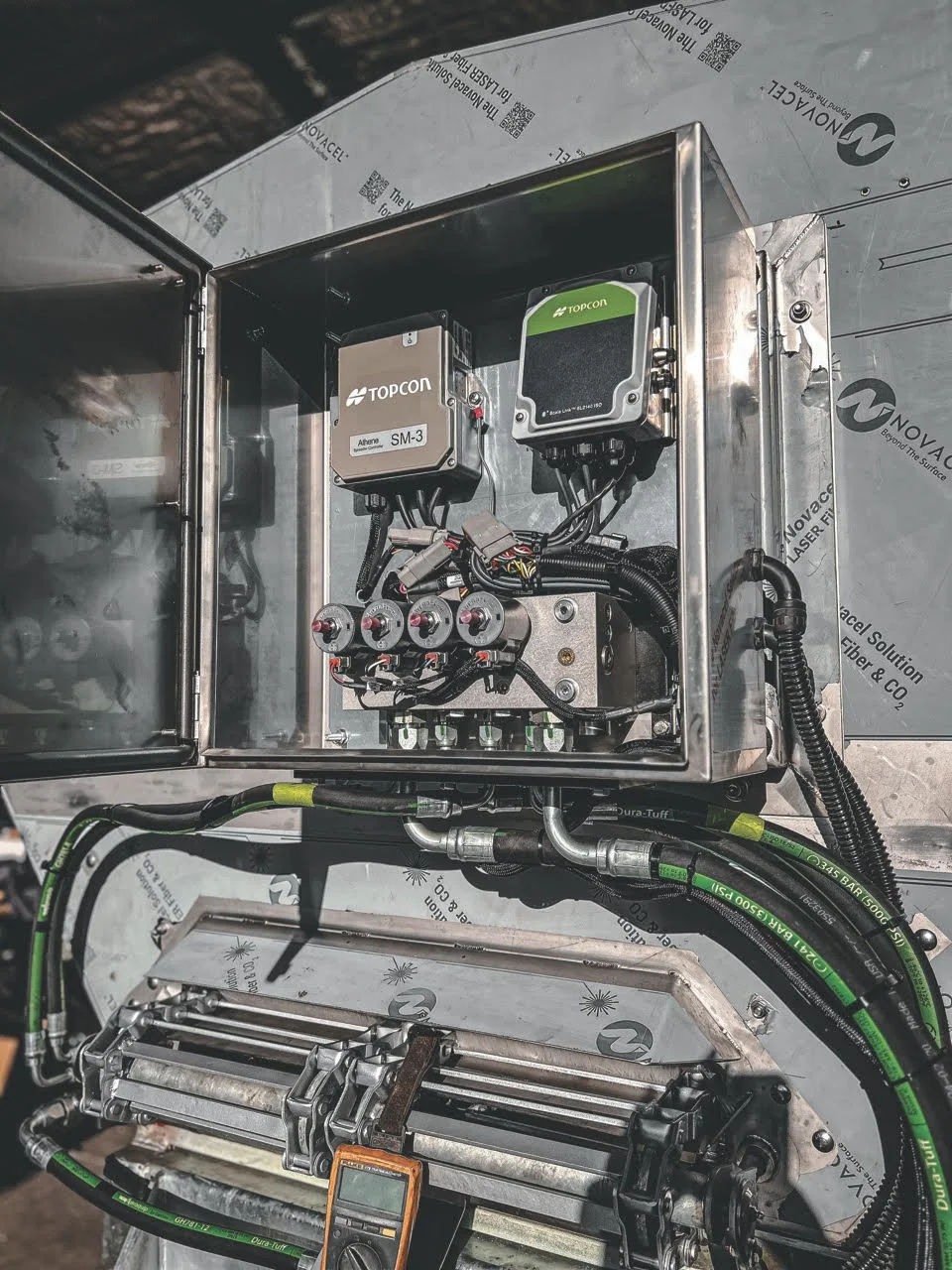
A recent project for BJ Scarlett Ltd, manufacturers and licensed Transpread builders showcases what Total Ag Control brings to the table. Scarlett needed a precision-spreading setup for a client wanting greater accuracy, less waste and smoother operation across irregular paddocks. Total Ag Control supplied and installed the latest Topcon hardware to achieve exactly that, proving how far spreading technology has advanced.
At the heart of the new system is Topcon’s Athene SM-3 controller, paired with a premium unlock for variable rate and variable width control. The spreader automatically adjusts both product rate and spinner speed as it moves across the paddock, slowing and narrowing the spread at headlands while maintaining the correct application rate. The result is a fully automated process that prevents overlap, eliminates waste and ensures uniform coverage, no manual calculations or adjustments required.
Through Isobus integration, any compatible tractor can connect directly to the spreader without extra displays or wiring. Operators simply hook up, load the job map and drive. The Topcon interface manages rate control, spinner adjustments and proof-of-application logging all in one platform. For contractors running mixed fleets this compatibility keeps systems flexible and transferable between machines, reducing downtime and improving utilisation.
For the operator, the benefits are clear: greater accuracy, less product wasted and a smoother job overall. Variable rate ensures nutrients are applied exactly where they’re needed, while variable width control maintains precision in awkward paddocks. The technology handles the fine-tuning allowing drivers to focus on efficient and safe operation, cutting costs and improving crop performance through more even application.
That simplicity is exactly what Tony and Nev aim for - taking technology that looks complex on paper and making it intuitive in the cab. Every installation is tailored to the customer’s equipment, whether it’s a new build like Scarlett’s or a retrofit to existing hardware. The emphasis is always on reliability and real-world function, not just features.
Total Ag Control’s alignment with Topcon also extends beyond spreading. From GNSS guidance and section control to flow monitoring and application mapping, the company provides integrated precision systems that help farmers and contractors manage inputs accurately and document their work with confidence. The flexibility of the Topcon platform means everything from standalone consoles to complete Isobus solutions can be configured to suit any operation, all supported by local technical know-how.
In the case of the new BJ Scarlett build, the outcome speaks volumes. The machine now runs full headland and boundary control with automated rate and width adjustment, maintaining consistent application across variable terrain. Every pass is logged and traceable and the system integrates seamlessly with farm mapping and nutrient management software for reporting.
With rising input costs and tighter environmental standards, this level of control is about more than convenience - it’s helping contractors and farmers achieve smarter compliance, better efficiency and stronger returns. The shift from Advanced GPS Ag to Total Ag Control has only strengthened local capability, cementing Tony and Nev’s position as key partners in keeping New Zealand agriculture at the forefront of precision innovation.
Tirotech
For New Zealand’s ground-spreading contractors, accuracy and accountability have become just as critical as horsepower and timing. The demands of modern agriculture, from nutrient management reporting to client transparency, mean contractors are being asked to deliver more data with every load. New Zealand guidance company Tirotech has emerged as a local disruptor in the GPS guidance market, a homegrown solution designed specifically for New Zealand ground-based fertiliser and spray contractors.
Originally developed for aviation, Tirotech’s ground-based guidance system brings a level of positional precision and reliability that contractors can trust in demanding conditions. Its focus is on real-world functionality: dependable guidance, automatic proof-of-application data capture and seamless digital communication between farm clients and operators.
At its core, Tirotech combines high-accuracy GPS guidance with an integrated 4G modem. The technology has been engineered with New Zealand’s variable terrain, connectivity gaps and compliance environment in mind, which sets it apart from imported or generic systems.
Tirotech is integrated with Precision Farming’s job management system, allowing contractors to manage jobs and digital maps more efficiently. Job details created in Precision Farming or linked farm management systems such as HawkEye or MyBallance flow directly to the Tirotech unit in the cab, removing the need for manual entry or paper maps. Once the application is completed, the data automatically returns through Precision Farming providing a clear record of what was done, where and when. The operator’s workflow is simplified, the driver’s workload reduced and data integrity maintained without manual intervention.
From an operational standpoint, the system’s flexibility is one of its strongest points. Contractors can run Tirotech with the widely used JWE V3 and V3+ spread controllers, as well as Novax and TeeJet systems and it supports variable-rate control as standard. Because it integrates with Precision Farming’s job management system, Tirotech can also be used alongside other hardware solutions. This interoperability ensures contractors with mixed fleets can adopt the technology without replacing all their existing hardware.
When a farmer places an electronic fertiliser or spray order through a connected farm management portal, the job details including the application map, rate and product information are transmitted digitally to the contractor’s Precision Farming dispatch system, which can be accessed on desktop or phone. The dispatcher or driver then assigns the job, and it appears instantly on the relevant Tirotech unit in the vehicle. Once in the paddock the operator follows the mapped guidance lines, applies product according to the prescription and the system logs all data automatically. Upon completion the proof-of-application file is synchronised back through the network, closing the loop between the farmer, contractor and supplier.
For contractors and farmers, this eliminates the friction of paper-based record keeping and reduces the risk of transcription errors or data loss. It also removes the administrative burden from operators, who no longer need to manually upload or transfer application records. The end result is a verifiable, geospatially referenced record of work that can satisfy client reporting requirements, support environmental audits and align with regulatory compliance standards.
Because Tirotech is built in New Zealand and connected and supported by the Precision Farming job management system, the team can respond quickly to feedback from operators and adapt the technology to local needs. The system has been developed with a clear understanding of the conditions contractors face, from the wide variability of rural network coverage to the ruggedness required of hardware that lives in the cab of a spreader or sprayer year-round. The display hardware is designed for clarity and reliability, with a responsive touchscreen that remains usable in dusty, bright or vibration-prone environments.
Operators adopting the system have reported improvements in operational efficiency through reduced downtime and better coordination. The ability to edit jobs on the fly or receive live updates from the office allows real-time scheduling adjustments based on weather, product availability or shifting client priorities. Fleet managers gain visibility over job progress and machine utilisation, which in turn supports better resource allocation and cost management.
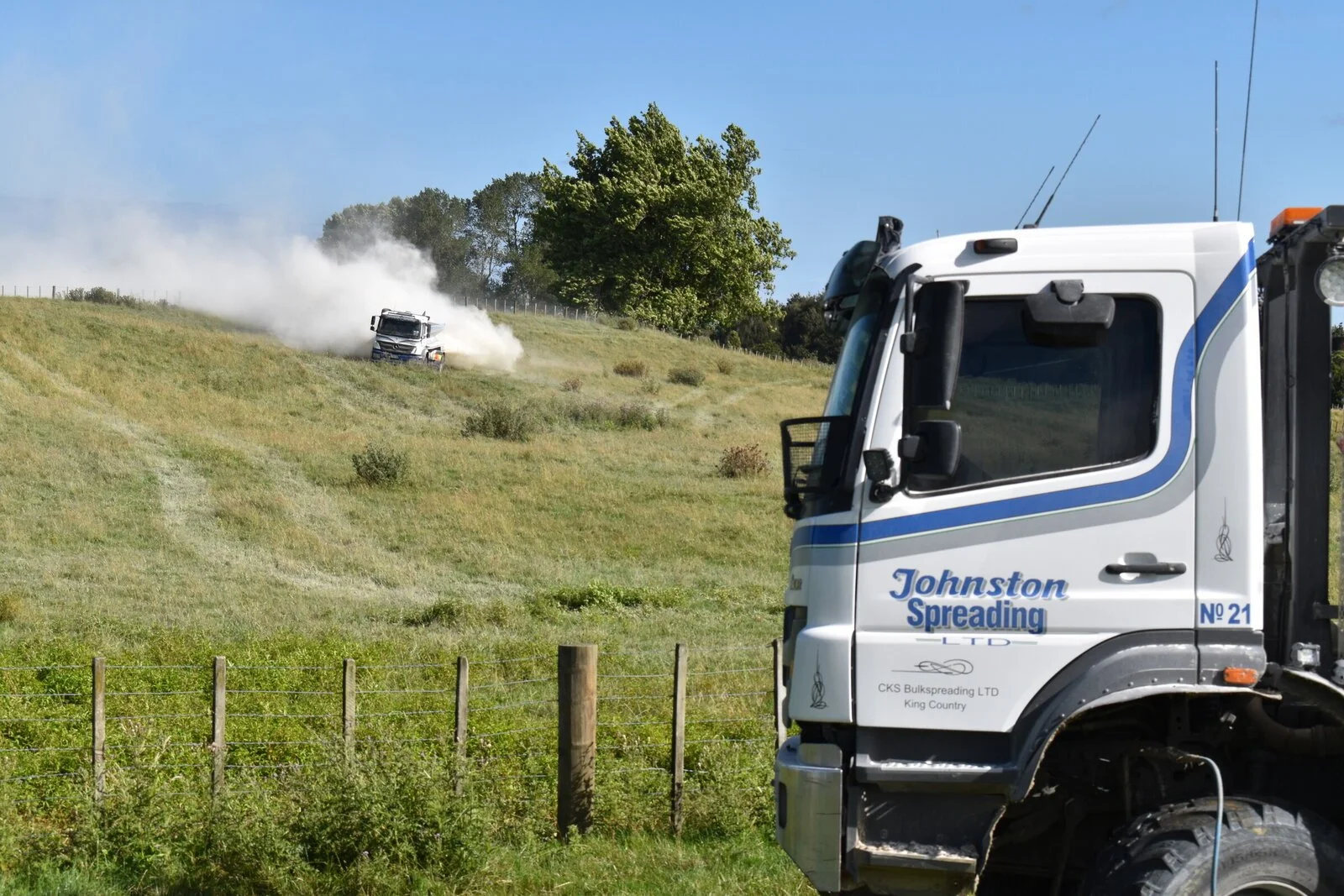
Waikato-based Johnston Spreading shifted to Tirotech at the start of the season and have been loving the change.
“Shifting to Tirotech has been a great decision for our business. The in-cab guidance system is clear and easy for our drivers to use, and receiving orders and managing jobs through Precision Farming works seamlessly,” says owner Bruce Johnston. “They’re constantly improving the systems and taking our feedback on board, which is really refreshing and their customer service has been outstanding.”
In parallel, farmers gain assurance that application records are precise and immediately available via Precision Farming or their fertiliser supplier portals HawkEye or MyBallance. For both sides of the equation, the system builds trust. The days of uncertainty around application boundaries, rates or timing are being replaced by data-backed clarity. As fertiliser and agrichemical use faces closer scrutiny, the ability to produce digital proof instantly becomes a major commercial advantage.
Tirotech’s development represents a significant step in the broader digital transformation of agricultural contracting. As agriculture continues to evolve, systems like this are becoming the backbone of how data moves through the industry—from product manufacturer to supplier, to contractor, to farmer and finally to compliance reporting. The integration between Tirotech and New Zealand’s leading farm data platforms via Precision Farming means it is already aligned with where the industry is heading: interoperable, automated and accountable.
UPL
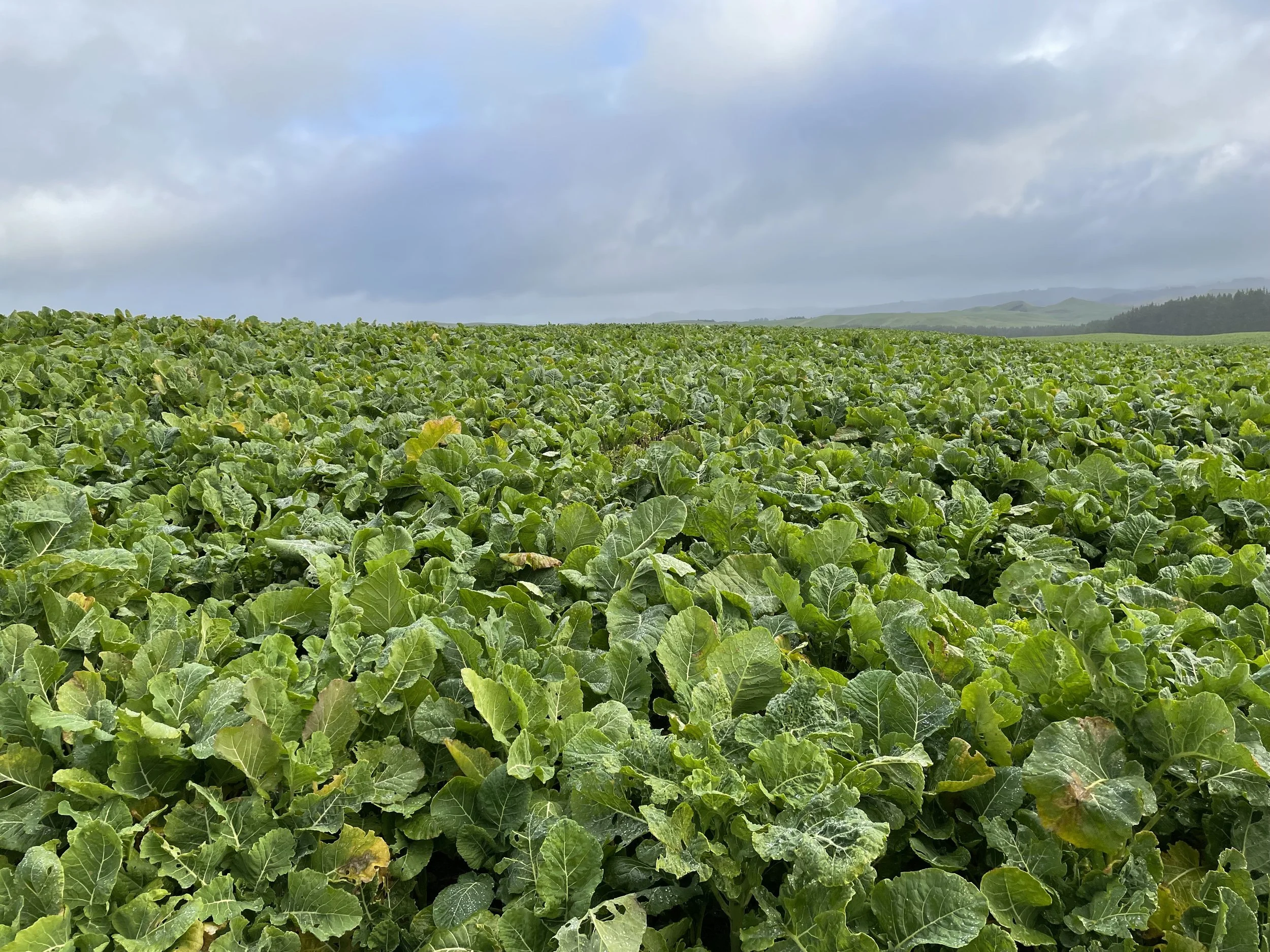
Getting thorough insecticide coverage, particularly on dense crops like forage brassicas, fodder beet, cereals and maize, takes a bit of doing. Insects by their nature are “all over the place.” Pieter Van Der Westhuizen, UPL NZ Ltd Adjuvant Lead, says, “There’s not one part of the leaf that isn’t vulnerable to damage.
“Using Du-Wett with your spray gets insecticides to all the places it’s needed—including leaves’ undersides. Many other adjuvants don’t get into all the nooks and crannies. At the same time using Du-Wett allows spraying at lower water rates which saves fuel and labour.”
Pieter says particularly with helicopter and drone application where low water volume is an advantage, Du-Wett comes into its own. “With Du-Wett you cover a greater area faster and still get better protection for the crop. Traditionally the school of thought was that using more water would improve spray coverage. That’s not how it works. In reality, it’s wasting an important resource without getting any ROI. Water’s high surface tension doesn’t give the spread or coverage needed for optimal performance.”
Du-Wett works by reducing the surface tension of spray droplets. One spray droplet containing Du-Wett can provide up to 20 times the spread of the insecticide active compared to an insecticide applied without an adjuvant, and at least 6-8 times compared to a conventional, non-ionic adjuvant.
Pieter says in addition, thanks to its composition, Du-Wett has capillary action which transfers insecticides to the leaves’ undersides. “Otherwise, insecticides often just drop off the tip of the foliage. That spray is effectively lost, and it exposes the crop to damage.”
He says around 20% reduction in spray drift can also be achieved which potentially extends the spraying application window and delivers certainty of targeting. “That’s part of doing a good job, and looking out for the neighbours, and the environment.”
Du-Wett is compatible with a whole range of commonly used insecticides including Sparta®, Exirel® and Aphidex®. White butterfly, diamondback moths, aphids and nysius “wheat bug” (which also attacks fodder beet and forage brassicas), are all likely to be threats this season.
In maize, Pieter says there’s a very real potential for FAW (fall army worm) to be out there and spreading rapidly if it’s not tackled effectively early on. While New Zealand has always had corn earworm and tropical army worm, FAW takes the potential for destruction to a whole new level. “They’re a terrible pest.”
He acknowledges that everyone is cost-conscious right now, but he says Du-Wett will easily pay for itself. “You get the most out of every drop of the spray. We get a lot of positive feedback on that.”
Pieter says it’s recommended that Du-Wett be used at 200 mL/ha for most insecticides, except for Attack® (then use at 300 mL/ha) and chlorpyrifos (recommended use 250 mL/ha). Water volumes are 50-250 L/ha for ground applications and 50-100 L/ha for aerial applications.
Optimum spreading and wetting from Du-Wett will occur between pH 5 and pH 9.
Du-Wett is a Kiwi innovation. Approved in 1996, it is one of Elliot Chemicals Ltd’s (now UPL NZ) many very successful products. A super spreader with improved deposition and no stomatal penetration, it is backed by years of dedicated research in New Zealand conditions.
For more information on getting the most out of insecticides with Du-Wett talk to your local technical advisor or contact Pieter Van Der Westhuizen, UPL NZ Adjuvant Lead, at 021 392 740.