
A review of spray technology
Modern spraying is no longer just about application; it is about accuracy, timing and efficiency. Section control, rate control and drift management technology are helping contractors reduce overlap, minimise waste and ensure crop protection products are applied precisely where they deliver the greatest benefit.
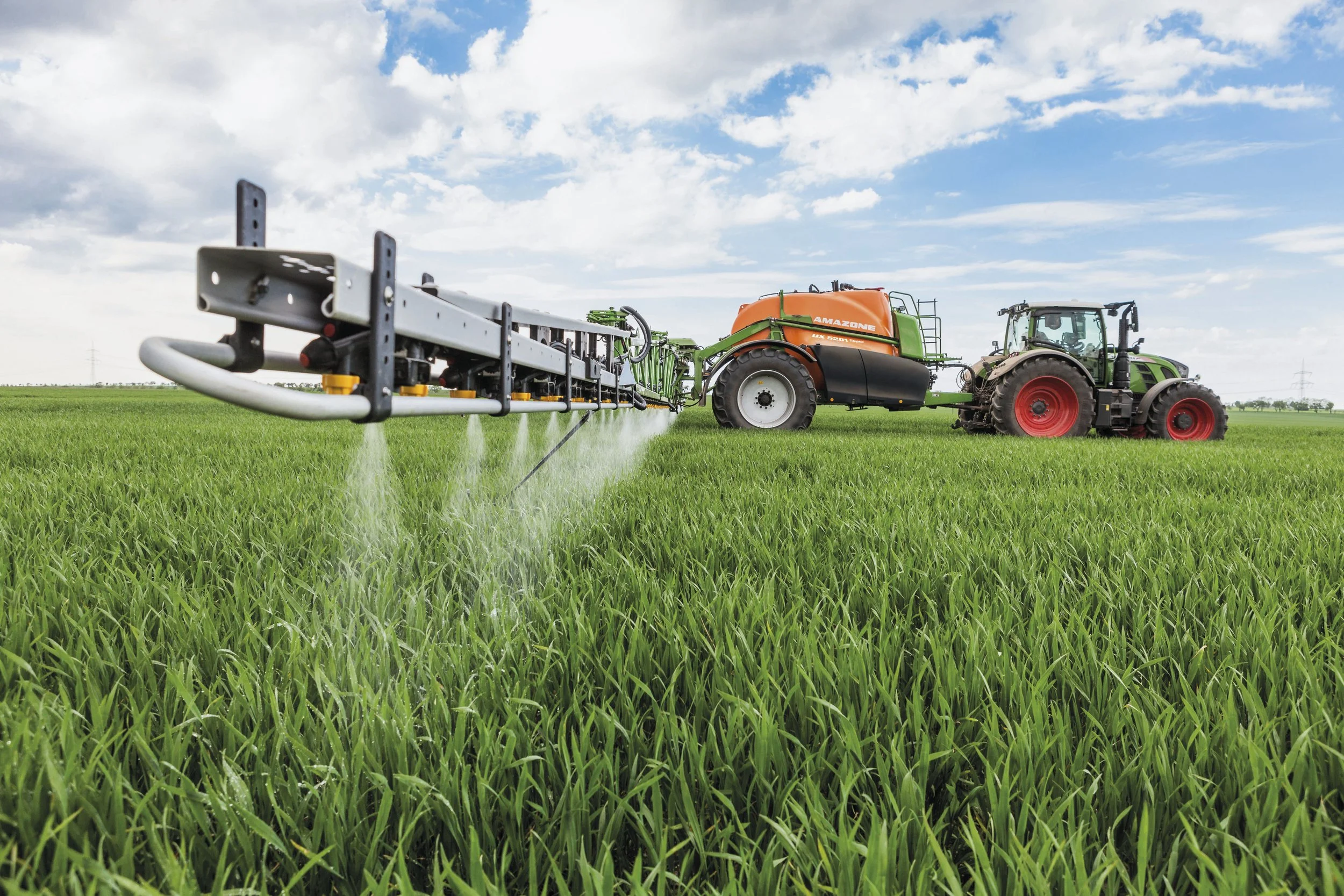
Amazone
With Amazone products farmers get precision, efficiency and savings all in one. Amazone spray technology represents a highly advanced suite of spraying innovations that apply crop protection chemicals exactly where and when they are needed, reducing waste, saving fuel and cutting input costs. Automated controls, GPS guidance and smart spot spraying technologies mean fewer passes over the field, less stress on crops and higher yields. Integrated digital systems make operation simple and data driven while sustainable application protects the environment. Simply put, Amazone helps farmers work smarter, boost profitability and grow better crops.
From smaller mounted units to large high capacity machines, Amazone offers a range of spray technology to suit any farm or contracting business.
Mounted sprayers are designed for small to medium farms where efficient spraying is required without the need for a trailed rig, particularly in situations where manoeuvrability is important.
The UF 01 mounted sprayer features a lightweight tractor mounted design with tank sizes from 900 L to 1,200 L. Boom widths range from 12 m to around 24 m and the unit incorporates strong suspension to maintain smooth and stable boom control. This makes it a practical choice for orchard, vine or smaller field applications where a compact sprayer is needed. Capacity can also be increased by pairing the machine with a front tank system.
For operators requiring greater capacity while retaining the advantages of a mounted sprayer, the UF 02 offers a step up. This larger mounted sprayer carries tank 2,000 L with boom widths reaching up to 30 m. It offers comfortable handling and like the UF 01, can be combined with front tank systems to achieve total capacities of up to 3,500 L.
Moving into higher output operations, Amazone’s range of trailed sprayers provides flexibility and greater tank capacity while still retaining precision control. The Ug trailed sprayers represent the entry point in this category with capacities of approximately 2,200 L and 3,000 L. These machines work well for mid sized farms where a tractor mounted sprayer may be limiting but extremely large tanks are not required. Their strong and reliable design allows them to handle a wide range of spraying tasks.
The UX Special trailed sprayer sits in the middle of the Amazone range, offering tank capacities of around 3,200 L, 4,200 L and 5,200 L. With boom widths reaching up to roughly 36 m the UX Special offers a practical balance of capacity, capability and cost. The machines are designed to be robust and straightforward to operate, making them a suitable option for many farming operations seeking increased output without stepping into the very largest equipment category.
At the top of the trailed sprayer range sits the UX Super series, Amazone’s flagship line designed for large scale cropping and high productivity field work. These machines offer tank capacities ranging from approximately 4,200 L up to 11,200 L, combined with wide boom options from roughly 21 m to 48 m. Advanced features such as boom guidance systems, precise individual nozzle control and powerful pumping systems allow these sprayers to operate efficiently during long days in the field. Larger versions within the series include models such as the UX 7601 Super with around 8,000 L capacity and the UX 8601 Super with approximately 9,000 L, both offering improved stability and high output performance suited to demanding cropping environments.
For contractors or large cropping operations requiring maximum productivity, Amazone also offers the Pantera self propelled sprayer. This machine integrates the tank, chassis and spraying system into a single purpose built platform designed to cover large areas quickly and efficiently. Available with tank sizes such as 4,500 L and 6,600 L and boom widths up to around 48 m, the Pantera is well suited to large farms or contracting businesses where high travel speed and operational autonomy are important.
Across the entire range user friendly digital controls, GPS guided section management and spot spraying capabilities help make spraying faster, easier and more reliable. Amazone sprayers feature advanced precision technology that allows farmers to apply crop protection products accurately, efficiently and sustainably. Systems such as AmaSelect automatically select the correct nozzle according to forward speed and the desired application rate, while PWFM (Pulse Width and Frequency Modulation) ensures each nozzle delivers the exact volume required with consistent droplet size.
For even greater precision, a number of options such as AmaSpot, SmartSprayer and AmaXact use sensors, cameras and GPS data to detect weeds or crop areas in real time applying chemicals only where needed. These integrated digital systems reduce overlap, cut chemical use, save fuel and improve crop quality while making spraying simpler, faster and environmentally responsible.
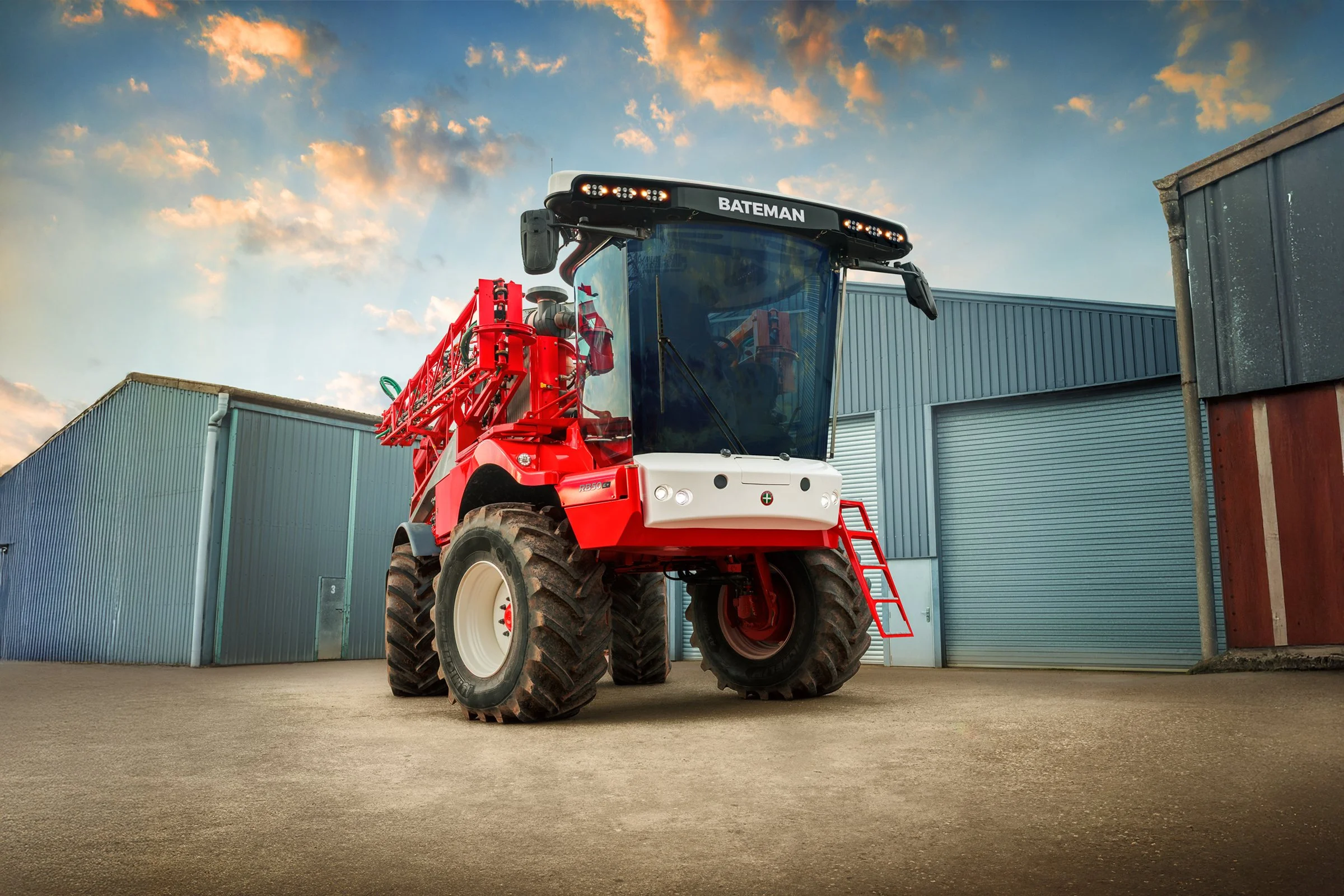
Molloy Agriculture
There are sprayers and there is Bateman. Farmers and contractors across the globe rely upon British-made Bateman self-propelled sprayers.
Bateman is a family-run company, it produces all four models of its range entirely in-house at its plant in Devon.
Every detail of a Bateman sprayer is designed around the operator. The design is driven by the need for simplicity to give effortless, efficient spraying during long hours in the field.
Step into the Panoramic 3 cab of a Bateman and immediately you know that it is an environment created by people who know sprayers. The highbacked, heated and cooled air suspension seat provides comfort while air quality and circulation is distributed by a high-performance climate control system featuring CAT 4 filtration.
Visibility in a Bateman is second to none thanks to just two carefully positioned pillars and an Ag Leader terminal that can be lifted and lowered out of view. Noise levels in the cab are greatly reduced by substantial insulation and the solid, airtight door. The cab sits on a chassis designed for safe weight distribution and minimal compaction. Unique to Bateman is the positive link two/four-wheel steering. This is a hydro-mechanical system that cleverly changes the driving mode without the need for electronic sensors or manual adjustment.
All Bateman sprayers feature hydraulically adjustable axles. With the flick of a switch, you can move the axles out to do a job or draw them back in when the job is finished.
The spraying system on a Bateman is easy to use and gets the job done every time. The plumbing system delivers high flow rates while auto filling provides increased efficiency on the farm and in the field.
For better fuel efficiency, all spraying systems on a Bateman sprayer are performed at low engine revolutions.
Air valves in the spray control system produce faster, more accurate on/off control of the spray line to minimise overlap and increase the effectiveness of chemicals or fertiliser.
Bateman Engineering also offers the Capstan AG Pinpoint III blended pulse modulation system. Pinpoint III controls flow and pressure at the nozzle in conjunction with individual nozzle boundary control. It provides accurate and repeatable application to achieve the desired coverage.
Speeding up, slowing down, turns, overlaps or any combination of those variables will not affect the consistency built into the Pinpoint II system.
The baffled stainless-steel tanks have capacities from 3000 litres on the RB 30 model up to 6000 litres on the RB 60 model.
Bateman offers two booms, the standard contour version or the variable geometry version. Standard contour booms are available in 18m, 20m and 24m widths and variable geometry booms start at 24m and extend up to 42m.
When unfolded, a mechanical or hydraulic shear bolt system secures the lightweight steel boom in position.
Both boom versions feature a breakaway facility. The variable geometry boom has hydraulic break-back at every fold point, and it automatically returns to position after the sprayer passes the obstacle.
The fold position of the boom is behind the cab to eliminate the risk of contamination of the operator’s environment when entering the cab.
Designed and developed entirely in-house, Bateman Boom Levelling (BBL) is a big step forward in boom levelling. BBL allows the boom to follow the contours of the ground, and provides the operator with the ability to spray under a vast range of conditions without the need to change settings.
This innovation is now available on all variable geometry contour booms across the Bateman range. It is also available as a retrofit.
Bateman maintains close relationships with the owners and operators of its sprayers. It aims to ‘keep the wheels turning’, so it provides the very best possible sprayers for the job and backs them up with outstanding service support and spare parts.
Molloy Agriculture Ltd is the Bateman Self Propelled Sprayer dealer for New Zealand.
Based in Canterbury, Molloy Agriculture is also a spray contracting business that runs a fleet of Bateman sprayers.
Molloy Ag’s staff have a wealth of knowledge and expertise that you can call on whenever you need it. For more information on Bateman sprayers call David Molloy on 0274 362 441 or email david@molloyag.co.nz
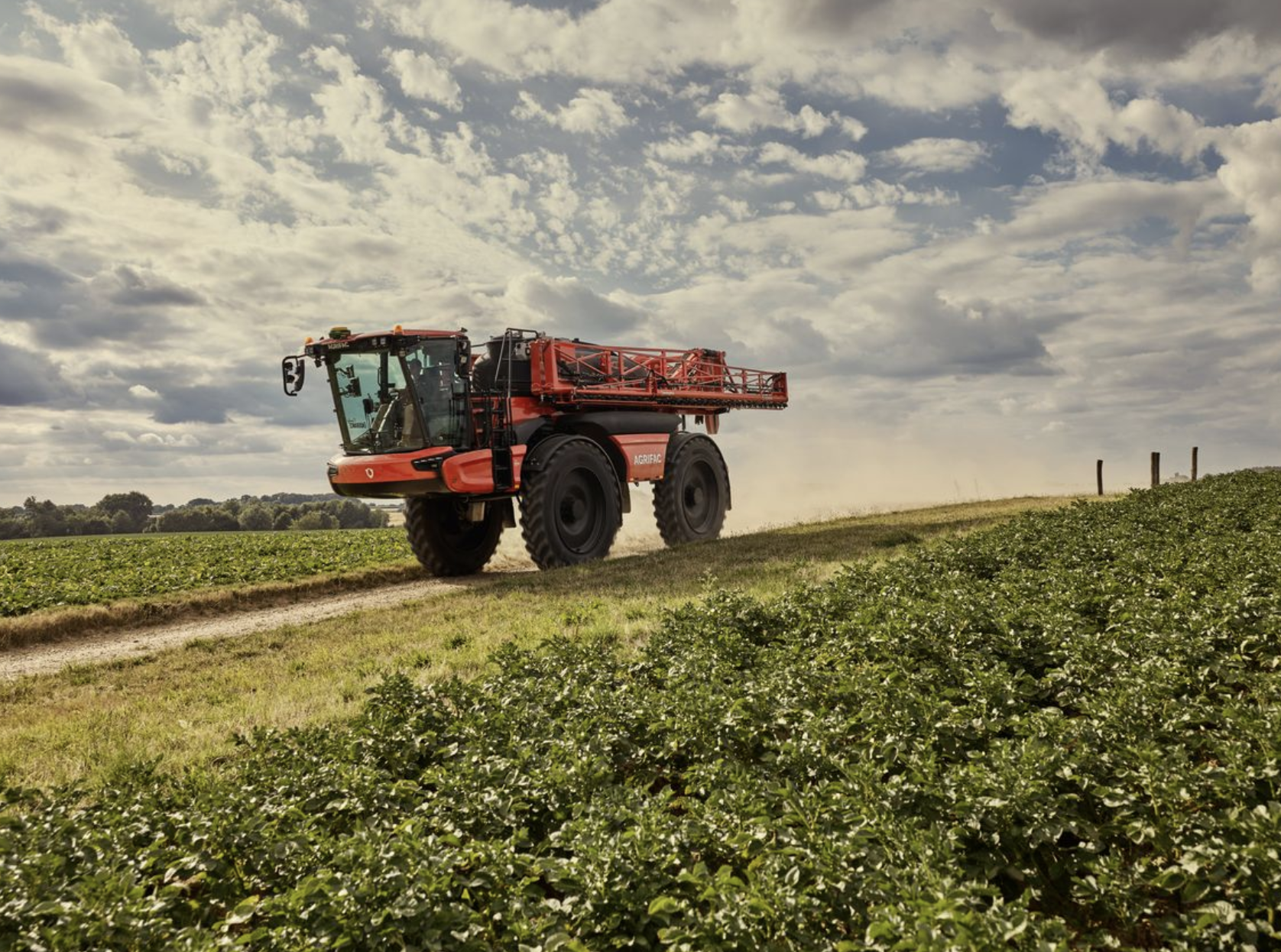
Power Farming - Agrifac
As farms become larger and cropping systems more intensive, the machinery responsible for delivering crop protection products must work harder while remaining precise enough to meet increasingly strict expectations around drift control, chemical efficiency and operator safety.
It is against that backdrop that Agrifac has introduced a new generation of self propelled sprayers, with the launch of three machines designed to raise the standard of what modern crop protection equipment can deliver. The Endurance 80, Vanguard 67 and Vanguard 55 represent the latest development from the Dutch manufacturer and signal a clear focus on increasing capacity, improving operator comfort and providing a more advanced technological platform for precision spraying systems.
All three machines share a common design philosophy centred around usability and control. Each model is equipped with the Claas X11 cab and Agrifac’s new EcoTronicPlus 3 operating system, bringing together machine control, spraying functions and operator interface into a single integrated environment. For operators spending long days in the cab during busy spraying windows, the emphasis on visibility, ergonomics and intuitive controls reflects the increasing importance of operator comfort alongside raw machine performance.
The flagship model in the range is the Endurance 80, a machine built for operations where spraying capacity and productivity are critical. Equipped with an 8,000 litre main tank and powered by a 405 horsepower Cummins engine, the sprayer is designed to cover large areas efficiently while maintaining the accuracy required for modern crop protection strategies. With spray boom options extending to 55 metres and tyres up to 2.3 metres in diameter, the Endurance 80 also offers a ground clearance of 154 centimetres allowing operators to continue spraying in taller crops or challenging field conditions without compromising crop safety.
While the Endurance 80 focuses on maximum capacity, the Vanguard 67 is positioned as a machine that balances performance with manoeuvrability. With a 6,700 litre tank and a 325 horsepower engine, the sprayer offers substantial capacity while maintaining a wheelbase and overall footprint that remain well suited to modern farming operations where paddock access, turning space and road travel are important considerations. For many growers this balance between capacity and agility can be the defining factor in how effectively a sprayer integrates into everyday farm operations.
Completing the range is the Vanguard 55, a more compact machine designed to offer versatility across a broad range of cropping systems. Despite its smaller footprint the sprayer still carries a 5,500 litre tank and can be equipped with large diameter tyres similar to those used on its larger sibling. The result is a machine capable of operating across varied terrain and crop types while maintaining the capacity needed for efficient spraying.
Across the three models operators can select boom widths ranging from 24 to 55 metres depending on the machine and configuration. Folding options include both three and four section boom designs, allowing the machines to adapt to a wide range of field sizes and operational requirements. This flexibility is particularly important as growers increasingly look to optimise spray width for both efficiency and crop protection accuracy.
An important part of the new sprayer generation lies in the technologies that support precise chemical application. Agrifac continues to focus heavily on systems that improve spray accuracy while reducing environmental impact. Two key technologies highlighted with the new machines are StrictSprayPlus and the AICPlus spot spraying system, both of which reflect the broader shift toward smarter, more targeted crop protection.
StrictSprayPlus uses pulse width modulation technology to control each individual nozzle electronically. By rapidly adjusting the flow rate through the nozzle without altering droplet size, the system maintains a consistent spray pattern even when the machine changes speed. This ensures that the application rate remains accurate across the entire boom width regardless of ground speed or terrain variation.
Complementing this system is the AICPlus spot spraying technology, which allows the sprayer to apply chemicals only where they are required. By identifying target weeds or plants within the crop, the system reduces unnecessary chemical application while maintaining effective crop protection. In practice this type of technology represents one of the most significant shifts currently occurring in crop protection equipment, moving away from blanket applications toward highly targeted treatment strategies.
Another key component of the sprayer design is the availability of the Agrifac AirFlowPlus boom system. This technology improves spray penetration and crop coverage by guiding droplets deeper into the crop canopy while reducing drift. In practical terms this allows operators to maintain effective coverage even in more challenging weather conditions while helping ensure chemicals reach the parts of the plant where they are needed most.
Together these technologies create a platform that supports both efficiency and sustainability in crop protection. For Agrifac the launch of the Endurance 80, Vanguard 67 and Vanguard 55 represents more than simply expanding a product range. It signals a continued focus on building spraying platforms capable of supporting the advanced technologies that are shaping the future of crop protection. As precision application systems become more sophisticated, the machinery that carries them must provide the stability, capacity and control required to deliver consistent results in the field.
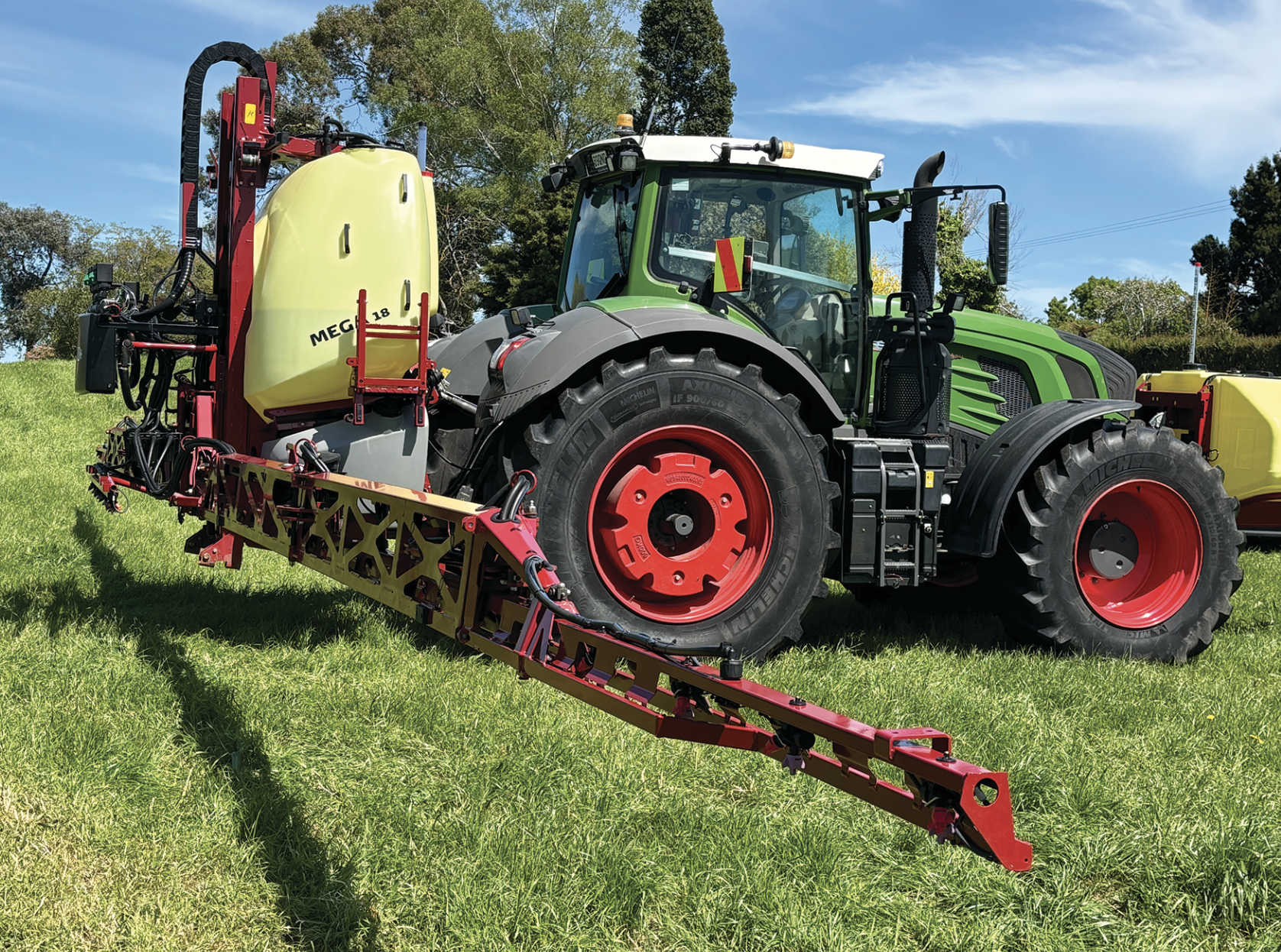
Hardi - Mega
Mounted sprayers have traditionally occupied a compromise position in arable and mixed farming systems. They offer manoeuvrability, lower weight and straightforward transport, yet historically they have not matched the capacity, stability or control sophistication of trailed machines. The Hardi Mega has been developed specifically to challenge that assumption, combining higher tank capacities, advanced boom management and integrated electronic control to deliver a mounted sprayer that operates much closer to trailed-sprayer performance than the category once allowed.
At the centre of the Mega concept is capacity. With tank options ranging from 1,200 to 2,200 litres, the sprayer is positioned to suit medium to large cropping operations and contracting fleets that require meaningful output without stepping into a trailed platform. That upper capacity in particular shifts the mounted sprayer conversation, allowing operators to maintain productivity across larger paddocks while retaining the agility and transport convenience that mounted units still offer.
For extra capacity front tanks can be added with sizes of 1200 and 1500 litres complete with a 12 volt agitation pump.
However, capacity alone does not define spraying performance. The Mega’s PRO Force boom range spanning 15 to 28 metres, is designed to deliver stability and coverage in conditions where mounted booms have traditionally struggled. The boom uses a pendulum-suspended centre section combined with hydraulic control systems to maintain a consistent spray height and alignment, even when travelling at higher forward speeds or working on variable terrain.
Boom stability is further supported by Hardi’s AutoTerrain and ActiveSlant control systems. These use ultrasonic sensors and roll sensors to monitor boom position and automatically regulate height, tilt, slant and yaw movement. Rather than reacting after the boom has moved, the system anticipates terrain changes and corrects movement before instability develops. In practice this reduces operator workload, limits drift risk and helps maintain consistent application quality across the field.
Suspension also plays a critical role in keeping the boom stable. The Mega incorporates an AirRide suspension system mounted in the lower linkage that isolates shock loads between tractor and sprayer. This not only improves operator comfort during transport and field work but also stabilises the boom platform, allowing higher working speeds without sacrificing accuracy.
Precision application is driven by the Mega’s DynamicFluid4 liquid regulation system. This processor continuously analyses pressure, flow, pump speed, forward speed and section status, updating calculations multiple times per second to maintain the target rate. The result is a system capable of rapid response to speed changes or section adjustments, ensuring that application remains consistent across the boom regardless of field conditions.
At the mechanical level, the diaphragm pump remains central to the system. Hardi’s long-standing pump design separates liquid from bearings and mechanical components, allowing the pump to run dry without damage and ensuring long service life. Combined with the EasyClean suction filter and Cyclone pressure filter, the liquid system is built for reliability as well as accuracy, reducing downtime and protecting the nozzles from contamination.
Application precision is further enhanced through PrimeFlow and AutoNozzleControl. PrimeFlow maintains pressurised circulation within the boom, ensuring that spray pressure is stable from the moment the system starts and preventing residue build-up or nozzle clogging. AutoNozzleControl then manages each nozzle individually, automatically switching them on or off to prevent overlap or missed strips. Operating in increments as small as 50 centimetres, the system can significantly reduce chemical use while improving coverage consistency across irregular paddocks or headlands.
For farms increasingly focused on environmental accountability and input efficiency, this level of nozzle control is becoming less of a premium feature and more of an operational requirement. By ensuring that product is applied exactly where it is needed and nowhere else, the system supports both cost management and compliance expectations.
Electronic integration is another defining element of the Mega platform. The SmartCom control architecture is fully Isobus compatible, allowing the sprayer to communicate directly with the tractor terminal or dedicated touchscreen controllers. This integration brings mapping, section control, variable rate capability and application logging into a single workflow reducing duplication and improving data accuracy.
Connectivity extends further through USB, WiFi and data-platform compatibility, enabling application data to be transferred directly to farm management systems or advisory platforms. In an era where spray records increasingly underpin compliance and nutrient planning, the ability to export verified application data without manual paperwork is a meaningful operational advantage.
While digital capability often draws attention, practical usability remains central to the design. The WorkZone layout groups filling, mixing and valve controls into an accessible operator area with colour-coded manifolds and a high-capacity TurboFiller to simplify chemical handling. The system’s agitation design uses Venturi nozzles to maintain consistent mixing across the tank, ensuring accurate dosing even with challenging products.
Cleaning and maintenance have also been considered carefully. The DilutionKit allows flushing of the boom and tank from the cab, while optional external cleaning systems enable in-field washing. These features help reduce contamination risk between jobs and support best practice stewardship around chemical handling.
Taken as a whole, the Hardi Mega reflects how mounted sprayers are evolving. Instead of serving solely as smaller alternatives to trailed machines, they are increasingly becoming high-capacity, high-precision platforms in their own right. By combining advanced boom control, responsive liquid regulation and integrated digital management the Mega moves the mounted sprayer firmly into the realm of modern precision agriculture.
Silvan
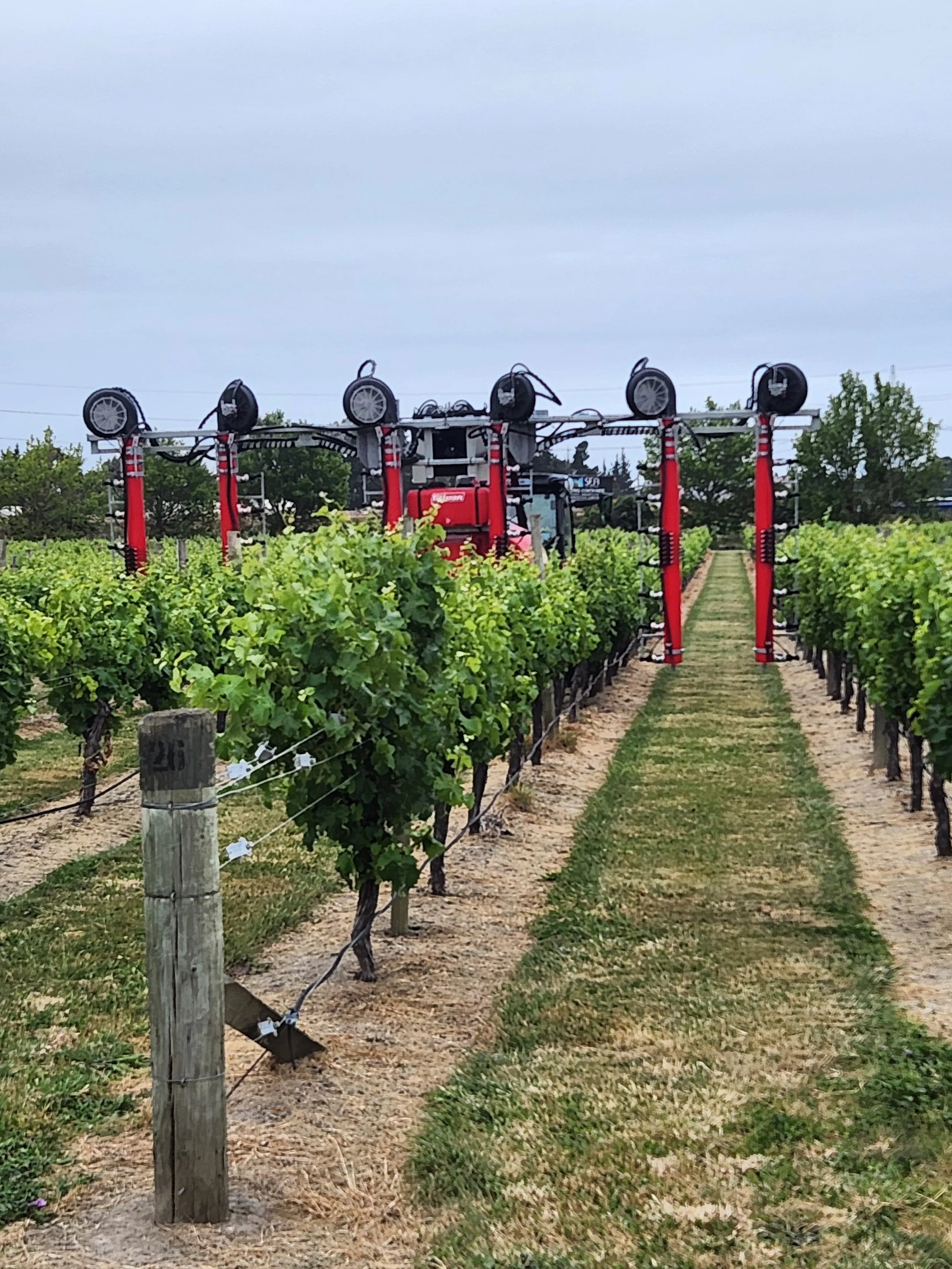
In perennial cropping systems spray effectiveness depends on how well airflow, droplet formation and machine stability interact within the crop canopy. The Silvan 4000L G2 Turbo Scram Trailed 3 Row Tri-Wrap sprayer is designed around that interaction, using air-shear technology and multi-fan airflow management as the core of its application system rather than relying solely on pump pressure or nozzle size.
The defining feature of the Turbo Scram system is its air-shear spray head. Rather than producing droplets purely through hydraulic pressure, the sprayer uses high-velocity air streams to atomise the spray solution as it exits the venturi outlets. This process creates a consistent droplet spectrum and improves penetration into dense foliage, allowing spray to reach both the outer canopy and interior leaf surfaces. In practice, this approach gives operators greater control over deposition while reducing the reliance on very high liquid volumes.
Air delivery is handled through multiple turbine fans positioned along the spray head, each generating a directed airflow column aligned with the crop rows. These fans are sized to produce sufficient air velocity to move droplets deep into the canopy without excessive turbulence. By pairing airflow with droplet formation the machine shifts application control from pressure-driven spraying to aerodynamic placement, which is particularly relevant in vineyard and orchard environments where canopy density varies significantly.
Liquid supply for this system comes from a stainless steel centrifugal pump rated at approximately 350 litres per minute. The pump is hydraulically driven and designed to maintain stable flow across multiple spray outlets, ensuring that each row receives consistent delivery. Because multi-row sprayers depend on uniform distribution across all spray heads, maintaining steady pressure within the circuit is critical to achieving even coverage across the working width.
The machine’s control architecture is centred on electric section valves paired with an automatic rate controller. This allows the operator to maintain a consistent application rate regardless of travel speed while also enabling independent section control across the spray head. For contractors and growers managing irregular block shapes or headlands, this level of automation reduces overlap and ensures chemical placement remains consistent throughout the job.
A key structural element of the Tri-Wrap configuration is its independent hydraulic folding system. The left and right arms can be adjusted to suit row spacing, while the central frame supports alignment across three rows simultaneously. This design allows the sprayer to adapt to varying vineyard layouts without requiring major mechanical changes, and it ensures airflow remains directed at the crop rather than dispersing above it. Adjustable geometry is particularly valuable in perennial systems, where canopy height and structure evolve over the season.
The hydraulic system that supports these adjustments is built around a self-contained power pack mounted on the chassis. This unit incorporates an oil reservoir, filtration and pressure-management components designed to stabilise hydraulic flow and protect the system from cavitation or overheating. By isolating the hydraulic circuit from the tractor where necessary, the sprayer can maintain consistent performance regardless of the towing machine’s hydraulic capacity.
Tank construction follows a durability-focused approach. The 4000-litre polyethylene tank is designed to withstand impact and chemical exposure, with integrated agitation and filtration systems supporting consistent mixing and flow. Separate freshwater and flushing tanks allow operators to rinse lines and maintain hygiene in the spray circuit, reducing contamination risk between products. These features contribute to operational reliability rather than headline performance, but they are essential to maintaining spray quality across a season.
The chassis design reflects the machine’s intended operating environment. A galvanised steel frame provides corrosion resistance, while tandem suspension axles distribute load and maintain stability over uneven ground. This stability is not simply about towing comfort. Maintaining consistent ride behaviour helps preserve spray head alignment and airflow direction, both of which influence droplet placement accuracy.
Taken together, the engineering approach behind the Turbo Scram Tri-Wrap platform places airflow control and droplet formation at the centre of the spraying process. Rather than increasing spray volume or relying on pressure alone, the machine focuses on how air and liquid interact as a combined delivery system. This reflects the broader direction of orchard and vineyard spray technology, where aerodynamic placement and canopy penetration increasingly define performance.
For operators working in high-value perennial crops, the ability to treat multiple rows in a single pass while maintaining uniform coverage can significantly influence productivity and chemical efficiency. Machines such as the Silvan Turbo Scram show how manufacturers are addressing that requirement through airflow engineering, hydraulic integration and structural adjustability rather than simply scaling up tank capacity.
As spray technology continues to evolve, the interaction between airflow, droplet size and canopy structure will likely become the defining measure of performance. The Turbo Scram Tri-Wrap platform demonstrates how those principles can be translated into a practical machine, designed to deliver consistent application across complex crop environments while maintaining the mechanical reliability required in commercial operation.
Airborne Solutions
Born on the land and raised in the skies, Bayden Neustroski and Scotty Horgan are bringing a fresh perspective to New Zealand’s aerial application. With more than 14 years of helicopter spraying experience behind them, the pair recognised a new chapter was unfolding in the sector. In 2020 they saw what they’d been waiting for - a truly commercial-grade agricultural drone that could perform to the standard New Zealand farmers demand.
“We were watching the drone space for a while,” says Scotty. “There was a lot of hype, but it never quite delivered. Then we saw what XAG was doing and we thought: right, now it’s ready.”
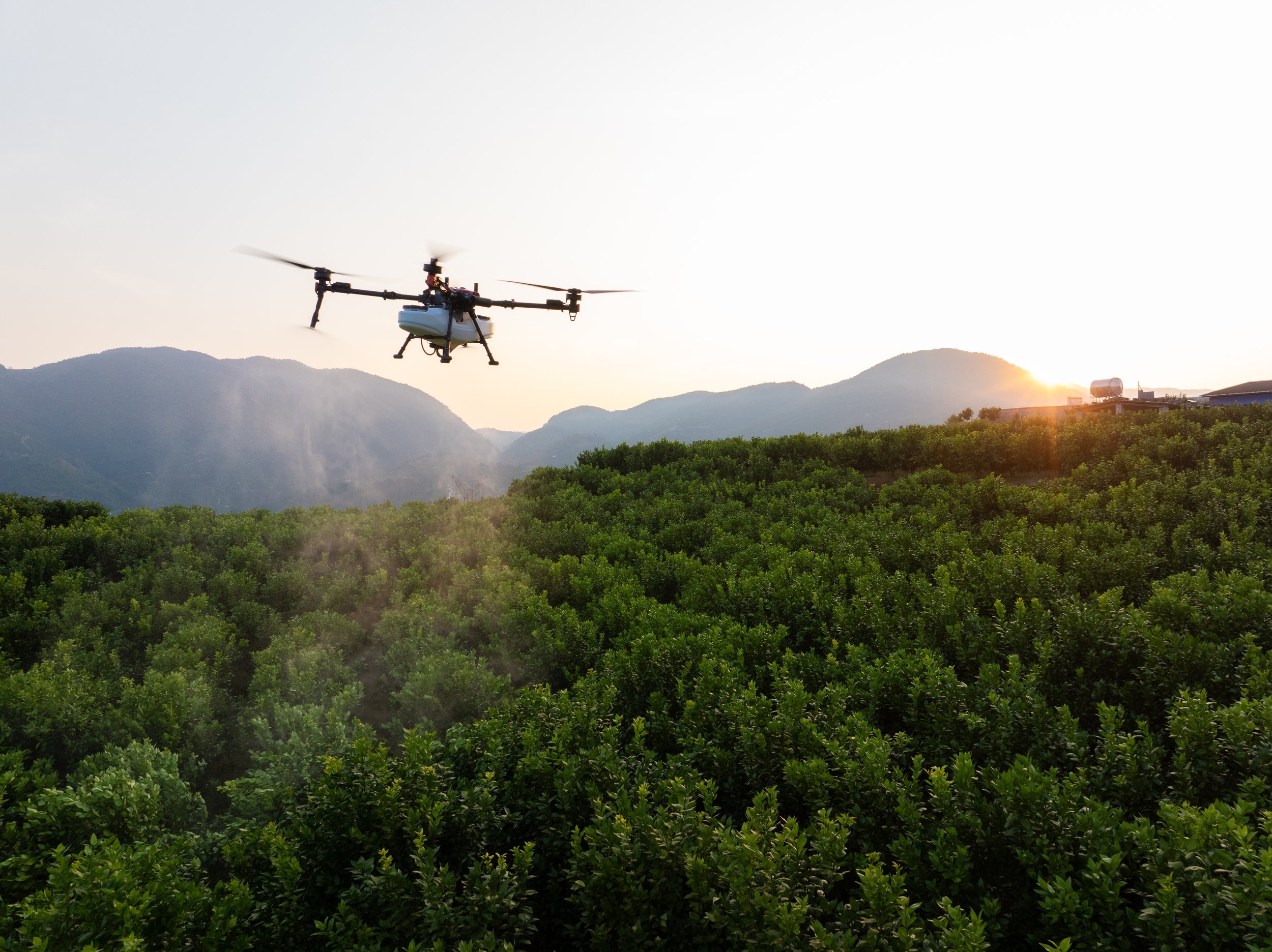
The first drone the pair imported was an XAG P30 - a 16 litre drone that had a place but was too small to make a real difference. Fast forward a few years, and the XAG P100 PRO has now proven itself a solid performer across the country’s vineyards, orchards and rolling paddocks. But the recent arrival of the fifth model Airborne Solutions have imported, the new XAG P150, takes things up a gear, or ten.
“Now we have a real workhorse at our disposal,” says Scotty.
With a 70kg lift capacity, 115L spreading tank and up to 30L/min spraying rate the P150 is built for serious work. Coverage of up to 20 hectares per hour and an RTK-guided app-based interface means it’s capable, precise and surprisingly simple to operate.
“It’s the closest thing we’ve seen to a true contractor’s drone,” says Bayden. “The speed and spread rate make it competitive with ground rigs, but without the compaction and with way better access.”
Still for all its capabilities, the pair are quick to remind customers that the drone itself is just part of the puzzle.
“We’ll give you the gear that suits your setup,” says Scotty. “But more importantly, we’ll show you how to get the best out of it.”
Airborne Solutions is now one of the few operators in the country both selling and using spray drones in the field. This hands-on approach sets them apart - Bayden and Scotty understand the challenges their customers face because they’ve faced them themselves.
That real-world knowledge underpins every sale, service and job they deliver, and is winning over clients across the country. Viticulturist Daniel from Hawke’s Bay says the communication and flexibility from Airborne Solutions has been first-class.
“Highly recommend Scotty and the team to anyone looking at drones as an avenue for fert or pesticide applications,” he says.
Mitch Neal of Aerofarm echoes the sentiment, praising their product knowledge and after-sales support.
“They were there to answer every question and offer guidance the whole way through.”
With bases in Hawke’s Bay and Wanaka Airborne Solutions services clients across the country, many of them contractors themselves often looking to add aerial application to their offering.
“We’ve got a few customers now who started off with a single drone and are running a proper business with it,” says Bayden. “It’s cool to be part of that. We don’t just hand them a box and walk away. We help them get set up, get their Part 102 certification if needed and stay in touch.”
Drones aren’t a silver bullet and neither Scotty nor Bayden would pretend otherwise. But they are a tool, a bloody good one and when they’re backed by practical advice, local knowledge, and genuine support they start to make a real dent in how we farm.
As Bayden puts it: “We’re not here to sell you a dream. We’re here to help you do the job better.”
Croplands
Croplands are the spraying specialists in New Zealand. With over 50 years’ experience, they are now leading the way in both traditional and emerging solutions technology to help maximise efficiency on farm. Hear more about their latest and greatest on farm solutions.
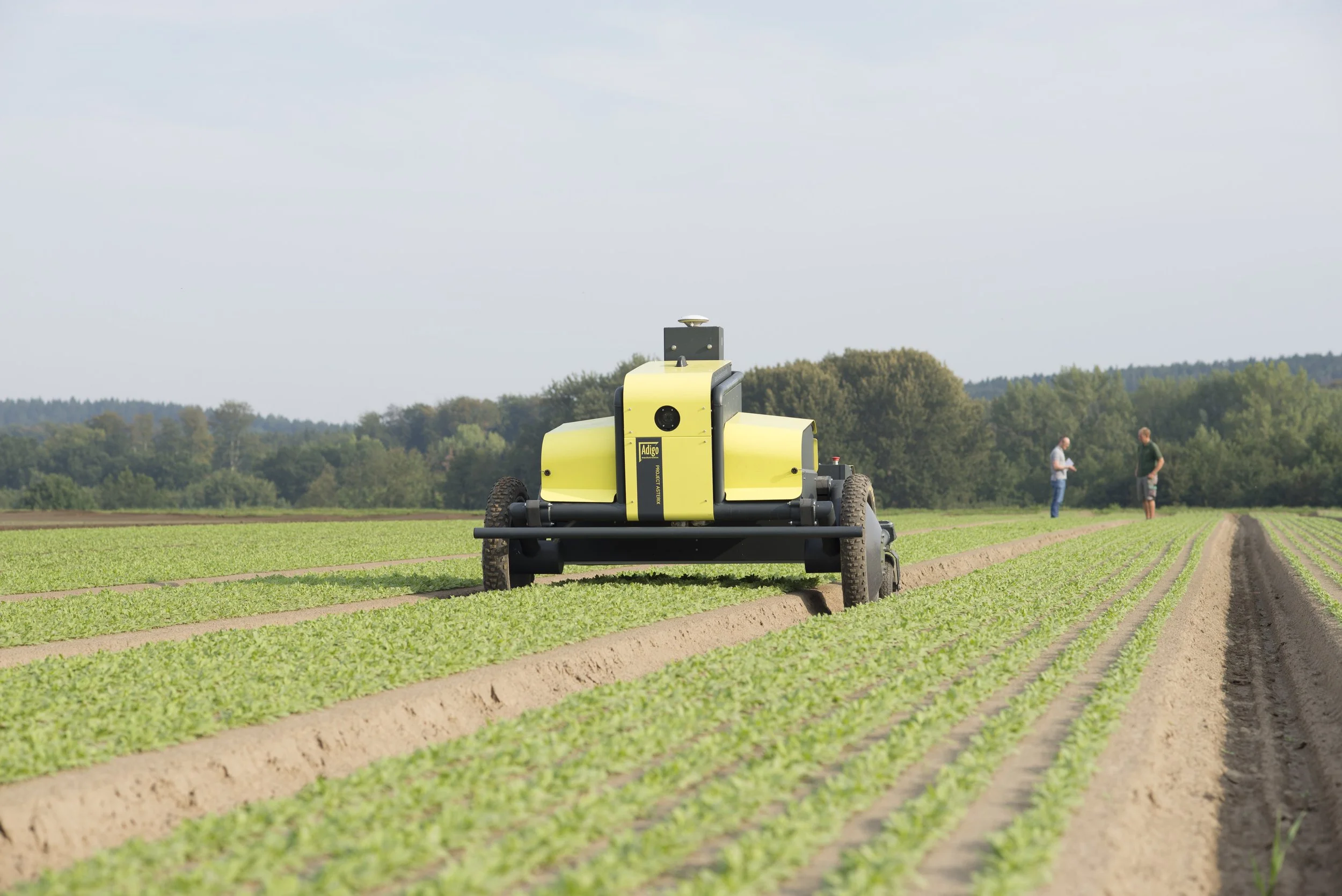
Croplands Kilter AX1 Autonomous Robot for the Vegetable Market
Now commercially available in both New Zealand and Australia, the Kilter AX1 marks a major step forward in sustainable weed control for the vegetable market. Developed in Norway and brought to market locally through Croplands, the AX1 uses patented Single Drop Technology (SDT) to apply herbicide with extreme precision, functioning much like an inkjet printer for weeds.
Green on Green: Using AI vision to apply application targeting weeds, 360 degrees around the crop.
Single Drop Technology: Providing a 1150 micron vmd droplet every 6mm, targeting weeds at their smallest. Helping preserve soil nutrients and moistures.
Autonomous Solutions: The AX-1 is a light-weight autonomous solution that allows earlier application of critical sprays onto beds while also releasing labour to focus on high-value tasks within the farming operation. Multiple AX-1s are a great tool for productivity, the portability of these small machines makes it easy to move between locations.
Organic Friendly: Suitable for both organic and conventional farming operations. Speak to your local Croplands Territory Manager to find out how the Kilter AX-1 works for your operation.
Crop Types: With 21 different crop classifiers either shovel-ready or in development, the AX-1 is ideally suited to vegetable and horticultural growers looking to improve sustainability, reduce input costs and lift productivity through autonomous technology.
Croplands Robotics Plus Prospr, powered by Yamaha Agriculture
The Robotics Plus Prospr is an autonomous fan sprayer commercially available in New Zealand and Australia, with multiple units already in operation, while additional machines are being assembled.
Developed in partnership with Yamaha Agriculture, Prospr is a multi-use hybrid vehicle platform that significantly increases efficiency across a variety of crop tasks designed specifically for vineyards and orchards. Launched with Croplands’ proven Quantum fan spraying technology, the platform features a modular, demountable design that allows it to perform a range of tasks beyond spraying as the technology continues to evolve.
With advanced guidance systems, comprehensive safety features and the ability to operate for extended periods, Prospr is helping growers address labour challenges, sustainable farming practices while maintaining consistent spray quality and operational efficiency.
Croplands Quantum Vine Pro
New to the Croplands vineyard range, the Quantum Vine Pro sets a new benchmark for trailed vineyard spraying. Designed after years of market research, customer collaboration and field testing, the Vine Pro combines Croplands’ market leading Quantum fan technology with a rugged, highly adaptable new platform.
Vine Pro is designed for all vineyards with row spacings to suit from 2.4m out to 3.6m.
Available in 2,500 L and 3,500 L tank configurations, the Vine Pro delivers exceptional coverage, stability and efficiency across varying row widths and terrain. Features include multirow capability, improved weight distribution, hydraulic fan control and advanced boom options, all engineered to provide the best coverage, control drift and add efficiency to your spraying programs.
Robot Ready Pinto – Autonomous Broadacre Spraying
Croplands released their first optical spot sprayer as a robot ready unit in Australia, the Robot Ready Pinto. This autonomous solution is suited to large scale broadacre growers looking to introduce new farming methods and efficiencies only possible with autonomy.
Autonomous solutions allow growers to free up one of their most precious resources – time. It reduces driver operational costs, allows a single operator to multitask and allows for efficient use of existing farm labour. Multiple units combined can allow for maximum efficiencies and operational gains for larger scale growers.
Croplands Dura Chemical Mixing & Transfer Solutions (Compact Range)
Expanding Croplands’ Compact Range, Dura Chemical Mixing and Transfer systems provide a safer, faster and more accurate way to handle agricultural chemicals. Designed to reduce operator exposure and minimise product waste, Dura solutions include transfer pumps, Easy Caddy systems, batching options and mixing hoppers to suit a wide range of farm setups.
Built for reliability and ease of use, these systems streamline the loading process, improve accuracy and help growers meet increasing safety and stewardship expectations making them a practical addition to both broadacre and horticultural operations.
Croplands Hol Spraying Systems (H.S.S)
Croplands and Hol Spraying Systems partnered up to bring New Zealand orchardists the latest in multi row sprayer technology. Our shared vision of providing orchardists with sustainable and efficient solutions combined with Croplands 50+ years’ experience in the New Zealand horticultural market enables us to bring Kiwi growers the ultimate solution for modern narrow plantings.
These units range from one to three row models, with an even, low drift air distribution matched to the canopy. With a low decibel efficient fan and synchronised folding, plus a mid-mounted boom for improved weight distribution and flotation tyres, the HSS range is low maintenance and reliable. The full H.S.S range has the new ARAG IBX-100 platform as an option.
To learn more about any of these units please contact Rob Marshall, Croplands Regional Manager and Territory Manager for the South Island, 027 248 6822 or Ashley Robinson, Territory Manager for the North Island, 027 726 0330.
UPL
The importance of the active ingredient in the spray tank is a given. But what’s often taken for granted can be the weakest link and the difference between spray programme success and failure.
Water, used as the carrier and making up around 90% of the spray tank is itself an active chemical - an inorganic compound. Pieter van der Westhuizen, Adjuvant Lead and Regional Manager Upper North Island at UPL New Zealand Ltd says our familiarity with water means its influence on spray performance is often overlooked along with the resulting impact on crop performance and yield.
“For example water pH, whether acidic or alkaline can vary, even across a single property. Some chemicals don’t perform well in alkaline water. Contractors sometimes tell me the active isn’t performing, but more often than not it’s actually the water. In most cases we want to lower the water’s pH which is easily corrected by adding the right amount of an acidifying adjuvant, such as Li 700.
“If water is hard - meaning it contains positively charged ions like calcium, magnesium or iron, these can react with negatively charged herbicides including glyphosate. Testing water pH and hardness before spraying is important and is as simple as using a spa pool test strip. I recommend contractors always carry some with them.”
Pieter says water hardness of 150 ppm is considered moderately hard and requires action. He recommends using a water conditioner and ion scavenger X-Change, to optimise spray performance. X-Change is a proprietary blend of organic and inorganic compounds that acts as a ‘sacrificial’ agent, binding free ions and effectively converting hard water into soft water.
Drift is another common challenge, particularly for contractors using drones or helicopters. Again, water is often the issue with very small droplet sizes increasing drift risk.
“With water as the spray carrier you don’t want droplets that are too large or too small, they need to be just right. Small droplets are often too light to be affected by gravity and can drift, meaning the crop protection product doesn’t reach the target. Large droplets on the other hand, can simply bounce off.”
“Drift isn’t just about avoiding waste it’s also about being a good steward of the land,” says Pieter. Products such as the multi purpose Li 1000, Li-700 or Unison can help ensure the active ends up where it should.
Conversely, large droplets can also be ineffective if the correct adjuvant isn’t included in the tank.
“We want the active to stick to the target surface not end up on the ground and be lost.”
“Adjuvants help make droplets fit for purpose,” Pieter says. In addition to drift control agents such as Li 1000, Li 700 and Unison adjuvants also include spreaders (Actiwett and Ranger), super spreaders (Du-Wett) and stickers (Du-Wett Weather Max and Bond Xtra).
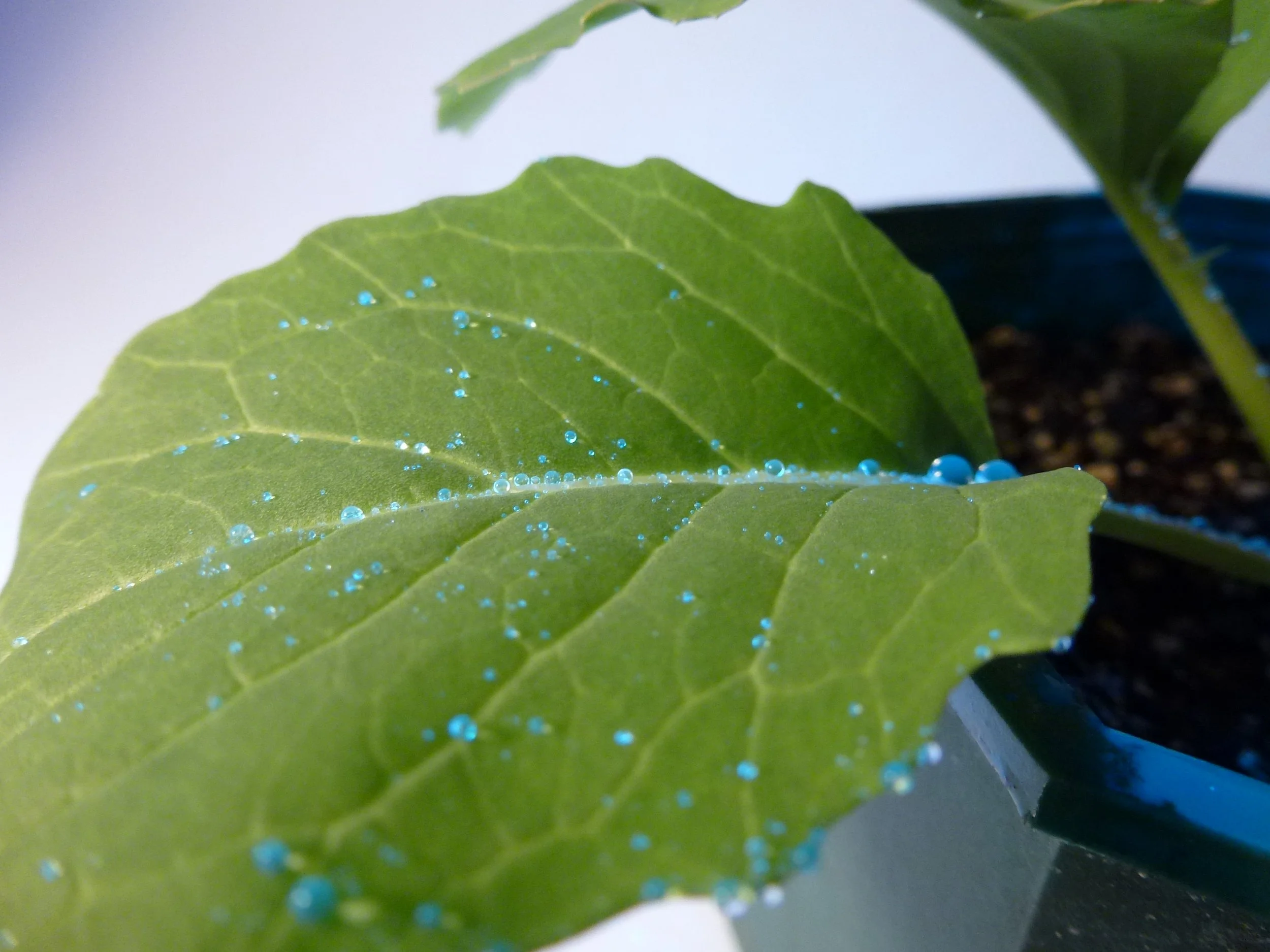
“In nature a drop of water on a leaf is perfectly rounded and simply sits there,” Pieter explains. “For spray actives to work, that droplet needs to flatten out and cover much more of the target surface. Adjuvants can spread droplets to 15–25 times their original size, delivering up to 25 times more surface coverage and enabling uptake up to 25 times faster.”
For decades vegetable, apple, grape and kiwifruit growers have relied on Du-Wett Super-Spreader. In the kiwifruit industry alone, adding Du-Wett Super-Spreader to the spray tank allows growers to use on average, just half the conventional water rate.
Graham Greer, owner of Greer Groundspraying Ltd, says Du-Wett allows his team to spray at lower water rates while still achieving better coverage, an advantage that’s become increasingly important as the business incorporates drones.
“You can actually see the difference Du-Wett coverage makes on the leaves,” he says.
To get a spray active inside the plant, they need to penetrate the plant. This involves moving through the cuticle, the waxy outer layer or entering via the stomata the plant’s ‘breathing’ apparatus. A clear example of the importance of penetration, Pieter says is gorse control.
“Gorse is a survivor. It has a thick wax layer and a relatively small leaf surface area for the size of the plant.
“The most effective way to control gorse is to add an organosilicon such as Slikka, Ad-Hance or Satur8 to the tank with the herbicide. A good quality organosilicon reduces surface tension so effectively that the spray solution flows into the stomata, pulling the active ingredient in with it.”
To learn more about how to manage water for more effective spray performance talk to your local technical representative or contact Pieter Van Der Westhuizen, UPL NZ Adjuvant Lead and Regional Manager Upper North Island at 021 392 740.
PSSAG
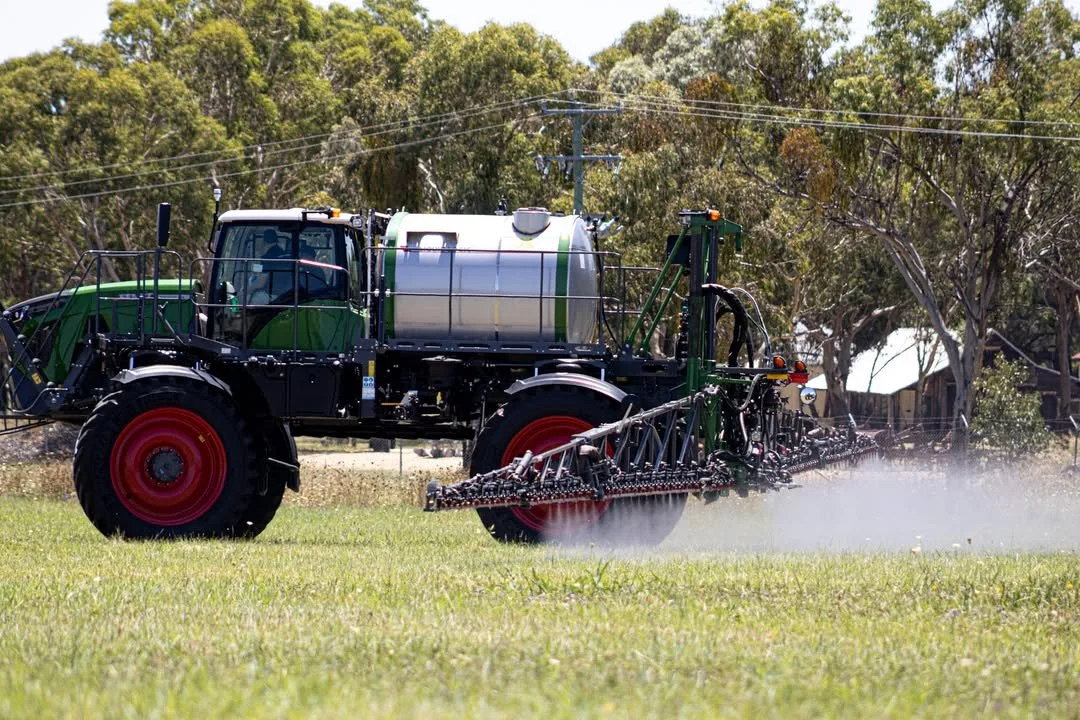
Spray application has always required a careful balance between biology, chemistry and machinery, and while farmers and contractors invest heavily in crop protection products the effectiveness of those inputs ultimately depends on how accurately they are delivered to the target. Droplet size, pressure stability, travel speed and boom performance all interact in ways that can either maximise the value of every litre in the tank or quietly erode it through drift, overlap or inconsistent coverage. As spraying technology has evolved the industry has increasingly focused on bringing greater precision to that moment of application, ensuring operators can maintain consistent results even when field conditions are constantly changing.
The Pssag SymphonyNozzle system sits firmly within that evolution, introducing nozzle level control and pulse width modulation technology to modern spraying systems.
Traditional sprayer systems manage application rate primarily through pressure changes and flow adjustments across the boom. While this approach has served the industry well for decades it introduces compromises that become more obvious as work rates increase. When travel speed rises the system must increase pressure to maintain the desired application rate, and as pressure rises droplet size changes. When the machine slows, pressure drops and atomisation can become less consistent. In practical terms operators are often forced to balance two competing priorities, maintaining the correct application rate while also trying to preserve droplet characteristics that minimise drift and deliver good crop coverage. The SymphonyNozzle system is designed to remove that compromise by separating rate control from pressure control, allowing both to be managed independently across the sprayer.
At the core of the system is pulse width modulation, commonly referred to as PWM. Rather than relying solely on pressure adjustments to regulate flow the nozzle assembly pulses rapidly on and off many times per second. By altering the proportion of time the nozzle remains open during each cycle the system adjusts the effective flow rate while maintaining a consistent pressure at the nozzle body. The result is a spraying environment where droplet size remains stable across a wide range of operating speeds and application rates, delivering a far more consistent spray pattern along the entire boom.
For contractors and large scale operators this level of control carries clear advantages. Spraying operations rarely occur under perfectly uniform conditions and ground speed inevitably changes as machines climb hills, turn on headlands or respond to varying field conditions. Under a conventional system these speed changes translate directly into pressure fluctuations which then alter droplet size and spray quality. With PWM control the SymphonyNozzle system maintains a programmed pressure regardless of those speed variations, while adjusting the duty cycle of each nozzle to maintain the target application rate. The operator can therefore preserve consistent droplet characteristics, whether travelling slowly through a tight corner or working at full field speed across large paddocks.
Another significant development lies in the system’s nozzle by nozzle control. Instead of managing application across broad boom sections, the SymphonyNozzle system allows each individual nozzle to operate independently. That level of precision introduces several practical benefits in the paddock. Overlaps on headlands and irregular paddock shapes can be reduced because individual nozzles can shut off exactly where coverage has already been applied. In areas where boom sections would normally overlap the system automatically adjusts output to maintain accurate rates without over application. Over time this approach not only improves crop protection performance but also reduces chemical wastage, something that carries both economic and environmental value.
The SymphonyNozzle system integrates with Precision Planting’s Gen 3 20|20 monitor, providing operators with detailed real time feedback on spray performance directly in the cab. Through the display operators can view application metrics including the duty cycle of individual nozzles, giving them a clear picture of how the system is performing across the entire boom. This level of visibility turns the sprayer into a far more data driven machine, allowing operators to monitor performance in real time rather than relying solely on indirect indicators such as pressure gauges.
Mapping and swath control are also integrated within the system. As the sprayer moves across the paddock, the monitor records application data while ensuring product is delivered only where it is required. For contractors managing large areas or operating across multiple farms during the season, this functionality helps maintain accurate coverage while avoiding unnecessary duplication of product on overlapping passes. The combination of mapping, nozzle level control and pulse width modulation effectively transforms the sprayer from a simple application machine into a precision management system.
Installation has also been considered carefully in the design of the SymphonyNozzle hardware. The system is designed to retrofit to many existing self propelled and pull type sprayers, providing an upgrade path that does not require operators to replace their entire machine. The custom nozzle assembly connects through a point-to-point harnessing architecture and does not require specialised tools for diagnostics or service. In a contracting environment where machinery must remain operational throughout busy seasonal windows and where downtime can quickly become costly, that simplicity becomes an important part of the system’s appeal.
Looking at the broader direction of spraying technology, it is clear the industry is steadily moving toward greater precision at the point of application. Variable rate systems, GPS guidance and section control have already transformed the way inputs are applied across large paddocks. The next step in that progression is finer control at the individual nozzle level, ensuring the sprayer can respond instantly to changes in speed, terrain and field geometry while maintaining consistent droplet characteristics.
The Pssag SymphonyNozzle system represents a practical step in that direction. By combining pulse width modulation with individual nozzle control and integrating those capabilities with a modern in-cab display, the system allows operators to maintain both rate accuracy and droplet consistency in a way that traditional pressure based systems struggle to achieve. For contractors and growers who rely on spraying as a critical part of crop protection programmes, that combination of precision and visibility has the potential to lift both performance and confidence in every pass across the paddock.
Smart Apply
Smart Apply proves its worth for high-value crop farmers
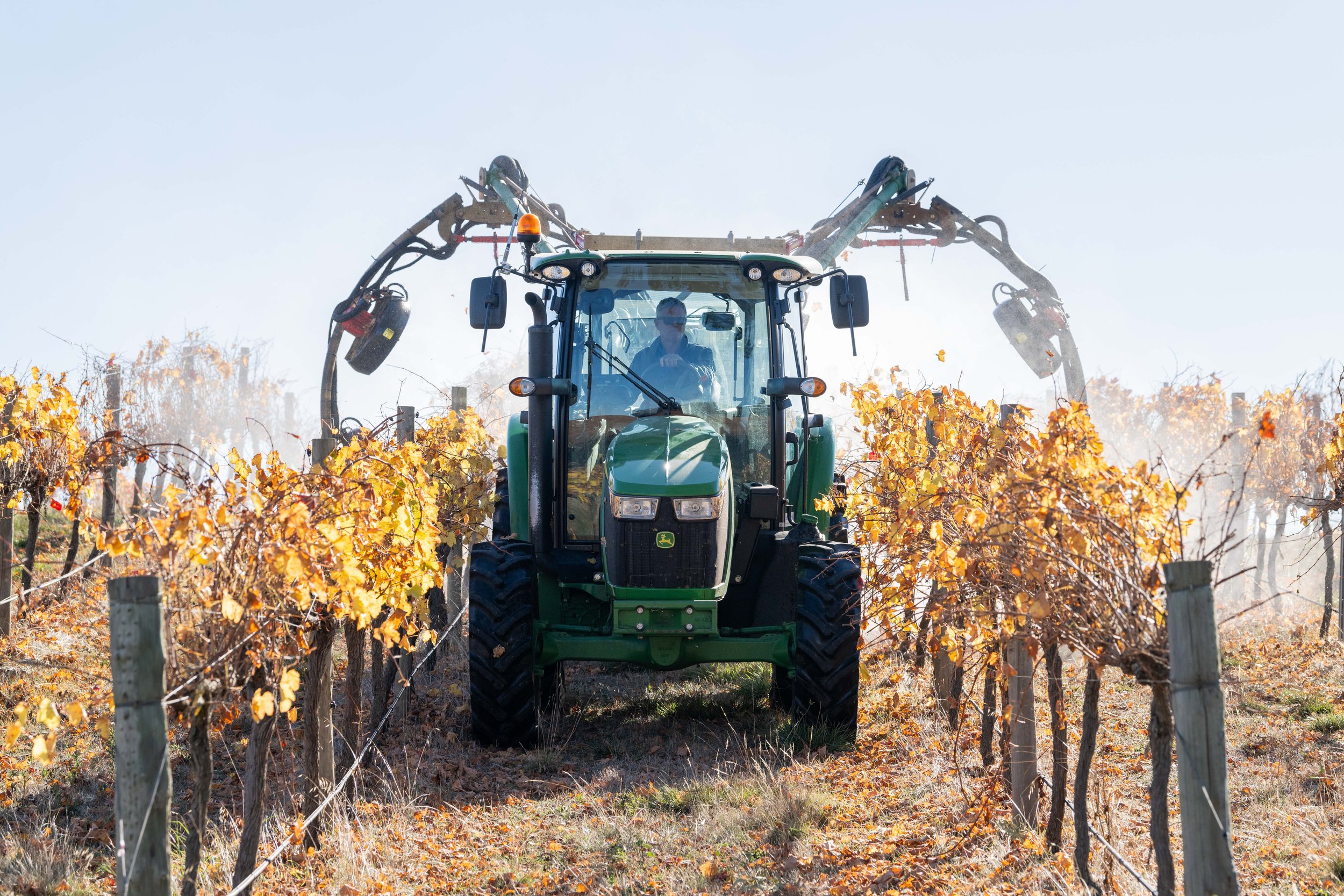
New Zealand wine grape growers, fruit orchardists and nut producers say they’re achieving comprehensive pest and insect control using less water and less chemical using John Deere’s introduced the Smart Apply Intelligent Spray Control System. Smart Apply uses sophisticated LiDAR (light detection and ranging) technology to sense the presence of individual trees and vines, enabling spray nozzles to automatically apply chemical only where necessary. The system has achieved up to 93% less chemical runoff and up to 87% reduction in airborne drift, while reducing chemical use by an average of 50% which in turn delivered a 50% reduction in water use.
Reducing application from six vats to one
Fourth generation Mildura orchardist, Darren Minter, has been amazed by the results of using Smart Apply on 400 hectares of almond and citrus trees at Iraak, on the Murray River. After planting 80 hectares of new almond trees, the Minters used Smart Apply on their standard Air-O-Fan band sprayer and cut chemical use from 5.5–6 vats down to a single vat.
“It saves chemical, fuel, and refilling time which adds up to quite a lot,” Mr Minter said. “With Smart Apply, we estimate we saved around 20% of spray on our big trees and between 60% and 80% on the little trees, depending on the density. It’s unreal!”
Customised kit shares precision data with Operations Center
Smart Apply is a customised kit that can be installed on almost every air blast and over-the-row sprayer, transforming it into a high-tech precision spraying system. The system’s proprietary, GPS-enabled software also captures a broad spectrum of data while it sprays.
The system documents date and time of spraying, litres applied, chemical savings, hectares sprayed, tree counts in smaller trees, canopy volumes to determine crop vigour, as well as crop width and height for management of the canopy. To mitigate any risks of accidental spraying and chemical wastage, when the Smart Apply unit is switched on and auto is active, the system will only spray if the unit is inside the particular block selected in the ‘Jobs’ function.
Growers can choose to share their Smart Apply data with John Deere Operations Center farm management software to unlock another level of insights by capturing data from both the tractor and the sprayer in one single platform. It’s an exciting development and one that will positively impact farmers’ bottom lines, said Erin Wagstaff, John Deere Australia and New Zealand Marketing Manager for Small Ag and Turf.
“Operations Center is free and it’s a great platform for record keeping. We are actively working to bring more and more data from Smart Apply into the Operations Center,” Ms Wagstaff said. “Smart Apply can capture hundreds of data points and does so in 3D as well, so it is able to provide really important insights from tree count to foliage density.
This type of precision data leads to a deeper understanding of an orchard's or vineyard's productivity, profitability, health and sustainability all of which are becoming increasingly important.”
Winemaker proves sceptics wrong
Fifth generation Victorian winemaker, Ben Thomson from Best’s Wines at Great Western, was quick to prove the sceptics wrong when he began using Smart Apply on grape vines three seasons ago. At a field day he hosted to demonstrate the technology, Mr Thomson said almost half of the visitors said it would never work.
“Smart Apply has delivered a reduction of 40% in our chemical use and we’re using 40% less water, which also makes us more fuel and time-efficient because we’re not filling up as often,” he said. “It’ll produce maps for you and you can click on each vine, and it’ll show how many millilitres you’ve applied to each vine. We’ve had two pressure seasons and no disease, so that’s the biggest proof I’ve got.”
Smart Apply = efficiency
Ms Wagstaff said the ability to view Smart Apply demonstrations at John Deere dealerships and trade shows across the country had been a significant step for producers.
“Many of our customers already have an established and trusted relationship with their local dealership, and now through that same dealer network, they are able to access these additional benefits during their spraying,” she said.
For New Zealand producers heading over the Tasman Sea to Melbourne to attend Hort Connections in June, John Deere will be showcasing the Smart Apply system fitted to a mini GUSS autonomous orchard sprayer. Both products will then be available for New Zealand growers to demo across the country.
Ms Wagstaff said John Deere would continue to innovate to ensure that producers around the world find ways to increase their efficiency.
“Solutions like Smart Apply, 5 Series tractors and the GUSS autonomous sprayer are a part of our shared journey towards reducing the cost of production for New Zealand high-value crop producers,” she said. “The overall goal is to optimise their efficiency by enabling them to do more with less.”
Agtech Hawke’s Bay
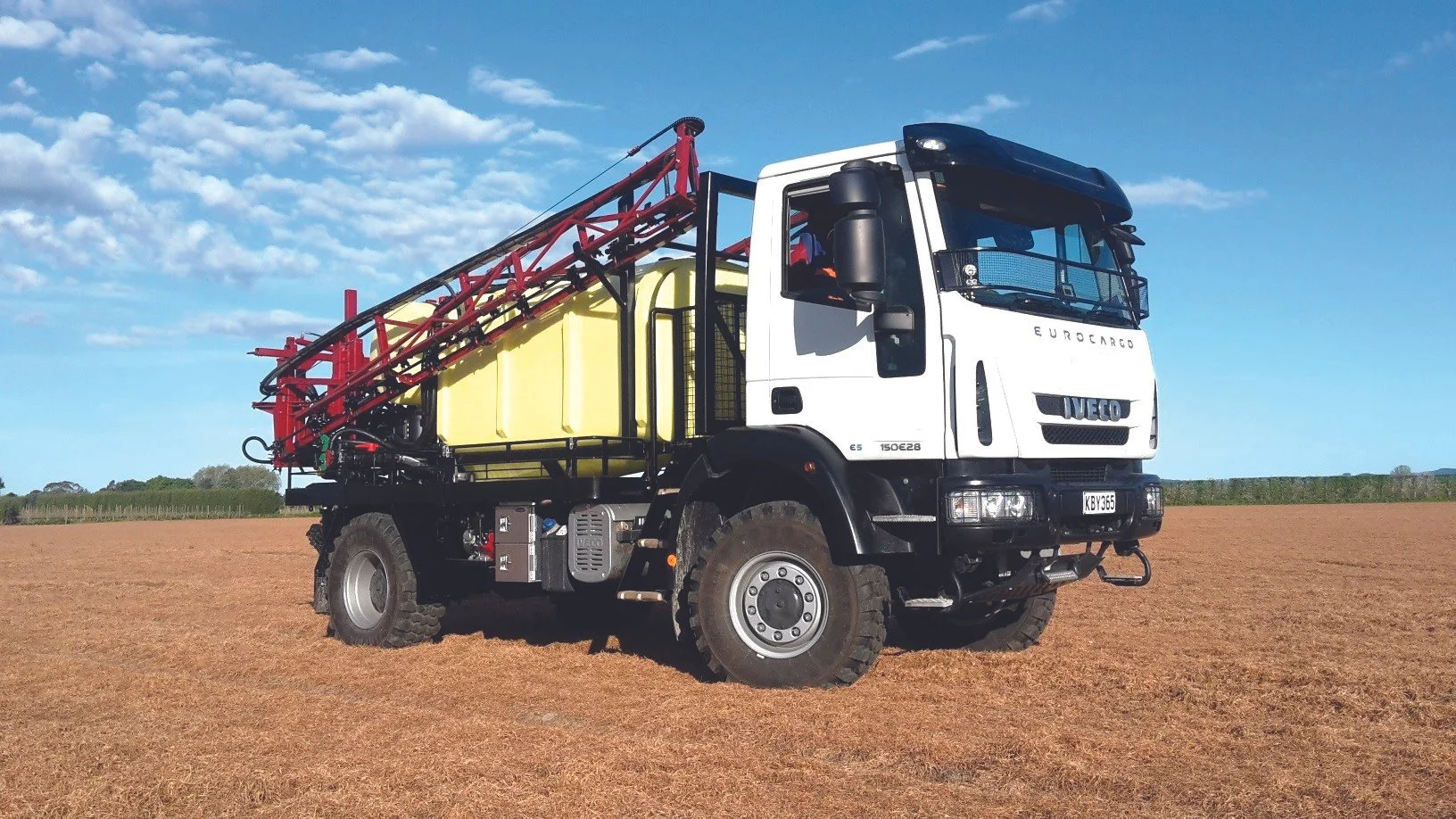
In modern spraying systems technology often gets framed around electronics, guidance and rate control yet none of those systems can perform accurately without stable hydraulic delivery behind them. The pump remains the core mechanical component of any sprayer and its specifications ultimately dictate flow consistency, agitation performance and spray accuracy.
That reality is reflected in the pump range supplied through Agtech, where selection is driven by application pressure, flow demand and duty cycle rather than simply matching tank size. Agtech Hawke’s Bay supplies diaphragm, centrifugal and motor-drive pump assemblies centred largely around the Comet PTO pump range. These pumps span low, medium and high-pressure categories allowing contractors and growers to match pump output precisely to spraying task rather than compromise performance with a one-size-fits-all approach.
Low-pressure diaphragm pumps form the backbone of most broadacre spraying systems. Units in this category typically operate up to around 20 bar, making them suited to boom spraying and liquid fertiliser work where high flow stability is more important than atomisation pressure. Models in the Comet BP series supplied through Agtech range from compact units such as the BP60K through to higher-capacity pumps in the BPS range capable of significantly larger output volumes. These pumps are designed specifically for weed control and fertiliser application in broadacre conditions where steady delivery across wide booms is critical.
Stepping up in performance, medium-pressure diaphragm pumps extend operating pressures to around 30 bar. This category is often chosen where operators need flexibility to run a boom and a hand-gun from the same system. A practical example is the Comet P48 pump, which delivers a maximum flow of around 64 litres per minute at pressures up to 30 bar while requiring only modest PTO horsepower. That output places it squarely in the range suitable for mid-sized tanks, moderate boom widths or mixed spraying setups where both coverage and spot treatment capability are required.
At the upper end of the diaphragm spectrum are high-pressure pumps designed for orchard, vineyard and high-penetration spraying. These units operate at pressures up to 50 bar, enabling finer droplet formation and improved canopy penetration. Within the Comet APS series, pumps such as the APS41 through to the larger APS166 provide a progression of capacity options depending on airflow demand, tank size and spray rig configuration. For contractors working across multiple crop types this ability to scale pressure output becomes central to maintaining spray effectiveness across different application environments.
While diaphragm pumps dominate boom spraying, centrifugal pumps serve a different purpose. Rather than prioritising pressure stability they deliver very high flow rates, making them suited to transfer operations or large self-propelled systems where hydraulic drive and high water volume are required. Their role highlights the fundamental trade-off in pump design. Diaphragm pumps offer pressure control and chemical compatibility, while centrifugal pumps prioritise throughput and simplicity.
What increasingly defines pump choice today is not simply output but integration with precision control systems. Electronic rate controllers and section shut-off systems rely on consistent flow delivery in order to maintain application accuracy. Any fluctuation in pump output directly influences droplet size, spray rate and overlap control. This is why modern pump selection often focuses on pressure stability curves and flow characteristics across operating RPM rather than just maximum output figures.
Durability and chemical compatibility are equally important considerations. Agricultural spray solutions can include abrasive fertilisers, suspension products and aggressive herbicide formulations. Diaphragm pumps used in agricultural spraying are designed so that spray liquid does not contact moving mechanical parts, reducing corrosion risk and extending service life. Components such as plastic-coated aluminium heads, reinforced diaphragms and replaceable valve assemblies allow pumps to withstand demanding chemical environments while remaining serviceable over multiple seasons.
Serviceability itself has become a critical design factor. Contractors now operate within tighter spraying windows and cover larger areas per day than ever before. A pump failure is no longer a minor inconvenience but a direct productivity loss. Agtech’s emphasis on spare parts availability, maintenance kits and accessories reflects this operational reality. Rapid replacement of diaphragms, valves or accumulators can mean the difference between returning to work the same day or losing an entire weather window.
Ultimately the pump determines how effectively a sprayer converts operator input into field performance. Guidance systems can steer the machine and controllers can adjust application rate, but neither can compensate for inconsistent hydraulic delivery. When the pump provides stable flow and pressure the rest of the system performs as designed. When it does not, even advanced electronics struggle to maintain accuracy.
As spraying technology continues to evolve, pumps remain one of the least visible but most influential components in the system. The Agtech range demonstrates how pump selection has shifted from a simple mechanical decision to a core part of spray system design. For contractors and large-scale operators the message is straightforward. Before electronics, before tank size and before boom width, sprayer performance still begins with the pump.
Reith Agri Imports
There are moments in agriculture when a piece of technology arrives that quietly changes how growers think about a problem they have been managing the same way for decades. Weed control has long been one of those areas where the standard approach has been relatively straightforward. A paddock is sprayed, weeds are suppressed and the crop moves on. The process works but it is inherently blunt, applying chemistry across an entire field when in reality only a fraction of the area actually requires treatment. For many growers that has always felt like an unavoidable compromise. The emergence of ultra precision spraying technology suggests that compromise may not need to exist any longer.
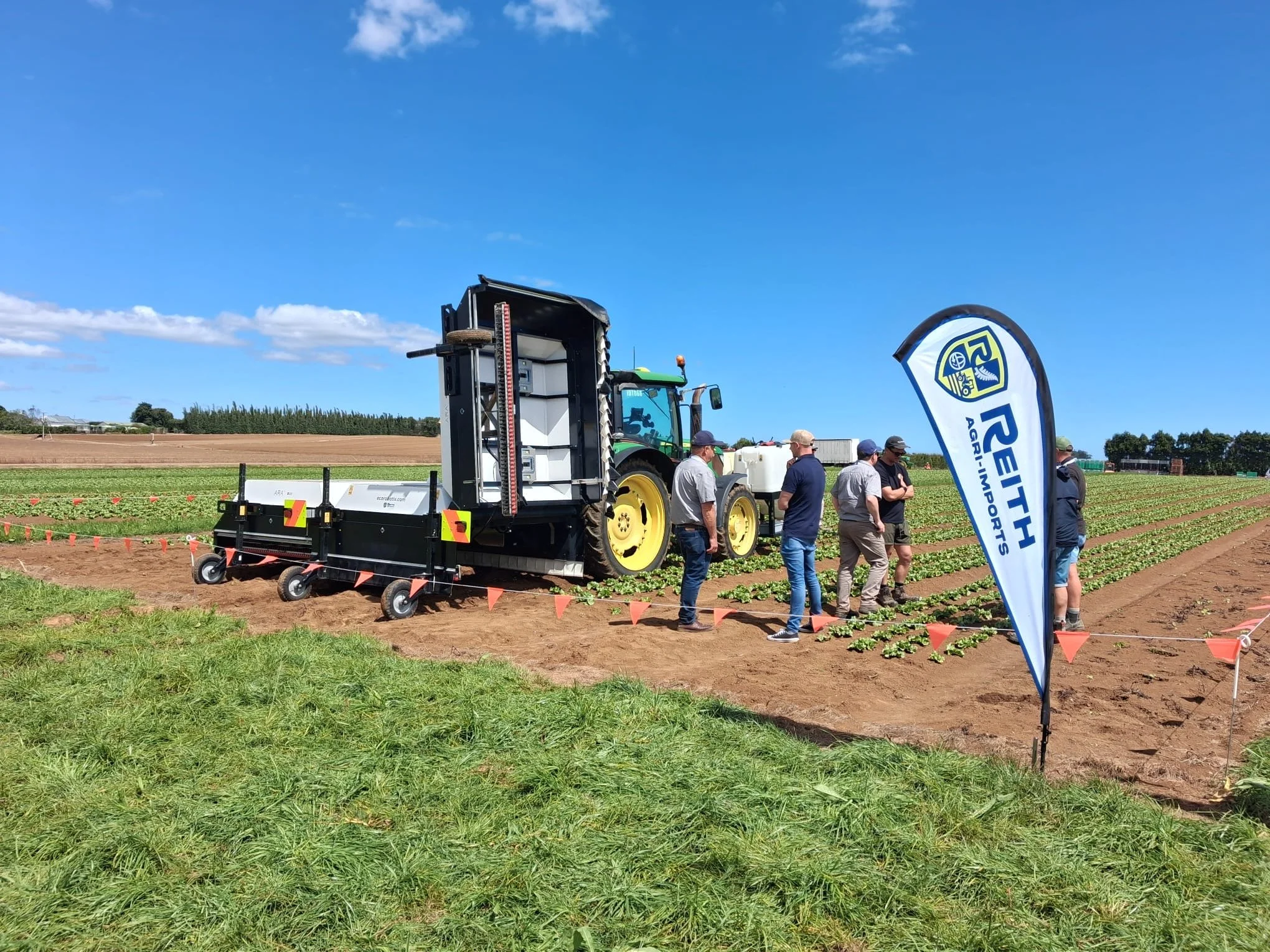
The Ecorobotix ARA precision sprayer represents one of the most advanced examples of that shift. Developed by the Swiss based precision agriculture company Ecorobotix, the machine uses artificial intelligence and computer vision to identify weeds individually and apply treatment only where it is needed. Rather than blanket spraying an entire paddock, the system recognises individual plants and targets them directly, dramatically reducing chemical use while maintaining effective weed control.
For New Zealand growers the technology is now becoming more accessible through Ashburton based Reith Agri Imports, a family owned and operated agricultural equipment business with more than three decades of industry experience. Established originally as an importer of second-hand tractors and combines from the United Kingdom, the company has evolved into a specialist supplier of cultivation equipment, trailers, vegetable harvesting machinery and precision technology sourced from a range of international manufacturers. Operating from a new purpose built facility in the Ashburton Business Park, the business continues to focus on providing specialised machinery supported by strong after sales service and direct relationships with its clients.
That approach has made the introduction of the Ecorobotix ARA into New Zealand a natural extension of the company’s portfolio. While the concept of AI driven weed detection might sound experimental at first glance, the technology is already well proven internationally. More than 600 ARA machines are currently operating across Europe, North America, South America and Australia with Ecorobotix employing more than 200 staff globally and continuing to expand into new markets. The company’s entry into Australasia during 2025 marked an important step in bringing that capability to local growers.
At its core the ARA is a tractor pulled precision sprayer designed to operate within existing farming systems. The machine spans 6.2 metres and travels at operating speeds of around 7.2 kilometres per hour. Across that working width sit 152 individual spray nozzles, each capable of applying treatment within a spray zone measuring just six by six centimetres. Mounted cameras scan the paddock continuously while onboard computing systems analyse the images in real time, identifying crops and weeds using trained algorithms before activating the appropriate nozzle.
From the operator’s perspective the process remains straightforward. The system is controlled through a wireless tablet inside the tractor cab. The operator selects the appropriate crop algorithm and defines a safety zone around the plants or crop, after which the machine manages the spraying automatically. On the screen the crop plants appear highlighted in green while target weeds appear in red, allowing the operator to see exactly what the system is identifying and treating as the machine moves across the paddock.
The accuracy of that detection is impressive. The system is capable of recognising weeds larger than two millimetres in diameter while distinguishing crop plants greater than two centimetres in size. Larger species such as docks and thistles can be targeted once they exceed approximately five centimetres, making the machine suitable for a wide range of crop and pasture situations. The operator can also adjust the safety zone around crop plants, providing additional confidence when working close to sensitive or high value crops.
One of the most compelling aspects of the technology lies in the reduction of chemical inputs. In situations where a grower might traditionally apply ten litres of herbicide per hectare, the ARA can reduce usage to less than a single litre by targeting only the weeds that are actually present. The impact is not limited to chemical cost savings. Lower chemical volumes also mean reduced resistance pressure on weeds and a significantly smaller environmental footprint.
Early results from New Zealand growers suggest the technology is already proving its value in the field. Five machines are currently operating across the country with more than 3,300 hectares treated during the current season across seed crops, pasture systems and vegetable production. In one case an onion grower was able to harvest a crop two weeks earlier than expected despite a difficult and unpredictable season, allowing the crop to be lifted before heavy pre-Christmas rain arrived. That kind of timing advantage can make an enormous difference in high value vegetable systems.
Equally important is the way the technology continues to evolve. Ecorobotix has already developed more than twenty five crop specific algorithms, with additional algorithms currently under development. These algorithms allow the machine to recognise different crop types and weed species, and they are continuously refined as more imagery and field data are collected. Reith Agri Imports is now working with the Ecorobotix development team to feed imagery from New Zealand paddocks directly into the system, ensuring the algorithms learn to recognise local weeds, soil conditions and crop characteristics rather than relying solely on European data.
The implications extend beyond weed control alone. Because the ARA functions as a highly precise liquid application platform, the same technology can potentially be used for other targeted applications. Selective liquid fertiliser placement, organic approved treatments and crop thinning applications are all areas where the system may eventually provide additional benefits for growers seeking more precise input management.
The company has also recently introduced a smaller companion machine called ALBA, designed specifically for turf environments such as golf courses, sports grounds and public parks. Operating at similar speeds but with a narrower 2.2 metre working width, the ALBA delivers spot spraying accuracy down to 3x3 centimetres, effectively the size of a golf ball. Equipped with 108 nozzles and a 140 litre tank, the machine is capable of treating approximately 1.6 hectares per hour while targeting problematic turf weeds such as Poa annua and other broadleaf species.
Taken together the arrival of this technology signals a broader shift in how growers may approach weed management in the years ahead. Rather than applying chemistry uniformly across an entire paddock, the focus is moving toward treating individual plants with precision.