
A review of tractors 90hp+
Today’s 90hp+ tractors are expected todo far more than basic fieldwork, combining transport capability, precision technology, fuel efficiency and operator comfort into versatile machines designed to handle the increasing demands of modern farming and contracting systems across New Zealand.
Massey Ferguson
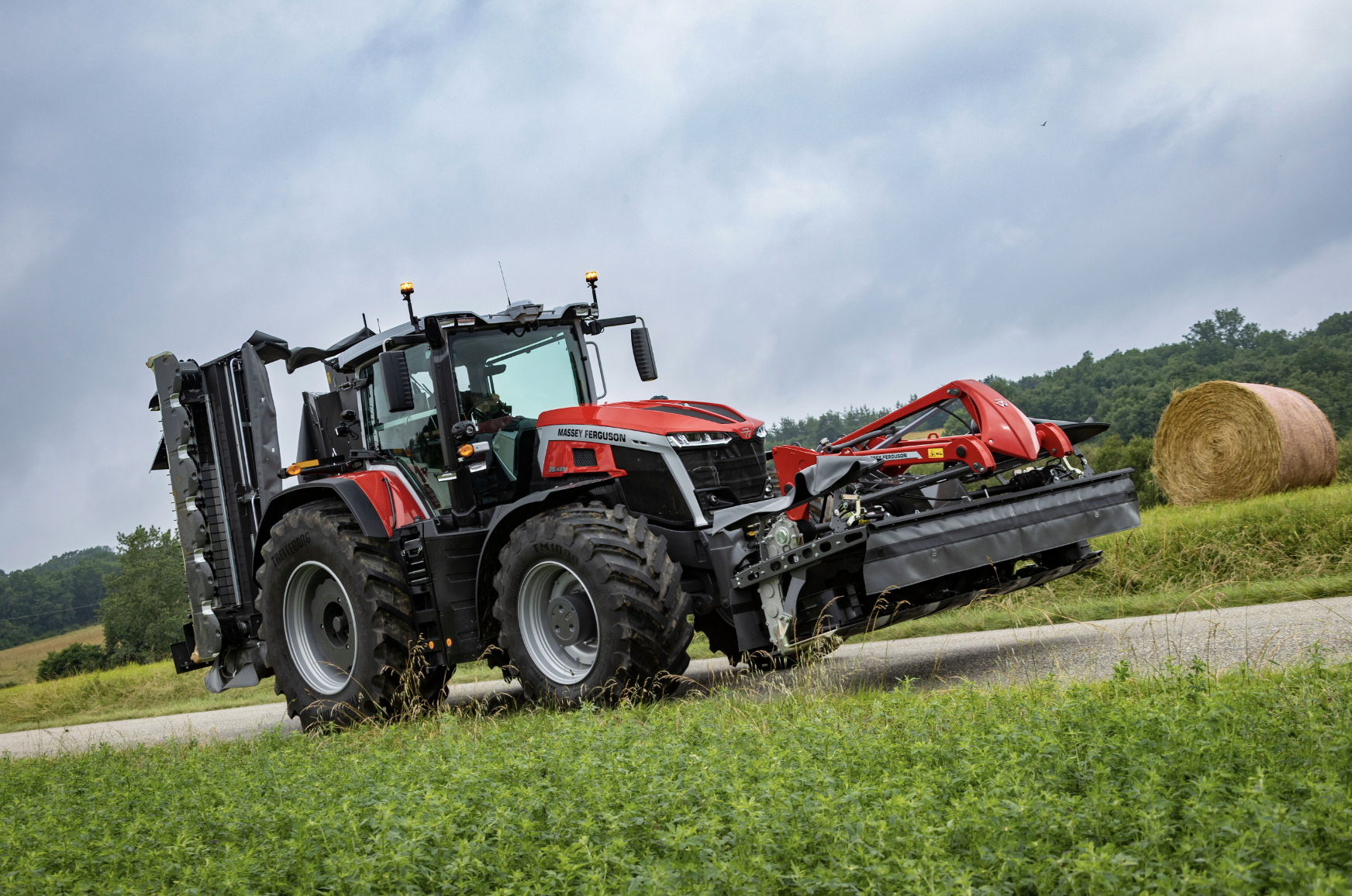
MF9S Series
The step into the 300hp-plus bracket has traditionally been defined by a shift in mindset as much as a shift in machinery, where tractors move beyond being general-purpose workhorses and instead become central to output, efficiency and scale. With the introduction of the Massey Ferguson MF 9S series, Massey Ferguson has made a deliberate move into this space with a platform that is not only higher in horsepower but engineered around the realities of modern large-scale farming and contracting.
The MF 9S is built around a well-proven 8.4-L, six-cylinder Agco Power engine, delivering outputs from 285 hp through to 425 hp across the range. What stands out is not just the headline power figures but the way that power is delivered, with high torque characteristics at relatively low engine speeds, allowing the tractor to maintain pulling performance without excessive fuel burn. On higher-load applications, Engine Power Management provides an additional boost of up to 30 hp, particularly useful in transport and PTO-driven work where maintaining consistent output under load is critical.
This focus on usable power is matched by a best-in-class power-to-weight ratio of around 25.6 kg/hp, which is a key figure when considering traction efficiency and soil impact. In practical terms it allows the MF 9S to operate across a wider range of tasks without excessive ballast, while still offering a maximum weight of up to 18.5 tonnes when additional traction is required. For contractors moving between cultivation, drilling and heavy draft work, that flexibility becomes increasingly important.
Transmission choice is simplified with the Dyna-VT continuously variable transmission fitted as standard across the range. This system delivers seamless speed control from zero through to transport speeds, with automatic engine and transmission management working together to maintain optimum efficiency. In field conditions this translates to consistent forward speed, regardless of load variation, with the system continuously adjusting engine revs to maintain efficiency, rather than chasing peak rpm. For operators running large cultivation sets or high-demand PTO implements, this level of integration reduces fatigue while improving work rates.
Hydraulic performance is equally aligned with the demands of modern implements, with closed-centre load-sensing systems delivering up to 205–340 L per minute of flow, depending on specification. This capacity ensures that the MF 9S can comfortably handle high-demand equipment, such as large air seeders, precision planters and high-output slurry systems, where consistent hydraulic performance is non-negotiable. Rear lift capacity sits in the 11,500 to 12,000 kg bracket, reinforcing the tractor’s ability to operate at the top end of the market.
A defining feature of the MF 9S is Massey Ferguson’s Protect-U design, which physically separates the engine compartment from the cab with a 24-cm gap. While it is a relatively simple concept, the impact on operator environment is significant, reducing noise, heat and vibration transfer into the cab. For operators spending long days in the seat, particularly in contracting operations where hours accumulate quickly, this translates into a noticeably improved working environment and reduced fatigue over time.
The cab itself reflects the brand’s ongoing focus on usability, with a layout that prioritises clear visibility and straightforward control. Advanced guidance and automation features are integrated through the MF technology suite, including MF Guide, MF AutoTurn and Tractor Implement Management, all of which are designed to streamline field operations and reduce operator workload. These systems are increasingly becoming standard expectations in this horsepower category, and their integration within the MF 9S platform ensures it remains competitive in a market where precision and automation are no longer optional extras.
From an efficiency perspective, Massey Ferguson has also targeted total cost of ownership, with claims of up to a 15% fuel advantage compared to competing models in similar power brackets. While such figures will always vary depending on application and operator behaviour, the combination of low-revving engine characteristics, CVT transmission efficiency and intelligent power management provides a strong foundation for reducing fuel use over time.
In transport, the MF 9S continues to demonstrate its versatility, with road speeds up to 50 km/h and a relatively tight turning radius of 5.75 m for a tractor of its size. For contractors covering significant distances between jobs, this balance between field performance and road capability is critical, particularly in regions where travel time can quickly erode productivity.
What ultimately defines the MF 9S is how it brings together these elements into a cohesive platform. The engine provides the foundation, the Dyna-VT transmission delivers control and the hydraulic system ensures compatibility with the latest generation of implements. Around that, the Protect-U design and cab environment support the operator, while integrated technology enhances accuracy and efficiency.
Tractors in this horsepower bracket are no longer niche machines. They are becoming central to the way work is planned and executed. The MF 9S reflects that shift, offering a machine that is not simply larger, but more refined in how it delivers performance.
CLAAS
Arion 6
From tight yard work and loader jobs through to heavy cultivation, mowing, baling and transport, most farms don’t have the luxury of specialised tractors for every task. What’s needed is one machine that can genuinely do it all, and do it efficiently, day after day.
That’s where the new Claas Arion 6, launched in November at Agritechnica in 2025, steps in.
Sitting in the sweet spot of the mid-horsepower category, the Arion 6 delivers up to around 200 hp through a proven 6-cylinder platform, giving it the muscle to handle demanding fieldwork while remaining compact enough for yard and transport duties.
It’s this balance that makes it particularly relevant for New Zealand conditions. Whether you’re running a mixed cropping operation in Canterbury, a dairy support block in the Waikato, or a contracting business covering a wide range of jobs.
The Arion 6 builds on Claas’ reputation for low fuel consumption, pairing a 6.8 L engine with the Cmatic continuously variable transmission to keep engine revs low while maintaining optimal power delivery. Its efficiency will show up in your fuel bill.
Add in intelligent systems like Cemos, which automatically optimises settings such as ballast, tyre pressure and operating parameters, and you’ve got a tractor that actively works to reduce fuel use, by as much as 16% in some conditions.
For farmers and contractors alike, that’s savings you notice across the season.
Product Business Manager, Tractors (ANZ), Kevin Walker adds, “The Arion 6 is a tractor that fits the whole job. It’s built around the reality that farms need a machine that delivers flexibility no matter what the job is that needs to be done.
“With its compact frame and strong manoeuvrability, it is equally at home feeding out or stacking bales, running a front loader, pulling cultivation gear, or handling transport between blocks.
“With up to 150 L/min hydraulic output, it’s also well matched to modern implements, from drills through to high-demand hydraulic equipment. In short, it’s not just capable — it’s adaptable,” he says.
In addition, if you are looking for operator comfort that pays over long days, Claas has clearly focused on making the Arion 6 a tractor operators want to stay in. A fully suspended cab, low noise levels and ergonomic controls, like the Cmotion lever, all contribute to reduced strain over long hours.
“It might sound like a luxury, but in reality, comfort directly impacts productivity. Eliminating fatigue is particularly important during peak periods like drilling, silage or harvest support,” Walker says.
Claas has made smart farming simpler, because technology is only valuable if it’s easy to use. That’s where the Arion 6 stands out. With integrated guidance capable of 2–3 cm accuracy and full Isobus compatibility, it slots straight into precision farming systems.
Add connectivity through Claas connect, and machine data, job tracking and farm records can all be managed seamlessly between tractor and office, saving time and improving decision making.
At the heart of the machine, the Arion 6 is about reliability. It’s a dependable all-rounder fit for our New Zealand conditions.
Designed for long working days and high seasonal pressure, it combines proven drivetrain technology from previous Arion 600 models, with straightforward servicing and strong dealer support, critical factors for New Zealand farmers who can’t afford downtime when the weather window opens.
Walker says, “The Claas Arion 6 isn’t trying to be the biggest tractor on the farm. It’s aiming to be the most useful, and for New Zealand farmers and contractors who need one machine to cover a wide range of jobs efficiently, comfortably and reliably, the Arion 6 makes a strong case as the tractor that earns its keep every day.”
To register your early interest in the Arion 6, which will be available for spring, see the team at your local Claas Harvest Centre.
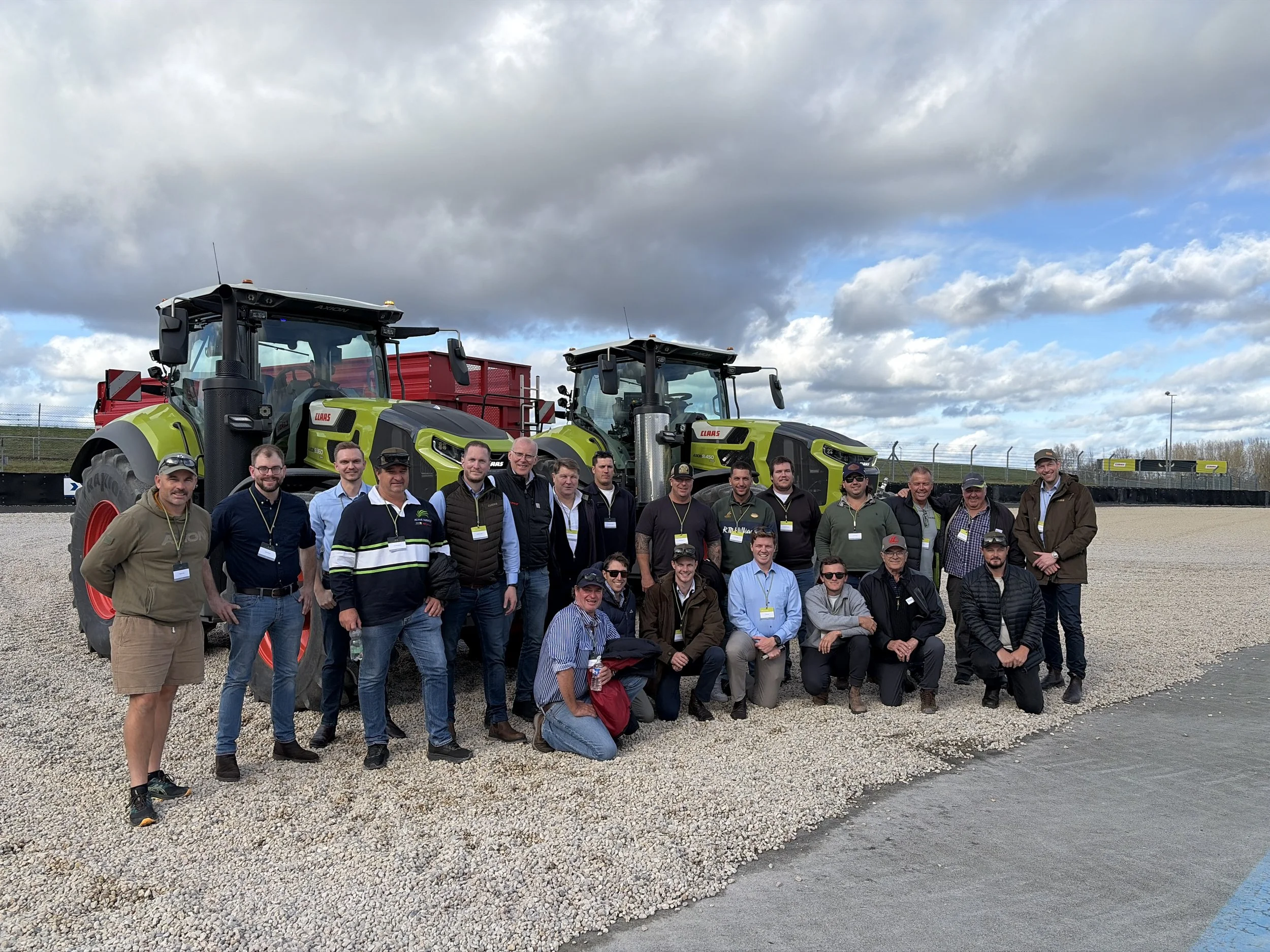
Axion 9 Cmatic
The launch of the new Axion 9 Cmatic series marks a significant step forward for Claas in the high horsepower tractor segment, bringing together increased performance, advanced automation and a clear focus on operator comfort and efficiency.
First presented at Agritechnica, the all-new Axion 9 range, including the Axion 9.450 Terra Trac, is now in production at the Le Mans facility in France, with availability in the Australian market expected from mid-2026. The Le Mans site has been central to Claas’ tractor development since its acquisition in 2003, producing more than 200,000 tractors over that time. Continued investment of more than €80 million has transformed the plant into one of the most modern tractor manufacturing facilities globally, incorporating digital production systems, automated guided vehicles and improved working environments.
This latest generation builds on that foundation, reflecting both the increasing demand for high-capacity machinery and the growing role of digitalisation and automation in modern farming systems. As Dr Martin von Hoyningen-Huene, Chief Technology Officer at Claas, notes, the tractor segment represents the greatest growth potential for the business, with the Le Mans facility playing a central role in that strategy.
The Axion 9 Cmatic series has been developed as the successor to the Axion 900 range, with wheeled models and Terra Trac crawler variants designed to deliver maximum output with improved efficiency both in the field and on the road. At the core of the machine is the latest generation 8.7-L FPT Cursor 9 six-cylinder engine, delivering between 330 and 450 hp and up to 1,850 Nm of torque. Power and torque are available across a wide rev range, allowing the tractor to operate efficiently at lower engine speeds.
A key feature is the dynamic Auto Droop function, which automatically adjusts engine behaviour based on load demand across the drivetrain, PTO and hydraulics. Combined with a low idle speed of 650 rpm, the system contributes to reduced fuel consumption, lower noise levels and improved overall efficiency. Maintenance intervals have also been extended, with engine oil changes now required every 750 hours, reducing downtime and operating costs.
The Cmatic’s continuously variable transmission remains a core component, but with a completely redesigned electronic management system. The new vehicle drive controller allows seamless transitions between operating modes, whether pedal, joystick or PTO control, without changes in speed or engine rpm. Operators can override at any time without interruption, maintaining full control while benefiting from automation.
One of the standout developments is the Auto Load Anticipation system. Using adaptive algorithms, the system predicts load changes, such as when an implement enters the soil, and adjusts engine speed in advance to maintain consistent performance. This proactive approach reduces speed drop under load and optimises fuel efficiency without operator input. It is this system that earned Claas a silver Agritechnica Innovation Award.
The Terra Trac models, including the Axion 9.360 and 9.450, offer an alternative to conventional wheeled tractors, combining full suspension with a tracked rear system. This delivers up to 50% greater ground contact area, improving traction while reducing soil compaction. Track width options from 457 mm through to 890 mm provide flexibility across a wide range of applications, from fertilisation and mowing through to heavy cultivation and drilling.
The Terra Trac system has been further refined with improved durability, reinforced track belts and enhanced roller coatings. An optional Ctic tyre pressure control system on the front axle further enhances traction and soil protection, particularly in challenging conditions.
Hydraulic performance has also been significantly upgraded, with flow rates of up to 370 L per minute available through a combination of standard and optional pumps. Up to eight rear spool valves and two front circuits can be specified, supporting large implements and high-demand applications. Lift capacity reaches up to 13 tonnes at the rear and 6.5 tonnes at the front, reinforcing the tractor’s suitability for heavy-duty work.
A major focus of the Axion 9 Cmatic development is the operator environment. The completely redesigned cab offers around three cubic metres of space, providing a noticeably more open and comfortable working area. Noise levels have been reduced to just 66 dB(A), making it one of the quietest cabs in its class.
Premium seating options include ventilation, heating and massage functions, while the seat can swivel up to 40 degrees to improve visibility of rear implements. Camera systems integrated into the machine allow operators to monitor implements and surroundings, with images displayed on the new Cebis Connect terminals.
The electronic architecture has been completely reworked, introducing Cebis Connect with dual 12-inch displays. These allow flexible control of machine functions, guidance systems and Isobus applications, with operators able to configure screens to suit the task. Integrated GPS Pilot steering can be displayed on either screen, supporting precision farming operations, including variable rate application and task documentation.
Additional operator support comes from systems such as Cemos, which assists with optimising ballast and tyre pressure, and Auto RefLine, which automatically adjusts guidance lines when transitioning between headlands and field work. These systems are designed to reduce operator workload while improving overall machine performance.
Lighting has also been enhanced, with up to 22 LED work lights delivering 56,000 lumens, ensuring visibility during long working hours. Practical features such as improved access, additional storage and easier cleaning further contribute to day-to-day usability.
From a maintenance perspective, Claas has focused on reducing downtime, with extended service intervals across key components and the introduction of a central lubrication system. This system automatically supplies lubrication to critical points, including the front axle and Terra Trac running gear, reducing daily maintenance requirements.
With a maximum permissible weight of up to 22 tonnes on Terra Trac models and high-capacity fuel tanks of up to 860 L, the Axion 9 Cmatic is clearly designed for long working days and demanding applications.
Overall, the Axion 9 Cmatic represents a comprehensive update that combines power, efficiency and automation in a package aimed squarely at large-scale farmers and contractors. With increasing pressure on labour availability and operating costs, the ability to deliver consistent performance with reduced input from the operator is becoming more important.
That balance of high horsepower, intelligent systems and operator-focused design positions the Axion 9 Cmatic as one of the most significant tractor developments in the high horsepower category, offering a platform that is well suited to the demands of modern large-scale agriculture.
Power Farming
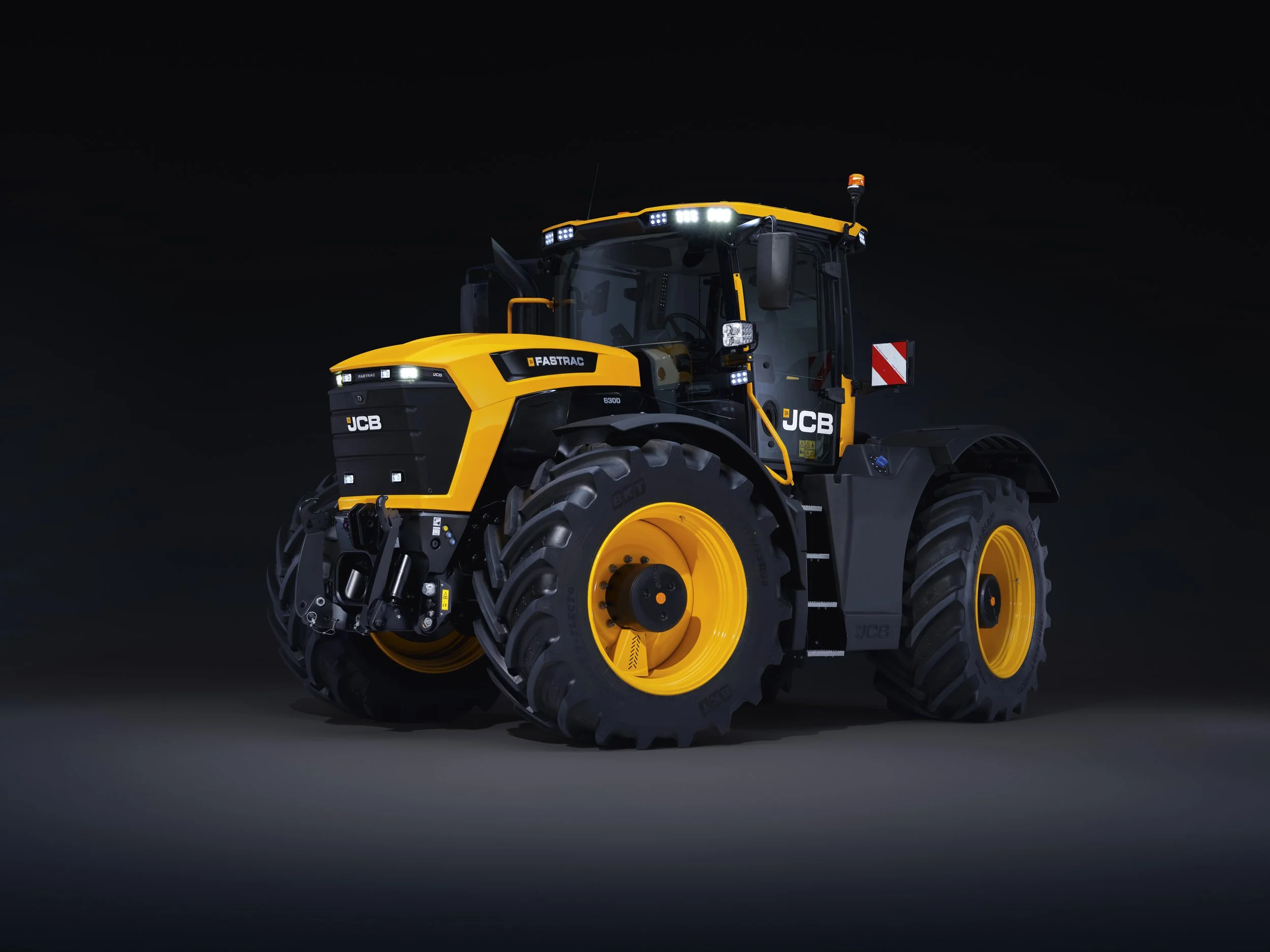
JCB Fastrac 6000 Series
There has always been a clear philosophy behind the JCB Fastrac 6000 Series, and with the latest 6000 Series that thinking has been taken another step forward. This is not simply a higher horsepower addition to the range, it is a ground-up rethink of what a modern high-performance tractor needs to be when it is expected to operate across cultivation, haulage and contracting work without compromise.
Positioned squarely in the 280 to 335 horsepower bracket, the 6000 Series bridges the gap between the established 4000 and 8000 machines, but, more importantly, it introduces a new level of integrated technology that is clearly aimed at contractors and large-scale operators who demand versatility without stepping up to the size and cost of a flagship unit.
At the heart of the machine is a 6.7-L six-cylinder engine platform, delivering up to 335 hp and torque figures pushing towards 1,400 Nm and it is the way that power is managed rather than simply produced that defines the tractor. The 6000 Series is powered by an FPT (Fiat Powertrain Technologies) engine, a proven OEM supplier across multiple off-highway industries, with a strong reputation in the agricultural sector. The engine is designed to deliver its peak torque at relatively low engine speeds, which in practical terms means the tractor holds on to pulling power under load while maintaining fuel efficiency and reducing operator fatigue over long working days.
Supporting that powertrain is an integrated approach to performance and control. An automatic exhaust brake works in conjunction with JCB’s Smart Transmission Control (STC), improving braking performance while also contributing to overall efficiency, something that has long been a defining feature of the Fastrac range. An optional variable pitch cooling fan further enhances this system, responding quickly to engine requirements to maintain optimal operating temperature. The ability to reverse the fan to clear radiators and grills of dust and chaff, with timing intervals and purge cycles adjustable through the screen or joystick, reflects a practical focus on uptime and reliability in real working conditions.
That efficiency is matched by a refined transmission approach. The 6000 Series uses a continuously variable transmission supported by Smart Transmission Control software, delivering precise speed control from zero through to 66 km/h where permitted. The system incorporates a four-range auto change CVT transmission with four key efficiency points, ensuring the tractor operates within optimal performance windows across a wide range of tasks. An integrated and enclosed park brake with active standstill function adds another layer of control, particularly in transport and stop-start operations, while maintaining the ease of use that operators expect from a modern CVT platform.
Speed has always been part of the Fastrac identity and the 6000 Series continues that tradition, but it is how that speed is controlled that sets the machine apart. Full suspension on both axles, combined with a central chassis design, delivers stability that is more akin to a truck than a conventional tractor. This is not simply about operator comfort, it directly translates into improved safety, better braking performance and more consistent control when towing heavy loads at speed.
The chassis itself is a key part of the technology story. Rather than relying on a traditional tractor layout, the 6000 Series uses a split-frame design with a cast front section supporting the engine and front linkage and a fabricated rear structure carrying the cab, transmission and rear linkage. This separation allows for better weight distribution, improved durability under load and a more refined ride, particularly when combined with the advanced suspension system.
Steering technology is another area where the 6000 Series stands out. Selectable four-wheel steering comes as standard, with multiple modes that allow the tractor to adapt to different tasks, from tight headland turns to stable high-speed road work. The addition of GPS-linked rapid steering further enhances this capability, allowing operators to switch steering modes automatically based on position and task, reducing the need for manual input and improving overall efficiency.
A further development in traction and efficiency comes through the availability of Central Tyre Inflation System (CTIS) on the 6300 model. This fully integrated single line system is built into the axles and uses twin compressors delivering a combined airflow of 600 L per minute. By allowing operators to adjust tyre pressures on the move, the system improves tractive performance and reduces soil compaction, while also enhancing overall efficiency. Deflation occurs at the rim, protecting internal components from dust and debris, and improving long-term durability of seals and system components. In practical terms, it allows the tractor to move seamlessly between field and road conditions while maintaining optimal tyre performance.
Hydraulic performance has also been pushed to meet the expectations of modern implements. With flow rates up to 205 L per minute as standard and significantly higher outputs available, the system is designed to support high-demand equipment such as drills, planters and large cultivation gear without compromise. Rear lift capacity sits around the 11,000 kg mark with a 5,000 kg front linkage option, giving the tractor the ability to handle complex front and rear implement combinations that are increasingly common in large-scale systems.
Braking and safety systems reflect the dual-purpose nature of the machine. External disc brakes on all four wheels, supported by ABS, provide consistent stopping power both in the field and on the road, reinforced further by the integrated exhaust braking system. Features such as brake wear indicators and simplified maintenance access show a clear focus on long-term ownership and uptime. This is a tractor designed not just to perform, but to keep performing with minimal interruption.
The operator environment continues to play a central role in the overall design. The spacious, centrally mounted cab remains a key feature of the 6000 Series, offering excellent 360-degree visibility through 6.6 sqm of glass. The driver’s seat allows for rotation, improving comfort and visibility across a range of operations, and is available in a premium specification with heating and ventilation. A full-size instructor’s seat ensures that passenger comfort is not compromised.
Attention to detail extends throughout the cab, with a forward-raked windscreen reducing heat and noise, supported by an enhanced air conditioning system designed to maintain a consistent working environment in all conditions. Storage is practical and well thought out, with cargo nets, a utility tray, cup holders and the option of an under-seat fridge, ensuring the cab remains a functional workspace over long days.
Technology integration within the cab continues to evolve. A coded key immobiliser is included as standard, improving security, while auto start and stop functionality reduces idle time and improves overall efficiency. Combined with push-button start, the system allows the engine to be shut down while maintaining ignition power, keeping systems such as GPS active. For operators spending long hours in the seat, the optional AudioPro package adds an upgraded sound system with additional speakers and a subwoofer, enhancing overall comfort without detracting from the machine’s core purpose.
What ties all of this together is the broader integration of technology into the operator environment. While the mechanical specification is impressive, the real advantage comes from how the machine allows the operator to manage that capability. From transmission control to engine management and steering modes, the systems are designed to work together rather than in isolation, reducing the level of input required while increasing consistency of output.
In practical terms, this means the 6000 Series is not defined by a single standout feature, but by the way each component contributes to overall efficiency. Whether it is maintaining consistent ground speed during drilling, reducing fuel use during transport, or improving manoeuvrability in tight field conditions, the technology is focused on real-world gains rather than headline specifications.
Kubota
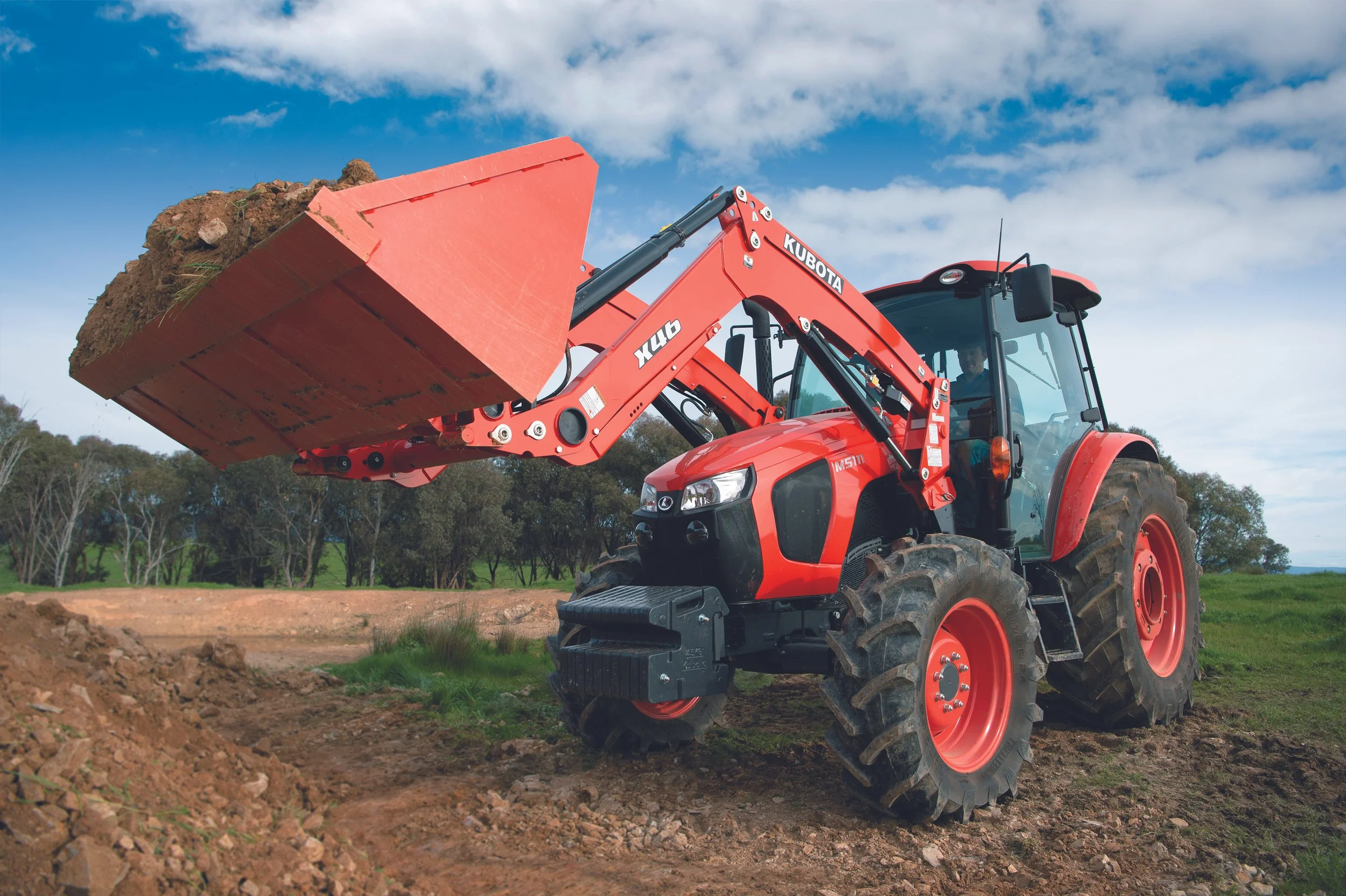
Kubota launched its versatile and feature-packed M5 Series tractors in the mid-size 90 to 110 hp class in New Zealand six years ago. Buyers typically use this horsepower range for hay production, all-purpose farming and specialist applications, and the M5 is designed to be powerful, spacious and versatile. Significantly, the series offers four models: the M5091 and M5111 Standard and then most of the same features in a compact, narrow tractor aimed at orchard and vineyard agriculture, the M5091 and M5101 Narrow.
Senior Product Manager for the M5, Kubota’s Konstantin Blersch, said the series have proven themselves as an important offering in Kubota’s line-up. There’s a need for an upmarket tractor that combines simplicity with comfort and versatility, and this is where the M5 fits right in. The M5 offers powerful performance combined with simple operation, extreme agility and Kubota’s well-known reliability. Kubota tractors are also known for working seamlessly with a variety of implements making them ideal for a range of uses, from field to orchard to transport and in tight spaces where manoeuvrability is essential.
The M5 Series uses Kubota’s reliable, efficient V3800 four-cylinder diesel engine which in addition to high levels of torque also delivers 76 or 89 hp at the PTO to implements. The V3800 common rail engine meets European Tier IV emission standards and uses exhaust gas recirculation and a diesel particulate filter for clean, economic performance. The M5 runs quietly and offers greater wear resistance and lower fuel consumption, which is no surprise when you remember that Kubota is a global leader for industrial diesel engines.
The M5’s Ultra Grand Cab II on Standard models is big on comfort, enclosed, panoramic and air-conditioned with a sunroof and retractable shade. The flat floor is 160 mm wider than previous models, and the console is newly designed with an optional instructor’s seat. The curved glass reduces glare, and the side exhaust, narrow pillars and new sloping bonnet improve visibility. The cab features two-tone colours, more storage and a revised layout that puts everything within easy reach. The same ergonomic design approach has been taken in the Narrow model cabins, which also boast controls within easy reach and a high level of operator comfort.
Kubota is well-known for its versatile transmissions and the M5 offers six synchronised gears, three ranges, Hi, Low and Creep and Dual Speed for either an 18-forward 18-reverse set-up, or a seamless 36-forward, 36-reverse configuration. Clutch and Dual Speed controls are at the operator’s fingertips on the gear lever. Kubota’s smart engine management is also in evidence in the M5, with RPM memory and constant RPM settings that ensure smooth power at all times. Direction change is done with a flick of the finger on a hydraulic shuttle, making manoeuvring smooth and simple, and substantially reducing fatigue for repetitive work.
In addition to the cutting-edge transmission, the M5 Series works hard with versatile hydraulics and a tough Category II three-point hitch that lifts 3,200 kg at the rear on Standard models and a handy 1,500 kg in the Narrow configuration. The hydraulics deliver a high flow rate of more than 60 L/min and plenty of options for control and flow valves. As you would expect from Kubota, the PTO shaft is engineered for safety and performance, with auto engagement and constant speed options. M5 Standard models also pair perfectly with a Kubota front-end loader, which includes third service, boom suspension and a Euro hitch for any job, while wheel choices cater for various applications, spanning general farm work through to specialist applications with adaptable tracks and heights.
Some advantages of the M5 are not immediately noticeable but still make a big difference to usability. Bi-speed turning is a long-standing Kubota feature, where at sharp angles the front wheel speed increases, resulting in extremely tight turns and high manoeuvrability when working with row crops or in tight spaces.
Other features that Kubota has packed into the M5 Series include the multifunction Intelli-Panel, which offers a clear LCD display for data and functions, a newly designed one-piece bonnet that opens wide for easy maintenance, a sunroof that allows a clear view to a raised front loader for easier material handling, all-wheel drive that is automatically engaged when braking for increased safety, and bigger fuel tanks of either 76 or 105 L that allow for long working days.
Kubota New Zealand is putting itself at the forefront of smart, efficient agricultural production and the M5 Series is designed to be clean, efficient and versatile. Thanks to ongoing technology developments, Kubota machines and processes are perfectly compatible and guarantee future viability, with the M5 Series continuing to redefine expectations on farms across New Zealand.
Fendt
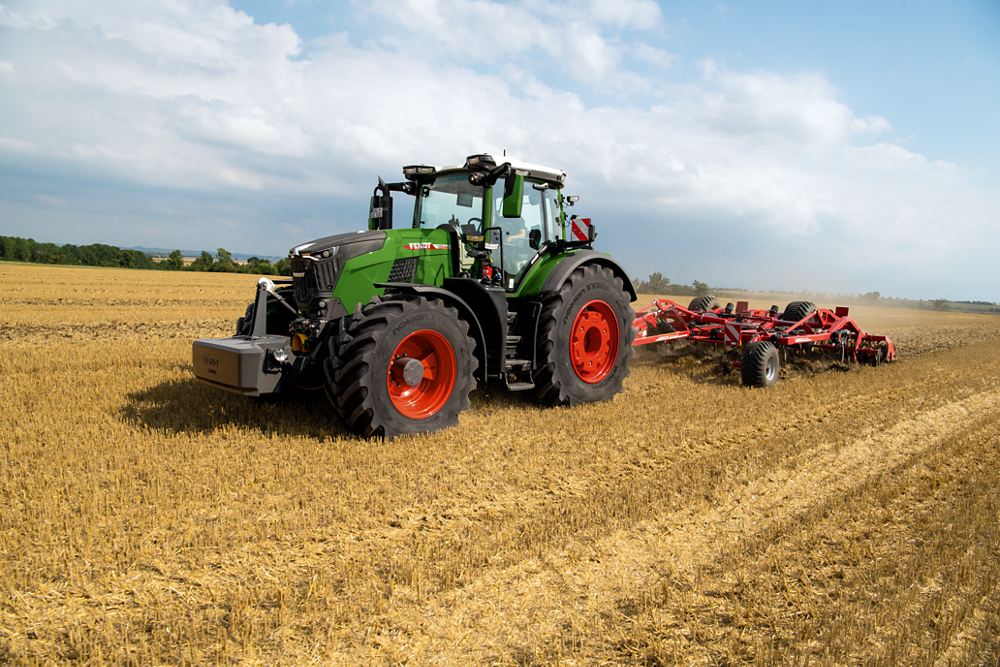
The Fendt 800 Vario Gen5 series marks a significant step forward in the evolution of high-horsepower tractors, bringing together a new platform that is clearly aimed at contractors and large-scale farming operations looking for a balance of power, efficiency and versatility.
Covering a performance range up to 343 hp, the new generation introduces a suite of technologies that have previously been reserved for larger machines, now packaged into a more compact and manoeuvrable format.
The range consists of three models, the 826, 829 and 832 Vario, delivering outputs from 260 hp through to 320 hp, with the addition of Fendt’s DynamicPerformance system providing a further 23 hp when required. That additional power is not tied to ground speed or specific operations, but is available to support auxiliary systems, such as cooling, hydraulics or PTO loads, ensuring consistent performance under varying demand.
A key part of the new platform is the introduction of VarioDrive to the 800 series for the first time. This single-stage transmission drives the front and rear axles independently, distributing torque dynamically depending on load and traction conditions. The system removes the need for manual shifting between field and transport work and also delivers the well-known pull-in turn effect, where the front axle actively pulls the tractor into the turn, reducing the turning radius and improving manoeuvrability in tighter conditions. For contractors working across a mix of paddocks and road transport, that flexibility becomes a practical advantage.
Efficiency has also been addressed through the Fendt iD low-speed concept, which focuses on delivering high torque at reduced engine speeds. With a rated speed of just 1,700 rpm and a typical working range between 1,100 and 1,400 rpm, the tractor is designed to operate in a quieter, more fuel-efficient band without compromising output. Road speeds are achieved at notably low engine speeds, with 40 km/h at 950 rpm and 60 km/h at 1,450 rpm, supporting both fuel savings and reduced wear over time. The top model delivers up to 1,680 Nm of torque, providing strong pulling power across a wide range of applications.
Payload capacity is another area where the 800 Vario Gen5 stands out. With an operating weight of 9.9 tonnes and a permissible gross weight of up to 17.5 tonnes, the tractor offers a payload of 7.6 tonnes. This allows it to operate effectively with larger implement combinations, whether that is a front tank and precision drill setup or a full mower combination, while remaining within legal limits for transport. Flexible ballasting options at both the front and rear ensure the machine can be set up to suit either field or road work.
Cab design has been given significant attention, with a new workspace aimed at improving comfort over long working days. Visibility remains a key focus, supported by an updated lighting system that offers up to 114,700 lumens through LED work lights. Operators can choose between Vision and UltraVision packages, with dimmable lighting and adjustable profiles allowing the setup to be tailored to different tasks and conditions. The ability to control individual lights becomes particularly useful when working alongside other machines or in reduced visibility.
The cab itself is built around the FendtONE operating system, with up to three display areas and user profiles that allow operators to store individual settings. This extends to seat position, mirrors and lighting configurations, helping reduce setup time when multiple drivers are using the machine. Comfort is further enhanced through features such as an optional heated laminated front windscreen, improved noise insulation and a new high-spec seat with full electronic adjustment.
Cooling and filtration systems have also been upgraded. The Concentric Air System manages engine cooling efficiently, while optional reverse fan functionality helps clear debris in dusty conditions. A self-cleaning engine air filter and automatic cab air filter cleaning system reduce daily maintenance and maintain air quality in challenging environments, particularly during cultivation or harvesting in dry conditions.
Hydraulic performance has been designed to match the demands of modern implements, with up to six rear and two front control valves available, along with multiple pump options delivering up to 385 L per minute. This allows the tractor to operate effectively with complex equipment such as high-capacity drills or combination units, where consistent oil flow is critical.
Transport capability remains a strong focus, with a top speed of up to 60 km/h supported by a range of safety and control systems. Features such as Fendt Stability Control, Reaction Steering and the Trailer Brake Assistant improve handling and safety, particularly when operating with heavy or high-capacity trailers. The integration of these systems reflects the increasing importance of road transport within modern contracting and farming operations.
Overall, the 800 Vario Gen5 represents a well-considered step forward for the mid to high horsepower segment. It combines the efficiency and technology of larger machines with a level of manoeuvrability that suits a wide range of applications. For contractors and large-scale farmers, it is not just about peak power, but about how that power is delivered, managed and translated into productivity across the season.
Case IH
Tier 3 Puma
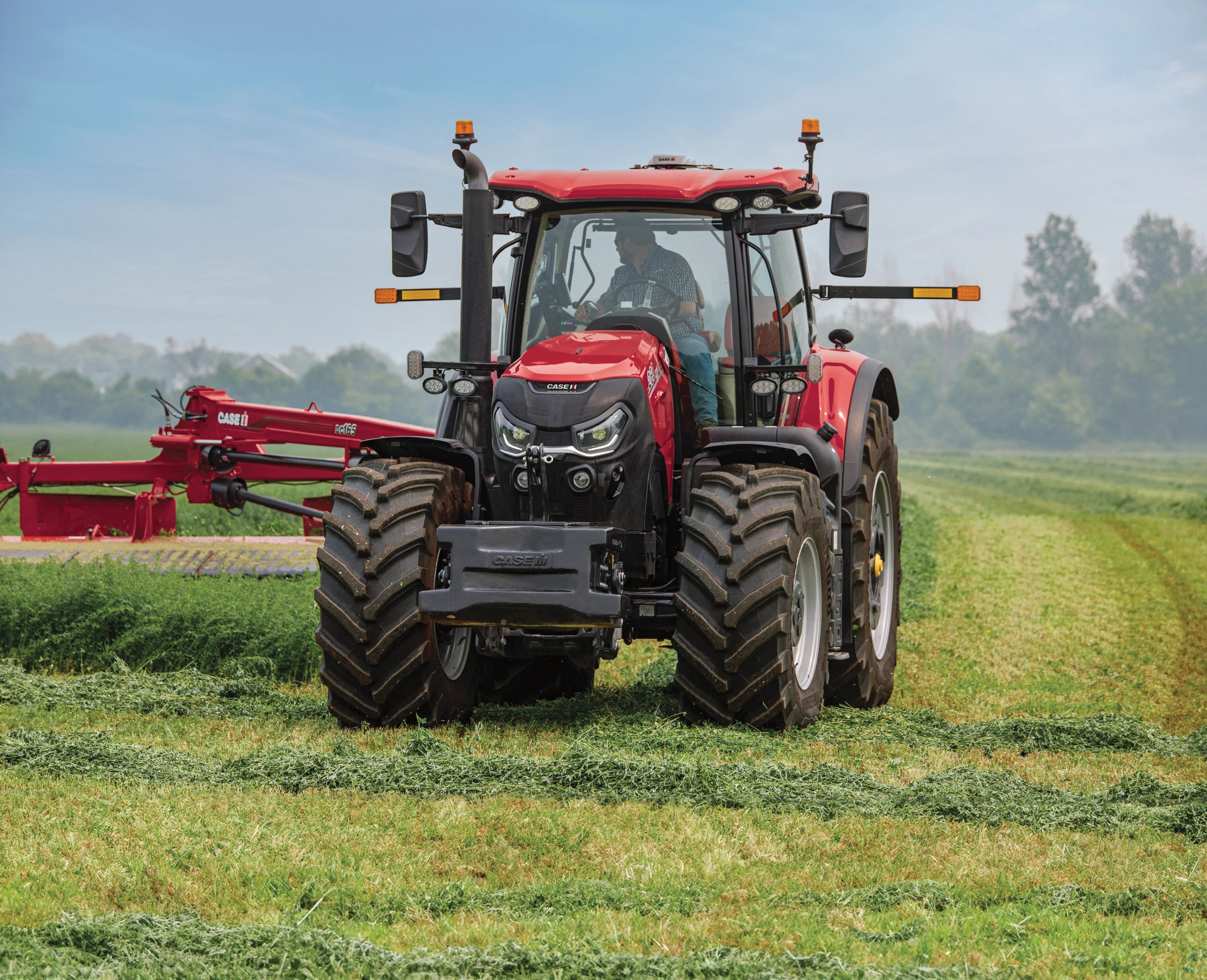
The Tier 3 Puma with it’s 6.7-litre FPT engine, is a platform that has been widely proven across the Puma range and beyond. It is not just about horsepower, although with models ranging from around 180 hp through to 220 hp there is no shortage of that. What matters more is how that power is delivered. The engine is tuned to provide strong torque through the working rev range, allowing the tractor to hold load without constant gear changes or excessive fuel burn.
That characteristic becomes particularly important in New Zealand conditions, where tractors in this category are expected to move between tasks without compromise. Whether it is pulling a heavy cultivation implement, running a baler or handling transport work, the ability to maintain consistent power under varying load is what defines productivity.
One of the most notable aspects of the Tier 3 Puma is its approach to emissions and engine management. By retaining Tier 3 technology the tractor eliminates the need for AdBlue, which immediately simplifies operation and maintenance. For many operators, particularly in contracting environments or remote locations, that simplicity is a real advantage. It reduces the number of consumables required on-farm and removes another variable from daily operation.
That simplicity extends further into servicing. Case IH has pushed service intervals out by around 25% compared to earlier Tier 3 models, which has a direct impact on uptime and running costs. In a seasonal workload where weather windows dictate output, fewer service interruptions translate directly into more hours in the field.
Transmission options play a key role in how the Puma fits into different operations. The Tier 3 range offers both Powershift and CVT configurations, allowing operators to match the tractor to their workload.
The Powershift option provides a straightforward, mechanical solution that suits operators who prioritise durability and ease of use. It is particularly effective in draft work and general field operations, where consistent pulling power is required.
At the other end of the scale, the CVT option introduces a higher level of control and efficiency, particularly in applications where speed and load vary frequently. Transport work, mowing and precision operations all benefit from the ability to maintain a constant ground speed without manual gear changes. The inclusion of these options reinforces the Puma’s position as a flexible platform rather than a one-size-fits-all solution.
Hydraulics are another area where the Puma is built for real-world application. With flow rates reaching up to 170 litres per minute on higher specification models, there is more than enough capacity to handle modern implements. Whether it is running high-demand hydraulic motors or managing multiple remotes, the system is designed to deliver consistent performance without lag or compromise.
The rear linkage and PTO configuration further support that versatility. With multiple PTO speed options, including economy settings, operators can match engine speed to the task, improving fuel efficiency without sacrificing output. In operations where PTO-driven implements are used extensively, that ability to fine-tune performance becomes a key efficiency gain.
From a structural perspective, the Tier 3 Puma is built around a long wheelbase platform, particularly in the higher horsepower models. That added length improves stability both in the field and on the road, especially when working with heavier implements or towing at speed. Stability is often overlooked in specification sheets, but in practice it plays a significant role in operator confidence and overall performance.
Cab design follows the same practical approach seen throughout the tractor. While newer Connect Puma models push further into high-spec technology, the Tier 3 variant focuses on delivering a comfortable, functional working environment without unnecessary complexity. Controls are laid out logically, visibility is strong and the overall environment is designed to support long working days.
That matters in a contracting context, where multiple operators may be using the same machine. Simplicity reduces training time and minimises the risk of operator error, particularly during peak periods when time is limited and workloads are high.
Loader compatibility adds another layer to the Puma’s versatility. While it is often seen as a field tractor, its ability to handle loader work effectively makes it a genuine all-rounder. This is particularly relevant in mixed farming systems, where tractors are expected to move between cultivation, feedout and yard work without downtime.
The Tier 3 Puma represents a clear segment of the market that continues to resonate with New Zealand farmers and contractors. While there is an increasing push towards higher levels of technology and connectivity, there remains strong demand for tractors that prioritise reliability and ease of use.
As Case IH Product Manager Seamus McCarthy described it, the Puma is designed as a “no fuss workhorse” that delivers power and performance while keeping things simple. That positioning is deliberate, and it reflects what many operators are actually looking for in this horsepower category.
There is also a broader context to consider. As machinery becomes more advanced, the cost of ownership increases, not just in terms of purchase price, but in servicing, diagnostics and operator training. The Tier 3 Puma offers a counterpoint to that trend, delivering modern performance without the full complexity of next-generation systems.