
Breaking compaction at depth with the Great Plains In-line Sub-soiler
There are parts of a paddock that tell their story openly and others that keep it hidden well below the surface and for many farmers and contractors the most limiting factor in crop performance sits out of sight in compacted layers that restrict roots, water and nutrient movement. Compaction is rarely dramatic but over time it quietly erodes yield potential and resilience, particularly in systems that rely on repeated traffic, heavier machinery and narrow working windows. Addressing that problem properly requires a tool that is built to work deep, stay true and fracture soil without creating new issues at the surface and that is where the Great Plains In-line Sub-soiler range fits natu rally into modern cultivation systems.
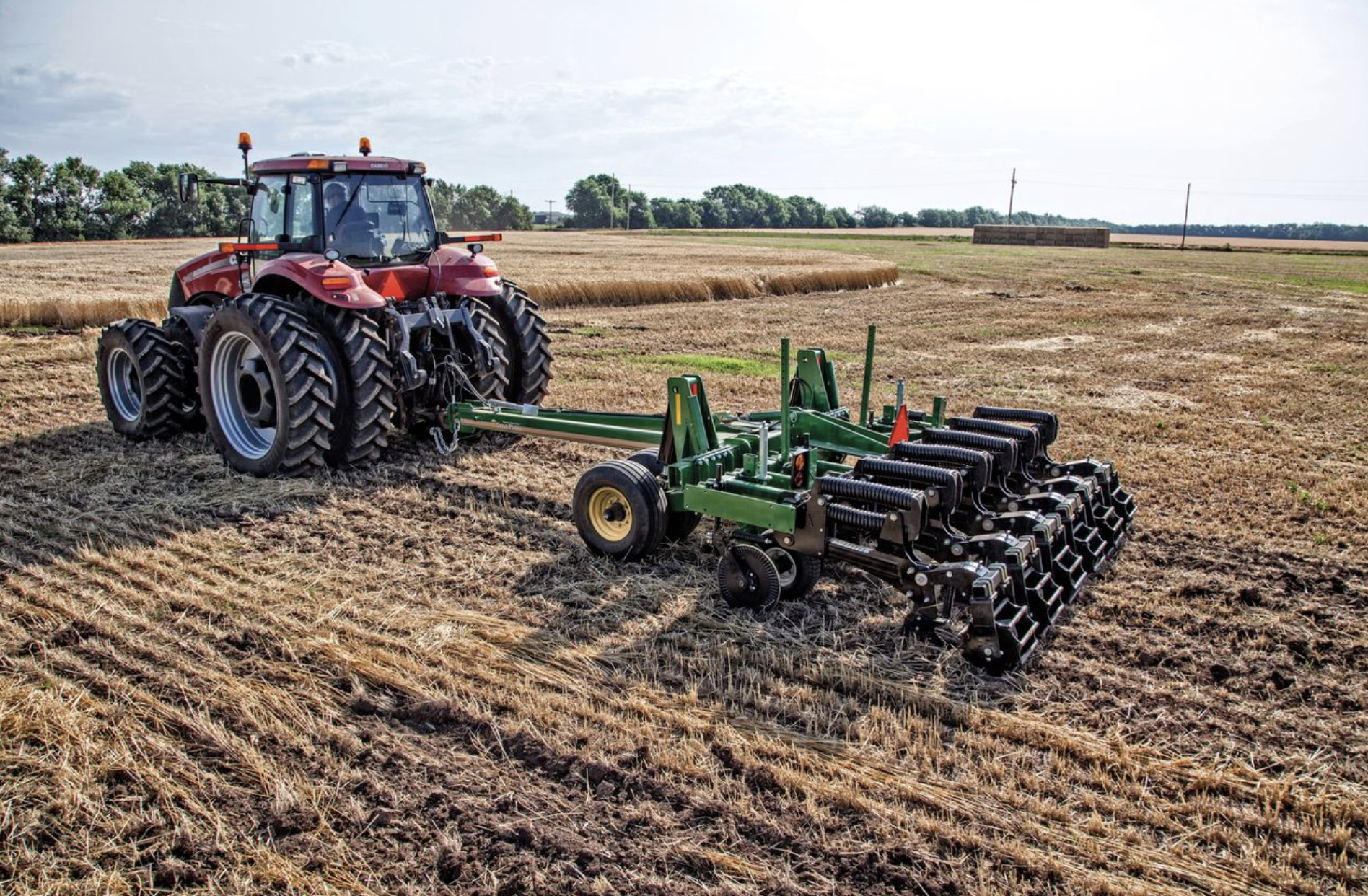
The In-line Sub-soiler range is designed with a single purpose in mind, which is to remove compaction and reset soil structure at depth while keeping the operation as controlled and predictable as possible. Rather than chasing surface finish, these machines focus on what happens below the working layer targeting hardpan created by years of cultivation, harvesting and transport. By lifting and shattering that dense zone the soil profile becomes more open and functional, allowing roots to explore deeper, water to drain and infiltrate more effectively and crops to access nutrients that were previously locked away.
Across the range Great Plains offers several models to suit different farm sizes, tractor power and operating styles. The core difference between models lies in working width and shank count, allowing operators to scale the machine to their horsepower and the area they want to cover in a day. Narrower configurations suit smaller tractors or targeted compaction work, while wider machines are clearly aimed at large-scale operators and contractors who need to cover ground efficiently when conditions are right. This modular approach means the range is not a one-size-fits-all solution but a set of tools built around the same principles.
A defining feature of the In-line Sub-soiler design is the straight in-line shank layout, which promotes consistent soil fracture across the full width of the machine. Shank spacing is set to ensure overlapping zones of disturbance, reducing the risk of untouched compaction strips between legs. Operators can choose between auto reset or shear-bolt shanks and point options depending on how aggressive they want the machine to be. The Great Plains In-line Sub-soiler comes standard with the no-till shank and shin option and is well suited to systems where residue retention and minimal surface disturbance are priorities, creating deep fracture while leaving the top profile largely intact.
Depth control is another area where the range shows its practical intent. Adjustable gauge wheels allow operators to set and hold working depth accurately, even across rolling or uneven ground. This matters because deep tillage only delivers its benefits when it is done at the correct depth, and inconsistent penetration can leave compaction untouched in places while overworking others. With the gauge wheels carrying part of the load the sub-soiler runs more steadily, reducing stress on the frame and tractor while improving consistency across the paddock.
Optional finishing components such as berm conditioners add another layer of flexibility. After the compaction layer has been fractured these attachments help firm and level the soil, reducing surface roughness and leaving the paddock in a more workable state for following operations. This is particularly valuable in systems where deep ripping is carried out ahead of drilling, as it helps avoid the need for extra passes simply to tidy up the surface.
When comparing models within the range, the decision often comes down to scale and timing rather than capability. Smaller units allow precise intervention in problem areas or on lighter tractors, while larger machines bring obvious advantages in productivity for those working big areas under tight seasonal pressure. In all cases the heavy-duty frame construction and straightforward mechanical layout reflect a machine built to live in real paddocks, not just demonstration plots. These are tools intended to be used hard when conditions allow and parked when they do not, without demanding excessive maintenance or adjustment.
The agronomic payoff from effective sub-soiling is rarely instant but is often long-lasting. Improved root depth supports better early vigour and stronger drought tolerance, while enhanced drainage reduces waterlogging and compaction-related stress. Over time, these gains translate into more even crops and greater consistency across paddocks that once struggled to perform. The role of the sub-soiler is not to replace good soil management but to support it removing physical barriers that limit the effectiveness of fertiliser, rainfall and plant genetics.
In an environment where soil health and productivity are increasingly linked to both profitability and sustainability, the Great Plains In-line Sub-soiler range offers a measured, practical response to one of farming’s most persistent challenges. By focusing on depth, control and durability and by offering a range of configurations to suit different operations, it gives farmers and contractors a reliable way to restore soil structure and unlock performance that has been held back for years. Sometimes the most valuable improvements happen out of sight and this is a range built to work exactly where it matters most.