
Don’t sweat it – the cool secret to sowing success
What if one simple change could make a world of difference to your pasture renewal this autumn?
It doesn’t cost anything, and it could save a lot of stress and frustration.
All you have to do is ask a question before you order new seed: Where has it been stored?
If the answer is ‘in a purpose-built cool store’, you’re good to go.
If not, odds are the only animals benefitting from that new grass will be the likes of Argentine stem weevil and black beetle.
New research has revealed what happens when perennial ryegrass seed with endophyte is stored poorly, and it’s not good.
Barenbrug national sales manager Jake Gardner says the recent study proves even moderate heat and humidity are enough to kill endophyte surprisingly quickly.
In fact, researchers found endophyte in seed stored at ambient temperature – 15–25°C, with 65% relative humidity – started dying after just three months.
This decline sharpened at six months, and after 15 months, seed that went into ambient storage with viable endophyte levels in excess of 80% had less than 20% remaining.
High levels of live endophyte are essential to deter insect pests from damaging and killing ryegrass.
Correctly cool stored, endophyte remains viable for a long time, which is why it’s so important to find out where your seed has been before you load it into the drill.
Endophyte is invisible, so unless the seed is tested shortly before sowing, Jake says, you won’t know there’s a problem until new pasture fails to establish well.
The new study¹ was done by the Seed Industry Research Centre at Lincoln, which is funded by a wide range of organisations, including research and tertiary institutes, seed breeding companies, producers and retailers.
It compared endophyte viability in perennial ryegrass seed under different conditions – cool and dry (4°C, 30 per cent relative humidity); and ambient, as described above.
The difference was stark, Jake says, and is especially relevant for everyone in the seed supply chain at this time of year, because the ambient research conditions are similar to what can be experienced in North Island regions prior to autumn sowing.
“Endophyte has been known for years to be much more vulnerable to storage conditions than seed itself.
“That’s why we’ve always advised farmers to store seed carefully on farm; to only buy as much as they need for the season ahead, and not carry seed over into the next season, as it’s likely to lose endophyte.”
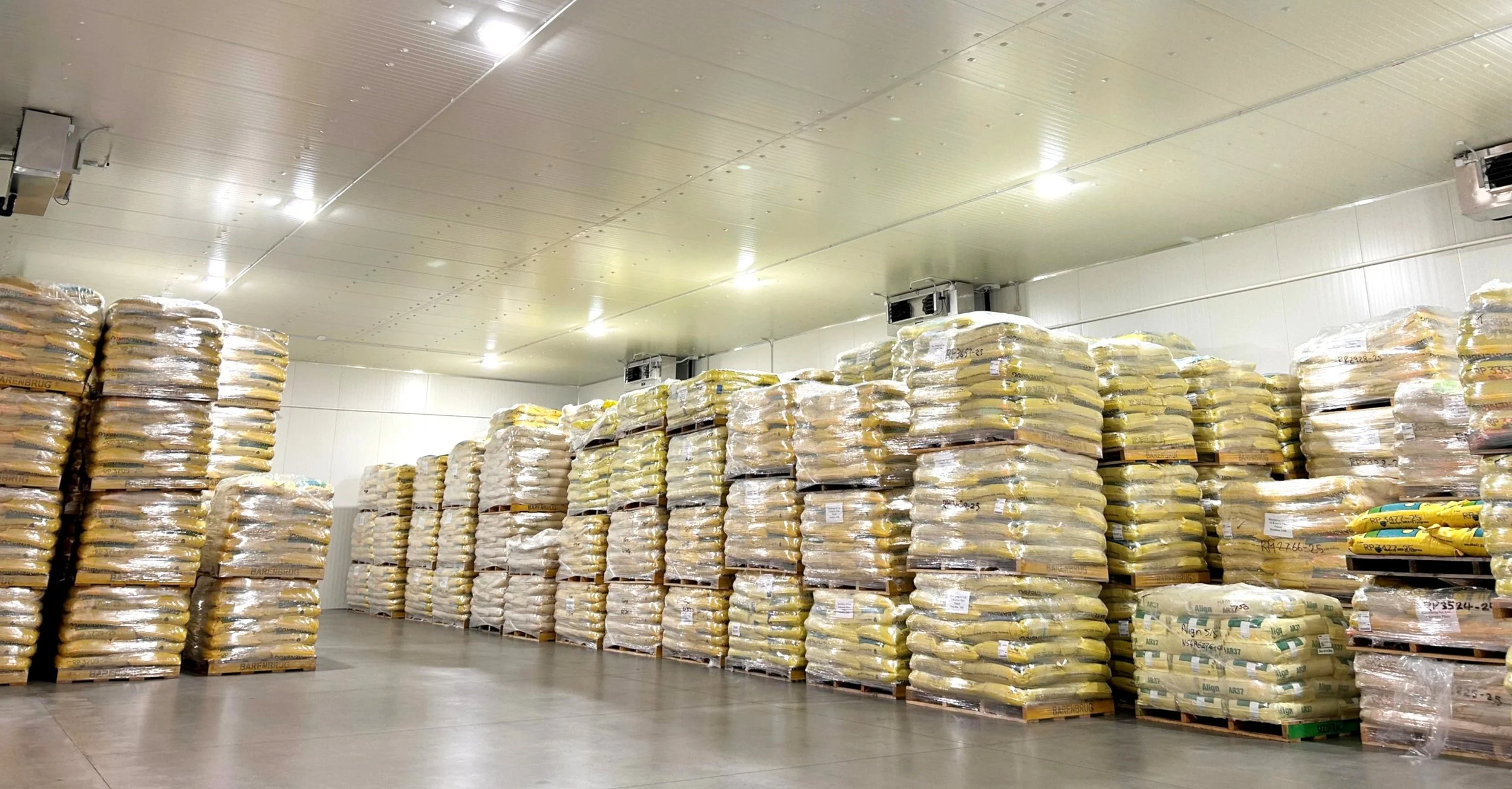
That’s also why Barenbrug has invested in a 400 tonne Waikato cool store, as part of its North Island distribution centre.
The cool store has been purpose-built to keep endophytic ryegrass seed safe until as close to sowing as possible.
Think of it like a fridge you might use to store live animal vaccines on-farm before using them.
After all the work that goes into growing, harvesting and processing high quality seed, Jake says, Barenbrug was not prepared to compromise on stewardship for this final step, even though the new facility adds hundreds of thousands of dollars to the company’s costs every year.
“This is a massive milestone for us and our customers. Farmers get the extra confidence of knowing all their Barenbrug ryegrass – with endophyte and without – arrives at their gate straight from optimal storage in the best possible condition.
“And we can fill the cool store early, so we have a lot more stock on hand at the start of autumn.”
The new site complements Barenbrug’s existing cool storage in the South Island, where most seed is grown.
The bulk of ryegrass seed sold for autumn renewal is at least 12 months old, as the window between harvest and sowing is too brief to process it all.
“So great stewardship and care are key.”
¹ Thant, Hampton, Rolston and Lawrie (2025). Seed packaging bag types – impact on endophyte viability and seed quality in perennial ryegrass during storage.