
ForestQuip
The humble rake rarely receives the same level of attention as a mower, baler or forage harvester, but anyone involved in making quality conserved feed knows it can have a major influence on the final result.
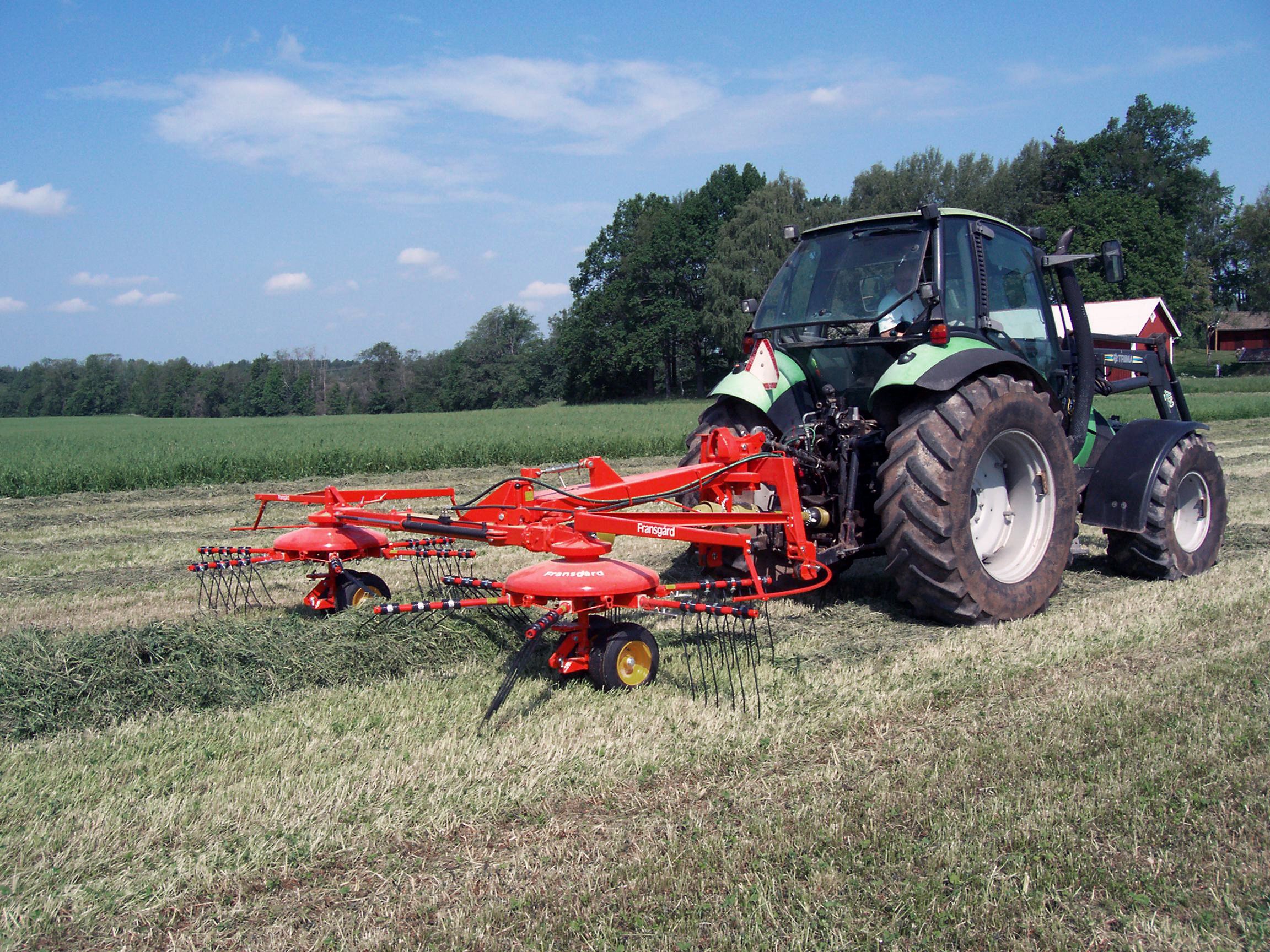
A good rake does far more than simply gather grass into a row. It helps preserve feed quality, reduces contamination, creates a consistent swath for the following machine and ultimately contributes to harvesting efficiency. Get it wrong and valuable dry matter can be lost long before the crop reaches the stack, bale or feed pad.
That is where machines like the Fransgård TI-6000 have carved out a strong reputation.
Built in Denmark and distributed in New Zealand by ForestQuip, the TI-6000 is a twin-rotor combi rake designed to give operators flexibility in how they manage forage. Rather than being limited to a single raking pattern, the machine can rake to the centre, rake to the side, create two swaths in one pass and even perform limited spreading duties when conditions require it.
That versatility is one of its biggest selling points.
Modern forage systems are increasingly focused on efficiency. Weather windows can be short and contractors often need machinery capable of adapting to different crops, field conditions and harvesting systems. A rake that can perform multiple tasks without requiring additional machinery has obvious appeal.
The TI-6000 operates with a working width adjustable from 4.6 m through to 6.2 m, allowing operators to tailor swath size to suit the pickup width of the following machine. Hydraulic adjustment means changes can be made quickly as conditions change across a paddock or between crops.
That flexibility becomes particularly valuable when working with different harvesting equipment. A contractor moving between round balers, square balers and forage harvesters can alter swath width to match the machine following behind rather than being locked into a fixed setup.
For operators looking to maximise efficiency, the ability to side rake is equally useful. The TI-6000 can merge multiple swaths together and, under suitable conditions, combine two swaths in a single operation. That reduces the number of passes required and helps improve harvesting productivity.
The design itself reflects Fransgård's long-standing focus on practical machinery.
The rake uses two rotors, each fitted with six arms carrying three rake spring assemblies per arm. The arrangement is designed to produce a light, fluffy swath while handling forage gently to minimise leaf loss and crop damage.
That gentler handling is increasingly important as farmers place greater emphasis on feed quality. Every unnecessary movement of the crop has the potential to knock valuable leaf material from lucerne, clover and other high-value forage species. A rake that lifts and rolls material cleanly rather than dragging it through the stubble helps retain feed value.
The TI-6000 also incorporates closed ball bearings within the cam track system, removing the need for lubrication and reducing routine maintenance requirements. In an environment where labour is often stretched and machinery fleets continue to grow, reducing maintenance demands can make a meaningful difference over the course of a season.
Ease of adjustment appears throughout the machine.
Rotor height can be fine-tuned to suit crop conditions and field surfaces, while the cam track system offers multiple adjustment positions. The working height can also be adjusted centrally, helping operators achieve a clean rake without pulling dirt and stones into the swath.
That matters because forage contamination remains one of the biggest quality issues in silage and hay production. Soil contamination not only affects feed quality but can also increase wear on harvesting equipment further down the line.
For New Zealand conditions, the machine's terrain-following ability is another important consideration.
The TI-6000 features a pivoting headstock arrangement that allows the rake to trail smoothly behind the tractor and automatically return to centre when lifted. Large wheels beneath each rotor help maintain stability while allowing the machine to follow ground contours effectively.
Anyone who has worked on rolling country understands the value of machinery that can maintain a consistent working height across uneven terrain. The better the rake follows the ground, the cleaner the finished swath.
Transport is often overlooked when discussing rakes, yet it becomes increasingly important as farm sizes grow and contractors travel longer distances between jobs.
Despite offering a working width of up to 6.2 m, the TI-6000 folds down to a compact transport width of approximately 2.5 m. Rotor components and guards can be repositioned for transport, making the machine easier to move safely between properties.
Capacity figures of four to eight hectares per hour place the machine firmly in the category of productive mid-sized rakes capable of keeping pace with modern mowing and baling operations. Depending on crop volume and field conditions, that level of output is sufficient for a wide range of dairy, drystock and contracting applications.
Power requirements remain relatively modest, with Fransgård specifying around 30 kW to 60 kW depending on configuration and operating conditions. That means the rake can be operated behind a wide range of tractors already found on New Zealand farms.
Perhaps the strongest endorsement of the TI-6000 is that it focuses on the fundamentals. It is not attempting to overwhelm operators with unnecessary complexity. Instead, it offers flexibility, gentle crop handling, straightforward adjustment and the ability to adapt to different harvesting systems.
For farmers and contractors looking to maximise forage quality while maintaining productivity, that combination remains highly relevant.