
Getting the system right - from paddock to pit
Northern Victoria dairy farmer Brady Hore says the key to putting the best feed in front of his cows is through thorough planning, backed by a strong working relationship with his contractor.
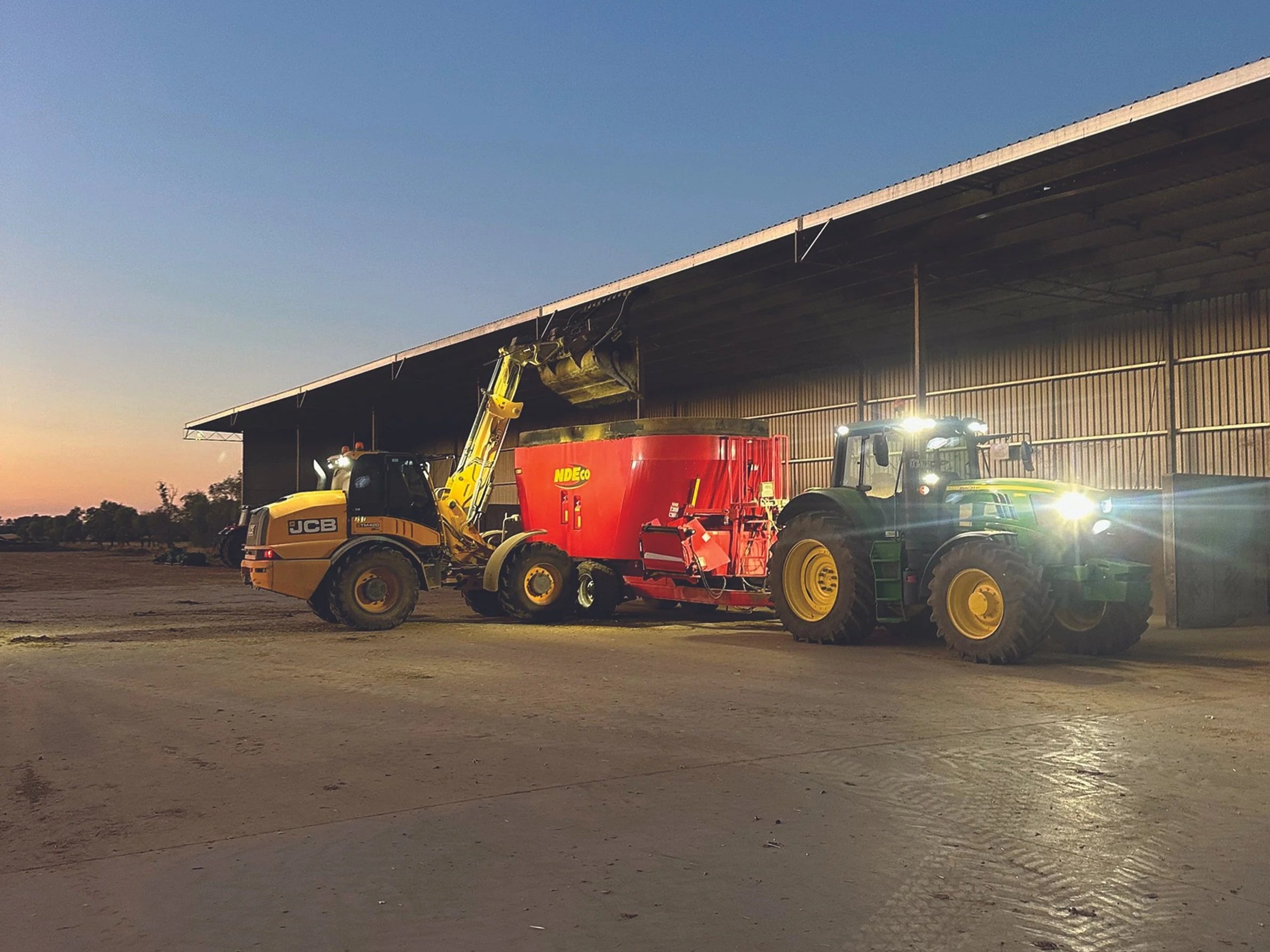
Brady is the fourth generation dairying on the farm, and operates in partnership with his parents, Steven and Deanne, and multiple staff. Brady milks 700 cows, with about 10 million litres of milk going through the 44 unit rotary every year.
Cows are all housed in sand bedded freestalls, with young and dry stock on manure compost bedding. The entire herd, from young stock to lactating cows, are barn fed total mixed rations (TMR).
Brady feeds an average 26-28kg dry matter intake per cow per day. All the feeding is done at first light, with the first job of the day being shaving the pit face for fresh feed.
Brady crops 1700 acres, aiming to harvest 2400 dry tonnes of corn and a few thousand tonnes of winter cereals and vetch for feed.
“Depending on the season and how much storage ahead we would like, we are trying to build a feed bunk,” he says.
Brady says, because he barn feeds TMR year round, he does not treat feed differently during specific seasons or for specific cow production stages, but constant monitoring of what goes into the pit and comes out of it is crucial for sustained productivity and good animal health.
“We are looking and learning all year round,” he says.
“We make sure the quality is top notch, especially what’s coming out of the silage pit. Our contractor checks in with us and we discuss any problems we pick up and make sure it doesn't happen the next season. I am also in constant contact with an animal nutritionist.
“Compaction, moisture content, dry matter, any mould or contamination, it's a daily check," he says.
Good feed quality translates into high milk production, production gain and healthy cows.
For the last five years, Brady has been contracting out silage chopping and packing to Monk & Son Ag Services, doing the rest himself.
Sam Monk started the business when he was only 16, and had only a Case IH Maximum 155 Tractor and a New Holland BR7060 round baler. The business has now grown to a fleet of tractors, forage harvesters, silage trucks and a host of other implements, with staff reaching 100 plus in peak silage season.
Brady says he maintains a good relationship with Sam at Monk & Son by regularly checking in and talking about how the season is tracking, and by catching up both on and off-site.
“We're talking all the time.”
Timing is critical to securing good feed, with weather conditions in the lead-up to harvest playing a key role in determining silage quality.
Talking about timing has everyone putting their minds together to assure the best quality result is possible.
Maximising the timing of dry matter is the most time critical factor, as it allows for making the best quality silage that will impact intake and production and enables him to get the most production from his feed.
With the consistency of silage a close second, also leading to maximum intake, as cows like consistency in feed.
His silage mix is made up of corn, cereal or vetch silage, lucerne hay, almond hulls, cottonseed, canola meal and grain.
“Getting a consistent product with the right dry matter in a total mixed ration is the key. Over the years we’ve gotten better and better”.
The right mix is one cog in the farm profitability machine, because cows that eat well are healthier, produce more milk, and they consume all their feed, which means less wastage.
“In conjunction with our nutritionist and agronomists and contractors, we are learning and improving. We're all on the same page and want to get the most production out of our animals and crops, and have good animal health.”
Asked what is the most critical time for feeding in an animal's life Brady says, “from the day it's born to the day the animal leaves the farm, it's all important and, because we lot feed on a full TMR everything is critical.”
We monitor animals and their growth rates from when they start TMR at five months old.
Brady takes on TMR mixing himself and relies on ONEFeed, an electronic feeding system, to track daily mixes, with dry matter intake and quality being particularly important.
Dry matter also helps maximise intake and consequently he gets higher production.
A cow eating a well-balanced diet of TMR and silage is able to produce optimally.
Brady also relies on Lallemand Inc to keep his cows healthy.
Lallemand develops microorganisms, yeasts, bacteria, fungi and their derivatives. Their theory is that a dairy farm has several microbial ecosystems, from the forage to the cow’s rumen, all hosting natural microflora.
“By managing these microbial ecosystems, producers can optimize performance, quality, and safety while contributing to sustainable dairy production.”
Brady says Lallemand has a good product offering covering inoculants and production advice.
He says Dave Lewis, technical service manager at Lallemand, has helped him achieve his production goals and boost animal health.
“I’ve learned a lot from him. He has helped me make and manage silage”.
Brady also relies on a GEA CowScout collar that tracks rumination, and will send a notification of reduced eating and rumination times, which helps Brady identify health problems early on.
The collar also tracks heat and identifies animals entering the milking shed.
Brady says attention to detail, teamwork, and consistent monitoring are what keep the system running smoothly from paddock to pit.
With the right people and practices in place, he’s confident his herd will keep performing at its peak for seasons to come.