
New Pöttinger Synkro cultivators add flexibility to tillage operations
Pöttinger has updated its Synkro range of stubble cultivators, introducing a number of new features and configuration options designed to give farmers and contractors greater flexibility across a range of cultivation tasks.
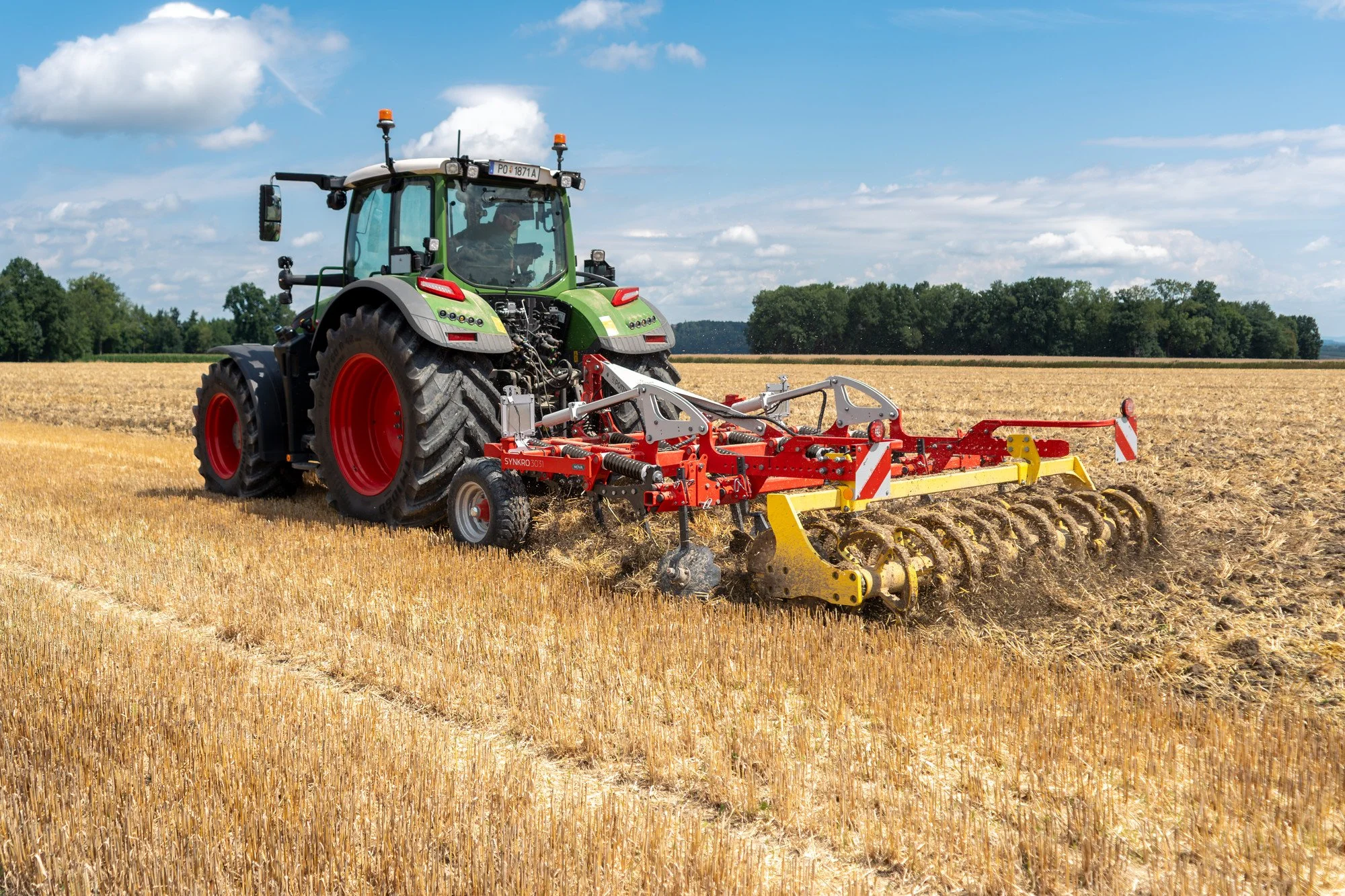
The new linkage-mounted Synkro cultivators are available in two-gang and three-gang configurations. Two-gang rigid models are offered in working widths of 2.5 m and 3 m, while the three-gang range includes rigid and folding machines from 3 m through to 5 m.
Designed as universal cultivators, the machines can be used for shallow stubble cultivation following harvest, deeper primary cultivation in autumn, seedbed preparation ahead of mulch drilling and terminating cover crops. The ability to configure the cultivator for different jobs is a key part of the new range, particularly for farming operations looking to reduce the number of implements required across the cultivation programme.
One of the more significant changes is the option of depth wheels on the rigid Synkro models. These are designed to maintain a consistent working depth when operating across rough or undulating ground, where relying solely on the rear roller for depth control can be more challenging.
Maintaining an even cultivation depth becomes particularly important when the machine is being used ahead of a seed drill. Consistency across the paddock helps provide a more uniform seedbed while avoiding unnecessary soil movement or deeper cultivation than required.
The addition of depth wheels also means the rear roller can be removed when conditions or the intended cultivation strategy call for it. This applies to both rigid and folding versions of the new Synkro.
Removing the rear roller leaves the soil in a looser, non-consolidated condition and provides another option for autumn primary cultivation. This is particularly relevant for farming systems operating without a plough, where the objective may be to loosen and mix the soil while avoiding immediate reconsolidation.
Leaving the rear roller off also allows more organic material to remain at the soil surface. Maintaining crop residue on top can provide additional protection against erosion, particularly where cultivated ground may otherwise remain exposed to wind or heavy rainfall through autumn and winter.
For contractors, the ability to operate with or without the rear roller also broadens the range of conditions in which the same machine can be used. Rather than having the machine permanently configured around one cultivation approach, it can be adapted according to soil type, conditions and the result required by the farmer.
Pöttinger has also made changes to the folding Synkro V models. Four optional parking stands allow the cultivator to be stored safely in its folded position, reducing the amount of shed or yard space required when the machine is not in use.
The Synkro V models use a symmetrical tine configuration intended to prevent side pull during operation. Keeping the machine running directly behind the tractor is particularly useful on wider cultivators, while the tine arrangement is also designed to provide consistent levelling across the full working width.
Stone protection has received attention as part of the update. Pöttinger's Nova mechanical stone protection system uses horizontal springs and has a triggering pressure of 550 kg. The latest version is now maintenance-free, reducing another routine service requirement on machines working in abrasive and often demanding conditions.
When a tine encounters an obstruction, the protection system allows it to move rather than transferring the full impact through the cultivator. Once the obstruction has been cleared, the tine can return to its working position and cultivation can continue.
The levelling tools on Synkro V models can now be adjusted centrally, simplifying machine set-up when moving between paddocks or changing cultivation depth. Overload protection has also been added to the levelling tools across all models.
A range of tillage tools and equipment options allows the cultivator to be configured according to soil type, crop residue and the required finish. This adaptability is becoming increasingly useful as cultivation strategies become more varied, with some operations using shallow passes to encourage volunteers and manage residues while others require deeper cultivation as part of primary soil preparation.
Machine set-up remains an important part of achieving those results. Working depth, tine configuration, levelling and consolidation all influence the condition left for the following operation, whether that is another cultivation pass or the seed drill.
The expanded Synkro range reflects the wider move towards cultivation equipment capable of performing more than a single task. For farmers and contractors, versatility can mean fewer specialised machines while still retaining the ability to alter the cultivation approach as soil and seasonal conditions change.
With working widths ranging from 2.5 m to 5 m, rigid and folding configurations, optional depth wheels and the ability to work with or without rear rollers, the new Synkro range covers operations from smaller farms through to larger arable businesses and contracting fleets.
Ultimately, the value of a universal cultivator lies in being able to adapt the machine to the job rather than forcing every paddock through the same cultivation programme. Pöttinger's latest Synkro updates provide more options to do exactly that, while retaining the consistent depth control, residue management and soil levelling required to prepare the ground for whatever operation follows.