
New Zealand farmers well placed to navigate a higher-cost, more uncertain world
As global markets grapple with renewed inflationary pressures, geopolitical instability and the prospect of higher interest rates, New Zealand farmers are better positioned than many international competitors to navigate the challenges ahead.
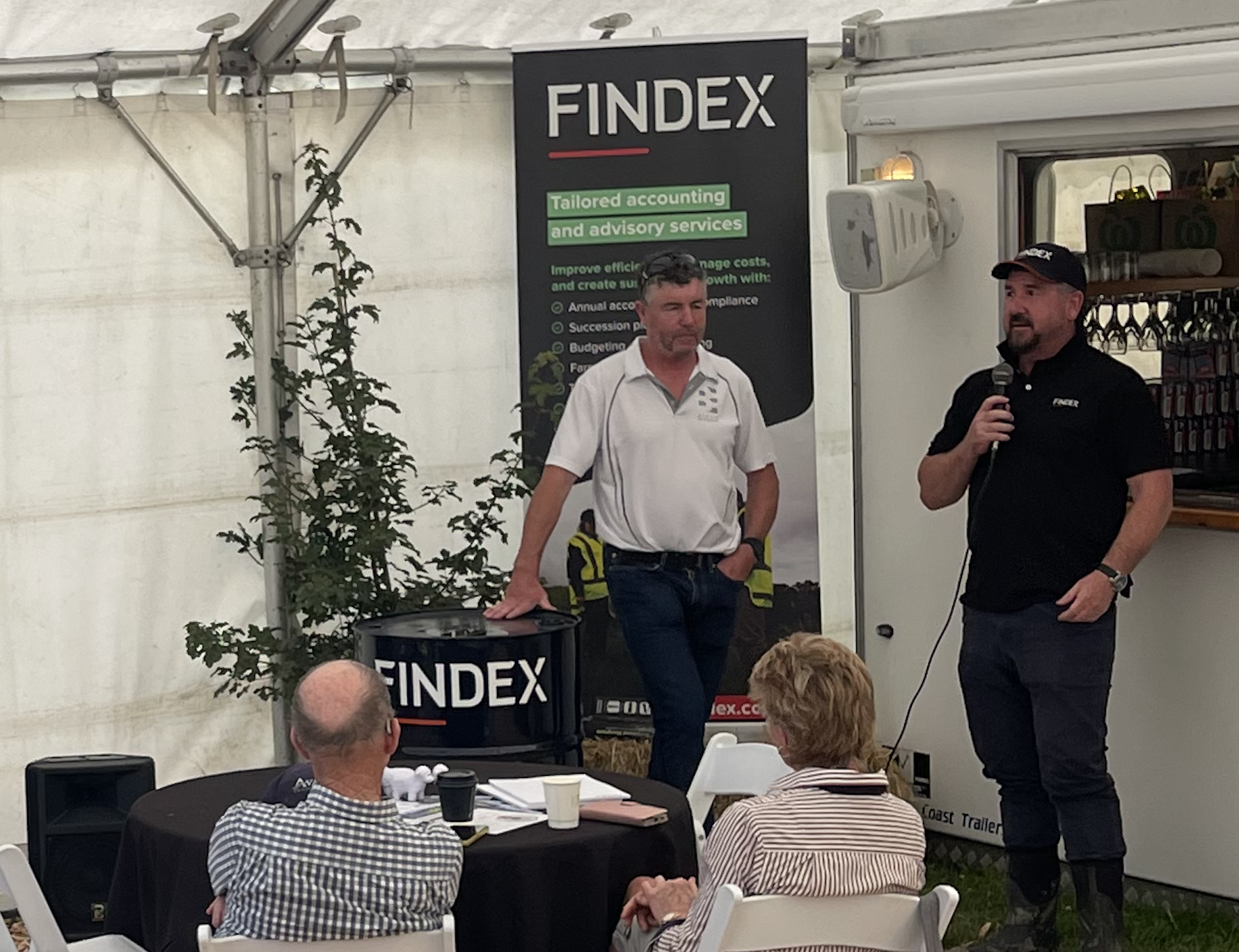
Economist Cameron Bagrie and Findex Agribusiness leader Hayden Dillon say the sector’s relatively low-cost, grass-based production systems, combined with improving commodity prices, stronger balance sheets and growing access to technology, professional advice and risk management tools, leave many farming businesses well placed despite increasing pressure on costs.
Dillon says several years of improving returns across key agricultural sectors have enabled many farmers to reinvest in their businesses, strengthening productivity and resilience ahead of the next economic cycle.
“Costs are rising, and there is every likelihood more pressure is still to come from inflation and interest rates. However, many New Zealand farmers have used the stronger earnings environment of recent years to reduce debt, improve infrastructure, adopt new technology and invest in productivity gains that will help them manage those pressures.
“Compared to many overseas producers, our grass-based farming systems remain a significant competitive advantage. We are less reliant on imported feed, energy and other high-cost inputs, which provides a degree of protection when inflation and global volatility increase.”
Bagrie says inflation remains a key watchpoint globally.
“Interest rates are under review by central banks, but the key central bank to watch is the US Federal Reserve. It’s been obvious that the United States has hotter inflation than what they’d like, and they are seeing strong labour market reports,” Bagrie says.
Core inflation (which removes fuel and food), has been stubborn around 3%. Central banks have struggled to return to inflation to 2%. It all points to interest rates needing to move up, or being too low.
He notes that inflationary pressures, ongoing geopolitical tensions and higher energy costs all point towards a more volatile operating environment for businesses around the world.
“We tend to fixate on the local situation, but the bigger picture is what’s happening with US interest rates which impacts the big dollar, the US dollar. Where it goes, the NZD/USD does in the other direction, and what it influences, influences us.”
Despite the uncertainty, both Bagrie and Dillon say New Zealand agriculture remains in a relatively strong position.
Speaking at Fieldays, Dillon says many rural communities are outperforming other parts of the economy.
“It’s almost a two-speed economy. You have somewhat depressed consumer spending in Auckland and Wellington, but many rural economies are doing really well and for some parts of the South Island, you’ve never had it so good.”
He says farmers have largely adapted to the reality of higher operating costs.
“Whether it’s fuel, labour, compliance or capital, costs are higher than they were five years ago and businesses are increasingly planning around that reality. The successful businesses aren’t waiting for costs to come back down, they’re focusing on how to become more productive and efficient.”
Bagrie says that while global events remain outside farmers’ control, business fundamentals remain as important as ever.
“You can’t control what’s going on globally, but what you can control is your own business. Focus on the things in front of your eyes. Watch the business basics, keep maximising productivity and minimising costs, look after your staff and yourself. It’s these little things that turn a good business into a great business and go straight to the bottom line.”
He says quality advice becomes increasingly important during periods of uncertainty.
“Advisory makes a difference in every business. Whether it’s commodity price hedging, capital structure, cashflow planning or strategic decision making, having experienced people around you becomes more valuable when uncertainty increases.”
Dillon says technology is also becoming an increasingly important part of maintaining profitability and competitiveness.
“The farmers who will perform best over the next decade won’t necessarily be those with the biggest farms, but those who make the best decisions. Good advice, technology, AI, risk management such as commodity hedging, forecasting and strong financial management all help businesses make better decisions and protect profitability.”
He says AI and emerging technologies should be viewed as practical business tools rather than future concepts.
“Farmers might think they’re avoiding AI, but they’re not. We’re already seeing technology helping businesses save time, improve decision making and operate more efficiently. Like any investment, if it improves productivity and strengthens your business, it’s worth considering.”
While global uncertainty is unlikely to disappear anytime soon, Dillon says New Zealand farmers remain well positioned to compete and prosper.
“The cost pressures are real, but so are the opportunities. New Zealand agriculture has proven time and again that it can adapt, innovate and compete on the global stage. Businesses that continue to invest in productivity, embrace useful technology and make use of good advice will be well placed for whatever comes next.”