
Small farm, smart strategy: How the right mindset and equipment drive success in Central West NSW
Kevin Beatty from Molong in Central West New South Wales says smaller livestock and crop producers can get ahead when they have the right mindset and the right gear.
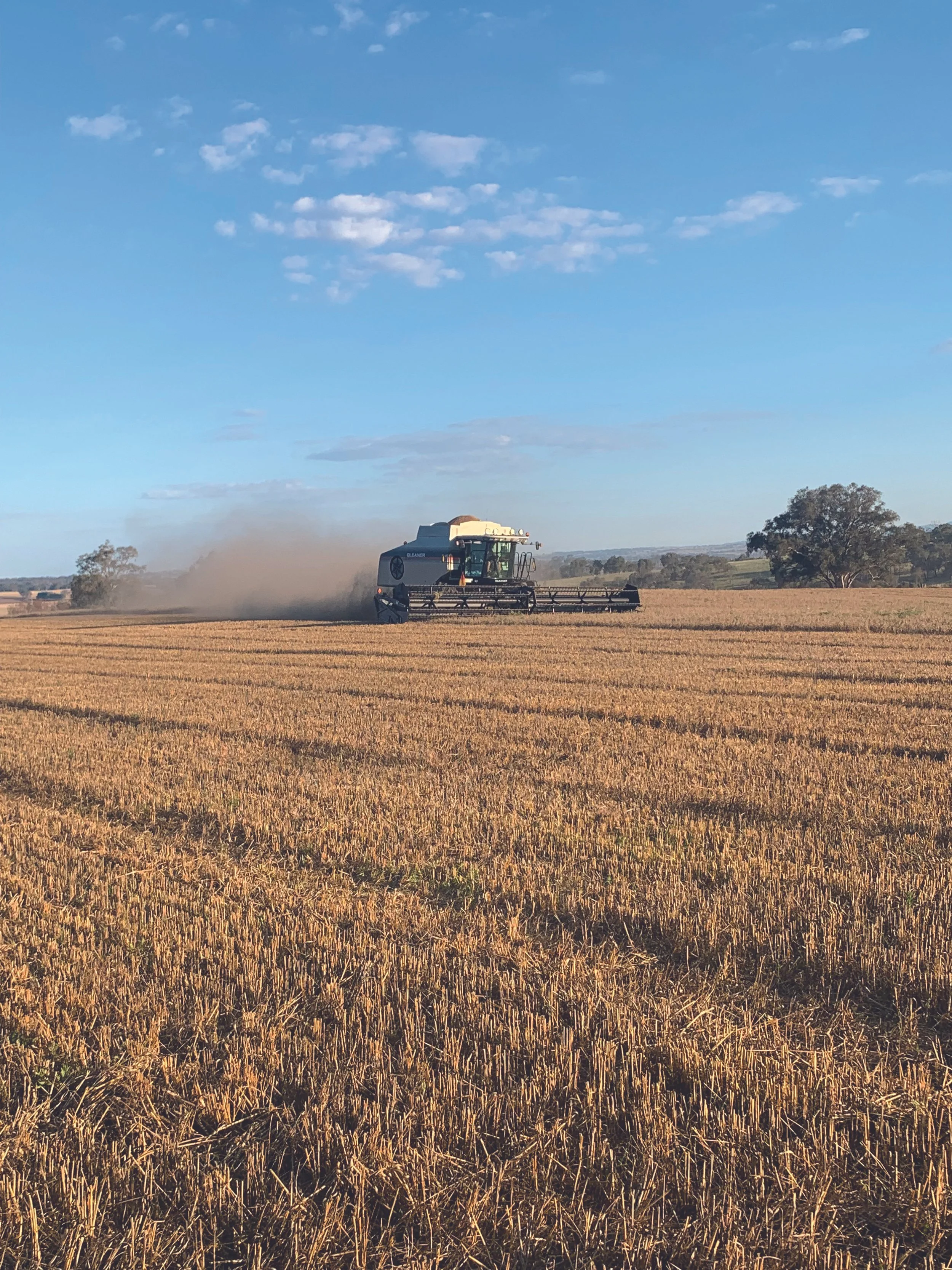
Kevin farms crops and raises sheep and cattle on a total of about 300 acres, with 60 acres of his own land and the remainder made up of a number of properties around Molong that he leases.
Versatility is key: Multi-enterprise approach spreads risk
Feed crops make up the largest part of his feed strategy and he plants mainly oats for winter feed, although he has grown wheat in the past. Oats are versatile and can be grazed, cut for hay and left to stand for seed.
After having livestock graze oats he shuts it up either to harvest it for hay, or strip for seed.
Kevin also grows out second cross lambs and runs Merino ewes which he puts a Border Leicester over them to produce first cross lambs. On top of that he runs Angus cattle that he calves to sell the weaners at six or seven months old.
In addition, Kevin also does contract work for other small producers in the area who do not have the gear to plant their own feed crops.
His contract work is similar to what he is already doing on his own properties, and sows oats and other cereal crops for clients who mainly use it as feed for lambs and stock.
He has sown pasture for himself, but not yet for clients.
He says with extreme temperatures, such as the 42°C at his place he recently experienced, and without much rain this season, he ideally gets seed into the ground as early as possible.
“I generally try to get seed in late February, early March. If the season goes well and you get rain you can feed late April to May. Depending on your season, you can turn stock in and out of that, twice to three times, again, depending on rainfall,” he says.
He fertilises paddocks with urea towards the middle of August, and then shuts them up, hopefully harvesting hay in the early October period.
Season dependent he can strip seed around December.
Molong in Central West New South Wales can become extremely hot, and has average temperatures in the summer in the mid 30s.
In winter it can drop to minus temperatures, with nearby regions even getting snow on the ground three or four times per year.
It's a massive temperature range to deal with, he says.
Precision tools for smaller producers: The AD140 advantage
To make a smaller farm work he has to rely on good gear.
Kevin says as a smaller producer the Agrowdrill 140 seed drill he bought from Davimac is the right tool to get the job done.
He says the direct drill machine is easy to transport on the road and is great for the contract work he does for other small livestock producers, because it fits through 14 foot gates, something the area has a lot of.
He tows his AD140 with a John Deere 120 horsepower, 6120R.
The AD140 can easily be calibrated down to any seed type and size.
“It’s very accurate,” he says.
Best of all, it's not complicated to manage.
The AD140 runs a 425 coil tyne and a 401 double disc unit in the undercarriage.
It has a 150cm row spacing, 1.5m to 3m working widths and up to two 385L dual seeder/fertiliser capacity.
Agroplow says it’s their most popular seed drill for small farms, with the strength needed to penetrate dry soils and is the tool for time-sensitive moisture conservation.
The pasture tool is in a heavy duty frame, but is budget friendly.
The AD140 is available in a CAT2 three point linkage (3PL) or a trailing design with hydraulic lift. The inverted T-shape Baker Boot Point minimise soil disturbance and ensures effective seed placement. The tyre roller then closes the furrows precisely.
The AD140 can support the 401 Double Disc undercarriage, transforming into a versatile disc seeder for improved trash management and zero till operations.
He says sight glasses at the front of the seed box are a great add on to the AD140.
“You can see when your seeds start to get low through the viewing glasses, it’s handy.
“It's just a really good size for small blocks”.
From passion to profit: Making the numbers work on 300 acres
Smaller producers face the same challenges as big producers, he says.
“You're at the mercy of market prices, and that's a challenge for everything. At the moment, market prices are good. But the cost of production is expensive.”
He says small producers have to count the cost of spraying out weeds, buying seed and seeding, diesel, machinery costing hundreds of thousands of dollars, treating and conditioning (if you produce seed yourself) and fertilising.
Most small producers pay others to harvest, which is an additional cost.
However Kevin says his main focus is to feed his animals correctly, and have them put weight on for sale, and to produce enough crop to get them through winter so they produce at the right time.
He supplies to the open market, but will sell to anyone who wants breeding stock and often sells ‘directly from his paddock”.
The wool price has been unimpressive for years, but he says that's just part of the job and part of good animal husbandry to make sure animals are healthy.
The wool price has come up in the last four months, with lamb prices also climbing to about $11/kg.
He says at the peak of the lamb price hike he was selling lambs for $389 a head, and heard of others selling bigger lambs for $500 a head.
A higher price does make him more positive about the future.
At about $250 he is covering costs. This is in stark contrast to 12 months ago when he was selling lamb for $80 a head.
He says newcomers should know that farming is a gamble, but if you do the right thing and properly prepare stock for sale you don't only get satisfaction as a reward but can also be rewarded financially.
“There is some money to be made in good times”.
He also says well looked after stock are also healthy.
“By improving your country by putting cereal crops in, cleaning up your weeds, and eventually trying to put it down to good pastures, you produce healthier and better stock. And they are worth more money. It's a gamble but a pretty safe gamble.”
He said good gear is also sellable if need be.
Kevin was a policeman and retired at the age of 50, 11 years ago.
When he was in the police he was back in the countryside, and says he always had a passion for farming.
It was a hobby at first, but soon became a job he loves.
His grandparents used to own a block he visited as a kid, with lots of memories from those days he is now continuing the legacy of working the land.