
A review of fertiliser technology and spreaders
Fertiliser spreading has become a precision job. Section control, variable rate technology and accurate calibration allow nutrients to be placed where they are needed and reduced where they are not, improving input efficiency and helping farmers manage both costs and environmental responsibilities.
Power Farming
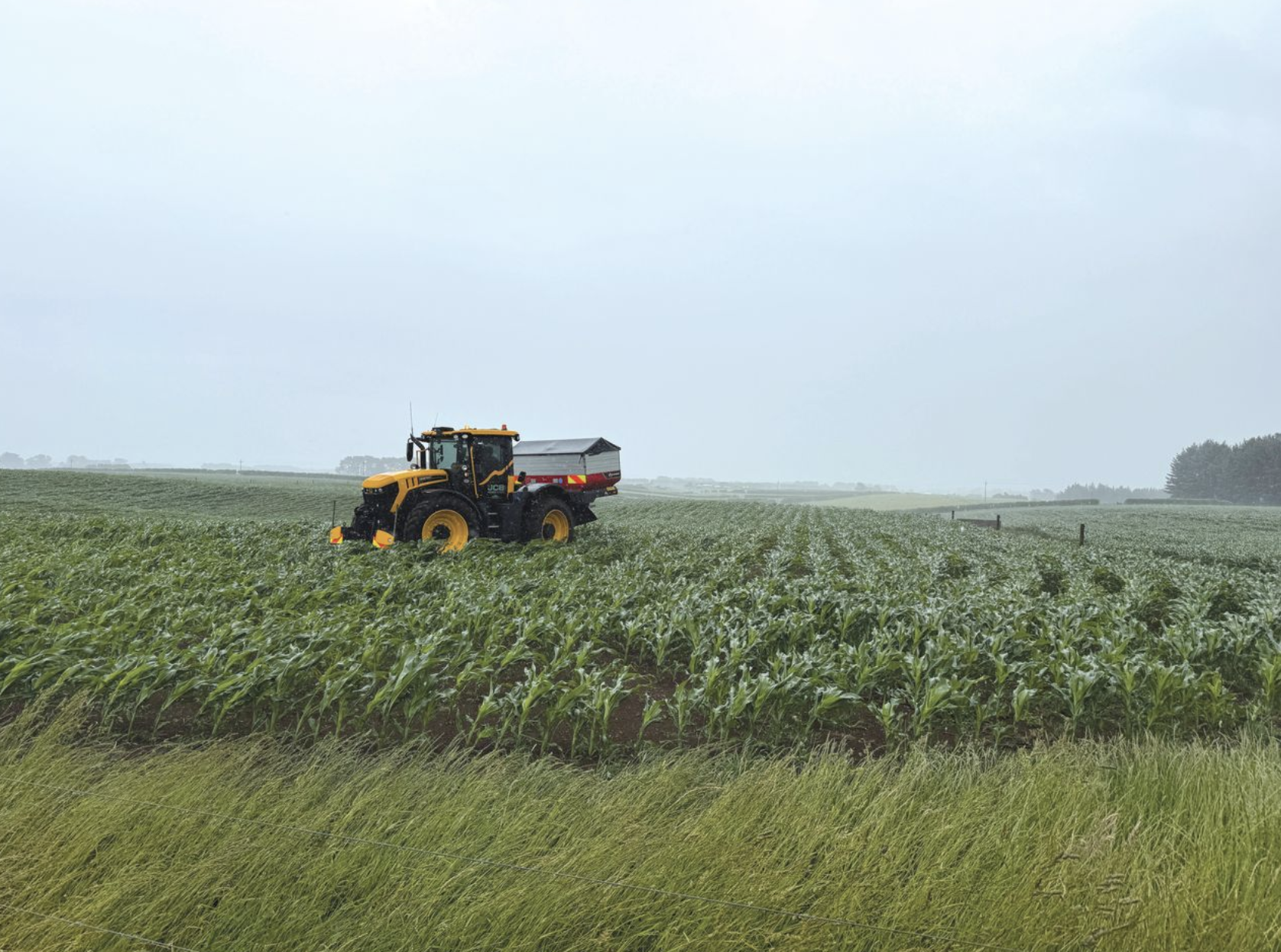
JCB Fastrac 4220 - Kverneland Exacta Tl Geospread fertiliser spreader combination
There is a quiet confidence that comes with machinery built on decades of refinement and in the case of the JCB Fastrac icon 4220 from the 4000 Series, that confidence is well justified. As Power Farming takes the reins as the exclusive distributor of JCB Agriculture in New Zealand, farmers are being offered a machine that is not only different from the rest but one designed to work seamlessly with the increasingly sophisticated implements that define modern farming systems. When paired with technology such as the Kverneland Exacta Tl Geospread fertiliser spreader, the result is a combination that brings together speed, operator comfort, precision control and proven reliability in a way that reflects the changing expectations of professional farming operations.
With more than 25 years of development behind it, the JCB Fastrac has built a reputation for challenging conventional tractor design while delivering tangible gains in productivity. The 4000 Series continues that philosophy with hallmark features such as equal sized wheels, four wheel steering, 50:50 weight distribution and all round self levelling suspension. These design elements are not simply engineering curiosities but the foundation of the tractor’s balance, stability and traction which become particularly important when operating precision implements such as fertiliser spreaders where maintaining consistent speed and control directly influences application accuracy.
In fertiliser spreading operations the tractor is not simply a power unit but a key component in the accuracy of the entire system. The ability to maintain steady forward speed, smooth handling and consistent traction across varying terrain has a direct impact on how effectively modern spreader technology can perform. In that respect the Fastrac platform provides an ideal partner for the Kverneland Exacta Tl Geospread, which has been developed to deliver high levels of spreading precision while remaining straightforward to operate in day to day conditions.
The Exacta Tl Geospread sits within Kverneland’s long established fertiliser spreader range and reflects the company’s ongoing investment in precision application technology. At the centre of the design is Kverneland’s signature CentreFlow spreading system, where fertiliser is released in the centre of the disc and accelerated smoothly to disc speed before reaching the vanes. The result is a spreading process that avoids impact and fragmentation of fertiliser granules, reducing dust and preserving fertiliser quality while maintaining an even distribution pattern across the working width.
Accurate dosing is maintained through a clever weighing system that uses four load cells supported by a reference sensor. This system continuously measures the fertiliser weight and automatically adjusts the metering system in real time, ensuring that the target application rate is maintained even when travelling over slopes or uneven terrain. By compensating for shocks and changes in ground conditions, the system maintains a high level of application accuracy regardless of field conditions.
The Geospread system itself represents a further step forward in spreading precision. Working through GPS based section control, the spreader is capable of automatically adjusting its working width in sections as small as one metre, with a maximum of up to 54 sections across the spreading width. This allows the machine to reduce overlap when working in wedges, irregular shaped paddocks or along headlands, ensuring fertiliser is placed exactly where it is required while minimising waste.
For operators working with prescription maps or variable rate technology, the Exacta Tl Geospread is also capable of adjusting fertiliser rates automatically across the field. Variable rate options allow fertiliser to be applied according to soil variation, or crop demand while the Geospread system simultaneously adjusts the spreading width to maintain an accurate distribution pattern across the paddock. The result is a spreading system that combines precise placement with efficient fertiliser use.
Capable of travelling at up to 60 kilometres per hour, the Fastrac is designed to cover ground efficiently, particularly when farms are spread across multiple blocks or when fertiliser operations involve significant travel between paddocks. Importantly that speed does not come at the expense of control. Four wheel disc brakes with ABS, selectable four wheel steering modes and a hydrostatic dual steering system provide a level of stability and road handling that is uncommon in traditional tractor designs. For contractors and farmers moving between jobs or managing time sensitive nutrient applications, that combination of speed and stability can make a significant difference to overall productivity.
The advantages of the Fastrac’s design become even clearer once in the paddock. The self-levelling suspension system helps maintain stability, and ride quality over uneven terrain while the tractor’s balanced weight distribution ensures consistent traction. These characteristics allow operators to maintain accurate spreading speeds across varying ground conditions, which in turn helps the Exacta Tl Geospread maintain its precise application rates and spreading patterns.
Modern fertiliser management requires accurate application rates, uniform spreading patterns and the ability to minimise overlap, particularly along field boundaries. The Exacta Tl Geospread addresses these requirements through a combination of electronic weighing technology, adjustable spreading systems and full Isobus compatibility allowing the spreader to integrate directly with the tractor’s control interface. The spreader is available in several configurations within the Exacta Tl range, including TL, TL Geospread and TL Geospread iDC models, giving operators the ability to match the specification to their precision farming requirements.
On the Fastrac icon 4220 that integration is managed through the tractor’s advanced cab technology. The machine is equipped with a 12 inch high definition touchscreen, that allows operators to control and monitor a wide range of machine and implement functions from a single interface. When operating an Isobus compatible spreader such as the Exacta Tl Geospread, the operator can adjust application rates, monitor performance data and manage spreading functions directly from the cab display. This level of integration reduces the need for multiple control terminals and simplifies the overall operating environment.
The Fastrac’s hydraulic system also plays a supporting role in implement performance. Delivering up to 195 litres per minute of hydraulic flow, the tractor provides ample capacity for high demand implements while maintaining precise control through its configurable valve system. Although fertiliser spreading itself does not demand extreme hydraulic output, the availability of strong hydraulic capacity ensures that the tractor remains versatile across a wide range of tasks throughout the season.
Operator comfort is another area where the Fastrac distinguishes itself, particularly during long working days that are common during fertiliser application windows. The centrally mounted cab enhances the tractor’s natural balance while advanced suspension smooths out rough ground, helping to reduce operator fatigue. A 60 degree rotating heated and ventilated seat allows the operator to maintain an optimal working position, particularly when monitoring rear mounted implements.
Inside the cab the environment is closer to a mobile office than a traditional tractor workspace. Automatic climate control maintains a comfortable temperature regardless of outside conditions, while Bluetooth connectivity and customisable armrest controls ensure that key machine functions remain easily accessible. For contractors training new staff or working in shared operations, the inclusion of a full size instructor seat adds a further layer of practicality.
At the heart of the Fastrac icon 4220 sits a reliable and efficient engine producing between 167 and 218 horsepower with maximum torque of up to 1,000 newton metres. The engine’s strength lies not simply in peak output, but in its ability to deliver consistent power across a wide operating range which is essential, when maintaining steady forward speeds for precision tasks such as fertiliser spreading. Combined with intelligent transmission management the result is a machine that performs equally well on the road and in the field.
For the Exacta Tl Geospread spreader that consistent power delivery helps ensure stable operating conditions which are vital for accurate fertiliser placement. The spreader itself is designed to deliver even distribution across wide working widths, while maintaining application accuracy through its integrated weighing system and advanced section control technology. The combination of accurate rate control, and stable tractor performance allows operators to apply fertiliser with confidence knowing that nutrients are being placed exactly where they are required.
Support and service also play an important role in the success of any machinery combination. With Power Farming now representing JCB Agriculture in New Zealand, operators gain access to a well established support network including parts availability, workshop services and technical expertise. That backing ensures the Fastrac platform remains a dependable partner for a wide range of equipment, including precision fertiliser spreaders such as the Kverneland Exacta Tl Geospread.
Origin AG
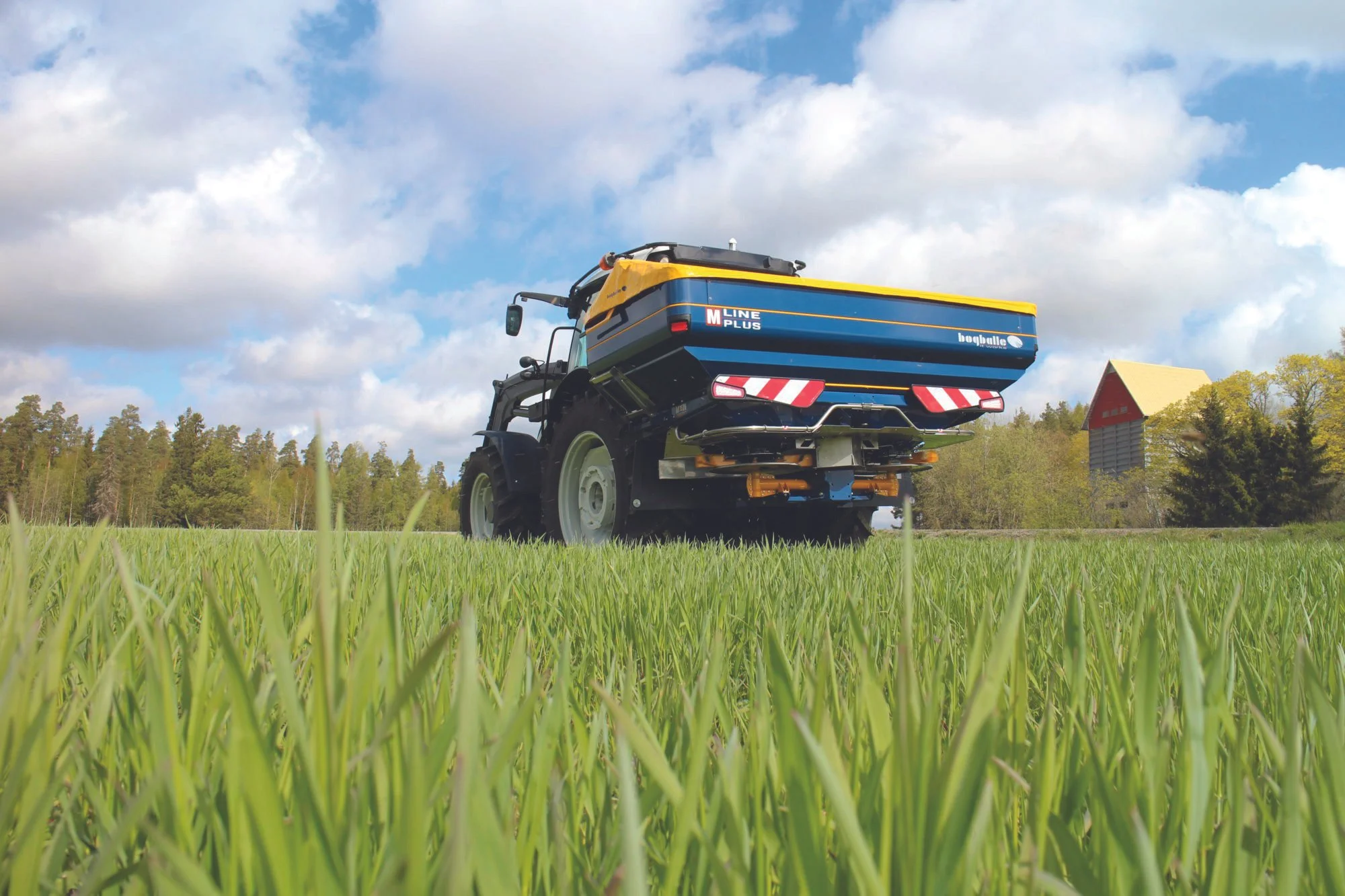
Bogballe M35W fertiliser spreader
The Bogballe M35W fertiliser spreader sits firmly in the category of machines designed to remove guesswork from nutrient application, combining a proven twin-disc spreading platform with an integrated weighing system that constantly monitors and adjusts output. In an era where data-driven farming continues to rise in importance, that level of control is not simply convenient, it is essential.
At its core, the M35W is a mounted twin-disc broadcaster intended for medium to large farms and contracting operations that require both capacity and precision. Working widths extend from roughly 10 to 42 metres depending on vane selection and fertiliser type, placing the machine comfortably alongside modern tramline systems and controlled traffic layouts. Hopper capacities vary by configuration, typically reaching up to around 3,000 kg on the base model and higher on extended versions, which allows operators to cover significant hectares between refills without pushing tractor lift limits unnecessarily. That balance between payload and mounting practicality is a defining feature of the design philosophy behind the spreader.
What distinguishes the M35W from simpler broadcast spreaders is the integrated weigh-cell system. Instead of relying solely on calibration charts or pre-set shutter openings, the machine continuously measures the amount of fertiliser leaving the hopper and adjusts the outlet accordingly. This automatic calibration system ensures application remains accurate regardless of product density, granule shape or flow characteristics, which is particularly valuable when switching between different fertiliser blends or dealing with variable moisture levels in stored product.
In practical terms, that translates to consistency across the paddock. Speed-related spreading comes as standard, meaning the machine automatically compensates for changes in forward speed to maintain the target rate. For operators working rolling country or headland turns where speed naturally fluctuates, this function prevents the over-application and striping that can otherwise occur with purely mechanical systems. The result is improved nutrient efficiency and reduced risk of costly misapplication.
The spreading system itself follows Bogballe’s established in-centre twin-disc design, engineered to produce a symmetrical spread pattern with overlapping trajectories that smooth out distribution. Optional section control and GPS integration allow the spreader to shut off individual zones to reduce overlap on wedges or headlands, an increasingly important feature where fertiliser application must meet both economic and environmental targets. Electronic border spreading is also available on many configurations, ensuring product is directed precisely to the paddock edge without waste or runoff risk.
Construction is another area where the machine reflects its contractor-friendly intent. Stainless steel discs and hopper components resist corrosion from aggressive fertiliser blends, while wear-resistant vanes help maintain spreading accuracy over time. These design choices are not glamorous, but they are vital for machines expected to handle abrasive materials in exposed conditions season after season.
Control options vary depending on specification. The spreader can be run through Bogballe’s dedicated control units or integrated into Isobus terminals, allowing it to slot directly into existing tractor displays and precision farming systems. Variable rate application linked to prescription maps becomes straightforward in this setup, enabling farmers to tailor nutrient inputs to soil variability rather than applying blanket rates. As farm data platforms become more sophisticated, machines like the M35W are increasingly judged by how easily they integrate with those systems rather than by mechanical performance alone.
From an operational perspective, the machine’s modular hopper extensions and configurable control packages allow it to be tailored to different roles. A farmer running a mixed cropping programme may prioritise weigh-scale accuracy and section control, while a contractor focused on output may opt for larger hopper extensions and high-speed coverage. The platform accommodates both approaches without requiring a fundamentally different machine.
Ultimately, the M35W’s strength lies in how it combines mechanical reliability with electronic precision. The spreading discs and agitator system are designed to treat granules gently to maintain even distribution, while the weighing system ensures the machine is always working toward the correct target rate. In combination, those elements produce a spreader that is less about raw hectare capacity and more about delivering consistent, measurable results across every pass.
As fertiliser continues to represent one of the largest input costs in arable and mixed farming systems, the expectation is no longer simply to spread product but to account for it. Machines like the Bogballe M35W reflect that shift. They are built not just to cover ground but to document, regulate and optimise nutrient delivery in a way that supports both profitability and environmental stewardship.
For contractors and larger farms alike, that transition from spreading fertiliser to managing nutrients is where the M35W finds its relevance. It is not a radical reinvention of the fertiliser spreader concept, but rather a refinement of it, adding the sensors, control systems and durability needed to meet the expectations of modern farming. In that sense, its real value lies not in any single feature, but in how the entire machine works together to deliver accuracy where it matters most.
Amazone
Spreaders
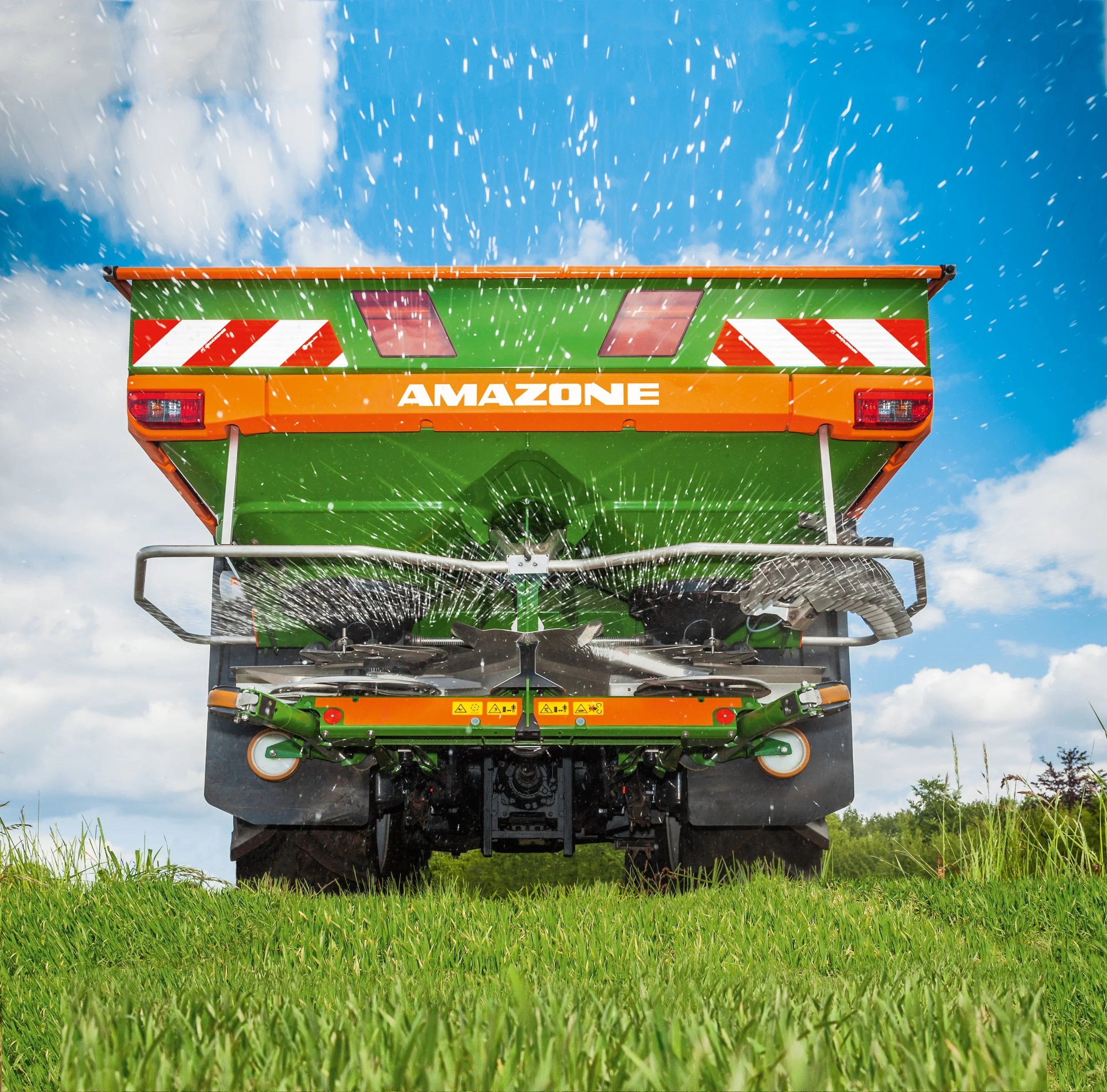
Farmers and contractors who need precise nutrient application and quick coverage for large areas during peak growth windows turn to Amazone. Fertiliser application is one of the most important management tools a farmer has.
Fertiliser is an investment and when applied correctly it delivers a measurable return. Higher yields mean more saleable or feed product, and better crop quality improves market or feed value. Stronger pasture growth lowers feed costs for livestock, while incorrect rates or uneven spreading can quickly reduce the return on that investment. For livestock farmers in particular, more pasture means higher stocking rates and improved animal performance.
Fertiliser application is not simply about feeding plants, but about sustaining a farming system that builds resilience and stable yields across seasons. When soils are deficient, plant growth slows, root development weakens and yields decline. When nutrients are managed correctly, they drive long-term productivity and underpin both profitability and environmental responsibility.
Amazone takes much of the guesswork out of achieving accurate application. Precision spreading technology delivers even coverage, reduces overlaps, minimises environmental losses, and ensures nutrients are applied exactly where they are needed. This level of control becomes especially important near waterways or environmentally sensitive areas where fertiliser placement must be carefully managed.
Amazone’s development approach centres on resource use efficiency, crop uniformity and environmental stewardship. Their fertiliser spreaders represent a significant step toward autonomous precision spreading. The technology is engineered to deliver excellent border control and accurate distribution at high speeds, while integrating with electronic control systems and GPS guidance so operators can complete wide and even spread patterns across large paddocks.
Modern fertiliser practices are increasingly guided by the principles of the four R’s: applying the right product at the right rate, at the right time and in the right place. Amazone spreaders are designed to support these principles by ensuring fertiliser is delivered precisely when and where it is required. This helps boost productivity while saving time and money and supporting smarter nutrient management across the farm.
Across the range, Amazone spreaders are built to deliver both capacity and accuracy. Machines are available with high fill capacities and optional hopper extensions which reduce refill frequency during busy spreading periods. Twin disc centrifugal spreading systems ensure even distribution across the full working width, while robust construction allows the machines to withstand heavy seasonal workloads. Optional weighing systems, together with electric or hydraulic drive options and modern terminal control, provide precise rate management and easy adjustment from the tractor cab. Integration with GPS and precision agriculture tools allows operators to combine fertiliser spreading with variable rate technology and accurate field mapping.
With both mounted and trailed machines available, the Amazone range provides solutions suited to a wide variety of farm sizes, cropping systems, and contracting operations.
Tractor-mounted spreaders attach directly to a tractor’s linkage and are well suited to smaller and medium-sized farms, or contractors who require flexibility and manoeuvrability. The ZAX represents the entry-level twin disc spreader designed for small to medium operations, offering a compact hopper and working widths of up to around 18 metres. Moving up the range, the ZAM provides a more professional specification with hopper capacities of up to around 3,000 litres and working widths reaching approximately 36 metres. Built with stainless steel components and reliable control systems, the ZAM has become a widely used machine for farmers who require both durability and spreading accuracy.
For higher output operations, the ZAV offers increased capacity and higher working speeds of up to around 30 kilometres per hour, while maintaining accurate application rates. Where maximum output is required, the ZATS sits at the top of the mounted spreader range, offering hopper capacities of up to approximately 5,000 litres and working widths of up to around 54 metres. This model is built around Amazone’s TS spreading system, which delivers particularly precise distribution across wide working widths.
For larger farms and contracting businesses working across extensive areas, Amazone also offers trailed spreaders which are pulled behind tractors and provide significantly greater capacity. The Zg Ts range features high-capacity trailed spreaders, equipped with the TS spreading system delivering wide working widths of up to around 54 metres along with advanced electronic control systems designed for precision agriculture. The Zg Tx combi spreader takes the concept further, by offering a flexible machine capable of both fertiliser and lime spreading. Designed for high-output work, the Zg Tx combines broad working widths with advanced rate control, and border and headland optimisation, which makes it particularly suited to large-scale farming or contracting environments.
Amazone continues to push the boundaries of fertiliser spreading technology with its latest development, the ZATS 01 Ultra. This machine marks a new era in intuitive spreading systems and has already received an Agritechnica innovation award. Early demand for the machine is expected to be strong, and numbers will be limited during the first release phase with the full range scheduled for wider launch in 2027. The ZATS 01 introduces technology designed to fundamentally change the way fertiliser is applied in the field.
One of the most significant innovations is the new AutoSpread system, which has been implemented for the first time in an Amazone spreader. AutoSpread acts as an autonomous solution for optimising fertiliser distribution by continuously monitoring the actual spread pattern of the fertiliser as it is applied. The system automatically adjusts machine settings to maintain optimum distribution across the working width.
Combined with an intelligent online connection to the Amazone Spreader Application Centre, the system permanently validates the spread pattern during operation. This means the operator no longer needs to manually adjust settings during spreading, because the machine continually measures the spread pattern and automatically corrects it where necessary.
Through this process, the spreader effectively self-adjusts by measuring its own distribution pattern and making corrections in real time. The technology also allows permanent optimisation across all spreading scenarios, including automatic determination of the correct switching points for section control. Continuous validation of spreading accuracy is maintained through the online connection with the Spreader Application Centre, while the system reduces time spent on traditional fertiliser testing procedures in the field.
It can also warn the operator of faulty or defective spreading vanes before distribution errors occur. Overall reliability is improved through detailed evaluation of the fertiliser application process within the AmaConnect data platform.
Alongside AutoSpread, the ZATS 01 introduces a completely new software platform that brings a range of digital innovations designed to make operation more intuitive and efficient. Existing technologies such as ArgusTwin, HeadlandControl, WindControl, and Section Control were previously separate systems but are now integrated together through AutoSpread. This integration allows each technology to operate with greater accuracy and coordination, ensuring that every part of the paddock receives the correct fertiliser rate.
Additional precision features further improve field performance. CurveControl ensures accurate fertiliser application, even when spreading around curves. A new border spreading setup allows the operator to simply enter the distance to the field boundary before starting work with the machine, automatically optimising the border spread pattern and allowing the distance to the field edge to be individually adjusted. The BorderTs border spreading system is fully integrated into the machine’s operation, and the system also records complete and accurate documentation of border spreading activities, including the actual working widths used during application.
Norwood
Sky Agriculture
In New Zealand farming, fertiliser is too valuable to waste. Whether it’s nitrogen ahead of a grazing round in Waikato or base nutrients across a Canterbury cereal block, the priority is the same: apply the right rate, in the right place, with minimal fuss. Choosing the correct spreader is no longer simply about capacity. It is about accuracy, adaptability and ease of use.
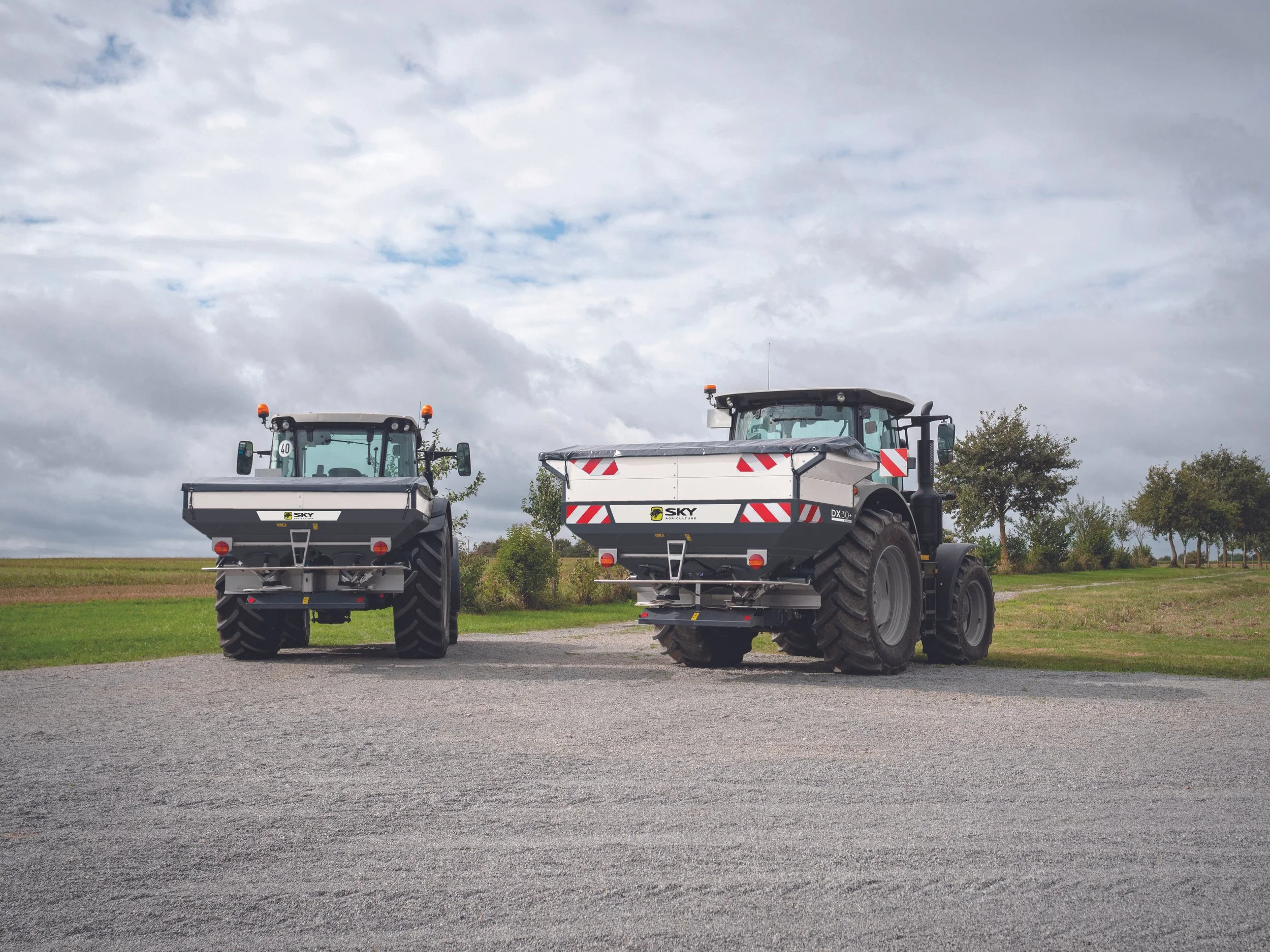
SKY Agriculture structures its mounted fertiliser spreader range in three clear steps: the DX series, the DX+ WPB range and the X Series ECONOV models. The progression reflects the varying scale and precision demands across New Zealand farms.
The DX series is built for straightforward, everyday reliability. Designed for dairy platforms and mixed operations, these machines focus on consistent spreading without unnecessary complexity. Mechanical setup is simple, adjustment points are clear and hopper sizes suit medium tractors common on owner-operated farms. For businesses applying routine nitrogen or maintenance fertiliser, that simplicity matters. Operators can hitch, calibrate and spread with confidence, keeping the focus on pasture management rather than machinery settings.
For farms seeking tighter rate control, the DX+ WPB range adds integrated weighing systems that provide real-time feedback. As hopper weight changes during spreading, the system automatically maintains the target application rate which is easily adjustable from the tractor cab through the ISOBUS Quartz 600 touchscreen console or the tractor’s own ISOBUS-compatible screen. The practical benefit is immediate: reduced risk of under- or over-application, particularly when working with variable fertiliser products. Arable growers gain greater certainty in nutrient budgeting; dairy farmers see more consistent pasture response and improved feed planning.
Importantly, added precision does not mean added complication. Calibration remains logical, and an inclinometer guarantees extremely accurate measurements even on slopes.
At the top of the mounted range sit the X40+ and X50+ ECONOV models, where section control and patented Speed Control technology come into play. On narrowing runs, curved headlands and variable terrain, automatic section control reduces overlap by adjusting the spread pattern as the machine moves through the field. Speed Control maintains distribution accuracy even as forward speed changes. The result is cleaner headlands, improved crop or pasture uniformity and measurable fertiliser savings over time. For large arable units working tight weather windows, wider working widths mean fewer passes. For dairy support blocks, precise section management supports both economic and environmental objectives.
Matching model to operation ultimately comes down to scale and nutrient management goals. DX delivers dependable simplicity. DX+ WPB introduces weighing-backed accuracy. X Series ECONOV provides advanced precision for high-efficiency systems.
Beyond mounted options, SKY Agriculture has extended its offering with the new FALCON T range of trailed fertiliser spreaders built to handle everything from granulated fertilisers to lime, wet bulk and organic products.
The FALCON T range is engineered around three principles: speed, precision and versatility. Its patented Speed Control technology adjusts the spreading pattern automatically according to forward speed, while brushless electric motors and a new intelligent dosing unit provide constant responsiveness. Dynamic weighing systems—using up to six load cells and hundreds of measurements per second—compensate for slope and temperature, ensuring consistent application regardless of terrain. Precision extends to GPS-managed curve control, independent left-right rate modulation and advanced border management. Together, these systems guarantee accurate dosing per hectare under varied conditions.
The most striking feature is versatility: operators can switch from spreading granulated fertiliser to wet bulk or lime in approximately seven minutes, without tools. For operations juggling multiple nutrient types, that flexibility reduces downtime and increases seasonal efficiency.
A standout innovation within the FALCON platform is FertiEye, a system awarded a silver medal at the Agritechnica Innovation Awards 2025. Using image recognition and artificial intelligence, FertiEye analyses a photographed fertiliser sample, measuring particle size and morphology before automatically calculating and transmitting optimal spreader settings via WiFi. Rather than relying on generic databases or lengthy laboratory testing, farmers can obtain calibrated adjustments in seconds. Given industry research indicating that inaccurate fertiliser settings can increase application error risk by more than 30 percent, the potential gains in efficiency and environmental protection are significant.
Capacity across the 4-model FALCON T range spans from 7,500 to 16,000 litres. Multiple configurations—including ECONOV+, PRO and CaP variants—ensure suitability for precision-focused arable systems as well as lime-specialist operations.
For New Zealand farmers facing rising input costs and tightening environmental expectations, the message is clear. The right spreader is not simply a machine; it is a management tool. Whether through the straightforward dependability of the DX series, the weighing-backed assurance of DX+ WPB, the section-controlled intelligence of ECONOV, or the high-capacity adaptability of the FALCON T, modern spreading technology is evolving toward one goal: delivering the right rate, accurately and efficiently, in conditions that demand nothing less.
Across all the SKY Agriculture spreader offerings, usability and simplicity remain central—a necessary focus in an environment where nutrient application is increasingly scrutinised.
Kuhn
Precision fertiliser application has always been one of those operations where consistency matters far more than speed alone. Across large blocks of land, the difference between an even spread and a slightly uneven one can quietly influence crop performance for months afterwards. For contractors and farmers alike, the challenge has long been the same: ensuring nutrients are placed evenly across the full working width while maintaining the efficiency required to cover ground quickly when conditions allow.
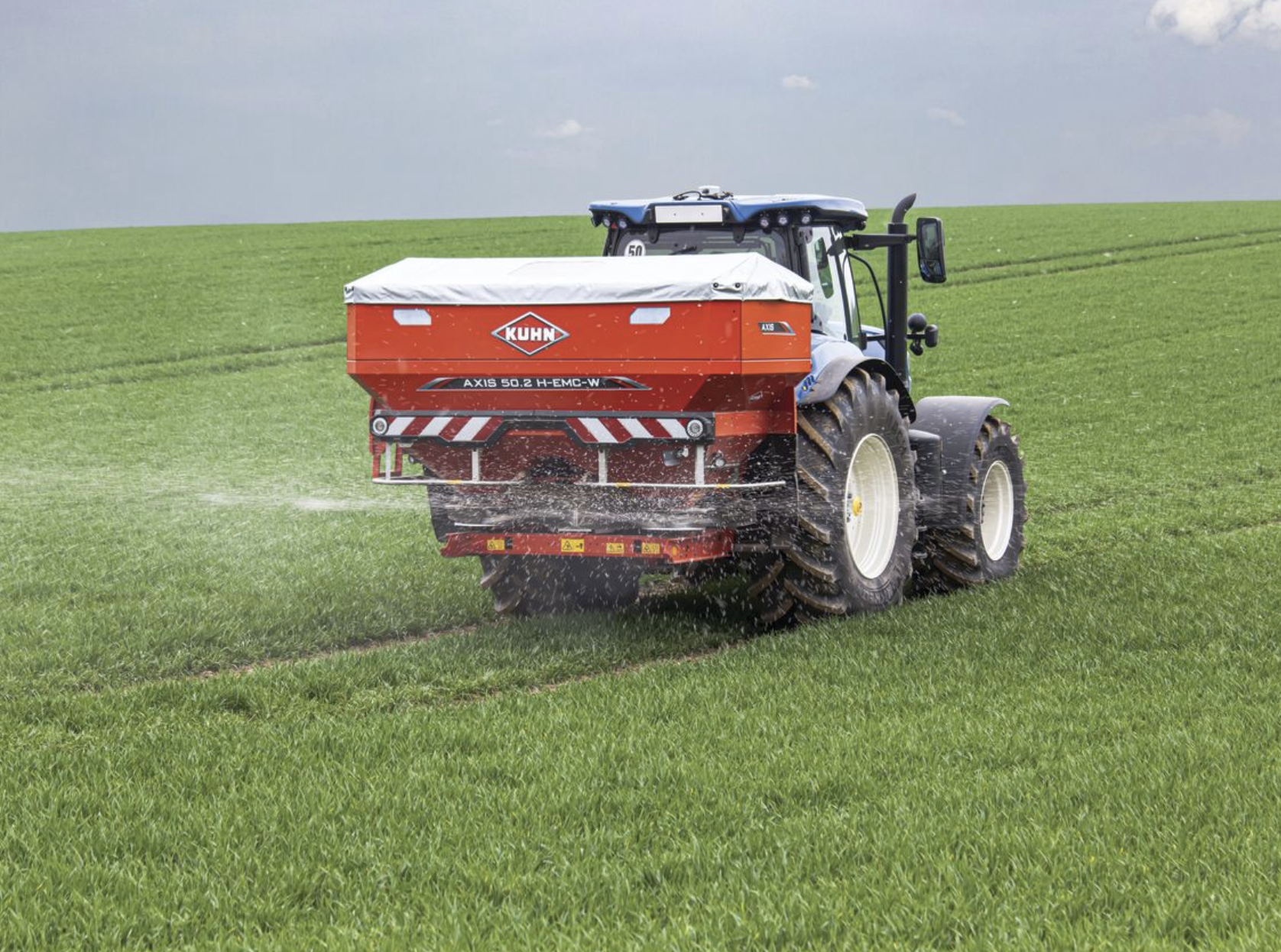
It is within that space that machines such as the Kuhn Axis 50.2 H EMC fertiliser spreader have been developed. Built as the largest model within the Axis mounted spreader range, the 50.2 combines high capacity with a suite of technologies designed to maintain spreading accuracy across wide working widths. With a working width ranging from 12 to 50 metres and hopper capacities from 3,200 to 4,200 litres, the machine is clearly aimed at larger farming operations and contracting businesses where productivity and precision must work together.
At the heart of the spreader’s design sits Kuhn’s EMC system, short for Electronic Mass Flow Control. Unlike conventional fertiliser spreaders that measure the flow of fertiliser by weighing the entire hopper, EMC works by measuring what is happening on each spreading disc individually. Sensors positioned beneath the discs monitor the torque required to drive them, which directly reflects the quantity of fertiliser flowing through the outlets.
Because the system measures the flow independently on the left and right discs, the spreader can automatically adjust the opening of each outlet to maintain the programmed application rate. If fertiliser characteristics change or a partial blockage occurs on one side, the system compensates immediately without affecting the opposite side. The result is a spreading pattern that remains consistent across the full working width rather than drifting unevenly across the paddock.
This individual disc monitoring is a key distinction compared with traditional hopper weighing systems. When a conventional spreader detects a change in flow, it can only adjust both outlets simultaneously because the measurement is taken from the hopper as a whole. EMC, instead, identifies exactly which side of the machine needs correction and adjusts that outlet alone, ensuring the intended application rate is maintained across the full spreading width.
Supporting this system is Kuhn’s CDA distribution design, which governs how fertiliser is delivered onto the spreading discs. The metering outlets are positioned close to the centre of the discs so that fertiliser is supplied evenly to the vanes. By maintaining a consistent drop point and steady product flow, the system helps preserve an even spreading pattern across a wide range of fertiliser types.
Different fertiliser products behave differently when spreading. Granule size, density and moisture content can all influence how fertiliser travels through the machine and across the paddock. By controlling the drop point precisely and stabilising the flow to the discs, the CDA system allows the spreader to maintain a uniform distribution whether applying urea, ammonium sulphate, NPK blends or other granular products.
Section control technology is another important part of the Axis 50.2 H EMC package. The Varispread Pro system continuously adjusts the effective spreading width by altering the fertiliser drop point on the disc. This is achieved using electric motors known as SpeedServo, which react significantly faster than traditional hydraulic cylinders. The faster response allows the spreader to adjust the spreading pattern rapidly as it approaches paddock boundaries, irregular field shapes or previously treated areas. By progressively narrowing the spreading width, the system reduces overlap and helps avoid areas of double application that can occur on headlands or tapering field edges.
Accuracy at the start and finish of each run is further improved through the Optipoint system. Rather than relying on the operator to judge the moment to open or close the outlets, Optipoint calculates the correct point automatically based on the fertiliser type and the forward speed of the tractor. The system then activates the outlets so that fertiliser lands precisely where it should across the headland boundary.
The Axis 50.2 H EMC also uses a hydraulic drive system for the spreading discs. Unlike mechanically driven spreaders that rely on the tractor’s PTO speed, the hydraulic system maintains a constant disc speed regardless of engine rpm. This allows operators to work at lower engine speeds while still maintaining the correct spreading pattern and working width.
Beyond the mechanical aspects, the spreader integrates with modern precision farming systems through full ISOBUS compatibility. Using compatible terminals such as Kuhn’s CCI displays, operators can import application maps, adjust spreading rates automatically and document fertiliser applications directly from the tractor cab.
The ability to link fertiliser spreading with GPS mapping and variable rate technology reflects the broader direction of nutrient management in modern farming. Rather than treating every hectare identically, fertiliser can be applied according to soil variability, crop demand or previous yield data, ensuring nutrients are placed exactly where they will deliver the greatest benefit.
Taken together, the technologies built into the Kuhn Axis 50.2 H EMC show how fertiliser spreading has evolved from a relatively simple field operation into a precise agronomic process. Accuracy across wide working widths, continuous monitoring of fertiliser flow and integration with digital farm systems all play a role in ensuring nutrients are applied consistently and efficiently across the paddock.
Hanzon
Precision in fertiliser application is usually framed around technology. We talk about rate control and section shut off, we reference ISOBUS integration, digital scales and spread pattern testing. We analyse bout widths and product density and debate the merits of variable rate maps. All of it matters, and modern spreaders are remarkably capable machines, but there is another side to precision that sits beyond the hardware and software.
It comes back to a far simpler question: who is sitting in the seat.
Contracting has never been more demanding. Machinery is more advanced and compliance expectations continue to rise, clients expect professionalism, accuracy and reliability every time you pull into the farm. A fertiliser truck arriving at the gate now represents more than tonnes per hectare; it represents nutrient management plans, environmental accountability and the reputation of the business on the door.
No matter how sophisticated the technology becomes, performance still comes back to the operator.
That thinking sits behind Hanzon Jobs, a specialist recruitment business working alongside contractors across New Zealand to place skilled Northern Hemisphere operators into silage, spreading, harvesting and cultivation crews. Over the past few seasons they have worked shoulder to shoulder with contracting businesses and, as they describe it, a pattern keeps repeating itself. The crews that run best are the ones that are organised early.
In Northland last season, Glen had Zoe and Alex return, with Nathan joining alongside. The difference was immediate.
“They’ve done a season, become one of us,” Glen said. “They remember the farmers, know the farms, it makes my life so much easier.”
In spreading work, that familiarity carries real weight. Knowing the contours of a property and where gateways tighten, understanding how wind moves across a paddock and where shelterbelts will influence spread pattern. Remembering which client wants documentation emailed before you leave the gate—those details are not captured on a screen; they are built through experience and reinforced by continuity.
Not every operator returns year after year, and that is the nature of seasonal work. But when a placement fits well, the benefits compound. There is less repetition and less second guessing. When workload builds and weather compresses the season, there is less pressure in the yard and on the road. For fertiliser contractors operating under increasing scrutiny around nutrient placement and environmental impact, that reduction in friction is significant. Confidence in the cab translates directly into performance in the paddock.
The real gain is not simply in having someone return for a second season, it is in getting the right fit from the start.
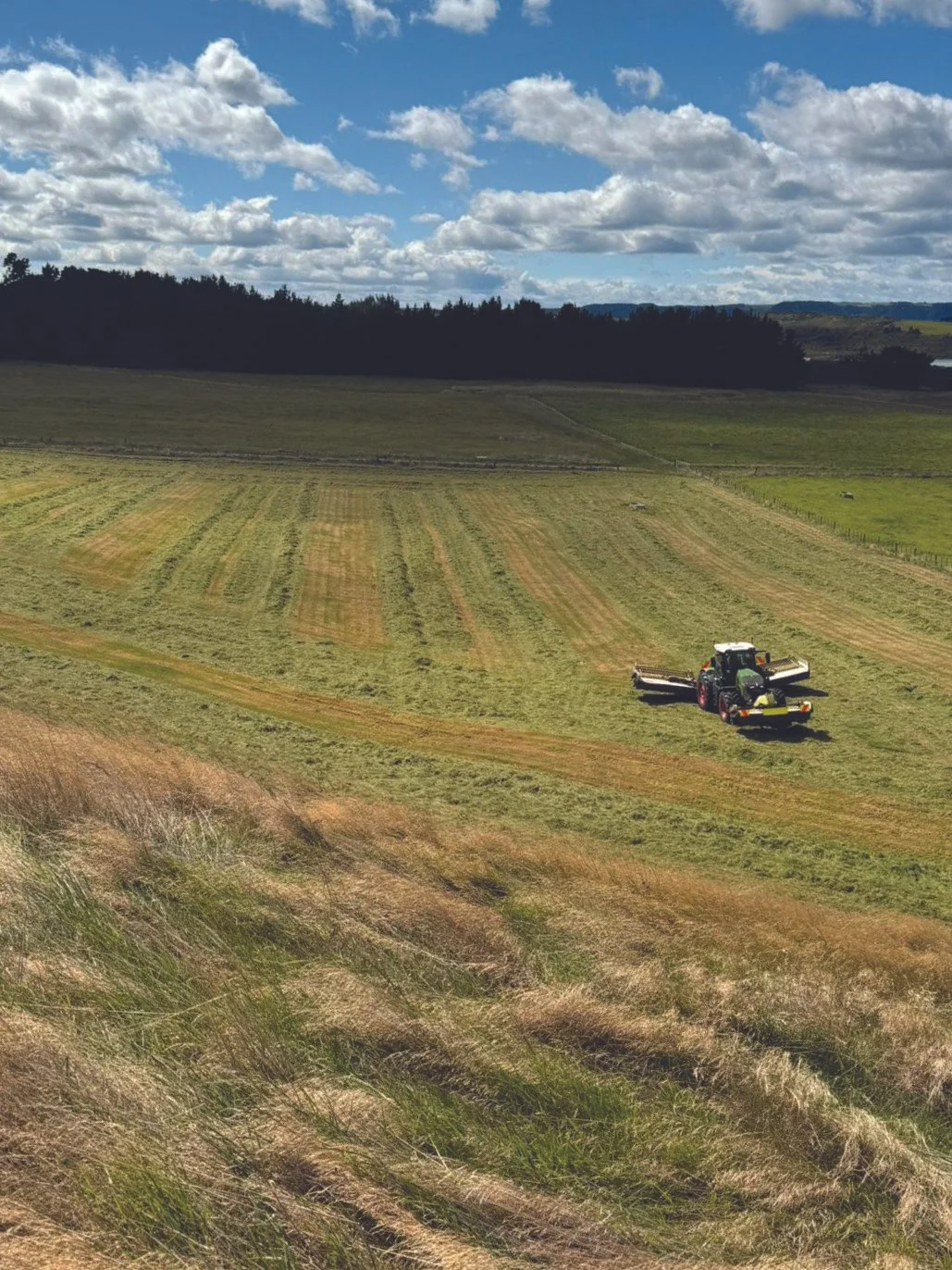
In the Central North Island, Darragh and Keiran did not know each other before arriving. They stepped into key roles with Josh’s crew as chopper driver and triple mower operators. They were strangers when they landed, but preparation shortened the adjustment period, crews settled quickly and workflows tightened. When the season inevitably compressed, the foundations were already in place.
That emphasis on preparation reflects another point Hanzon Jobs makes clearly: this is not a CV-forwarding service detached from the realities of a contracting yard. The team comes from contracting backgrounds and understands what it means to hand someone the keys to high-value machinery in the middle of a tight season.
As contractors often tell them, “You understand it because you’ve done it.”
That lived experience shapes how operators are assessed. In fertiliser and spreading work, the difference between someone who says they can run a high-capacity spreader and someone who genuinely can is not academic. It shows up in both accuracy and product stewardship. It shows up in how machinery is treated at the end of a long day and how the business is represented on farm.
When Hanzon Jobs talks about operators, they are referring to people who will respect the machinery, represent your business well, understand documentation and compliance requirements, and slot into a crew without friction. Those qualities are not secondary to technical skill—they underpin it.
Technology continues to lift the bar. Spreaders now weigh product to the kilogram and adjust automatically for changes in flow characteristics. Integration with farm nutrient plans is increasingly seamless, but none of that prevents poor outcomes if loading is careless, calibration is rushed or basic machine care is overlooked. Precision equipment still depends on disciplined operators.
Looking ahead to the 2026 season, the next intake of staff will arrive in September and October. The pattern is familiar: contractors who are calm in August are usually the ones who booked in early. Those under pressure are often the ones who waited. Early organisation is not simply about filling a seat; it is about building a team that understands expectations around precision application before the first load is tipped into the shed.
If you already know you will need a silage harvester driver, a baler operator, a tractor driver for drilling or mowing, or an all-rounder capable of moving between roles, the conversation needs to start now. In fertiliser work, especially where timing, compliance and public perception intersect, the person in the cab carries more than operational responsibility—they carry the standing of the business.
In a feature dedicated to fertiliser technology and spreaders, it is right to celebrate innovation. New systems improve accuracy and efficiency and they matter to the bottom line, but precision is not confined to steel and software. It is embedded in people and planning. Product placement matters and so does people placement. For contractors preparing for 2026, that may be the most important decision made long before the first paddock is spread.
Tow And Fert
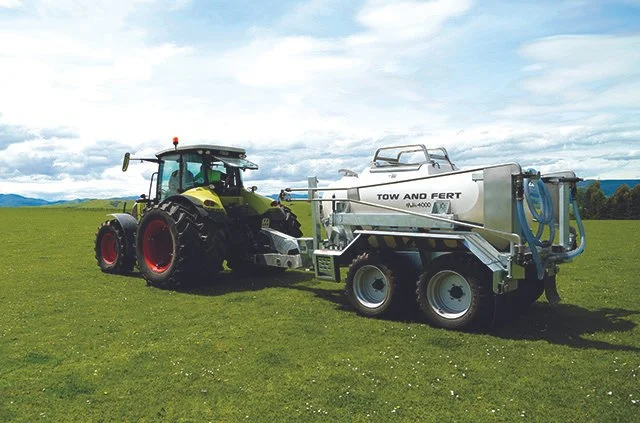
Fertiliser technology is increasingly moving toward precision delivery rather than simple bulk spreading. Liquid and suspension systems are gaining traction because they allow nutrients, biologicals and trace elements to be applied more accurately and at lower rates, improving efficiency while reducing waste. The Tow and Fert Multi 4000 sits firmly within that transition, built as a high-capacity liquid fertiliser system designed to combine mixing, transport and application into one integrated machine.
At the core of the Multi 4000 is its 4,000 litre tank, which allows the machine to treat roughly 30 to 40 hectares per load depending on application rate. With a delivery range from about 50 to 500 litres per hectare, operators can tailor nutrient placement to pasture demand, crop stage or soil conditions rather than applying uniform blanket rates. That flexibility is central to modern fertiliser strategies where performance is measured in nutrient uptake rather than tonnes spread.
The system is designed around dissolving fertiliser directly on farm rather than transporting pre-mixed liquids. Tow and Fert’s agitation setup allows fine particle fertilisers to be loaded straight into the tank without pre-mixing, reducing handling time and eliminating the dust associated with granular spreading. For urea users, the tank can dissolve significant volumes of product into water, allowing nitrogen to be applied as a liquid rather than broadcast granules. This approach supports more even distribution and reduces losses through volatilisation or uneven spreading patterns.
Agitation performance is supported by dual drive options. Mixing can be powered either by PTO at 1,000 rpm or by a hydraulic motor supplying around 55 litres per minute. This allows the machine to be matched to different tractor hydraulic capacities while ensuring fertiliser particles remain in suspension even in heavier mixes. Maintaining that suspension is critical for even nutrient delivery, particularly when applying biological products or trace mineral blends that could otherwise settle during transport.
Delivery performance centres on a stainless steel centrifugal trash pump driven hydraulically. The pump provides high flow output, capable of maintaining boom pressure while supporting continuous recirculation within the tank. This ensures the solution remains uniform and that application rates remain stable across the full boom width. Stable flow is essential in liquid fertiliser systems, because uneven delivery immediately translates into uneven pasture response.
Working widths typically fall in the 18 to 22 metre range depending on boom configuration, allowing the machine to cover ground efficiently without sacrificing application accuracy. At typical operating speeds, the Multi 4000 can achieve substantial daily coverage, transforming liquid fertiliser from a niche option into a practical broadacre tool for both contractors and large-scale grazing operations.
Structural design reflects the weight carried by liquid fertiliser mixes. With a dry weight around three tonnes and a loaded weight approaching ten tonnes depending on solution density, the machine is intended for tractors in the 120 horsepower class and above. The trailed configuration spreads this load across the chassis while maintaining manoeuvrability across paddocks and headlands, helping reduce compaction compared with machines carrying similar volumes on a single frame.
Operational efficiency is also built into the loading process. With the optional crane system, several tonnes of fertiliser can be loaded quickly, allowing faster turnaround between fills and ensuring the machine spends more time working in the paddock rather than sitting in the yard. This becomes particularly valuable in autumn and spring when nutrient response is highly timing sensitive and weather windows can be short.
Beyond nitrogen delivery, the Multi 4000 reflects a broader shift toward multi-product nutrient systems. Liquid application allows operators to incorporate trace elements, biological stimulants and soil conditioners into the same pass. Combining inputs in this way reduces traffic across paddocks and enables more targeted nutrient programmes that respond to plant and soil requirements rather than relying solely on seasonal spreading cycles.
From a systems perspective, machines like the Multi 4000 highlight how fertiliser technology is evolving away from simple spreading toward controlled nutrient placement. By dissolving fertiliser on farm, maintaining it in suspension and delivering it evenly across wide booms, the machine bridges the gap between conventional bulk fertiliser and precision liquid application.
That capability supports a more measured approach to nutrient use where efficiency, timing and placement matter as much as product choice. For contractors and large-scale operators, the appeal lies in integration. The Multi 4000 is not just a sprayer and not just a mixer but a complete nutrient delivery platform capable of handling solid inputs, converting them into liquid solutions and applying them in a single workflow. As fertiliser costs rise, that ability to apply exactly what is needed, where it is needed and when it is needed becomes increasingly valuable.
In that sense, the Tow and Fert Multi 4000 represents more than a machine. It reflects a shift in fertiliser thinking from volume to precision, from bulk distribution to targeted application, and from separate processes to integrated systems designed to make every kilogram of nutrient count.

Progro
For much of the past century, fertiliser strategy in New Zealand has been dominated by what goes on the soil rather than what goes on the plant. Granular nitrogen, spreaders and aerial topdressing have shaped the rhythm of pasture management, and for good reason. They have delivered scale, simplicity and predictable results across diverse farming systems. Yet as environmental pressure increases and seasonal conditions become less predictable, farmers and contractors alike are starting to look more closely at how efficiently nutrients are actually being used once they are applied. That shift in thinking is one of the reasons foliar fertilisers are attracting renewed attention, and it sits at the heart of the approach taken by Progro.
Foliar fertilisers are not a new concept, but they are being reconsidered in a new context. Rather than replacing conventional fertiliser programmes, they are increasingly viewed as a way to complement them, delivering targeted nutrition directly through the leaf when soil conditions limit uptake. By bypassing the root zone, foliar nutrients can be absorbed quickly and used immediately by the plant, a benefit that becomes particularly relevant during dry spells, cool soil temperatures or periods of rapid growth when nutrient demand outpaces supply. In those situations, timing often matters as much as total application rate, and the ability to feed the plant directly can make a measurable difference to performance.
Progro’s approach has been to simplify that concept for farmers who do not have the time or inclination to blend their own solutions. Its products are supplied as ready-to-use liquid fertilisers designed for specific growth stages or seasonal conditions, with each formulation combining nitrogen with macronutrients, trace elements and biological stimulants. The intention is to remove guesswork, allowing operators to apply a balanced nutrient package rather than focusing solely on nitrogen inputs. By delivering nutrients through the leaf while also supporting soil biology, the system aims to improve overall nutrient efficiency and reduce losses through leaching or volatilisation.
One of the key drivers behind interest in foliar fertilisers is the growing recognition that lush pasture growth does not always equate to high feed value. Rapid spring growth, for example, can dilute protein and mineral content, producing bulk without the nutritional density animals require. Foliar blends applied at the right stage can help sustain nutrient balance during those high-growth periods, supporting both yield and feed quality rather than simply chasing tonnage. In that sense, the role of foliar nutrition aligns with a broader shift in farming away from input volume and toward input effectiveness.
Application also fits naturally into existing spray programmes, which is one reason contractors are taking notice. Foliar fertilisers can often be applied alongside crop protection products, reducing the need for separate passes and allowing nutrition to be delivered as part of routine field operations. In a contracting environment where efficiency and timing are critical, that integration can make the difference between a product being used or overlooked. It also reflects a wider trend toward multi-purpose passes, where each trip across a paddock is expected to deliver more than one outcome.
The environmental dimension is another factor shaping interest in products like Progro’s. Nutrient losses from soil-applied fertilisers remain a major concern for regulators and catchment groups, particularly in regions facing water quality constraints. By improving uptake efficiency and reducing the proportion of nutrients left in the soil system, foliar approaches have the potential to lower losses while still supporting production. For farmers balancing regulatory expectations with economic pressure, that possibility is increasingly relevant.
None of this suggests that foliar fertilisers are a silver bullet. Soil fertility remains fundamental, and no amount of leaf feeding can compensate for poor soil structure or long-term nutrient depletion. What foliar nutrition offers is a more responsive tool within a broader nutrient management strategy, allowing farmers to address short-term deficiencies, support growth during stress periods and fine-tune feed quality when it matters most. Used that way, it becomes part of a system rather than a replacement for one.
For contractors and growers alike, the growing interest in foliar fertilisers reflects a wider change in how fertiliser is viewed. The conversation is shifting from how much nutrient is applied to how effectively that nutrient is used, and from blanket application toward targeted timing. Progro’s ready-mixed formulations sit within that trend, offering a practical option for operators who want to deliver balanced nutrition quickly and efficiently without complicating their workflow.
As farming systems continue to evolve, tools that improve nutrient efficiency are likely to become more important rather than less. Foliar fertilisers will not replace traditional programmes, but their role as a complementary tool is expanding. For many farms, the question is no longer whether to use them at all, but how to integrate them effectively into an overall strategy that delivers both production and sustainability.
Precision Farming
Precision agriculture often conjures images of high-spec tractors, RTK correction signals and complex data platforms, yet for many farms the most significant gains still come from improving the basics. Fertiliser placement, spray coverage and irrigation positioning remain tasks where small errors quickly compound into wasted inputs, uneven growth and unnecessary compliance headaches. Spreadify has been developed squarely for that reality, offering a guidance and recording system that works with the machinery farmers already own rather than requiring expensive new hardware.
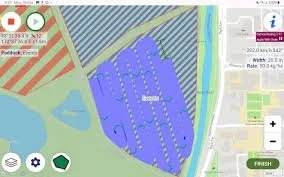
At its simplest, Spreadify is a GPS-based guidance app that runs on a smartphone or tablet, allowing operators to map, guide and record on-farm applications without installing dedicated in-cab systems. That simplicity is central to its appeal. Instead of treating precision farming as a specialist add-on, the system lowers the entry barrier, turning any tractor, ute or sprayer into a basic guidance platform. For farms that self-spread fertiliser or manage their own spraying programmes, that shift from analogue to digital workflow can deliver immediate practical gains.
The core function is straightforward. The app provides visual guidance across paddocks so operators can see exactly where product has already been applied and where coverage is still required. This reduces overlap, missed strips and inconsistent placement, which are among the most common inefficiencies in manual spreading. Even small overlaps quickly inflate fertiliser costs across a season, while missed areas can lead to uneven pasture response that persists for months. By simply keeping operators on track, the system addresses one of the most fundamental drivers of application accuracy.
Beyond guidance, Spreadify also acts as a recording tool. Every application can be logged automatically, capturing details such as timing, location and product use. This digital paddock diary becomes increasingly valuable as regulatory expectations tighten and nutrient tracking requirements grow more formalised. Instead of reconstructing records at the end of the season, farms can maintain an ongoing, verifiable log of where nutrients have been placed and when.
The compliance dimension is particularly relevant in the New Zealand context. Nitrogen caps, freshwater farm plans and nutrient budgeting frameworks all rely on reliable proof of application data. Spreadify connects directly to the wider Precision Farming platform, allowing information to flow automatically to fertiliser suppliers or farm management systems. Integration with tools such as MyBallance and Hawkeye means proof-of-application data can be returned without manual paperwork, reducing both administrative workload and the risk of reporting errors.
From an operational standpoint, this connectivity transforms the app from a simple mapping tool into part of a broader farm data ecosystem. Orders, application maps and compliance records can all align within a single digital workflow, reducing duplication and improving transparency across the season. For contractors working with multiple clients, this type of integration can also streamline job management and reporting, ensuring information flows both ways between farmer and operator.
Another practical advantage lies in versatility. Although fertiliser guidance is the most obvious application, the same system can guide spraying operations, effluent placement and even irrigation sprinkler positioning. This multi-use functionality reflects how modern farms operate, where machinery and labour are often shared across tasks and where any tool that can support several jobs becomes more valuable than one dedicated to a single function.
The irrigation element is particularly noteworthy. On farms using pods or sprinklers, accurate placement can influence water distribution, energy efficiency and pasture response. By recording previous placements and timing shifts, the app introduces a level of repeatability that is difficult to maintain through memory or paper notes alone. Over time, this type of record can help identify patterns in water use and improve scheduling decisions.
Importantly, the system’s design philosophy avoids overwhelming the user with complexity. Precision agriculture tools sometimes struggle because they demand significant training or workflow changes before benefits are realised. Spreadify instead focuses on ease of adoption, with a familiar app interface and minimal setup requirements. That accessibility means the technology can be used by any operator on the farm rather than being confined to a single tech-savvy individual.
From a broader industry perspective, tools like Spreadify signal a shift in how precision farming is evolving. Rather than relying solely on expensive machinery upgrades, innovation is increasingly arriving through software that enhances existing equipment. This approach spreads the benefits of precision technology more widely across the sector, allowing smaller operations to access capabilities that were once restricted to large capital-intensive farms.
In that sense, Spreadify’s value lies less in any single feature than in how it fits into the everyday rhythm of farm work. It does not attempt to replace high-end guidance systems or variable-rate controllers. Instead, it fills the gap between traditional manual spreading and full-scale precision platforms, offering a practical stepping stone that delivers immediate accuracy improvements while laying the foundation for more advanced data use in the future.
For self-spreading farmers and contractors alike, that balance between simplicity and usefulness may be the system’s greatest strength. It turns everyday spreading into a documented, guided process, helping ensure that every pass across the paddock contributes to productivity rather than uncertainty.