
Workwear that works as hard as you do
There is a quiet shift taking place in how farmers and contractors think about workwear. For a long time clothing sat in the background of the operation, something you wore out, replaced and did not think too much about. Now, particularly across larger scale operations and contracting businesses, it has become part of the system. It affects productivity, comfort, safety and even how a business presents itself on farm. That is where brands like Bushbuck are finding their place, not as fashion but as functional equipment.
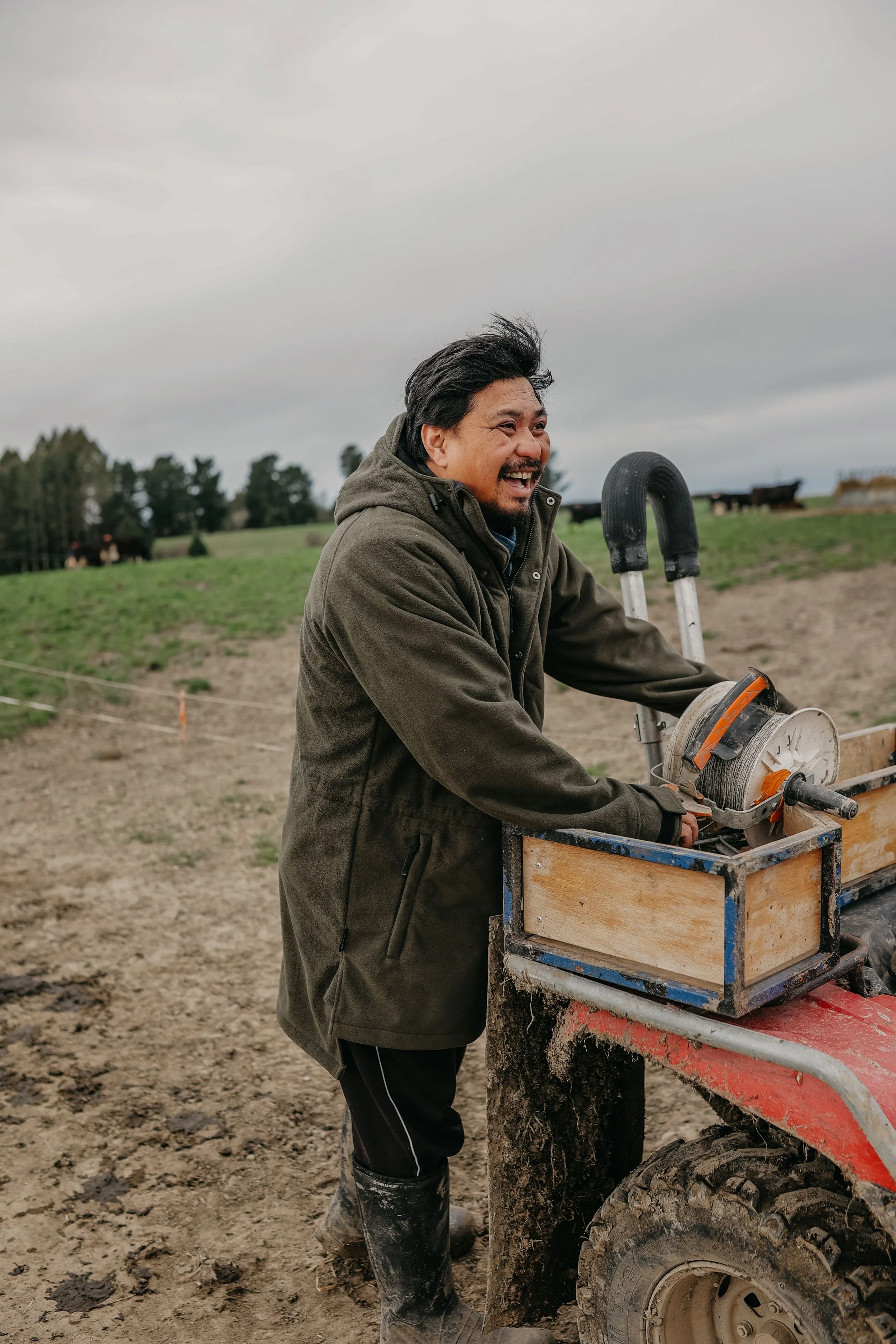
What separates Bushbuck from traditional workwear is where it has come from. Rather than being built out of the farming sector alone, it has grown out of the hunting and outdoor space, designed in New Zealand and tested in the same environments that farmers and contractors operate in every day. That crossover matters. Hunting and backcountry use demand gear that performs when conditions turn quickly, when you are a long way from shelter and when failure is not an option. Those same demands apply on farm, particularly in regions where weather and terrain can change within hours.
The result is clothing that is engineered first for performance. Durability sits at the centre of that. Bushbuck’s range is built around fabrics and construction that are designed to handle abrasion, moisture and repeated use, rather than simply looking the part. For contractors, that is a practical consideration. Gear that wears out quickly is not just an inconvenience, it becomes a cost and a disruption during the busiest parts of the season.
There is also a clear emphasis on systems rather than individual garments. The idea of layering is not new, but it has become more refined in recent years. Base layers, mid layers and outer shells all play a role, allowing operators to adjust to conditions throughout the day. In a New Zealand context, where a day can start in frost, move through wind and end in rain, that flexibility is critical.
Merino thermals, for example, provide a base that manages moisture and temperature, while windproof fleeces and wool jerseys add insulation without restricting movement. Over the top of that, waterproof outer layers are designed to keep operators dry in sustained rain, something that is not negotiable during silage or drilling seasons. It is a system that mirrors the way contractors already think about machinery, selecting the right tool for the job and building a setup that works across different conditions.
Where Bushbuck stands out is in how it balances that performance with practicality. Many technical clothing brands push into high-end territory, often at a price point that does not stack up for everyday work use. Bushbuck has taken a different approach, designing gear that is accessible while still maintaining the performance required for demanding environments. That positioning is important, particularly for contracting businesses that may be outfitting multiple staff.
Uniformity is another factor that has become more relevant. As contracting businesses grow, presentation becomes part of the job. Turning up with a consistent, professional appearance reflects the quality of the work being delivered. Bushbuck has leaned into that space, offering corporate workwear solutions that allow businesses to standardise clothing across teams, including branding and customisation.
That might seem like a small detail, but it has practical implications. Clear identification on site improves safety, particularly where multiple operators and machines are working together. It also reinforces a level of professionalism that clients increasingly expect. In a competitive environment, those details can make a difference.
The range itself is broad, covering everything from high visibility gear through to waterproof jackets, work pants and insulated outerwear. High vis remains a requirement in many contracting environments, particularly in civil and roading work, but it is now being integrated into clothing that also meets performance standards for warmth and durability. That shift reflects the reality of modern worksites, where compliance and comfort need to sit alongside each other.
For farming operations, the focus often shifts slightly towards versatility. A contractor may need multiple sets of gear depending on the job, but a farmer is more likely to rely on a smaller number of pieces that can handle a wide range of tasks. That is where items like canvas puffer jackets and waterproof outer layers come into their own, offering protection across feeding, stock work and machinery operation without the need to constantly change gear.
There is also a growing awareness of how clothing impacts fatigue. Long days in the cab or on foot are part of the job, and gear that restricts movement, holds moisture or fails to regulate temperature adds to that fatigue. Bushbuck’s approach to lightweight, breathable fabrics and ergonomic design is aimed at reducing that load, allowing operators to work more comfortably for longer periods.
From a contracting perspective, that translates directly into productivity. An operator who is comfortable and dry is more likely to maintain focus and consistency throughout the day. It is not a headline feature, but it is one that contributes to the overall efficiency of the operation.
The other side of that equation is longevity. Premium workwear is often justified on the basis that it lasts longer, and in many cases that holds true. Investing in gear that can withstand multiple seasons reduces the need for constant replacement, which in turn reduces downtime and cost. For businesses running multiple staff, that becomes a significant consideration.
What is also notable is how Bushbuck has positioned itself within the New Zealand market. Being locally owned and designed, with gear tested in New Zealand conditions, gives it a level of relevance that imported brands sometimes struggle to achieve. The environments it is designed for, whether that is the Waikato, Hawke’s Bay, Fiordland, the Mackenzie Basin or the wider South Island, are the same environments many of its customers are working in.
That connection to place matters. It shapes the way products are designed and the problems they are trying to solve. It also builds a level of trust, particularly in rural communities where word of mouth and proven performance carry more weight than marketing.
Looking ahead, the role of workwear in farming and contracting is only likely to increase. As systems become more efficient and expectations around performance continue to rise, every part of the operation is being examined for gains. Clothing is part of that. It influences how people work, how they feel and how effectively they can operate in challenging conditions.
Bushbuck is not trying to reinvent the concept of workwear, but it is refining it. By bringing together elements from the outdoor, hunting and technical clothing sectors and applying them to farming and contracting, it is contributing to a shift in how gear is viewed.