
Winter-ready: How autumn-sown cereals are transforming New Zealand farm performance
Putting autumn-sown cereals to work in New Zealand farming systems.
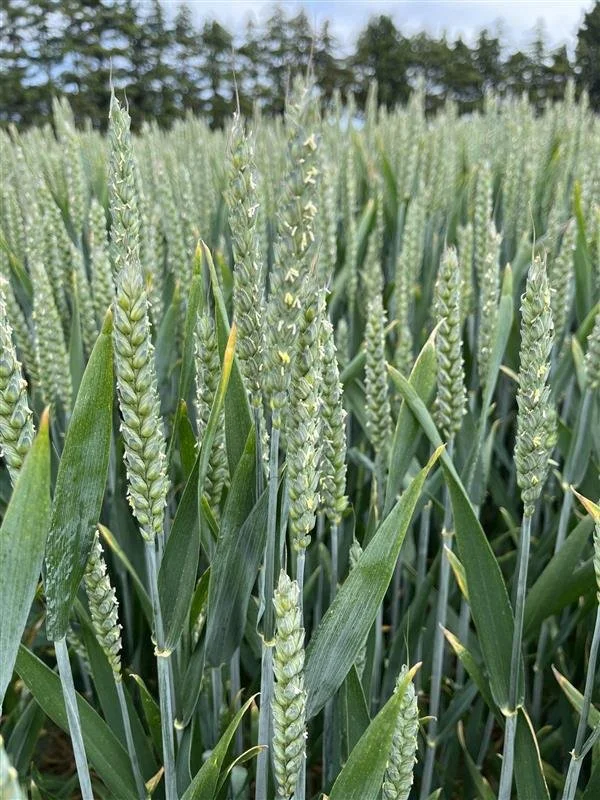
In a farming environment where input costs are punishing, environmental compliance is tightening and the pressure to lift per-hectare performance has never been greater, the strategic use of autumn-sown cereals is one of the most undervalued tools in the New Zealand farmer’s toolkit. From the free-draining downs of Canterbury to the heavy, wet paddocks of Southland and the warmer, free-draining country of the Waikato and Hawke’s Bay, cereals in rotation offer a level of system-wide benefit – in feed supply, weed management, soil remediation and pasture renewal – that few other agronomic interventions can match.
And yet many operators still view a cereal break as a reactive measure rather than a proactive, planned rotation decision. That thinking needs to change.
The winter feed gap – and why pasture alone won’t bridge it
Every stock farmer on both islands understands the feed pinch. Whether it’s pre-calving dairy cows that need controlled BCS management heading into lactation, store lambs chasing liveweight targets before the sales, or weaner cattle that need to keep frames growing through the shoulder season, winter is when the feed budget either stacks up or blows out.
Pasture growth rates crater in June and July across most of New Zealand’s pastoral regions, and the gap between maintenance requirements and available dry matter can rapidly become a serious animal performance problem.
Research has confirmed what many farmers already know from experience: relying on established ryegrass-clover pasture alone to carry stock through winter is increasingly risky. Pasture productivity gains on New Zealand dairy platforms have stalled significantly since the early 2000s, with annual improvement rates falling from over 1.4% per year to just 0.26%, despite sustained inputs of nitrogen fertiliser and higher stocking pressure.
On dryland sheep and beef country, climate variability is further eroding the reliability of late-autumn and early-winter pasture cover. The upshot is that supplementary feed, whether purchased palm kernel, maize silage, or bought-in baleage, is filling a gap that a planned rotation system could be filling far more cost-effectively on-farm.
Autumn-sown cereals, such as forage oats, triticale, ryecorn, wheat and barley, are purpose-built to fill that gap. They germinate readily in cooling soils, establish quickly from a March or April sowing, and produce high-quality, leafy dry matter through the coldest months of the system calendar.
A well-managed forage cereal stand can realistically yield 5–8 tonnes of dry matter per hectare across a grazing season, with metabolisable energy values that support genuine animal performance – not just maintenance. For the dairy farmer, that’s a meaningful reduction in reliance on bought-in supplement. For the sheep and beef operator, it’s the difference between holding condition on the breeding flock and watching it drain away.
Dual-use potential: The flexibility that sets cereals apart
What distinguishes cereal crops from most other winter feed options is their inherent dual-use flexibility. Unlike a brassica, which must be grazed within a defined window, a cereal crop gives the farmer genuine options depending on how the season unfolds.
A crop sown in late March or early April in North Island districts will typically be ready for break-feeding by late June or July. Stock are shifted across the crop in a controlled system, converting standing dry matter directly into liveweight gain or milk solids. Stocking density, allocation per break and residual height are all management levers the farmer controls.
Any late autumn-sown cereal that has been surplus to winter demand can be carried through to early spring, where it can be either spring grazed or converted into green chop cereal silage. It is important to note the disease tolerance of the chosen forage oat cultivar greatly impacts the crops holding potential to be carried through for early spring use.
Very late autumn-or winter-sown forage oats are an outstanding catch crop opportunity to convert bare ground post-winter crop grazing. Forage oats germinate at low temperatures and immediately start using vulnerable nitrogen that may be exposed to leaching through winter if no action is taken.
Catch crops are regularly taken through to green crop silage in late October to mid-November before planting into the next cropping cycle. If demand requires, they can be grazed earlier.
Ryecorn is the workhorse of this dual-use approach in colder, frost-prone environments – Central Plateau, Mackenzie Basin, Central Otago, the uplands of inland Hawke’s Bay. Its frost hardiness, strong tillering capacity and ability to recover from hard grazing and still push to a silage or grain yield make it the go-to variety for South Island and elevated North Island country.
For warmer climates in New Zealand, triticale and forage oat mixes offer similarly flexible management in productive systems.
Crowa forage oats: Fast feed, maximum flexibility
Crowa forage oats, developed by Agricom and bred in New Zealand, has built a strong reputation for fast, reliable establishment and genuine management flexibility. Its ability to establish quickly to provide ground cover early makes it one of the most solid forage oat choices available.
Maturing 7–10 days later than its predecessor Milton, Crowa holds feed quality in the paddock without deteriorating when harvest decisions need to be delayed. This is a practical asset for mixed livestock systems. It’s very good rust tolerance reduces mid-season disease risk, particularly in humid conditions.
Crowa can be sown as a pure stand at 100–120 kg/ha or blended with Manta Italian ryegrass at 80 kg/ha to extend the grazing window. It also performs well as a catch crop following winter crop grazing by establishing quickly and capturing residual soil nitrogen. Its adaptability across sowing dates and end uses makes it a practical first choice for tight rotations.
The weed management argument: Why cereals open the door
The weed management argument pushes the equation firmly into no-brainer territory for any farmer carrying weedy or run-out paddocks. Perennial pasture weeds, such as ragwort, thistles, docks, fathen, and invasive grasses like browntop and fog grass, are among the most damaging and persistent challenges in New Zealand pastoral systems.
These weeds reduce available dry matter, suppress clover content, reduce pasture palatability and, in some cases, directly harm stock or taint produce. The conventional approach of overgrazing, spot-spraying and relying on existing ryegrass to fill the voids rarely delivers lasting results, particularly once perennial weeds are well-established.
A planned cereal rotation fundamentally changes what is agronomically possible in a weedy paddock. Spraying out with glyphosate before drilling eliminates both the existing sward and a significant proportion of the weed seedbank, including perennial grass species that cannot be killed in standing pasture without destroying the ryegrass alongside them.
Cultivating before sowing further disrupts weed root systems and exposes dormant seed to environmental kill. For established paddocks with significant broadleaf weed pressure, a second glyphosate pass after six weeks targeting late-germinating survivors dramatically further depletes the seedbank before drilling commences.
Once the cereal crop is established, the farmer gains access to a suite of herbicides, including 2,4-D and MCPA, that are highly effective against broadleaf weeds but cannot be used in ryegrass-clover swards without damaging the clover.
Applying one or two herbicide treatments to the cereal, timed at crop establishment and again as the canopy closes, achieves broadleaf weed knockdown that is simply not possible in continuous pasture. The result, when the paddock is returned to a new ryegrass and clover sward, is a seedbed with minimal weed competition. This gives the new pasture its best possible start and avoids the costly situation of a new sowing battling established weed pressure from day one.
Firebird herbicide: Locking out grass weeds at drilling
Firebird herbicide from Bayer Crop Science addresses grass weeds at the point of establishment, where they cause the most damage. A pre-emergence product combining flufenacet and diflufenican, Firebird forms a persistent soil barrier after drilling that stops germinating weed seeds before they reach the surface.
Application must go on at or immediately after drilling (ideally the same day) to ensure the herbicide layer is in place before weed germination begins. It performs especially well in minimum-tillage and direct-drilling systems, where weed seeds remain near the surface.
Primary targets include vulpia (hair grass) and annual poa, as well as broadleaf weeds such as field pansy and speedwell. The label rate is 300 mL/ha. Where vulpia is the dominant pressure, Firebird is the clear first choice; where ryegrass dominates, proven safe to wheat and barley, Firebird gives growers confidence the crop is protected from the ground up.
Putting it all together
Autumn-sown cereals managed well and supported by the right inputs are one of the highest-returning agronomic decisions available to any New Zealand dairy, beef, or sheep farmer with cultivatable land in the rotation.
They deliver high-quality, high-yield winter feed at the time of maximum system need. They unlock weed control tools unavailable under continuous pasture. They break pathogen and pest cycles that accumulate in monoculture ryegrass systems. They allow mechanical remediation of compaction and soil structural damage. And they set the platform for the cleanest, most productive new pasture establishment possible.
When Crowa forage oats are matched with an emergence programme at drilling to lock grass weeds out from the start, the cereal crop gets away clean, establishes without competition and delivers its full dry matter potential through the grazing or silage window.
That combination of variety selection and early weed management is the difference between a good cereal break and a great one. Make the rotation decision early, plan the sowing date, get the herbicide on at drilling and let the crop do the work.
By Dr Elena Duter. For advice on Crowa forage oats, contact your Farmlands TFS, agronomist, or local Agricom representative. For Firebird herbicide information, visit cropscience.bayer.co.nz or contact your Bayer Crop Science representative. Always read the label before use.