
A New chapter for Väderstad in New Zealand
There are certain machinery brands that carry weight in New Zealand cropping and cultivation circles, not just because of the equipment they produce but because of the systems thinking that sits behind them.
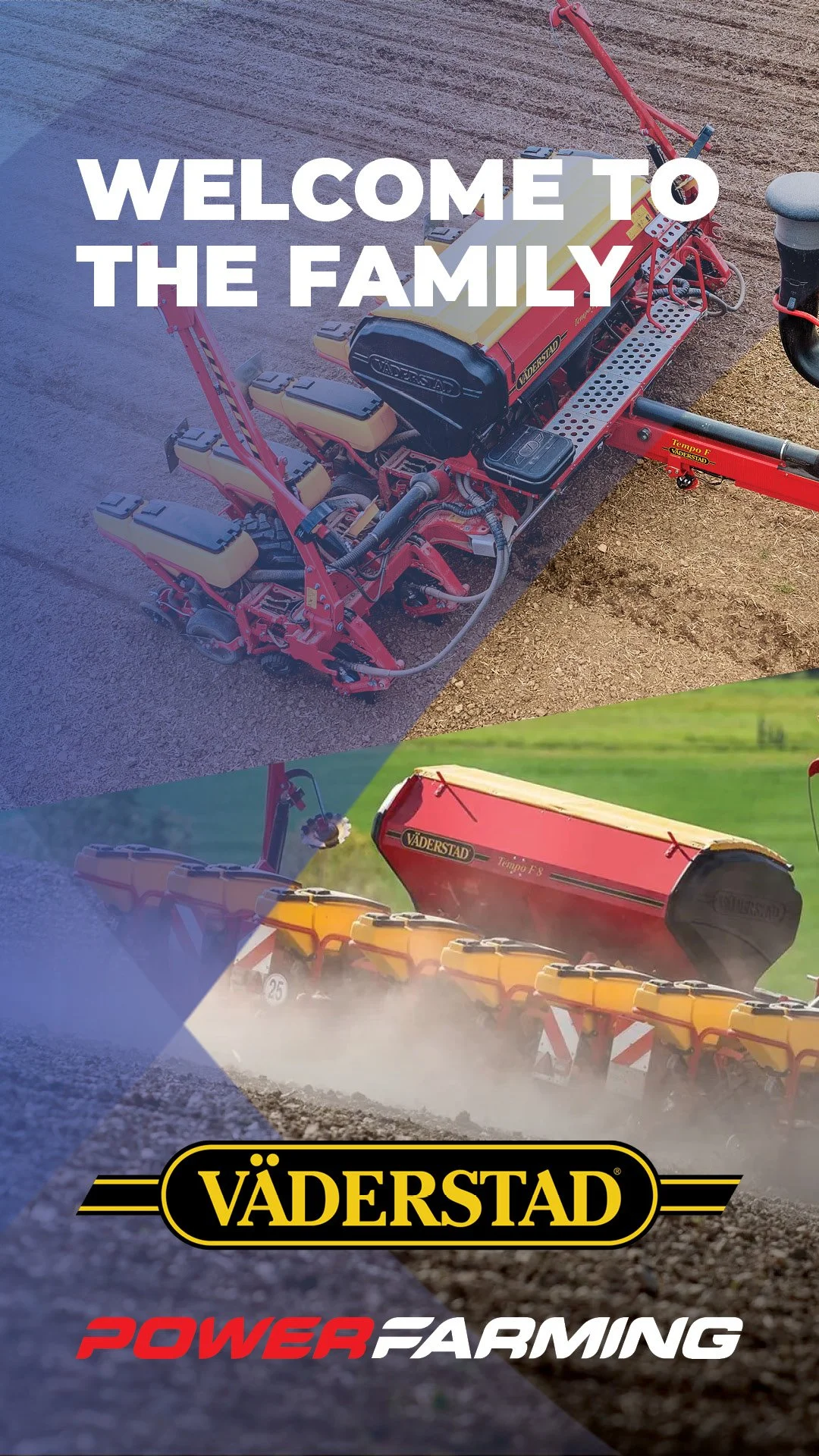
Väderstad is one of those names. For decades the brand has been associated with precision seed placement, consistent cultivation and a design philosophy that prioritises agronomic outcomes as much as mechanical performance. The announcement that Power Farming will take on distribution of Väderstad machinery in New Zealand from March 2026 therefore marks more than a simple dealership change, it signals a shift in how one of the country’s most respected cultivation and drilling ranges will be supported and positioned in the market.
For many operators, Väderstad’s presence in New Zealand has been closely tied to the team at Norwood, who have represented the brand for more than twenty-five years and built a strong reputation around it. During that time the machines have found a place on arable farms, mixed enterprises and contracting fleets where establishment accuracy and reliable work rates matter. That legacy does not disappear overnight, and the fact that both companies are working together to support existing customers through the transition reflects a shared understanding that machinery partnerships ultimately live or die on the strength of aftersales support.
From Power Farming’s perspective the addition of Väderstad sits logically alongside its existing machinery portfolio. The business has grown steadily over more than seventy-five years, building a network that spans New Zealand and Australia, with recent expansion into the United States. Its strength has long been its dealer structure and parts support, which are often the deciding factors for farmers and contractors weighing up major machinery investments. Bringing Väderstad into that framework gives the company a stronger presence in the cultivation, seeding and planting segment while also aligning with the increasing focus on precision establishment across New Zealand cropping systems.
That focus on establishment accuracy is becoming more important with each season. Whether the crop is cereals, maize, fodder beet or pasture renewal the ability to place seed consistently at the right depth and spacing is central to achieving uniform emergence. Uniform crops not only maximise yield potential, they also simplify management later in the season from spraying decisions to harvest timing. Equipment that can deliver that consistency therefore plays a direct role in both production efficiency and profitability.
Väderstad’s reputation has largely been built on this principle. Its drills, cultivators and planters are designed to work as integrated systems rather than standalone machines. Soil preparation, consolidation and seed placement are treated as linked steps in one process and that approach resonates with the way many New Zealand farmers now think about establishment. Rather than treating cultivation and drilling as separate operations, the emphasis has shifted toward achieving a complete seedbed in as few passes as possible while maintaining soil structure.
For contractors, this systems approach has practical implications. Machines that can prepare and establish in one operation reduce labour requirements, fuel use and weather exposure. In seasons where planting windows are short and clients expect rapid turnaround, the ability to move quickly between paddocks without sacrificing accuracy becomes a competitive advantage.
This is where the design philosophy behind Väderstad equipment tends to stand out, because it is built around maintaining consistent performance across large working widths and varying soil conditions.
The challenge for any distributor taking on a premium machinery brand is to match that engineering quality with equally strong local support. High specification machines demand reliable parts supply, knowledgeable technicians and dealers who understand not just the mechanics but the agronomic intent behind the equipment. Power Farming’s existing dealer network will therefore play a crucial role in how successfully the transition unfolds, particularly during the early seasons when customers are assessing how service continuity compares with what they have previously experienced.
There is also a broader industry context to consider. Machinery distribution in New Zealand has always been shaped by relationships as much as product lines. Farmers and contractors tend to stick with suppliers they trust, especially when equipment is central to seasonal timing. Any change in distribution therefore requires careful communication and reassurance that existing machines will continue to be supported. The collaborative tone of this announcement suggests both companies recognise that reality and are prioritising customer confidence as the transition begins.
In many ways this development reflects the ongoing evolution of New Zealand’s machinery landscape. As farm systems become more technically demanding and establishment precision becomes more critical, the partnerships between manufacturers and distributors grow increasingly important. The right machinery in the paddock still matters, but the right backup behind it matters just as much.
For Väderstad customers the coming seasons will likely be about continuity first and opportunity second. Continuity in service, parts and technical support and opportunity in the potential reach of Power Farming’s network and its investment in growth. For the wider market, the shift represents another reminder that machinery supply chains are not static. They move with business strategy, market demand and the ongoing push for better establishment performance across New Zealand farms.
Ultimately, machinery distribution changes are only significant if they translate into better outcomes in the paddock. If this transition delivers strong support, consistent backup and continued focus on precision establishment it will be judged a success not by the announcement itself but by the crops that follow the drills and cultivators in seasons to come.