
A review of bale wrappers, bale handling equipment and telehandlers
Today’s farming operations require topnotch supplements and feed. To produce them, contractors and farmers need equipment that can handle the job with ease, precision and reliability. In this feature we review the products leading the charge in bale wrapping and handling equipment.
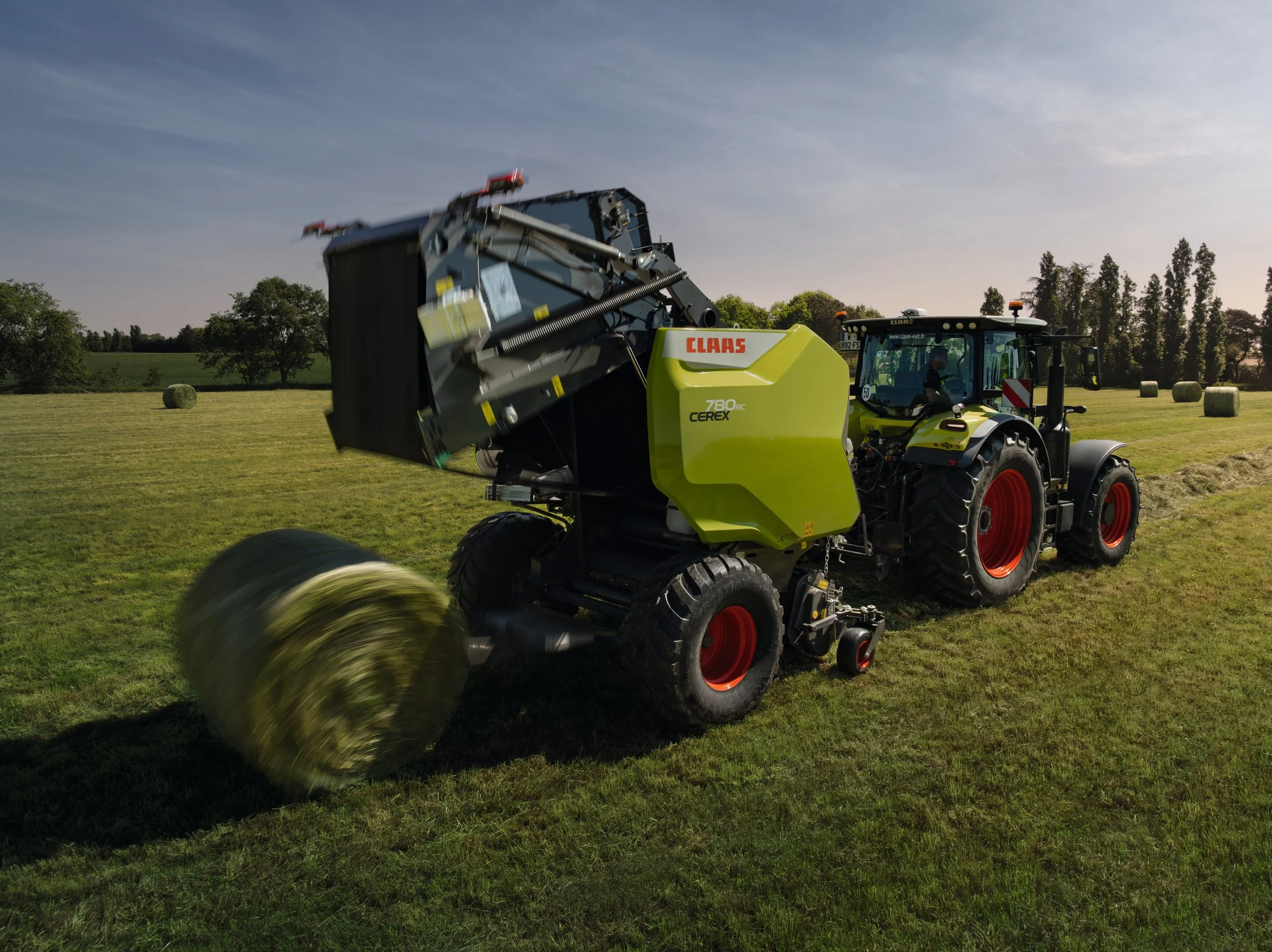
Claas Cerex
Professional baling operations are increasingly focused on how much quality forage can be put through a machine in a working day without adding labour, fuel use or unnecessary downtime. For contractors and large-scale farmers, that puts the emphasis on capacity, consistent bale density and reliability, particularly when a machine is expected to work long hours across large areas.
Claas is targeting that end of the market with the new Cerex 700 RC, a high-capacity variable chamber round baler developed for demanding silage, hay, straw and specialist crop applications. Positioned above the established Variant 500 series, the Cerex combines a new high-density bale chamber with a heavy-duty driveline, revised crop-flow systems and Isobus controls. Limited numbers are expected to be available this spring.
Claas Product Business Manager Green Harvest Luke Wheeler says productivity has been central to the machine's development.
“Outputs of up to sixty high-density bales per hour place the Cerex firmly into the high-capacity contractor category,” says Wheeler.
Crop intake begins with the latest-generation Multiflow HD pickup. At 2.10 m wide, with a DIN raking width of 1.90 m, it has been designed to handle heavy swaths and high crop volumes. The five-row pickup operates at 146 rpm, while a reinforced cam track reduces drive requirements by 20% and increases rake frequency by 20%. The aim is to maintain consistent feeding while reducing power demand and driveline wear.
A 70 mm pickup reel shaft, removable plastic strippers and dual-guide chain tensioning contribute to the heavy-duty design, while positioning the pickup further forward improves visibility from the tractor cab.
This allows the operator to better monitor crop flow and adjust forward speed as swath conditions change.
Behind the pickup is Claas's Roto Cut feed rotor, using spirally arranged double tines manufactured from double-hardened boron steel.
Operators can choose 25 or 17 heavy-duty knives. The 25-knife configuration provides a minimum chop length of 44 mm, while the 17-knife version provides a minimum of 63 mm. Knife groups can be switched electro-hydraulically between 25/13/12 or 17/9/8 through the Isobus terminal, allowing the cutting system to be adapted to different crops and feed requirements.
The Pro cutting frame can move by up to 30 mm as crop volumes fluctuate, helping maintain crop flow and reduce the risk of blockages. Visual and acoustic warnings alert the operator as crop load increases and, if a blockage does occur, the cutting frame can be hydraulically lowered from the terminal.
One of the bigger changes is the Cerex's redesigned variable bale chamber.
For contractors, bale density has a direct impact on the economics of the job. Higher density can mean fewer bales to wrap, handle, transport and store, while consistent density is important for customers wanting predictable bale weights and forage quality.
The chamber uses two endless heavy-duty belts, a separate hydraulic pressure system and a new tensioning arm cylinder to increase compaction pressure while maintaining bale shape. The chamber almost completely encloses the bale during formation to reduce losses from short-cut material, while continuous cleaning rollers are designed to maintain performance in difficult silage conditions.
Sensors on each HD belt monitor bale shape and the independent hydraulic pressure system maintains chamber pressure as crop and paddock conditions change.
The Cerex 760 RC produces bales from 0.90 to 1.60 m in diameter, while the larger Cerex 780 RC extends maximum diameter to 1.83 m.
A standard soft-core function allows core density to be adjusted for different crops and storage requirements.
Durability has also been a focus, particularly for machines working long hours in heavy silage. Claas describes the approach as its full HD concept. The chassis uses reinforced 20 mm steel profiles and strengthened load-bearing points, while the rotor is driven by heavy-duty duplex chains and high-performance bearings.
A new split-drive system is rated for up to 216 hp input power at 1,000 rpm PTO speed. Separate power trains drive the bale chamber and cutting rotor, improving torque transmission and reducing the load on individual driveline components.
Service access has been improved, including easier knife removal and cleaning. An optional Plus lubrication system can carry enough oil for up to 14 working hours, reducing the need to stop during long baling days.
Claas has also revised the tying system to reduce wrapping time and net consumption.
A new duckbill feed system pre-positions the net for insertion, while a hydraulic net brake maintains tension during wrapping. Claas says the system can reduce net consumption by up to 15%.
Three spare net rolls can be carried on the baler and a loading ramp makes changing the heavy rolls easier for the operator.
Control is through the Claas Cemis 700 Isobus terminal, with a seven-inch colour touchscreen, direct-access buttons and rotary push controls.
Bale density, knife groups, moisture monitoring, chamber settings and operational data can all be managed from the cab.
The Cerex is also compatible with other Isobus terminals, while Claas Connect provides machine management, maintenance planning, bale calculation and operational tracking.
For contractors, the significance of these systems is less about adding technology for its own sake and more about keeping the machine productive throughout a long working day.
A blockage, net change or maintenance stop might only cost a few minutes, but repeated across a large job those interruptions can quickly affect daily output.
The Cerex 700 RC brings Claas's approach together in one machine, combining greater crop intake, high-density bale formation, a heavy-duty driveline and faster wrapping with systems designed to reduce downtime.
For professional operators, the measure will ultimately be straightforward: how much crop the machine can put through in a day, how consistently it produces the bale the customer wants and how reliably it can keep doing that across a season.
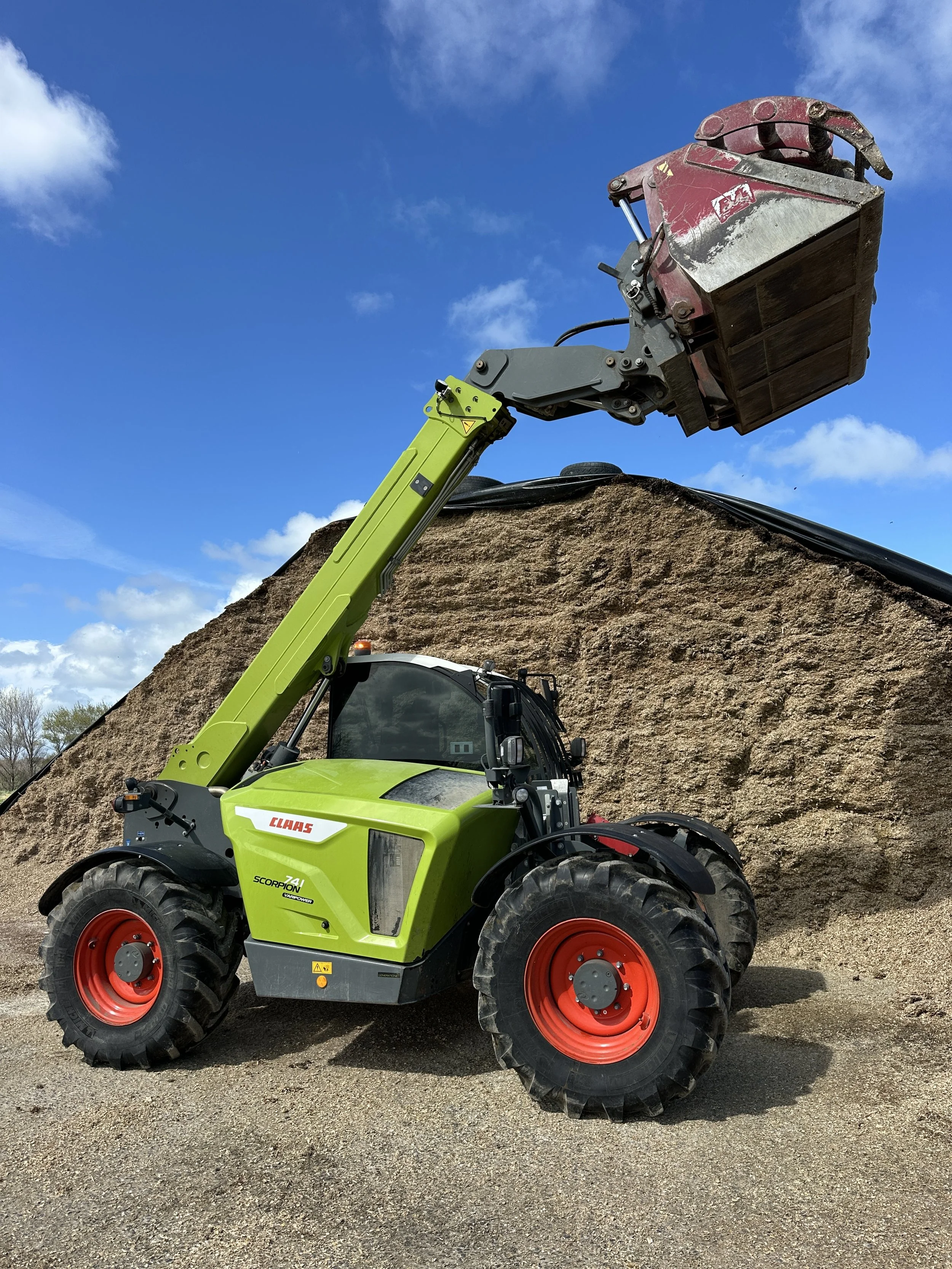
Scorpion telehandler
Replacing the telehandler was not high on the priority list for Te Hou Farms Operations Manager Jarred Clode, but an incident involving the farm's previous machine quickly changed that.
Clode has spent nine years at Te Hou Farms Limited Partnership in Bulls, central Manawatū, where machinery plays an essential role in feeding 1,650 cows across the 530 ha dairy platform.
“Feeding 1,650 cows across the 530 hectare dairy platform can't happen without machinery,” says Clode.
Working with the insurance company, the Te Hou Farms board and Central Claas Harvest Centre, a Claas Scorpion 741 telehandler was secured following the June 2025 Mystery Creek Fieldays, where the machine had been on display.
“The Scorpion literally came straight to our farm from Fieldays and replaced our interim loan machine within weeks. It was a really good response to an urgent situation,” says Clode.
The replacement also gave Clode and his team an opportunity to look at how telehandler technology had developed and, importantly, what features could reduce safety risks following the earlier incident.
“Everyone knows what basic functions you are going to get, but until you get in and learn the machine, you don't really get to know about the benefit it will provide you,” says Clode.
The Scorpion groups its main controls within reach of the operator's right hand, with functions arranged by application and colour-coded to make them easier to identify.
Clode says having most of the functions on the joystick took some adjustment for operators accustomed to the previous machine.
“When you change to anything new, it's different. The Scorpion controls, with everything being situated on the joystick, were unfamiliar to me and my team, but after having used it for a short while it's heaps easier, and we wouldn't go back,” says Clode.
Cab access was another consideration.
“Having the steering column tilt is an added safety feature because it means everything is out of the way when you get in and out of the cab. You don't have to manoeuvre around fixed objects.”
Visibility is aided by the cab's 360-degree design, while the boom controls, transmission and steering have been developed to make the machine easier to manoeuvre around confined areas.
The hydrostatic ground drive allows tighter turning and more precise movement, while Dynamic Power links engine speed with demand from the working hydraulics.
For Clode, however, one of the most noticeable differences is how the machine feels when working with the boom extended.
“It just feels a lot smoother and gives the impression that it is much more stable on the ground when the boom is extended. It makes me a lot happier knowing that I'm reducing the risk on the ground when they are loading big loads of maize in the buckets,” says Clode.
The Scorpion also incorporates an automatic parking brake, which has particular significance for the Te Hou Farms team following its experience with the previous machine.
“The added advantage of the cut-off features and automatic braking means I am no longer concerned that we could have a repeat of our last incident.
“I know that when things are really moving through summer, I have confidence that my team are going to be a whole lot safer in this piece of equipment,” says Clode.
Reducing the amount of time operators spend climbing in and out of the cab has also been considered. An exterior implement release button allows attachments to be changed without the operator having to return to the cab.
“It's extremely quick and efficient, eliminating some risk during rushed and busy periods,” says Clode.
The Scorpion 741 has also brought some practical improvements to daily maintenance. Three-point greasing reduces the time required for routine lubrication, while key maintenance points can be reached from ground level.
For a machine that forms an important part of the farm's daily operation, reducing servicing time and making routine checks easier can make a difference over the course of a season.
The machine's onboard technology is also linked with the Claas Harvest Centre service team, allowing service requirements and machine alerts to be monitored without relying solely on the farm team to identify when attention is needed.
“Everyone gets busy and occasionally people let the ball slip. Having the local team members call us when it needs a service, or if an error message displays, means that we don't have to take the time out to try to get hold of service technicians. They are on the phone before I need to place that call.
“It also means I know the machine is safe and sound when it's in use,” says Clode.
After putting the Scorpion 741 to work, Clode says farmers considering a replacement telehandler should look beyond whether their existing machine can simply perform the required tasks.
“I urge other farmers to think about whether your machinery is just operationally ticking boxes, or if it's the best machine for your operation and to keep your team safe,” he says.
Te Hou Farms Limited Partnership is two-thirds owned by Ngā Wairiki Ngāti Apa Developments Limited, with the remaining third held in partnership with Ātihau Whanganui Incorporation.
The Bulls-based agribusiness has developed over the past decade and operates across cropping, dairy and beef.
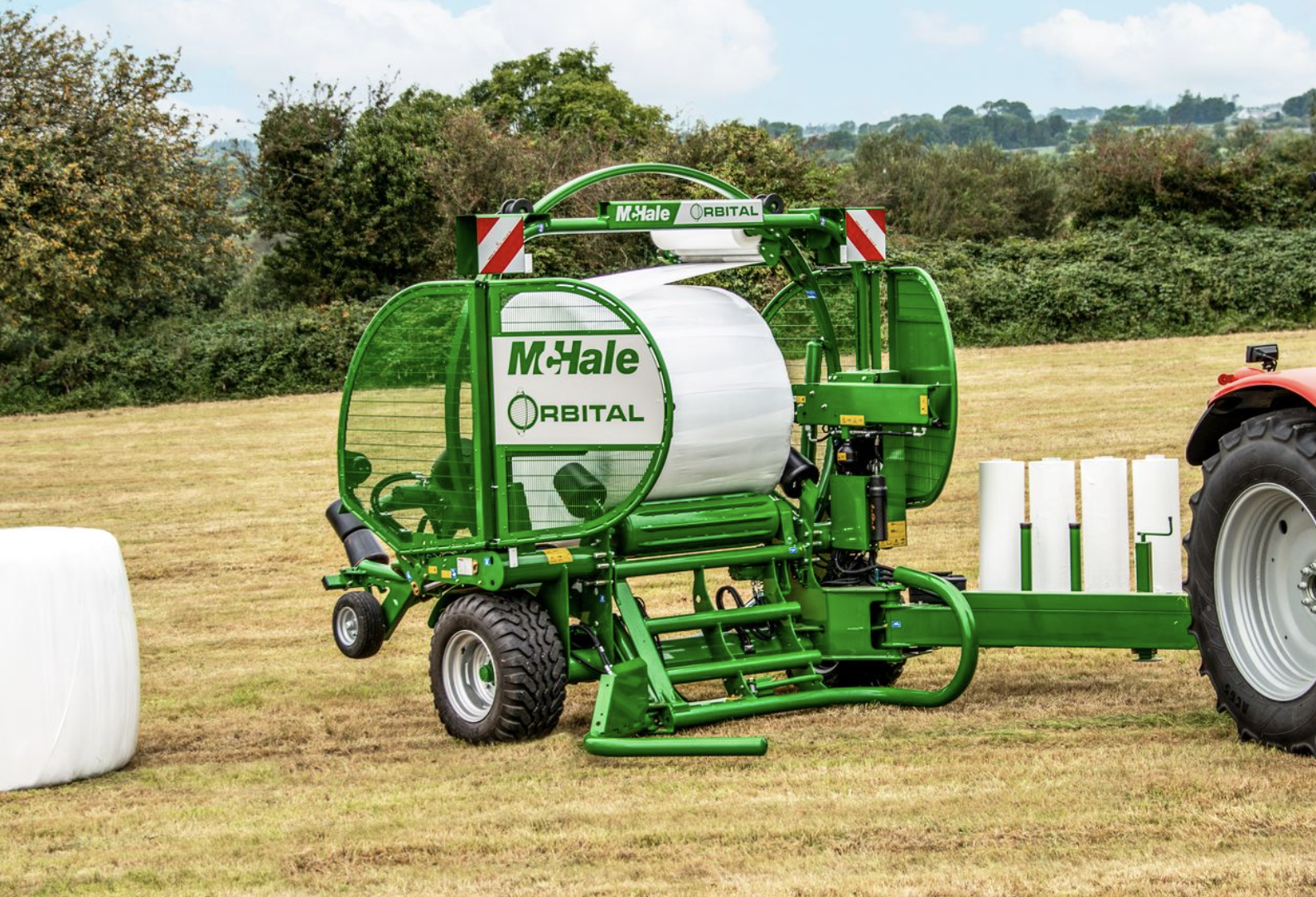
McHale
Over the past three decades, McHale has developed an extensive range of round bale wrappers, from relatively straightforward linkage machines for farmers wrapping at a storage site through to high-output machines capable of handling up to 100 bales an hour.
At the entry point is the McHale 991 L range of single-dispenser linkage wrappers. These machines are designed primarily for farmers and contractors bringing bales back to a central storage area for wrapping, combining relatively simple operation with the robust construction McHale has become known for.
Three models are available, starting with the manually operated 991 LB. Four individual levers control the wrapping functions, with the machine powered either through the tractor hydraulics or an independent power pack. The control valve can be positioned beside the dispenser post or inside the tractor cab, while a control unit monitors revolutions and the number of film layers applied. Operators can adjust film layers and retain bale totals for different jobs.
Moving up the range, the 991 LBER automates the wrapping process through an electronic control console. Once the required settings and number of film layers have been selected, the operator presses Auto Start and the machine completes the wrapping cycle before automatically tipping the finished bale.
The 991 TBER uses the same fully automatic approach but adds a specially adapted chassis designed for transport and mounting a hydraulic power pack. This allows the wrapper to be moved between wrapping and storage sites behind a small tractor or telehandler, providing greater flexibility where wrapping is carried out away from the main tractor fleet.
For operators wanting a trailed machine, the 991 B range steps capacity up to approximately 50 to 60 bales per hour while retaining the proven single-dispenser format.
The 991 BC is the simplest of the three, using cable controls and four individual levers to operate the lift arm, wrapping table, cut and hold system and bale tip. The 991 BJS introduces a servo joystick and low-pressure hydraulic controls, providing smoother transitions between functions and giving the operator direct control through a sequence of joystick movements.
At the top of the 991 B range, the fully automatic 991 BE introduces significantly more automation. Its Expert electronic control console allows the operator to choose between three working cycles, ranging from automatic wrapping with manual loading and tipping through to a completely automatic load, wrap and tip sequence.
For larger operations, output becomes increasingly important. A wrapper that cannot keep pace with the baler quickly becomes the limiting factor in the harvesting chain, which is where the McHale 991 High Speed comes into its own.
Capable of approximately 75 to 90 bales per hour, the 991 High Speed uses twin dispensers, a hydraulically operated cut and hold system and McHale’s Ground Supported Damper System to reduce wrapping time and maintain productivity.
Two 750 mm aluminium dispensers apply the film, with paired rollers geared together to maintain consistent stretch. The dispensers are stepped so the two sheets overlap as they are applied, providing consistent film coverage around the bale while making efficient use of plastic.
For operations requiring still greater capacity, the McHale Orbital sits at the top of the round bale wrapper range.
Rather than simply increasing the speed of a conventional wrapping table, the Orbital draws on the vertical wrapping-ring technology developed for McHale’s Fusion range of integrated baler-wrappers. It combines that system with McHale’s high-speed bale transfer system and tip roller, allowing the machine to achieve claimed outputs of approximately 80 to 100 bales per hour.
That capacity makes the Orbital particularly relevant to large-scale contractors where one wrapper may need to keep up with several balers operating in the same harvesting programme. Reducing wrapping time is important, but equally significant is minimising the risk of the wrapper becoming a bottleneck as bale numbers build during a good weather window.
Across the range, the differences are largely about matching automation and capacity to the scale of the operation. A farmer wrapping bales at a storage site has very different requirements from a contractor trying to process thousands of bales through a season, and additional complexity only makes sense where there is enough work to justify it.
From the relatively straightforward 991 L linkage machines through the trailed 991 B models and onto the 991 High Speed and Orbital, McHale offers progressively greater automation and output while retaining the same basic objective: getting bales wrapped consistently and efficiently once they leave the baler.
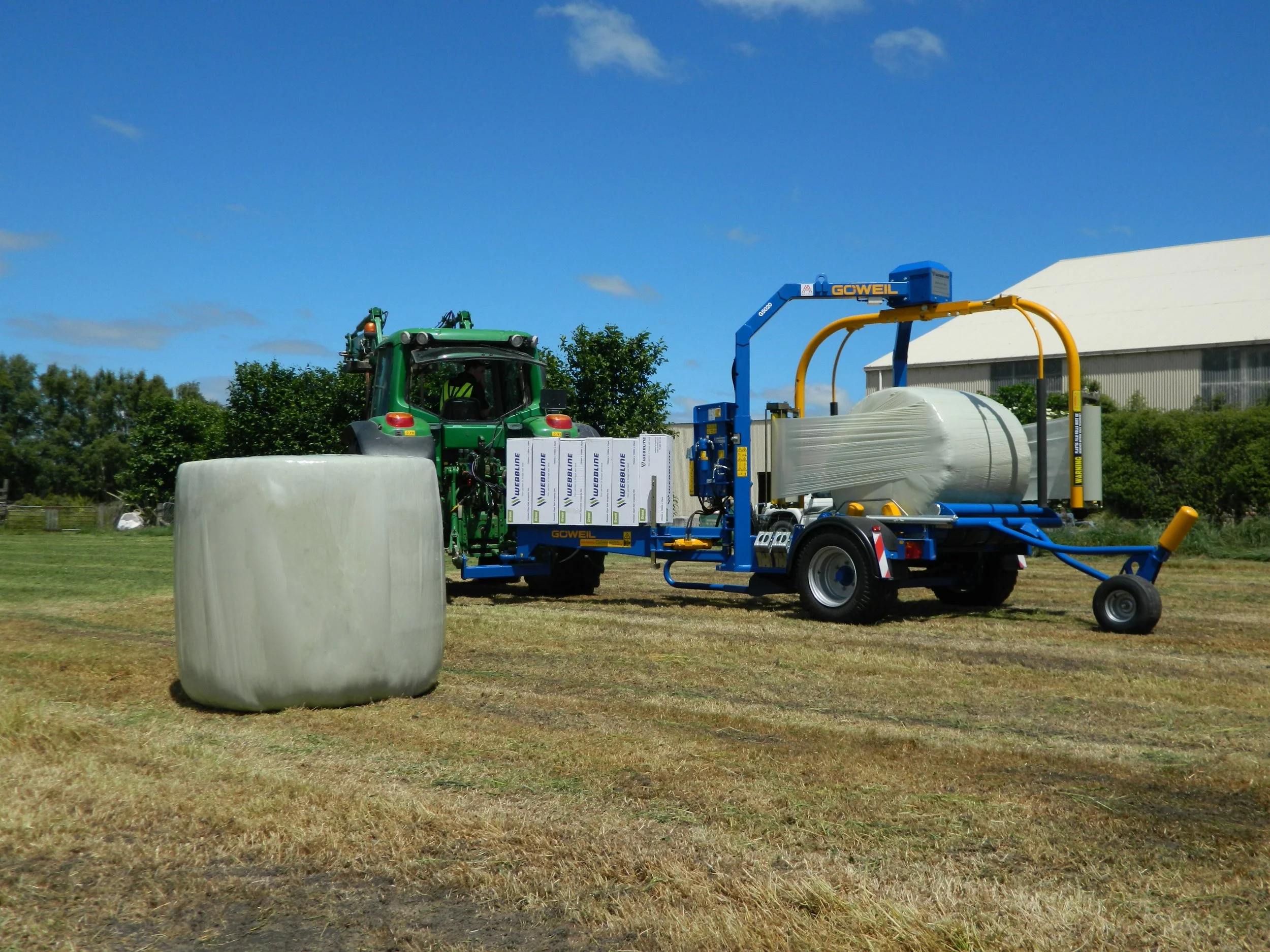
Webbline Göweil wrappers
Wrapping a silage bale is ultimately about getting air out and keeping it out, but for farmers and contractors, the machinery doing the job also has to keep pace with the baler, handle bales cleanly and apply film consistently without creating another bottleneck in the harvesting operation.
Austrian manufacturer Göweil has specialised in baling and wrapping equipment since 1988, with its current wrapper range extending from straightforward single-arm machines through to high-output twin-arm round bale wrappers and machines capable of handling both large square and round bales. In New Zealand, the range is distributed by Webbline Agriculture, which has had a long-standing relationship with the Austrian manufacturer.
At the centre of the round-bale offering is the G50 Series, comprising the G5010, G5012 and G5020. All three share a trailed layout designed to pick the bale up from the front and deposit it behind the machine, keeping the wrapping process moving in the same direction as the baling operation.
The G5010 provides the entry point to the range with a single wrapping arm and Standard program control, while the G5012 steps up to twin wrapping arms. Both can handle round bales from 0.9 m to 1.5 m in diameter and weighing up to 1,800 kg, depending on machine configuration.
For higher-output operations, the G5020 retains the twin-arm arrangement but adds fully automatic Isobus control. Once the bale has been picked up, the wrapping sequence, film management and bale deposit can be automated, reducing the number of functions requiring operator input during repetitive work.
The twin wrapping arms are particularly important where output needs to match a high-capacity baler. Applying film from two rolls simultaneously reduces the time required to complete the wrapping cycle, while film monitoring and a single-film mode allow work to continue if one roll runs out or breaks.
The G5020 carries six spare rolls of film and uses 750 mm pre-stretchers. Göweil's Precision Cut system automatically cuts and holds the film ready for the next bale, removing another manual step from the process.
Despite its capacity, the G50 layout has been kept relatively compact. The G5020 is 3.94 m long and 2.75 m wide in standard specification, with a low and wide stance intended to provide stability when working across slopes. The wrapper itself weighs around 1,780 kg.
A hydraulically pivoting drawbar allows the machine to be moved into its working position to the right of the tractor. The bale is collected from the front using the hydraulically rotating pick-up before being transferred onto four conveyor belts on the wrapping table. Once wrapping is complete, the table swings rearwards and lowers towards the ground to minimise the distance the finished bale has to drop.
For contractors following a baler across multiple properties, that sequence is intended to combine capacity with manoeuvrability rather than simply making the wrapper larger.
Göweil takes a different approach with its G40 Q Series, where the requirement is to handle square bales as well as rounds.
The G4010 Q Profi is primarily a stationary machine, powered by a 17.5 kW water-cooled Kubota diesel engine with its own hydraulic system. Twin wrapping arms and fully automatic Profi program control allow the wrapping sequence to be managed by radio remote, making the machine suited to stationary wrapping operations, where bales are being brought to the wrapper by a loader.
A wide continuous conveyor belt supports and rotates the bale during wrapping, with four guide rollers helping maintain its position. The arrangement allows the machine to handle square bales ranging from 0.8 m x 0.8 m through to 1.2 m x 1.4 m, with bale lengths between 1 m and 2 m. Round bales between 0.9 m and 1.6 m diameter can also be wrapped.
One of the more interesting capabilities of the G40 Q design is its ability to wrap two suitable bales together. Rather than individually wrapping smaller bales, two can be combined into a larger package, increasing throughput and reducing the amount of film required. Göweil says this can reduce film consumption by up to 20%.
The G4020 Q Profi takes much of the same wrapping technology into a trailed, self-loading format.
Instead of relying on a loader to place each bale onto a stationary wrapper, the G4020 Q picks the bale up from the right-hand side as the machine travels through the paddock. Once loaded onto the wrapping table, the twin-arm system completes the wrapping cycle before depositing the finished bale to the left.
It retains the broad bale-size capability of the stationary machine, handling square bales up to 2 m long as well as round bales up to 1.6 m diameter. Maximum specified bale weights are 1,500 kg for square bales and 1,800 kg for rounds.
That ability to work with different bale formats is particularly relevant to contractors whose wrapping workload is not limited to conventional round silage.
Across both the G40 Q and G50 ranges, the engineering is focused on controlling the bale throughout the wrapping process. Film overlap, bale rotation, clean cutting and secure film retention all have to work consistently if the finished package is going to remain airtight after it leaves the machine.
There is also a practical difference between simply being able to wrap a bale and doing it quickly enough to fit within a modern harvesting system. Higher baler outputs put more pressure on the wrapper and, for contractors in particular, a machine waiting for the wrapping cycle to finish can quickly become the limiting factor in the operation.
That helps explain Göweil's progression from the single-arm G5010 through twin-arm machines and ultimately into the automated G5020 and larger G40 Q square-bale wrappers.
The underlying job has not changed. The bale still needs to be wrapped tightly and consistently to protect the forage inside. What has changed is the speed and range of bales modern operators expect one machine to handle.
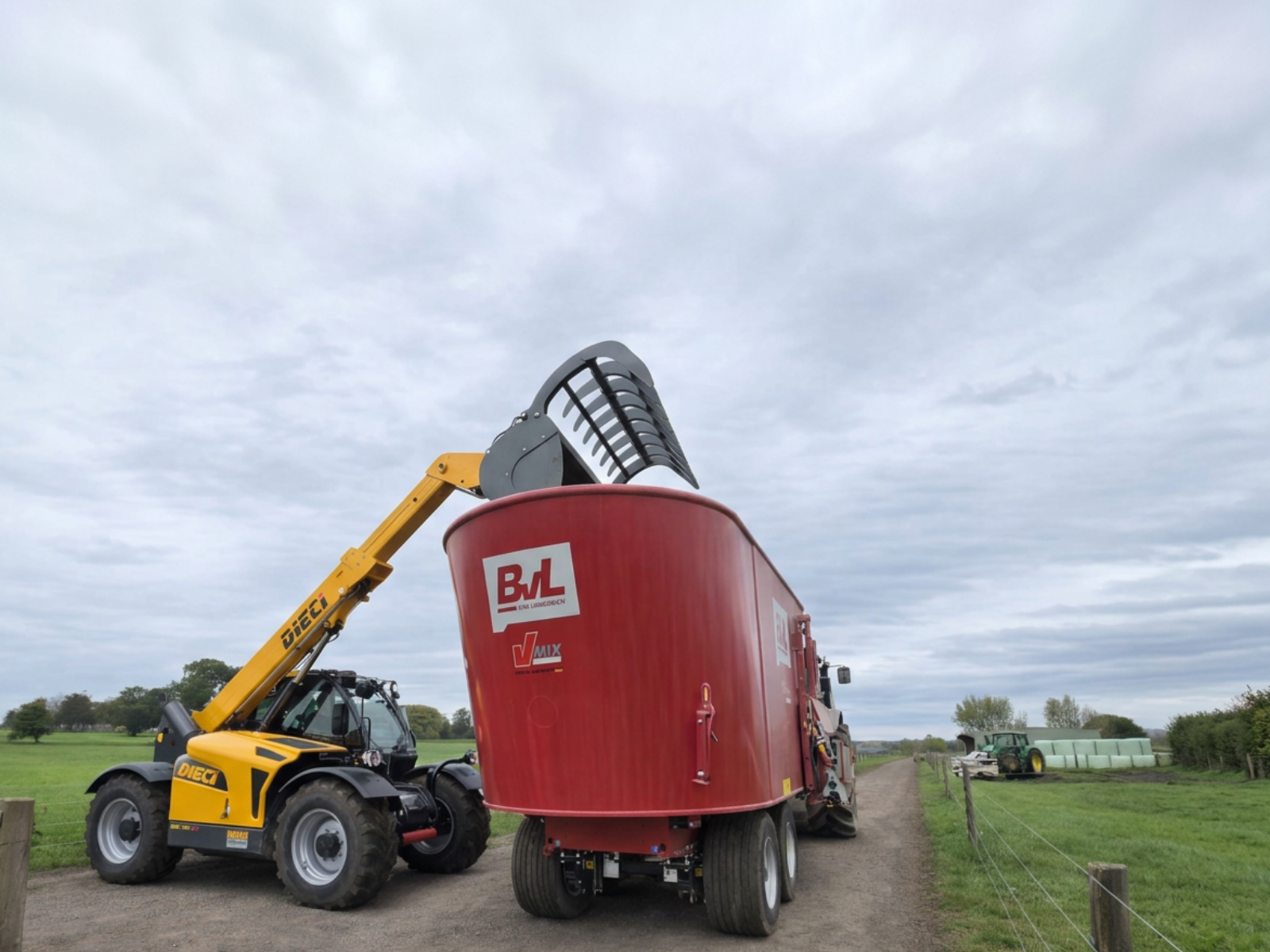
Webbline Dieci Agri Star telehandlers
The new Dieci Agri Star Mondo GD telehandlers combine lifting capacity, manoeuvrability and operator comfort in a package designed for the varied handling demands of modern farming operations.
The range consists of three models covering applications from bale and silage handling through to pallet work and other material handling jobs. The Agri Star 37.7 has a maximum lift capacity of 3,700 kg and maximum lift height of 6.8 m, while the Agri Star 45.8 increases capacity to 4,500 kg and reach to 7.7 m and the Agri Star 38.10 provides a maximum capacity of 3,800 kg and extends the working height to 9.6 m.
All three models are powered by a 125 hp Tier 3 FPT four-cylinder diesel engine, which does not require AdBlue, and have a maximum travel speed of 38 km/h.
Hydraulic performance comes from a 145 L/pm pump, providing oil flow for steering and boom functions, while a separate hydraulic pump operates the cooling fan. This allows the main hydraulic system to concentrate on machine functions during loading and handling work.
The Agri Star uses a two-speed hydrostatic transmission with electronic control, designed to provide precise travel control across the machine’s working range. An inching pedal allows the operator to control forward movement independently when positioning loads, particularly useful when approaching stacks, trailers or feed storage areas where small movements can make a significant difference.
The hydraulic system allows several functions to be operated simultaneously, helping maintain productivity during repetitive loading cycles. A hydraulic quick hitch and hydraulic services at the boom head make changing and operating attachments easier, while a reversible hydraulic fan helps keep the cooling package clear when working in dusty conditions.
Operator comfort has also received considerable attention with the latest Agri Star Mondo GD. The redesigned cab provides additional legroom and improved soundproofing, while a heated seat is available with three suspension options to suit different operators and working conditions.
Visibility is particularly important when a telehandler is working around buildings, feed pads, stacks and other machinery. Large areas of glass provide a clear view around the machine, supplemented by LED lighting and integrated cameras covering the right-hand side and rear. Camera images are displayed through a 7-inch screen, giving the operator additional visibility into areas that can otherwise be difficult to see from the driving position. This is particularly useful when manoeuvring in confined yards and sheds or working around other people and machinery.
Ventilation and climate control have also been designed with long working days in mind. Roof and rear windows provide additional ventilation, while a dual air-filter system helps reduce dust and odours entering the cab.
Dieci’s Zero Shock System cab suspension is designed to isolate the operator from movement generated when travelling across uneven surfaces. The system absorbs oscillations in multiple directions, reducing the amount of vibration and movement transferred into the cab when operating over rough farm tracks, paddocks and yards.
Machine control is centred around a single-lever joystick, which manages travel direction and boom functions. Bringing these commonly used functions together allows the operator to concentrate on positioning the machine and load rather than moving between separate controls.
An electronic control unit manages the machine’s operating functions and uses an onboard diagnostic system to monitor working parameters. This provides the operator with information on machine performance while supporting accurate control of the telehandler during loading operations.
Safety systems include electronic boom suspension management, which adjusts automatically according to travel speed. This helps control boom movement when carrying loads across uneven ground and contributes to machine stability and operator comfort.
An overload protection system monitors the machine’s operating limits and prevents movements that would further increase an unsafe loading condition once those limits are reached. For machines routinely lifting heavy loads at varying boom heights and extensions, this provides an important additional level of protection.
The Agri Star models are fitted with 460/70R24 Traxion tyres, while LED work and road lighting supports operation during early mornings, evenings and poor-light conditions.
A robust single-stage boom design completes a specification intended to cope with the repetitive loading and handling work encountered in agricultural operations.
Telehandlers have become increasingly versatile machines on larger farms, where the same machine may move from loading silage and handling bales to stacking pallets, loading trucks or shifting bulk materials during the course of a day. That places demand not only on lift capacity, but also hydraulic performance, manoeuvrability and operator comfort.
With three different combinations of lift capacity and reach, the Dieci Agri Star Mondo GD range allows farmers to select a machine according to the type of work required rather than simply choosing the largest model available. For operations working predominantly around yards and sheds, capacity and manoeuvrability may take priority, while additional reach becomes more important for higher stacking and loading applications.
Combining those lifting options with hydrostatic drive, a 145 L/pm hydraulic system, improved visibility and the latest cab developments gives the Agri Star range the versatility to move between the many handling jobs required on farm.
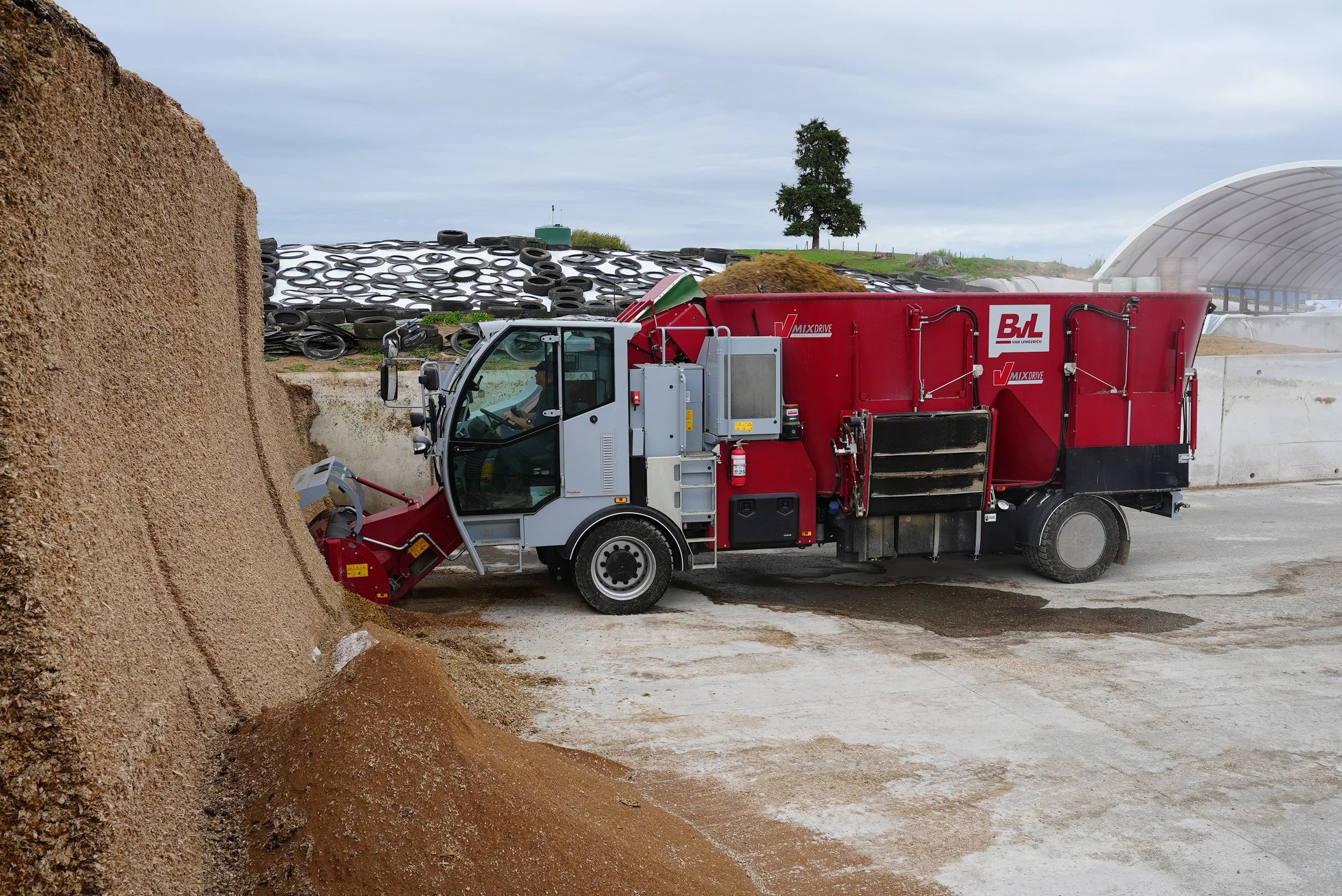
Webbline BvL mixer wagons
Getting more from every tonne of feed starts with mixing it properly. For dairy farmers, that means producing a consistent ration, reducing sorting and making sure everything from the main ingredients through to smaller mineral inclusions is evenly distributed before it reaches the feed face.
BvL mixer wagons, distributed in New Zealand by Webbline Agriculture, are designed around that objective, combining heavy-duty construction with an asymmetrical auger and counter-knife system intended to deliver a consistent mix while keeping power demand in check.
Durability is a major part of the BvL design. The wagons use a truck-style chassis, independent weigh cells, a 20 mm floor plate and 8 mm sidewalls. At the joints, the steel is lapped and fillet-welded, effectively doubling material thickness at high-wear points and strengthening areas that are often exposed to the greatest abrasion during mixing.
The auger flight joins are also overlapped rather than simply butt-welded, addressing another area where wear can become an issue over time.
Mixing performance comes from the relationship between the asymmetrical auger, counter knives and bowl geometry. BvL says the auger-to-bowl height ratio is designed to promote faster mixing and reduce unnecessary power demand, while the Exact Dosing System is intended to make full use of the bowl capacity.
The aim is to keep the entire ration moving, including smaller ingredients and trace elements that can otherwise settle near the bottom of the tub. Once mixed, feed is discharged through a wide opening to maintain a loose and consistent flow.
For dairy farmers, the practical benefit is repeatability. A more uniform ration reduces variation between mouthfuls and helps ensure cows receive the intended balance of ingredients throughout the feeding period. That can support feed intake, digestion and more consistent conversion of feed into milk solids or liveweight gain.
Smarter feeding with Dairy Feeder
BvL has also added a digital layer to feed management through its Dairy Feeder system, which turns the mixer wagon into a source of feeding, inventory and performance data.
Dairy Feeder is fitted as standard to BvL Pro Series and self-propelled mixer wagons and can also be retrofitted to existing BvL machines.
The system allows farmers to plan and monitor feed mixes remotely wherever an internet connection is available. Feed inventories can be tracked in real time, while each mix and load fed out is recorded to provide a clearer picture of what has been fed, when it was delivered and how closely actual feeding matches the planned ration.
That becomes particularly useful on farms with multiple operators, where feeding consistency can otherwise vary between shifts. It also gives farmers the ability to share information with nutritionists, consultants or veterinarians without relying on handwritten records or manually collated data.
Dairy Feeder also produces reports around feed use, feed cost and conversion efficiency, giving farmers another way of identifying where waste or inconsistency may be occurring.
Pro Series adds wear protection
For operators wanting greater protection in high-use applications, BvL’s Pro Series retains the same underlying mixer design but adds several durability and management features.
A stainless steel hardliner is fitted to the leading edge of the augers. At 100 mm wide and 5 mm thick, the welded wear strip is designed to protect an area exposed to constant abrasion and extend auger service life.
A mixing magnet is also fitted to the second discharge arm to capture stray metal before it reaches the ration, adding another layer of protection for livestock and feeding equipment.
The BvL V-Connect Dairy Feeder is standard on Pro Series models and includes a 12-month subscription, while a work platform and ladder provide easier access when adding bagged minerals or checking the mix.
Self-propelled Maximus
At the top end of the range, the Maximus self-propelled mixer wagon combines the BvL mixing system with a self-loading design.
Rather than relying on a separate loader to fill the wagon, the Maximus chops and loads material before it reaches the mixing bowl. That can reduce the time needed to prepare the ration while also limiting disturbance to the silage face.
The Maximus is available from 11 m³ to 23 m³ in both single and twin-auger configurations, giving operators the ability to match machine capacity to herd size and feeding requirements.
Its cab has been designed around long feeding runs, with good visibility, straightforward controls and operator comfort receiving more attention than on a conventional towed mixer.
The Maximus also incorporates BvL’s V-Connect Dairy Feeder system, allowing feeding plans, monitoring and reporting to be managed through the same digital platform used across the wider mixer range.
With several Maximus machines already operating on New Zealand farms, Webbline says the self-propelled format is finding a place where operators are looking to reduce the number of machines involved in feeding and simplify daily ration preparation.
Across the range, BvL’s approach is based less on complexity and more on consistency, durability and control. Whether the priority is reducing variation in the ration, improving feed records or cutting the time and machinery needed to feed a herd, the mixer wagon remains a central part of the system.
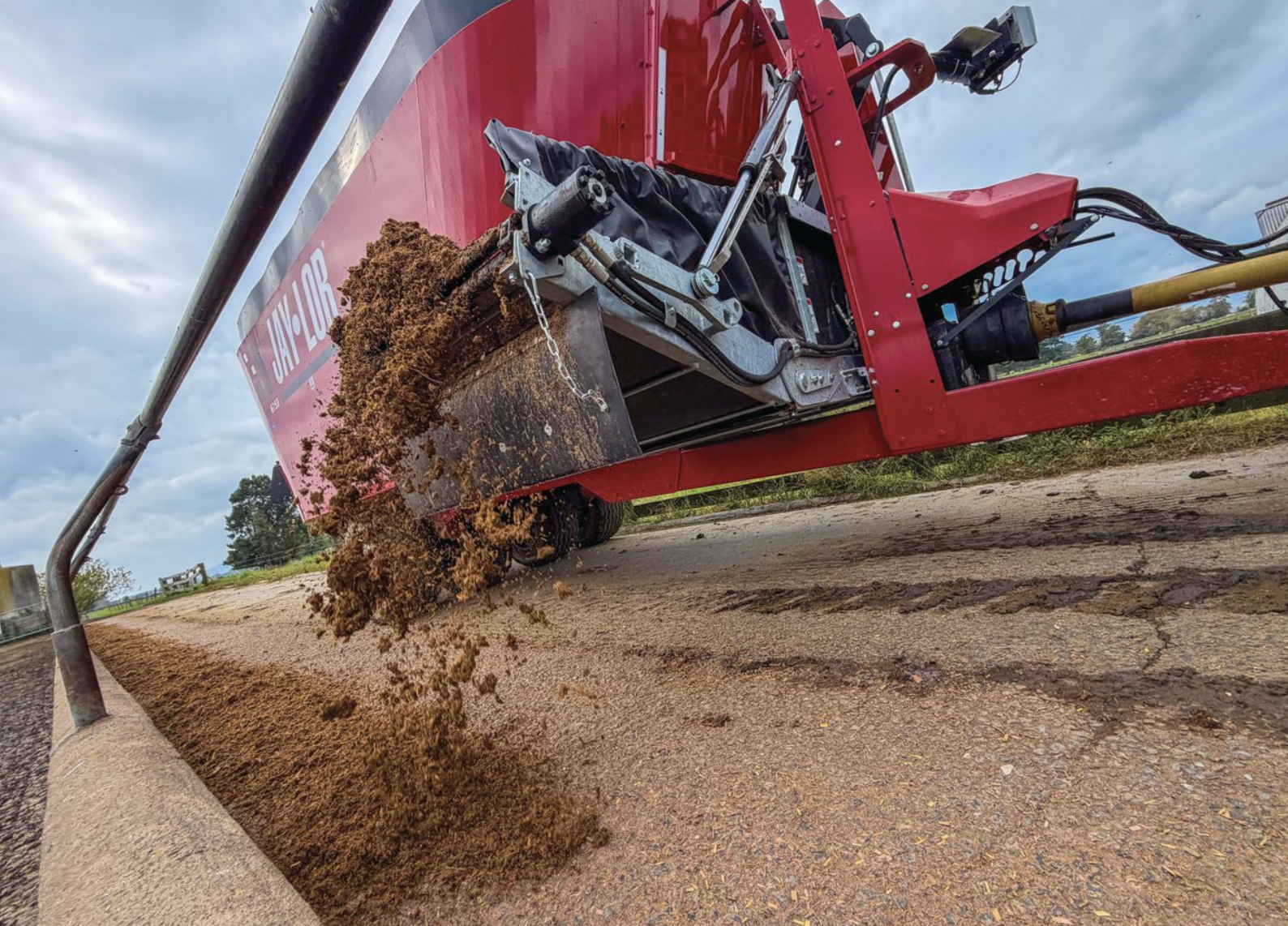
Power Farming Jaylor 6000 Series
Getting a consistent ration in front of stock is the basic purpose of any mixer wagon but achieving that efficiently when the ingredients include long-stem forage and whole bales can place considerable demands on both the machine and the tractor.
Jaylor has tackled that challenge with its 6000 Series vertical TMR mixer range, combining its distinctive Square-Cut auger design with a choice of single- and twin-auger machines suited to a wide range of feeding operations.
Distributed in New Zealand by Power Farming, the Canadian-built Jaylor range is designed to produce a consistent total mixed ration (TMR) while reducing the time and horsepower required to process forage. Central to that approach is Jaylor's patented Square-Cut auger, which differs from the conventional round-auger profile found in many vertical mixers.
The Square-Cut design allows feed to drop between the flighting as material moves through the machine, creating continuous movement throughout the ration while providing a slicing rather than aggressive chopping action. Jaylor says the system can mix faster while requiring 20% less horsepower than conventional round-auger mixers. This becomes particularly relevant when processing baled forage and long-stem material, where processing time can significantly affect the daily feeding workload.
A sloped top on the auger is designed to prevent bales from bridging across the mixer, encouraging material to fall back into the processing area. Standard tungsten carbide-coated knives use a low-angle serrated profile to slice material, while optional Alexander knives can be fitted to the upper auger flighting where greater bale-processing capacity is required. Optional vertical knives mounted on the slide plate provide another means of improving forage processing, particularly when working with high-forage rations.
The slide plate gathers feed towards the auger while reducing pressure on the mixer sidewalls, helping to maintain steady feed movement and consistent particle distribution throughout the ration. For New Zealand farmers feeding baleage, silage and other forage-based diets, this combination provides the flexibility to process a variety of feed materials within the same machine.
The 6000 Series starts with four single-auger models: the 6350, 6400, 6425 and 6575. Standard capacities range from 9.9 m³ for the 6350 through to 13.5 m³ for the 6575, with extensions increasing maximum capacity to 16.3 m³ on the largest single-auger model.
Depending on the model and configuration, the larger single-auger machines can handle multiple round bales, with the 6425 and 6575 capable of accommodating a 5 x 6 round bale when appropriately configured. Minimum power requirements start at 60 hp for the 6350 and increase to 80 hp for the 6575, giving farmers the option of matching mixer size to both feeding requirements and available tractor power.
For operations requiring greater capacity, the 6600, 6650, 6750 and 6850 twin-auger models use two Square-Cut augers to increase both throughput and bale capacity. Jaylor says long-strand grass and coarse, large bales can be processed and ready for unloading in as little as 15 minutes, while rations using pre-processed ingredients can be mixed in three to five minutes.
The twin-auger range starts at 17.4 m³ and extends to 27.2 m³ with extensions, with the largest machines able to accommodate multiple large bales. Minimum tractor requirements range from 105 hp to 125 hp across the four models, positioning them for larger livestock operations, where feeding volume and daily throughput become increasingly important.
Beyond mixing, Jaylor has invested considerable development into the discharge side of the 6000 Series, introducing a new patented conveyor system constructed from galvanised steel, HDPE and heavy-duty components. Short-wing, long-wing, flat and slide conveyor configurations are available, allowing the discharge arrangement to be matched to different feeding systems.
A top-mounted hydraulic lift increases clearance beneath the conveyor while allowing the operator to set the desired feed-out height. Flexible spring shields help contain material during unloading, while a feed guide with built-in wipers directs the ration and clears material from the conveyor slats so that more feed reaches the bunk.
The conveyor is backed by a five-year structural and corrosion warranty covering the frame, workmanship and corrosion of the galvanised steel components, subject to Jaylor's warranty conditions.
Several changes are aimed specifically at making the mixer easier to operate during the daily feeding routine. The viewing window is 50% larger than the previous design and is positioned to give the operator a clearer view of the ration without having to climb up and look into the drum.
Meanwhile, the new Seal-Lock door uses heavy-duty latching cams to pull the door inward when closed.
This creates a flush internal drum surface, allowing feed to move freely around the mixer without encountering a gap at the discharge opening. From the tractor cab, there is also a clear line of sight to the door and conveyor, while the redesigned front hood incorporates hose storage and a built-in toolbox.
Adjustable restrictor blades provide further control over feed movement during processing and mixing, while a galvanised viewing ladder is fitted when direct visual access to the mixer is required.
Jaylor has extended the same 6000 Series platform into machines designed for more demanding ground conditions. The 6425AT single-auger and 6850AT twin-auger All-Terrain models combine a raised undercarriage with large flotation tyres, providing additional ground clearance while helping to reduce soil compaction.
The 6850AT provides approximately 12 inches of additional ground clearance over the standard 6850, making the All-Terrain configuration particularly suited to operations where mud, soft ground and uneven terrain can limit access for a conventional mixer wagon. Both models retain the same mixing principles as the standard machines while offering capacities of up to 15.3 m³ for the 6425AT and 27.2 m³ for the 6850AT when fitted with extensions.
For higher-volume operations, the 6750HD, 6850HD, 61000HD and 61250HD heavy-duty twin-auger models further strengthen the platform with reinforced frames, 19 mm floors and heavy-duty walking-beam axle assemblies. A stainless-steel lower wall is fitted as standard, protecting the high-wear area around the bottom of the mixer drum, while the walking-beam arrangement provides articulation across uneven ground while supporting heavier loads.
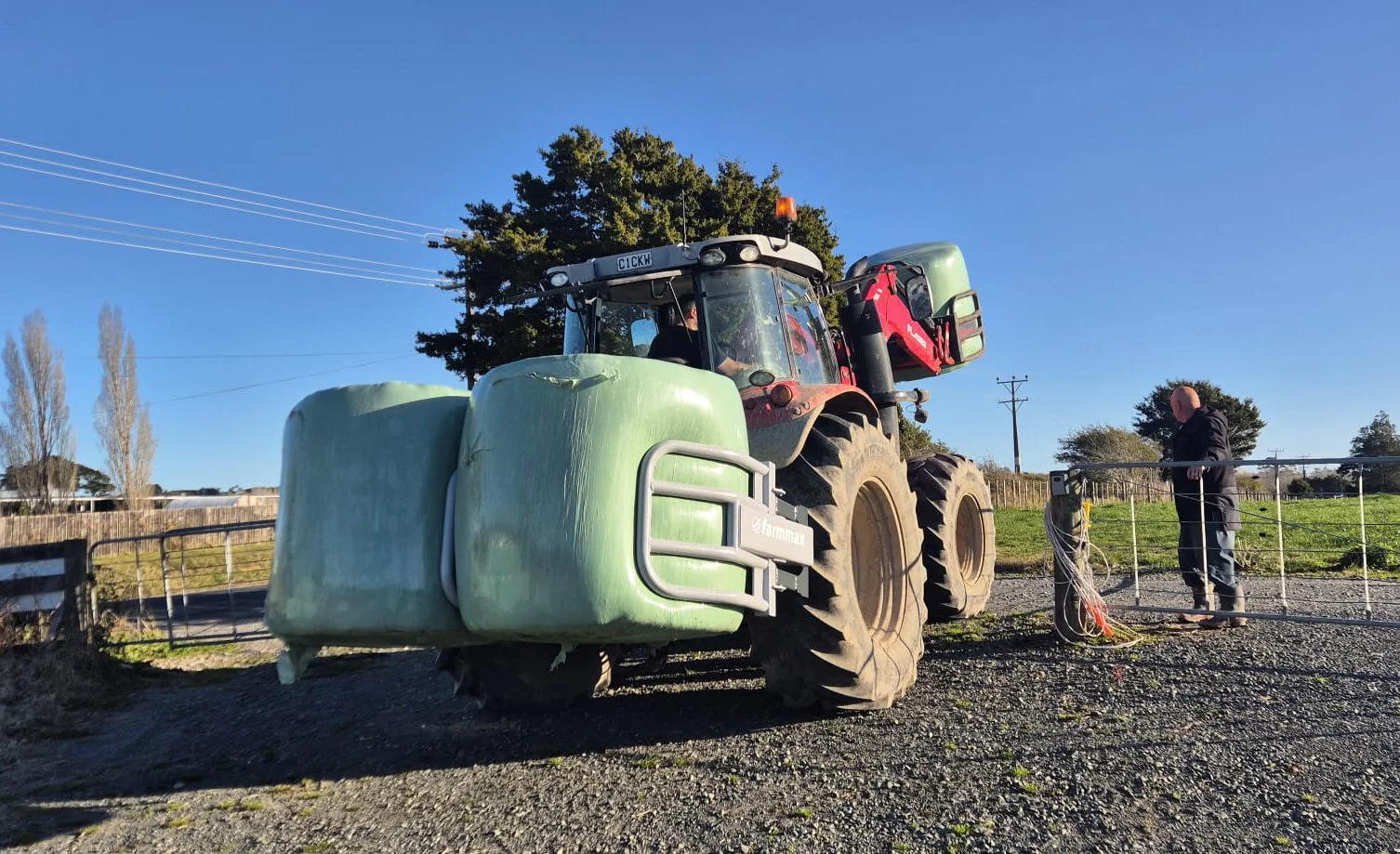
FarmShop
Designed in New Zealand, built heavy in Poland and priced at half its predecessor, FarmShop’s new Double Bale Grab is all about moving more bales with fewer trips.
It was this simple maths that prompted FarmShop to develop a smarter and more cost-effective way for farmers and contractors to move round bales.
Capable of carrying two round bales at once, the new heavy-duty grab can be mounted on either a tractor’s front Euro hitch or rear three-point linkage. For operators already carrying multiple bales, that creates the opportunity to move significantly more with every trip across the paddock.
FarmShop customer and contractor Mike Webber is a good example. Webber runs two tractors with a single grab fitted to both the front and rear. By adding a FarmMax Double Bale Grab to the rear linkage, he has increased capacity from four bales per trip to six, delivering a 50% lift in productivity without putting another driver in the seat.
“Time is money during the season. If you can move more bales with every trip, you’re reducing the number of trips across the paddock and making better use of the tractor and operator,” says FarmShop Sales Manager Harrison Wearmouth.
Across a large silage job, that can quickly translate into fewer tractor hours, lower diesel use and valuable time saved during one of the busiest periods of the year.
Versatility was a key part of the brief when FarmShop developed the FarmMax Double Bale Grab. With both a Euro hitch and rear three-point linkage available, the same grab can be used at either end of the tractor, allowing operators to carry two bales on the front or rear depending on the task.
The dual mounting options also make life easier where paddock access is restricted. Operators can pick up bales with the front loader before transferring the grab to the rear linkage when required, making it easier to negotiate tight gateways, yards and other confined areas.
The new grab also reflects FarmShop’s drive to improve value without compromising durability. Working alongside a long-standing manufacturing partner in Poland has allowed the company to substantially reduce the retail price compared with its previous equivalent model, with the FarmMax Double Bale Grab selling for around half the price while retaining heavy-duty construction.
“We’ve been continually impressed with the quality of the steel and welding coming out of Poland, and we get very good feedback on longevity across the entire FarmMax range. It means we’ve been able to bring something to the local market that’s heavily built, but also represents really good value,” says Wearmouth.
Constructed from high-strength steel and weighing approximately 330 kg, the grab has been designed primarily for handling and stacking round silage bales. It is a relatively simple piece of machinery, but that simplicity is part of its appeal. There is no complicated technology, just a practical tool designed to help farmers and contractors complete one of the most repetitive jobs on the farm more efficiently.
FarmShop says interest in the new grab has been strong, with much of the appeal coming back to a straightforward question: how much more can be achieved with every pass?
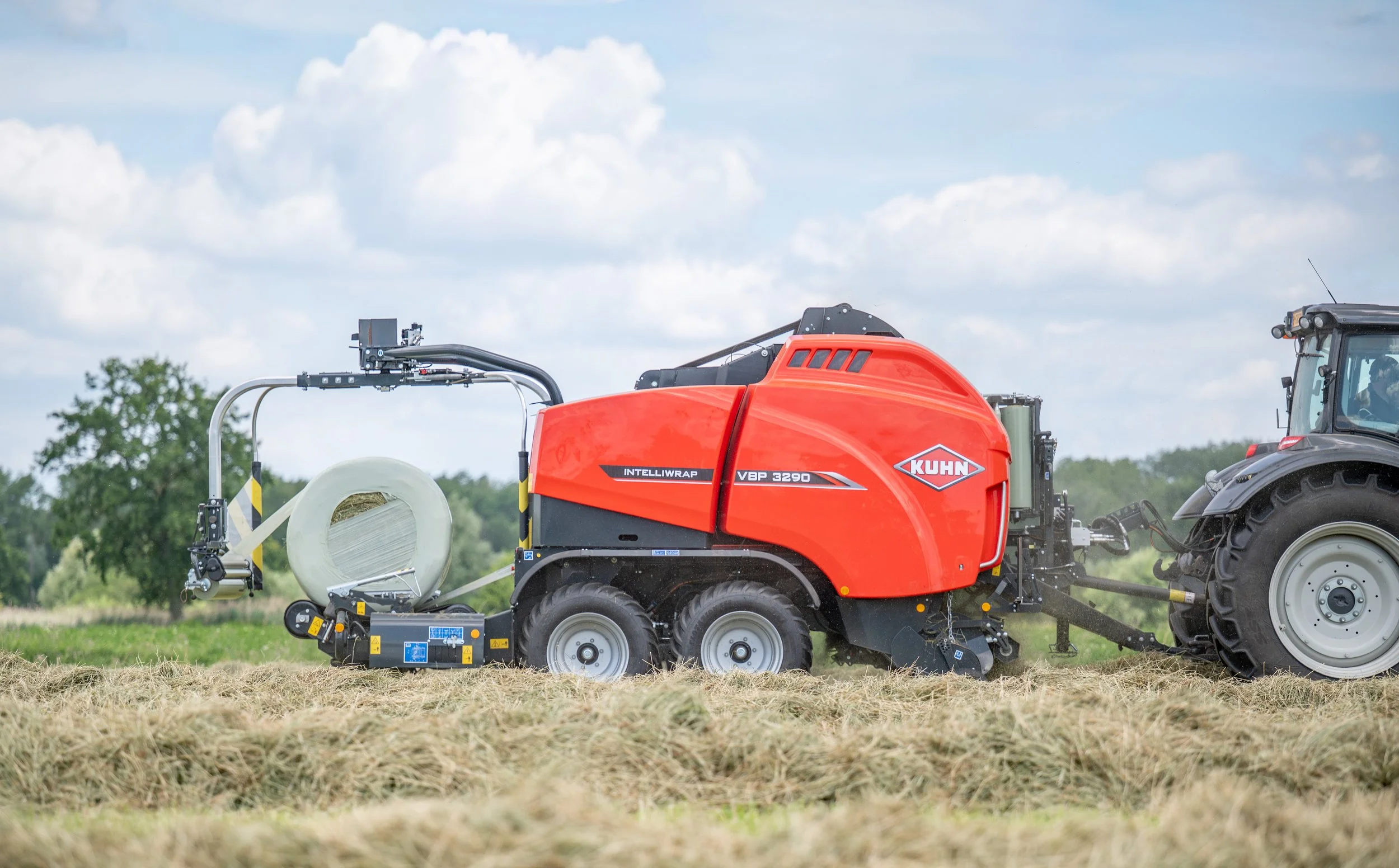
Kuhn VBP 3200 bale-wrapper combination
Producing silage, hay and straw with the same baler places quite different demands on bale formation, density, cutting and binding, particularly for contractors who may move between crops and customers during the same day.
That flexibility is central to the Kuhn VBP 3200 Series, a variable-chamber baler-wrapper combination designed to produce different bale sizes while allowing operators to adjust the machine to suit the crop being harvested.
Available in New Zealand through Norwood and independent dealers Agricentre Ltd and Roger Gill Huntly, the VBP 3200 combines Kuhn’s variable bale chamber with its Integral Rotor intake system, Opticut crop cutting, Progressive Density bale formation and an integrated wrapper. The result is a machine intended to cover everything from silage through to hay and straw without requiring the operator to compromise on bale formation when changing between crops.
At the front of the machine, crop enters through a wide cam-track pick-up designed to follow ground contours using a pendulum mounting. From there, the Integral Rotor provides a short transfer path between the pick-up and rotor, maintaining crop flow into the bale chamber.
Rotor tines are manufactured from Hardox wear plate, while Kuhn’s patented elliptical rotor tine profile is designed to draw material towards the knives progressively rather than forcing the crop against them. The intention is to maintain intake capacity while reducing the power required for cutting.
Depending on specification, the VBP 3200 can be equipped with Opticut 14 or Opticut 23 cutting systems. The 14-knife arrangement provides a theoretical chop length of 70 mm, while the 23-knife version reduces that to 45 mm. Individual knives are spring protected against foreign objects and group selection allows the operator to vary the number of knives working according to the crop and required chop length.
Once material reaches the chamber, five belts and three rollers form the bale, with Kuhn’s Progressive Density system increasing pressure as bale diameter grows.
Rather than applying maximum pressure from the beginning, resistance on the belt tensioning arm progressively increases through two hydraulic cylinders and a spring tensioner. Baling pressure and core size are set on the monitor. This produces a moderate core surrounded by a denser outer section, helping silage bales retain their shape while giving straw bales a firmer outer layer for handling and storage.
The VBP 3200 Series also receives Progressive Density Plus as standard. This pressure-boosting system acts on the belt tensioning arm and Kuhn says it can increase density in dry crops by 10% over the previous model, the VBP 3165.
Variable bale diameter is an important part of the machine’s versatility. It allows an operator to produce smaller bales where handling requirements dictate, then change the bale size when moving into another crop or working for a different customer. For contractors, that ability to move between silage, hay and straw without changing machines can be particularly useful when workload and crop conditions vary throughout the season.
Keeping material moving is equally important when output matters. If the intake becomes overloaded, the VBP uses Kuhn’s Dropfloor system, allowing the floor and knives beneath the rotor to be hydraulically lowered to provide additional clearance.
The automatic deblocking sequence goes further. When the overload protection clutch activates, the Dropfloor lowers and knives retract. Once the PTO is re-engaged, the rotor restarts and draws the obstruction into the chamber before the floor and knives return to their working positions. A separate rotor disengagement clutch provides another option in more severe blockages, allowing the existing bale to be completed and ejected before the intake is cleared.
Binding can be carried out using net, while Kuhn’s optional Twin-reel film binding system provides another option for silage. Rather than requiring a separate wide mantle film, Twin-reel uses two conventional 750 mm stretch-film rolls, with the same type of film able to be used for both binding and wrapping.
Kuhn says using regular wrapping film allows a higher pre-stretch ratio and can reduce film-binding costs by 37% compared with conventional wide-film binding systems, while extending film-change intervals by 30%. Operators can carry both net and film on the machine and switch between the two without removing the rolls.
Once the bale leaves the chamber, the wrapping system is designed to maintain bale shape while applying the required film coverage. Intelliwrap allows the operator to select the number of film layers rather than being restricted to conventional even-numbered wrapping patterns, providing settings of four, five, six, seven, eight or more layers according to crop moisture and intended storage period.
Kuhn's optional patented 3D wrapping system takes a different approach to film placement by initially concentrating film around the shoulders of the bale before completing the cylindrical wrapping process. The aim is to protect an area particularly vulnerable to air ingress while distributing film more evenly across the bale surface.
Control of the baling and wrapping sequence is handled through Isobus, with Kuhn’s Process View interface displaying the different stages of the operation. Individual processes can be run automatically or manually and paused when required, while visual and audible warnings alert the operator when a stage of the sequence is interrupted.
Optional moisture measurement and bale weighing add another level of information for operators wanting to record what is happening through the machine. The moisture sensor measures up to 40% moisture content and displays the result in real time, while the integrated weighing system records bale weight and incorporates slope compensation to maintain accuracy on uneven ground.
The technology within the VBP 3200 ultimately comes back to versatility. A contractor may be producing silage bales in the morning before moving into hay or straw later in the day, with different customers wanting different bale sizes, cutting lengths, densities and binding options.
Rather than designing the machine around one crop, Kuhn has built the VBP 3200 around the ability to change those parameters while retaining the same basic intake, bale formation and wrapping platform. For farmers and contractors wanting one baler-wrapper to cover a broad range of work, that adaptability is arguably its most important piece of technology.
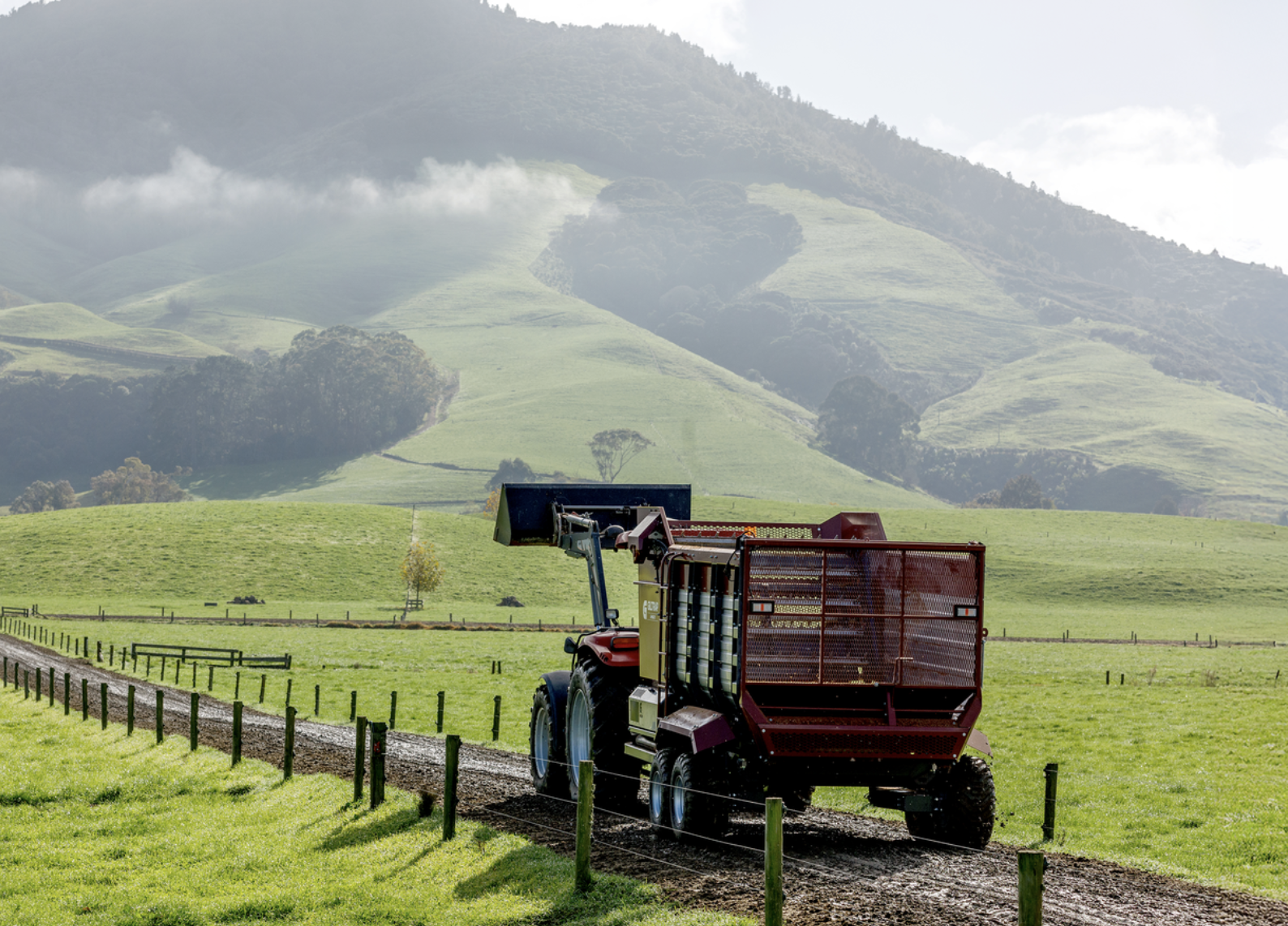
Giltrap G-Series
Giltrap’s new G-Series forage wagons bring many of the important developments from the company’s flagship G-Max range into a more straightforward package aimed at farmers wanting strength and feeding accuracy without necessarily requiring every feature of the top-specification machine.
Giltrap describes the G-Series as being built on the same foundation as the G-Max, retaining the core chassis, feed-control and heavy-duty drive principles while simplifying the specification to provide a more value-focused alternative.
That distinction is important because simpler does not mean returning to the construction of earlier-generation forage wagons.
Among the most significant changes is the move from the previous 10 mm chains to heavier 13 mm chains, providing additional strength through the floor and elevator systems.
The change recognises the considerable forces involved when moving a full load of heavy silage towards the elevator, particularly when material has settled during loading or when the wagon is operating through demanding feeding conditions.
Gearbox drives are used for the elevator and floor, providing a robust means of transmitting power through the main feed systems.
Another practical change is the move away from the traditional wooden wagon floor to a plastic floor.
The new HDPE floor provides a hard-wearing surface while reducing resistance as feed is moved forward towards the elevator. It is the sort of development that may not attract the same attention as electronic controls but can have a meaningful effect on how the wagon operates over its working life.
Visibility has also been improved.
The new front design provides the tractor driver with a better view into the wagon from the seat, making it easier to see how the load is moving during feedout. Improved visibility through the wagon can also assist when reversing and manoeuvring around feed pads, gateways and farm tracks.
Where the G-Series becomes particularly interesting is that choosing the simpler wagon does not exclude farmers from the latest weighing technology.
Giltrap’s new optional wireless weighing and control system has been developed for both the G-Max and G-Series ranges.
That allows the specification to be matched to how sophisticated the farmer wants the feeding system to become.
At its simplest, the wagon can be equipped with load cells and wireless scales, while the feed rate continues to be controlled manually through the tractor hydraulics.
The weighing information can be displayed on Giltrap’s 7-inch Canbus touchscreen in the tractor cab, providing tare and gross weights and allowing the operator to monitor how much feed remains in the wagon.
However, farmers no longer necessarily need another dedicated display in the cab.
The new system can also send scale information wirelessly to a smartphone or tablet. For farmers wanting accurate weighing without electronic rate control, the phone-based system provides a lower-cost way of introducing scales to the wagon.
That could be particularly useful where a wagon is shared between tractors. Rather than moving a dedicated display or equipping every tractor with its own unit, operators can access the scales through a compatible phone or tablet.
The wireless system has a range of up to 100 m or line of sight, meaning weight can also be monitored away from the tractor during loading.
For farmers wanting more control, the G-Series can be taken further.
Electronic rate control allows discharge to be adjusted from the Canbus controller while the tractor is moving, something Giltrap says is particularly useful when feeding large bales where the required rate can change frequently.
At the top of the system is wireless weighing combined with fully automatic feed-rate control.
Here the operator can enter the required feed quantity and feed-run distance and allow the wagon to calculate the discharge rate. The system then controls the feedout and can automatically shut off when the nominated quantity or run is complete.
That gives the G-Series an interesting position within Giltrap’s forage wagon range.
It is designed as the more straightforward alternative to the G-Max, but farmers do not have to sacrifice the ability to accurately weigh feed or adopt electronic feeding technology if their operation requires it.
Instead, the wagon can effectively be specified around the farm.
For some businesses, the priority will simply be a strong mechanical forage wagon with the heavier 13 mm chains, plastic floor, gearbox drives and improved operator visibility.
Others can add wireless scales while retaining manual feed control, with the new phone-based scale display providing a relatively simple entry into electronic feed management.
Farmers wanting greater automation can move further again into electronic or fully automatic feed-rate control.
That modular approach means the technology does not necessarily dictate the wagon.
At its core, the G-Series remains focused on the basic job of reliably moving feed from the wagon to livestock. The heavier chains, new floor construction and gearbox drives strengthen that mechanical foundation, while better visibility makes the machine easier to monitor from the tractor.
The new weighing systems then give farmers the choice of how much technology they want to put around it.
For a farmer who wants the core developments of Giltrap’s latest forage wagon generation without moving directly to the flagship G-Max specification, that may ultimately be the G-Series’ strongest argument.
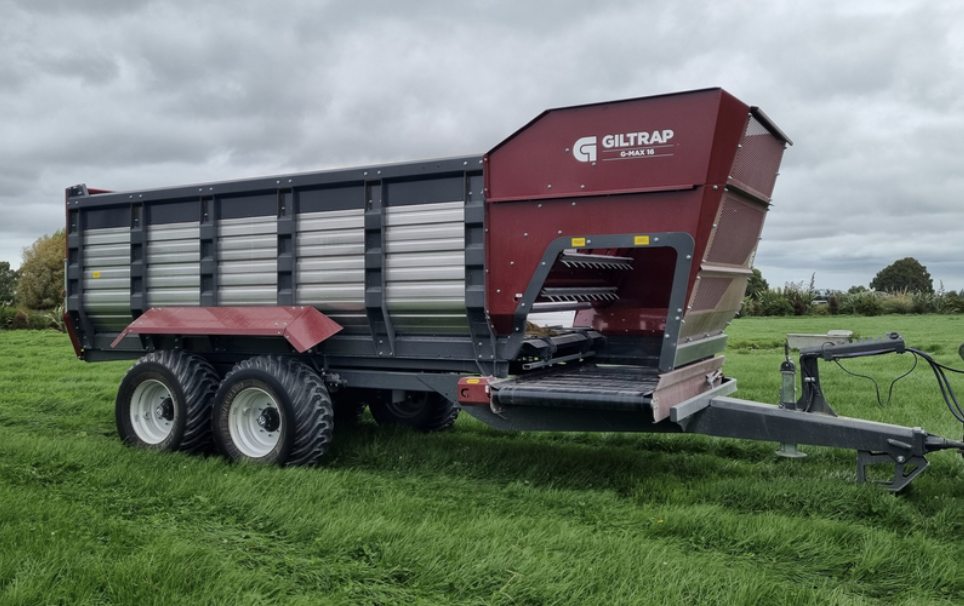
Giltrap G-Max
Giltrap has introduced a new generation of its G-Max forage wagons, combining heavier-duty driveline components with updated weighing technology and a number of practical changes aimed at making everyday feeding easier.
Built in New Zealand, the new G-Max range is available in five models from 11 m³ through to 25 m³, giving farmers options for operations ranging from relatively modest feeding requirements through to larger-scale systems moving substantial volumes of feed each day.
While technology is an important part of the new range, some of the most significant changes are mechanical.
Giltrap has increased the size of the floor and elevator chains from the 10 mm chains used previously to new 13 mm high-tensile calibrated link chains.
The two 13 mm chains are tested to 24.5 tonnes each, providing a combined chain strength of 49 tonnes. Extra-heavy-duty 65 x 35 RHS galvanised floor bars are bolted to the chains, allowing individual bars to be replaced if required.
Driving those systems are dedicated heavy-duty gearboxes providing the torque required for the floor and elevator, a change designed to provide a strong and straightforward drive system when handling heavy loads.
Another notable departure from previous wagons is underneath the load itself.
The traditional wooden floor has been replaced by a 15 mm HDPE plastic floor. As well as being durable, the plastic provides a slippery surface that allows the load to move forward more easily as the floor chains operate.
HDPE runners are also used beneath the heavy-duty galvanised elevator bars to provide smoother and quieter operation.
Operator visibility has also received attention.
A mesh front screen provides a clearer view into the wagon from the tractor seat, allowing the operator to monitor the load while feeding. The open design also provides visibility through the wagon when reversing, a relatively simple change that can make a considerable difference during everyday operation.
Feed exits through a 1200 mm-wide side conveyor, with farmers able to choose between a rubber belt or roller chain and slat conveyor depending on the material being handled. The width allows the wagon to deal with a range of feeds including large square bales.
The G-Max range is designed to handle grass, maize and whole-crop cereal silage along with long or precision-cut round and square bales.
Load-sensing hydraulics maintain an even feed flow, with the feed rate manually adjustable as standard and the ability to move into electronic rate control when the optional weighing system is fitted.
That weighing technology is one of the more significant developments on the new machines.
All G-Max wagons are scale-ready, using a double chassis that allows electronic load cells to be fitted. Depending on the model, the system uses either four or six industrial shear-beam load cells.
Rather than simply updating the scales themselves, Giltrap has developed a wireless system that gives farmers considerably more flexibility over how the information is displayed and used.
One option uses a 7-inch Canbus touchscreen mounted in the tractor cab. The wireless connection has an operating range of up to 100 m or line of sight, allowing the operator to monitor wagon weight while loading or feeding without a physical connection between the display and wagon.
A second and potentially useful development is the ability to use a smartphone or tablet as the scale display.
Farmers who want weighing capability without electronic feed-rate control can choose the lower-cost phone-based system, removing the need for a dedicated display in the tractor altogether.
For operations using several tractors, additional phones or tablets can also be connected to the system, rather than requiring a dedicated scale screen in every tractor.
The full Canbus system takes the technology further by combining wireless weighing with automatic feed-rate control.
The operator can enter how much feed is required and the length of the feed run, with the wagon calculating the required discharge rate. It then distributes the load across the nominated distance and automatically shuts off at the end of the run.
Alternatively, feed can be controlled by percentage or kilograms, giving operators several ways of matching delivery to the farm’s feeding programme.
Despite the additional electronics, Giltrap has retained much of the straightforward mechanical construction associated with its forage wagons.
Stainless steel side panels provide corrosion resistance when handling acidic silage, while galvanised elevator and floor components are used extensively through the feed mechanism.
Stainless steel floor-chain and conveyor tensioners are positioned for relatively easy adjustment.
The drawbar remains narrow to provide good turning clearance, with a replaceable swivel tow eye that can also be upgraded to a K80 ball hitch. Heavy-duty walking beams use replaceable Vesconite pivot bushes and oversized hubs with sealed bearings.
A range of axle, tyre, braking and conveyor options allows the wagon to be configured around different farming systems.
For Giltrap, the new G-Max therefore represents more than an electronics upgrade.
Increasing the floor and elevator chains from 10 mm to 13 mm, replacing the wooden floor with HDPE plastic, moving to gearbox drives and improving visibility into the wagon address the mechanical and practical side of everyday feedout.
The new wireless weighing technology then adds another layer, particularly with the ability to use a farmer’s existing phone or tablet rather than requiring another dedicated screen in the tractor.
Across a range extending from 11 m³ to 25 m³, the result is a G-Max designed around moving large quantities of feed reliably while giving operators considerably more information and control from the tractor seat.