
Adding value from the ground up
For generations, New Zealand agriculture has excelled at producing some of the world's highest quality raw materials. Wheat, milk, meat, wool and horticultural products have earned international reputations for quality and consistency, yet many of the processed foods filling supermarket shelves continue to rely heavily on imported ingredients. That creates an interesting contradiction. We are exceptionally good at growing food, but we often leave the value-adding to someone else.
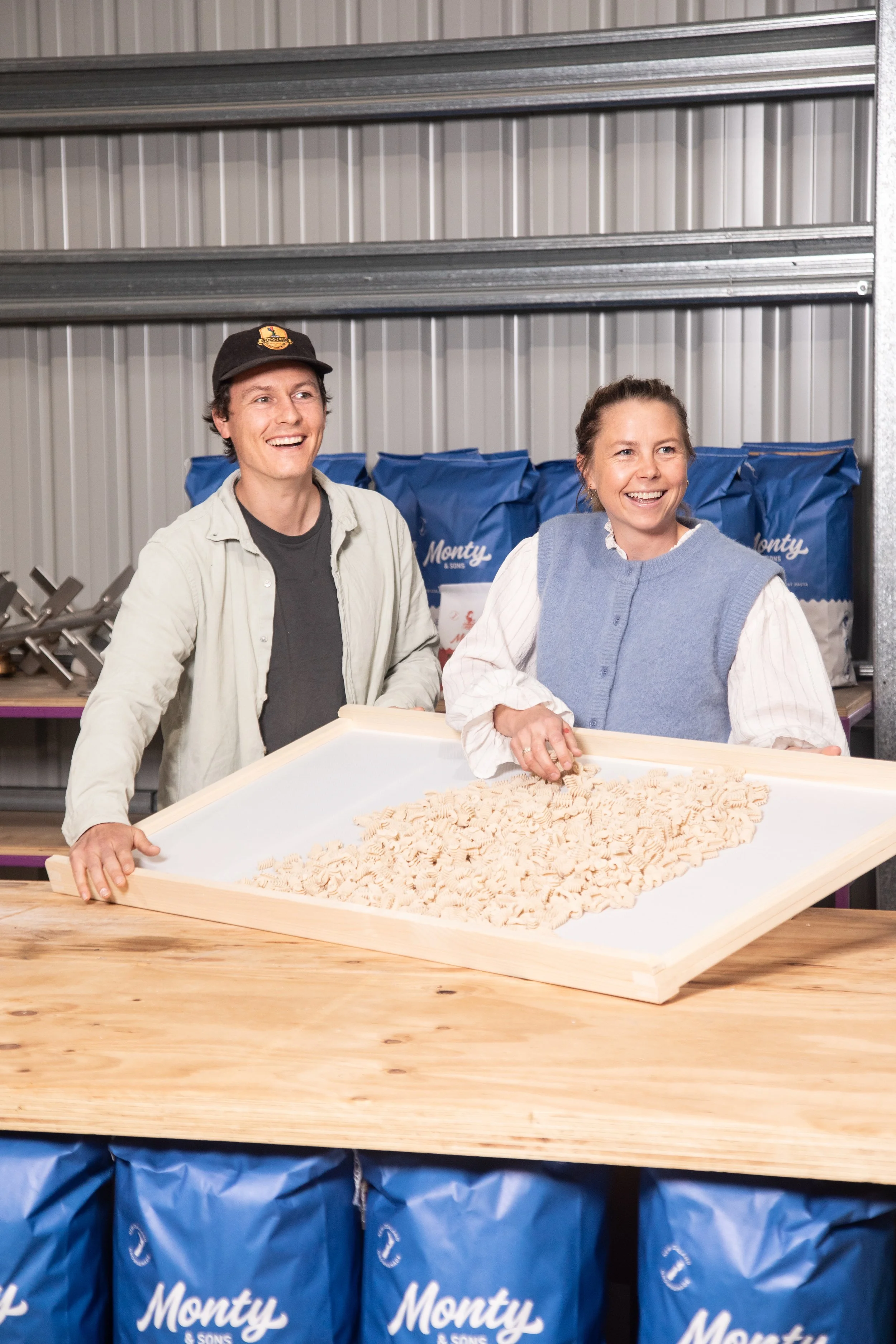
Monty & Sons represents a different way of thinking. Rather than simply manufacturing pasta in New Zealand using imported grain, the South Wairarapa business has built its production model around growing, milling and manufacturing within the same domestic supply chain. It is a relatively simple concept, but one that requires considerable coordination between growers, processors and manufacturers if it is to work successfully.
The foundation of that system lies with locally grown durum wheat. Unlike conventional bread wheat, durum has traditionally been sourced from overseas, largely because of the belief that New Zealand conditions were not ideally suited to the crop. By working with growers in the Wairarapa Grains Collective and selecting ancient durum varieties that perform well in the region's dry summer climate, Monty & Sons has demonstrated that a genuine New Zealand-grown pasta industry is achievable. That may appear to be a small step, but from a supply chain perspective it is significant, reducing reliance on imported raw materials while creating new opportunities for arable farmers looking to diversify their cropping programmes.
What makes the business particularly interesting, however, is not simply where the wheat comes from, but how it is transformed into the finished product. Modern food manufacturing is built around efficiency, with production lines designed to maximise throughput while delivering consistent quality. In the pasta industry, this typically involves extruding dough through smooth Teflon dies before rapidly drying the product at elevated temperatures. The system is fast, highly repeatable and ideally suited to large-scale manufacturing.
Monty & Sons has deliberately chosen a different production pathway.
Instead of Teflon tooling, the company uses traditional bronze dies during extrusion. While this may seem like a minor manufacturing detail, it fundamentally changes the surface characteristics of the finished pasta. Bronze tooling leaves a microscopically textured surface that holds sauces more effectively than the smooth finish produced by modern dies. It is a slower process that requires greater attention to production, but it reflects a conscious decision to prioritise product performance rather than production speed.
The drying process follows exactly the same philosophy. Rather than removing moisture as quickly as possible, the pasta is slow dried over periods of up to 24 hours using lower temperatures. From a processing perspective, this helps preserve the structure of the wheat proteins while producing a firmer texture and more consistent cooking performance. It is another example of manufacturing decisions being driven by product quality rather than factory output, even though slower drying inevitably reduces production capacity.
There is also an important story behind the grain itself. By sourcing wheat directly from local growers, the company has established complete traceability throughout its production system.
At a time when consumers increasingly want to understand where their food comes from, shorter supply chains provide greater transparency while strengthening the relationship between growers, processors and end users. For farmers, it creates the opportunity to produce a premium ingredient with a clearly identified destination rather than simply supplying a global commodity market.
That emphasis on production extends beyond the factory gate. The growers supplying the business follow regenerative farming principles that place a strong focus on soil health and long-term productivity. Regardless of where individual farmers sit on the regenerative farming debate, maintaining healthy soils remains fundamental to any sustainable cropping system.
Linking production practices directly to a premium food product also demonstrates how agricultural management decisions can become part of a product's overall value proposition rather than remaining invisible to consumers.
Packaging has received the same level of attention. Food manufacturers continue to face the challenge of reducing plastic without compromising product quality or shelf life, particularly where moisture control is critical. Rather than accepting conventional plastic packaging as the default option, Monty & Sons invested time in identifying biodegradable alternatives capable of protecting the product while reducing environmental impact. It is another example of engineering and manufacturing decisions being considered across the entire production system rather than focusing solely on the food itself.
Perhaps the most interesting aspect of the business is that there is no single breakthrough technology underpinning its success. Instead, it is the accumulation of numerous production decisions that collectively create something different. Locally grown durum wheat, bronze extrusion, slow drying, shorter supply chains and thoughtful packaging are all established technologies in their own right. The innovation comes from integrating them into a production model that delivers greater value while remaining firmly connected to New Zealand agriculture.
For the wider agricultural sector, there is an important lesson in that approach. Adding value does not always require revolutionary technology or major scientific breakthroughs. Sometimes it comes from asking how existing production systems can be redesigned to retain more value within New Zealand while giving farmers access to new markets built on quality, provenance and transparency. As pressure continues to grow for agriculture to deliver more than commodity production alone, businesses such as Monty & Sons demonstrate that the next opportunity may lie not in producing more, but in producing smarter.