
Cool Beef looks to breed more efficient cattle
A new four-year research programme will investigate whether New Zealand beef cattle can be bred to become more feed efficient and produce less methane without compromising the productivity traits farmers rely on.
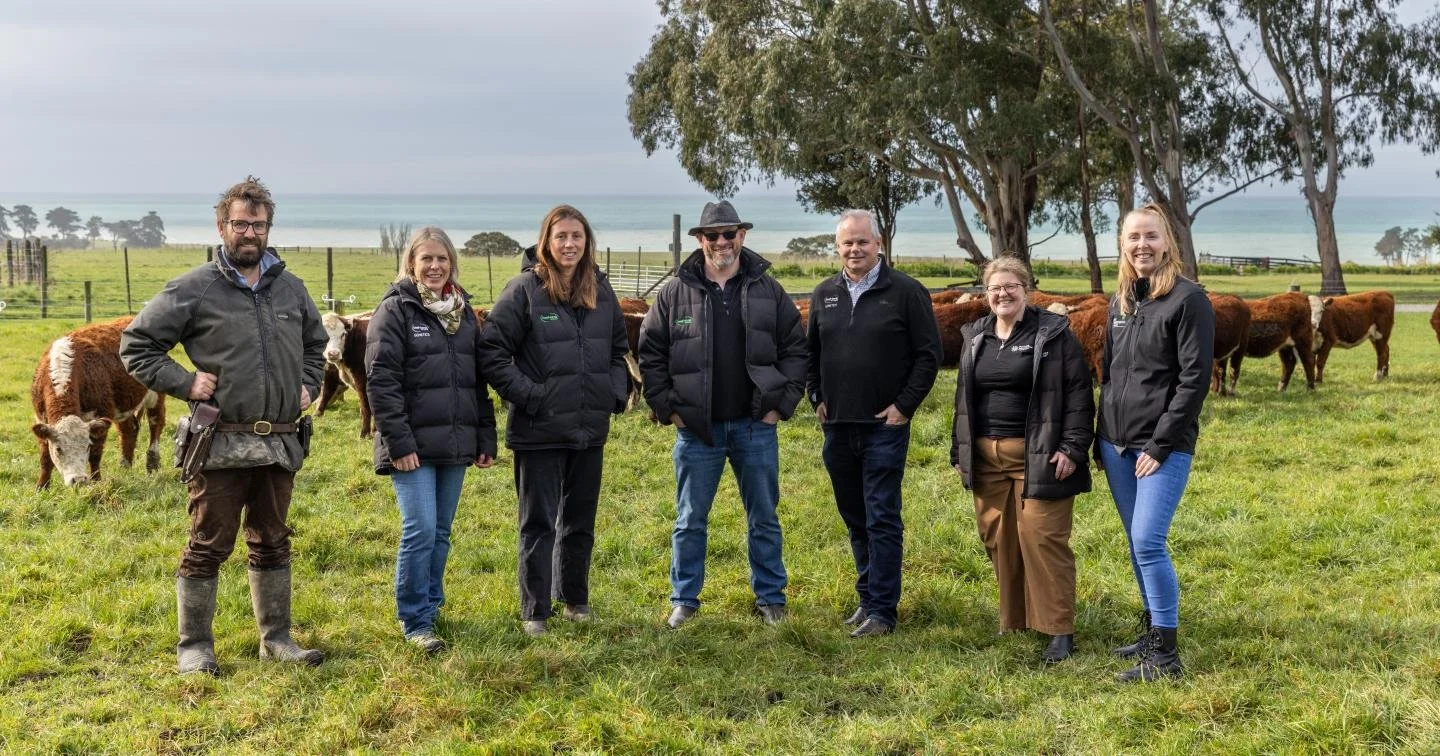
The Cool Beef programme was officially launched at Te Mania Angus in North Canterbury and will bring together farmers, scientists and industry partners to build the science and data needed to better understand the relationship between feed efficiency, methane emissions and production in New Zealand beef cattle.
Led by Beef + Lamb New Zealand (B+LNZ) and funded by the Ag Emissions Centre, the programme is ultimately intended to support the development of breeding tools that could allow farmers and breeders to consider feed efficiency and methane alongside the production traits already used when making breeding decisions.
The Ag Emissions Centre is investing $3.9 million in Cool Beef through to May 2029, with the Bioeconomy Science Institute and collaborating cattle breeders also involved in delivering the programme.
B+LNZ Chair Kate Acland says the focus is on developing the information farmers will need if they choose to include these traits in future breeding decisions.
“Farmers are focused on breeding productive animals that perform well in their farming systems. Cool Beef will help build our understanding of the relationship between feed efficiency, methane emissions and production traits, giving breeders better information to support future decisions.”
The programme builds on earlier industry research, including work carried out through the Informing New Zealand Beef programme and B+LNZ’s Beef Progeny Test.
Over the next four years, at least 2,000 beef cattle will be measured for both feed intake and methane emissions, with another 1,000 methane measurements collected from cattle grazing directly on pasture.
The research will include Angus, Hereford and crossbred cattle from collaborating breeders throughout New Zealand.
Two research locations, Te Mania Angus in North Canterbury and Pāmu’s St Kilda farm in Taupō, will collect both feed intake and methane emissions data. A third site, Pāmu’s Kepler Farm near Te Anau, will collect methane measurements directly from cattle grazing pasture.
Feed efficiency is an important part of the equation. Specialised feed intake technology will measure exactly how much individual animals consume, allowing researchers to compare that intake with animal growth and performance.
Rather than simply identifying cattle that grow quickly, the research should help determine which animals are capable of converting feed into production more efficiently and how that efficiency relates to methane emissions and other economically important traits.
Methane measurements are currently being collected using Portable Accumulation Chambers (PACs), developed by the Bioeconomy Science Institute. Individual animals spend around one hour in the chambers, which capture the gases they emit and allow researchers to rank animals according to their methane emissions.
The technology has already been used extensively with sheep, with thousands of measurements collected on farms throughout New Zealand, and Cool Beef will investigate its application at a considerably greater scale within the beef industry. Other methane measurement technologies could also be incorporated as the programme develops.
The Bioeconomy Science Institute’s technology and expertise have been critical to establishing the measurement capability required for the programme.
Ag Emissions Centre Executive Director Dr Naomi Parker says Cool Beef forms part of a wider programme looking at the potential of livestock genetics to contribute to reducing agricultural methane emissions.
“The Cool Beef programme is a key part of the Ag Emissions Centre’s broader portfolio of low methane livestock genetics research, including work on low methane sheep and low methane dairy. By bringing together industry, researchers and farmers, we’re building the scientific capability needed to develop practical breeding tools for New Zealand farmers and support New Zealand agriculture into the future.
“Cool Beef is a great example of that collaborative approach, building the knowledge and breeding tools needed to support future breeding decisions.”
An important part of the programme will be determining how methane emissions and feed efficiency interact with existing production traits.
Selecting for a single characteristic can potentially have consequences elsewhere in an animal’s performance, making it important to understand the relationships between feed intake, growth, productivity and emissions before incorporating new traits into a breeding programme.
By combining methane measurements with feed intake and performance data across thousands of animals, researchers aim to establish whether feed efficiency and lower methane emissions can be selected for individually or together, and what consequences that selection could have for other traits.
Ultimately, that information could contribute to future Estimated Breeding Values (EBVs) for New Zealand beef cattle.
One likely outcome following the programme is the development of a breeding value for methane emissions, alongside data that could inform breeding values for feed efficiency in New Zealand cattle.
These would not replace the production EBVs farmers and breeders already use. Instead, they would provide additional information that could be considered alongside traits such as growth and other measures of animal performance, depending on the objectives of an individual farming business.
That distinction is important because Cool Beef is intended to provide farmers with another breeding option rather than prescribe how cattle should be selected.
Acland says breeding decisions have implications that extend well beyond a single season, making robust science particularly important before new traits are introduced into selection programmes.
“Breeding decisions are made with the long-term performance of a herd in mind. Cool Beef is about generating robust information so farmers who want to consider these traits in the future have the confidence that the science behind them is sound.”
Early work has already demonstrated the scale of measurement involved. Before the programme’s formal launch, 256 heifers had completed feed-efficiency and PAC measurements as work got underway.
Cool Beef will also complement New Zealand’s involvement in the international Bluegrass project, involving researchers from New Zealand, Australia, the United Kingdom, Ireland and the United States, which is expected to provide additional measurements and information relevant to livestock efficiency and emissions.
The programme forms part of the Ag Emissions Centre’s broader investment in low-methane livestock genetics across beef, sheep and dairy.
For the beef industry, however, the immediate objective is relatively straightforward. Before farmers can make informed breeding decisions around feed efficiency or methane, they need reliable measurements and an understanding of what selecting for those traits means for the overall performance of the animal.
Cool Beef is intended to provide that foundation.
Participation is voluntary, with collaborating breeders providing cattle and data that will contribute to the wider research programme. If the work ultimately leads to new breeding values, farmers will then have the choice of incorporating those traits into their breeding objectives alongside the productivity characteristics that already underpin New Zealand beef genetics.
For an industry where improvements through genetics accumulate from one generation to the next, understanding whether cattle can consume less feed, maintain production and produce less methane could provide another long-term tool for improving both the efficiency and environmental performance of New Zealand beef production.