
Fall armyworm: Four years on
Four years since it was first detected in New Zealand, researchers and growers now know much more about management of maize pest fall armyworm.
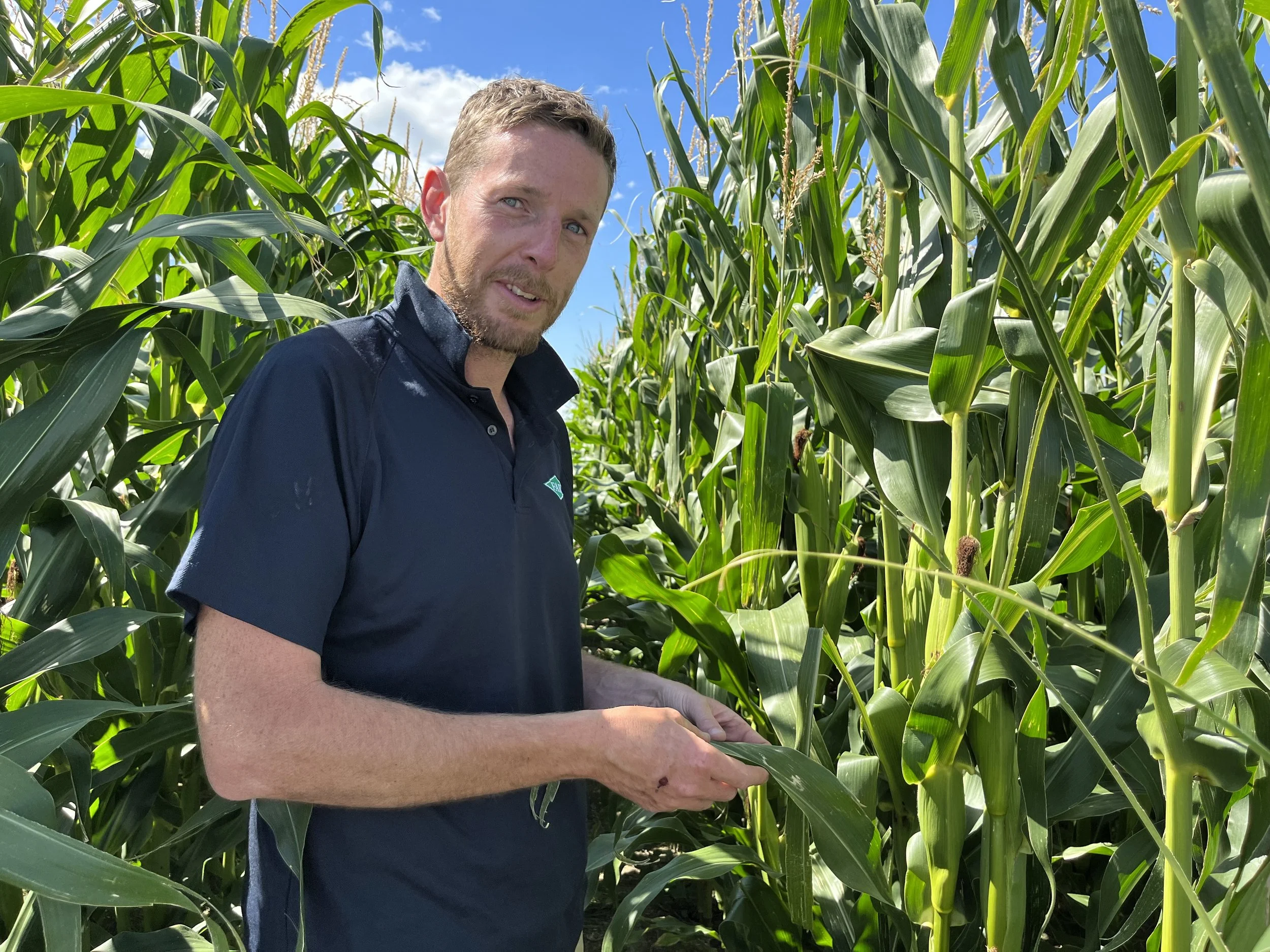
When fall armyworm (FAW) arrived, there was considerable uncertainty, Foundation for Arable Research’s Biosecurity Officer Ash Mills says.
“Many assumptions were based on overseas experience. Four years later, we have a much clearer understanding of where the pest fits within our maize production systems and what remains unknown.”
First detected in New Zealand in 2022, FAW is one of the world's most significant maize pests.
“The challenge was that while there was a large amount of international information available, very little of it had been tested under New Zealand conditions.”
Mills leads a three-year MPI Sustainable Food and Fibre Futures (SFFF) long-term management project, supported by Vegetables NZ, which has six months to go.
The project focuses on five key questions: where the pest occurs, when it becomes economically important, how it can be managed, how it fits within existing maize pest management, and what research remains necessary.
“Our challenge was not simply to control fall armyworm, it was to understand its place within the wider maize ecosystem,” he told the third annual FAW research workshop.
The first challenge was knowing where FAW was present and how populations changed over time.
To address this, the project established a national surveillance system combining pheromone trapping, field scouting and seasonal monitoring. It also developed identification guides, grower resources and the fallarmyworm.nz website to act as a central information hub.
“One important lesson emerged very quickly. Detecting moths (using pheromone traps) is relatively easy. Predicting crop damage is much harder.
“We also learned that effective surveillance depends on growers and advisers regularly inspecting crops, which remains one of the biggest practical challenges.”
The project shows that FAW management needs to be incorporated into existing integrated pest management programmes, but timing is earlier than for other maize pests. FAW activity is most economically important during vegetative crop stages, where yield potential remains vulnerable.
“When larvae are detected early, management options are generally effective and straightforward. As larvae grow and move deeper into the plant, control becomes more difficult.
“This is why management decisions must be based primarily on crop scouting rather than trap captures alone.”
Other species, particularly Helicoverpa armigera, also continue to contribute significantly to economic losses in maize.
Volunteer maize and other host plants may also support populations between seasons.
While the SFFF project has nearly finished, there is still plenty of work on FAW going on at research agencies, including the Bioeconomy Science Institute, Mills says.
“We still don't fully understand how well fall armyworm overwinters in New Zealand or what drives seasonal population changes. Improving our ability to forecast outbreaks remains a key priority.
“Another important question is the frequency and origin of new incursions. Without frequent population genetic studies, we can't determine what proportion of the FAW population is the result of over-winter survival versus new arrivals from Australia. This has important implications for both biosecurity and insecticide resistance management,” Mills says.
BSI Entomologist Scott Hardwick says that monitoring shows FAW produces three to four generations a year in the Far North, as well as warmer regions such as Gisborne and the East Coast of the North Island. Southern regions produce one to two generations.
Far North Entomologist Jenny Dymock, who has monitored six FAW bucket pheromone traps and adjacent maize crops near Kaitaia for the last four years, advises maize silage and grain growers in the region to sow crops in November, not December, to avoid larval feeding damage to seedlings and cobs from second-generation FAW larvae.