
Fieldays 2026: A measure of cost, capability and direction
Every June, the rural calendar pulls the industry north to Fieldays at Mystery Creek and while the scale and spectacle of the event remains a constant, the context in which it sits continues to shift.
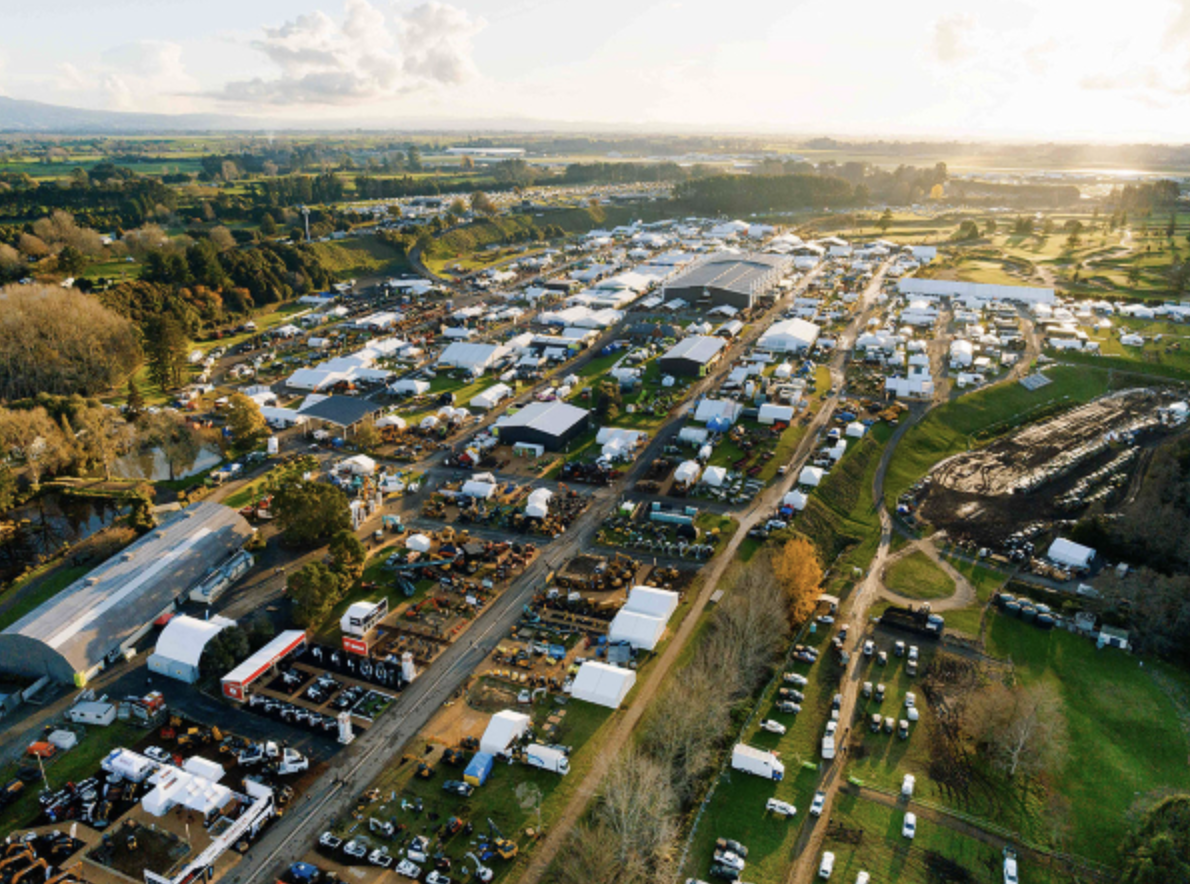
Fieldays has always been more than a showcase. It is a pressure gauge for the sector. It reflects where confidence sits, where investment is heading and how farmers and contractors are responding to the realities in front of them. That makes this year’s event particularly relevant, because the backdrop is once again tightening.
One of the most immediate pressures being felt across the country is the increased cost of diesel. For contractors running high-hour machinery programmes and for farmers managing cultivation, drilling and transport, fuel is not a marginal cost. It is a core input. Every additional cent per litre flows directly through to operating costs and, in many cases, it cannot simply be passed on.
That changes the way decisions are made.
It sharpens the focus on efficiency. It puts greater weight on machine selection. It raises the importance of technology that can reduce overlap, improve application accuracy and ultimately cut unnecessary passes across the paddock. And it reinforces the value of reliability, because downtime under tight weather windows becomes even more expensive when every hour of operation carries a higher cost.
That is where Fieldays continues to hold its relevance. It is one of the few places where the full spectrum of the industry is brought together, from large-scale machinery and emerging technology through to finance, advocacy and workforce development. It allows farmers and contractors to step back from the day-to-day and assess what is changing, what is worth investing in and what will actually deliver in New Zealand conditions.
Looking back at recent events, the themes have been consistent. Innovation remains front and centre, whether through developments in drone technology, the continued evolution of precision agriculture or the growing presence of agritech businesses looking to solve practical problems on-farm. At the same time, there has been a strong emphasis on people, reinforcing that the sector’s future depends as much on capability as it does on machinery.
Those themes are only becoming more pronounced.
The technology on display continues to move quickly, but the conversation around it is becoming more grounded. Farmers and contractors are less interested in what technology can do in theory and more focused on what it delivers in practice. Does it save time? Does it reduce cost? Does it make the job easier or more consistent? Those are the questions that will be asked across the site this year.
At the same time, the structure of the event itself continues to evolve. Feature hubs, such as innovation spaces, careers and education areas, and advocacy platforms have become key anchors within the site, creating spaces where visitors can engage more deeply with specific parts of the industry rather than simply walking past a stand. That reflects a broader shift in how Fieldays is experienced, moving from a purely transactional environment to one that also supports learning, discussion and connection.
This year’s spotlight on wool is another example of that approach, bringing renewed attention to a product that has long been part of New Zealand’s identity but is now being re-examined through the lens of sustainability and innovation. It is a reminder that while new technology continues to drive the sector forward, there is also value in revisiting existing resources and finding new ways to use them.
For contractors in particular, Fieldays remains a critical touchpoint. It is where machinery decisions are influenced, where relationships with suppliers are strengthened and where a sense of direction for the season ahead begins to form. With diesel costs reaching dizzying heights and margins under pressure, those decisions carry even more weight this year.
It also comes at a time when the pace of change across the sector shows little sign of slowing. Regulation, environmental expectations and market demands continue to evolve and while those factors may not always be front of mind when walking through a machinery site, they sit behind many of the decisions being made.
What Fieldays offers and continues to offer, is perspective.
It brings together the full picture of the industry in one place. It allows farmers and contractors to compare, question and reassess. And it provides a reminder that while the challenges are real, so too is the level of innovation and capability within the sector.
As the industry gathers again at Mystery Creek this June, the conversations are likely to be shaped by cost, efficiency and resilience. But as always, they will also be shaped by opportunity.
Because beneath the pressure, there remains a constant drive to improve, to adapt and to find better ways of doing the job. And that is what Fieldays at its best, continues to represent
Precision Cultivation
As fuel prices continue to rise and contractors face increasing pressure to cover more ground in tighter seasonal windows, efficiency has become one of the biggest drivers of machinery investment decisions.
For Precision Cultivation, the focus has always been on building practical solutions for real New Zealand farming conditions.
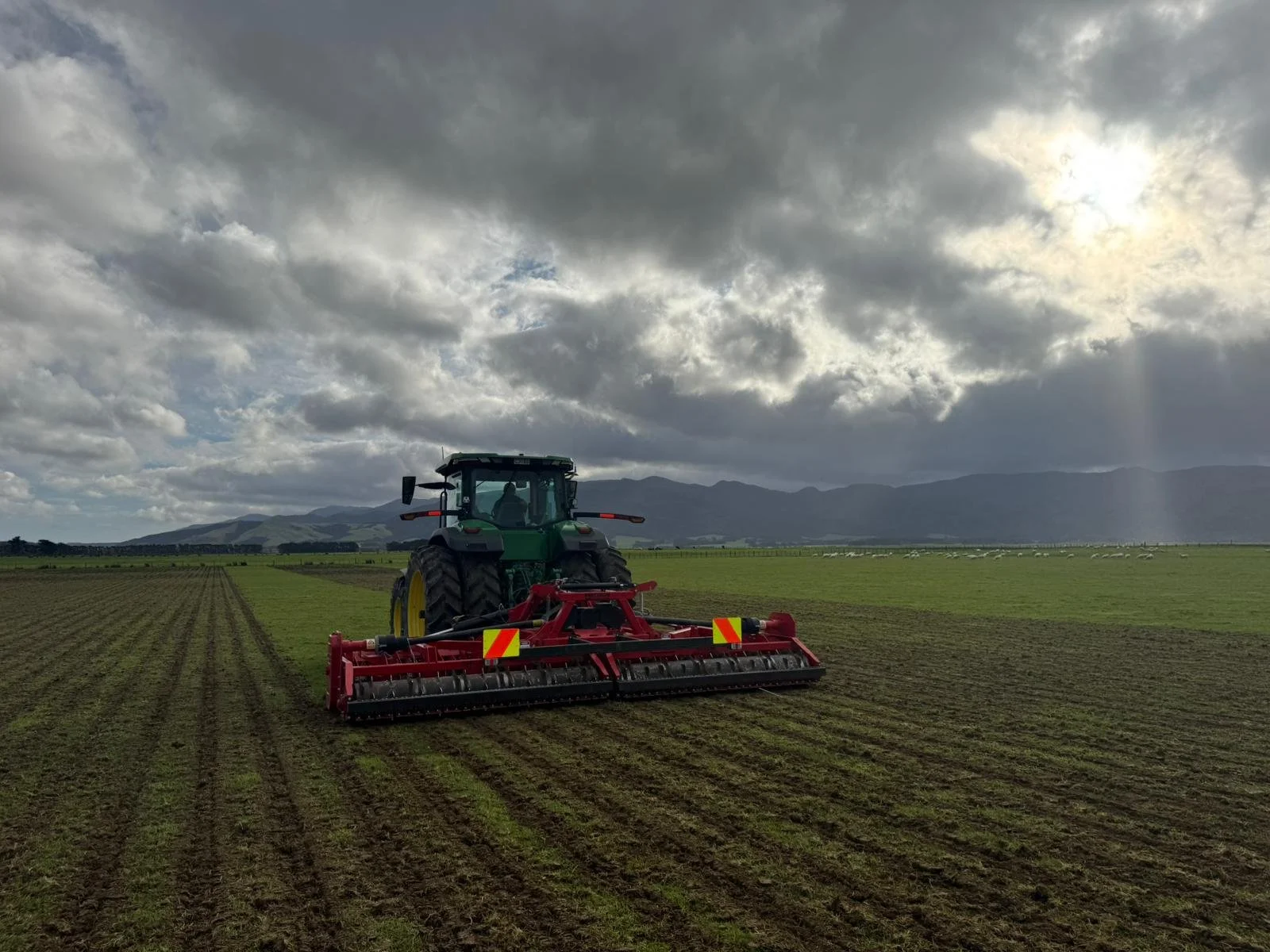
Designed in New Zealand and built in Palmerston North by McIntosh Farm Machinery, Precision Cultivation’s strip tillage machines are engineered specifically for local conditions – from wet paddocks through to stony ground. The company’s patented technology has been developed with direct input from farming and contracting experience, resulting in machines designed to reduce passes, lower running costs and improve establishment outcomes.
The range now includes four models operating across New Zealand, with machines also exporting into Australia. One standout in the lineup is the P6050F – a 12-row, 500 mm spacing machine that Precision Cultivation says is currently the only powered strip till machine of its kind in the world.
Thanks to its patented design and lower horsepower draw, contractors can achieve high output without requiring excessive tractor power.
The machine layout itself has been designed to improve performance in difficult conditions.
Subsoiler legs are positioned ahead of the tunnel, lifting and lowering the soil to create a horizontal shattering effect that helps eliminate compaction and improve root development. Disc coulters cut through vegetation cleanly, while the tunnel system allows soil to flow smoothly, even in moist conditions.
For Canterbury contractor Danny Walker, from Canterbury Strip Till, those design features have made a noticeable difference in day-to-day operation.
“I’ve used other machines, and they all have their pros and cons,” Walker explains. “But this one stands out because of its design. With the legs up front, it handles tougher ground with ease, which means I can get straight into the areas that are ready, instead of waiting around.”
After six seasons running Precision Cultivation strip tillage machines, Walker says lower running costs have become one of the biggest advantages.
“With some other brands you’re replacing blades every 100 to 200 hectares. With this, I’ll do 500 hectares on a set. That adds up when you’re covering big areas.”
Reducing passes is another major benefit. Precision Cultivation machines are designed to minimise cultivation requirements, helping reduce fuel use, labour hours and overall wear on machinery. According to company figures, growers can reduce establishment costs compared to conventional multi-pass systems while also increasing hectares covered per engine hour.
Support and reliability also remain critical during peak seasonal periods.
“If I need points, blades – whatever it is – they get it sorted quickly,” Walker says. “That kind of support makes all the difference when you’re working to tight seasonal windows and have farmers relying on you.”
With increasing focus on profitability, fuel efficiency and soil structure preservation, strip tillage continues to gain momentum across New Zealand farming systems. For Precision Cultivation, the goal is simple: build tough, practical machinery that performs in Kiwi conditions and helps contractors and growers work smarter.
To learn more or book a demo, contact Precision Cultivation at precisioncultivation.com or call Paul Linklater on 021 247 4967.
Landpower
World-class machines, maximum performance, greater fuel efficiency
Landpower are convinced that seeing is believing, which is why, at Mystery Creek, their focus is on letting you experience their world-class machinery firsthand through their demonstration programme. Selected machines on display are available for demonstration, so you can move towards your next purchase with confidence and unlock real efficiency gains where it counts.
Built by leading European manufacturers for ultimate efficiency, these machines mean more tons and fewer tanks, meaning you can get more done with less fuel.
LEXION 7700 – The sweet spot for New Zealand contractors
Fuel efficiency isn’t just a spec, it’s a saving. Over 200 harvest hours using up to 20% less fuel could mean thousands back in your pocket.
Claas Lexion 7700 is one of the most well-balanced combines for New Zealand conditions, delivering high output, crop flexibility and the versatility to handle both plains and rolling terrain.
It’s known as the “sweet spot” for contractors who want performance without stepping up to the biggest and most expensive Lexion models.
For growers and contractors, timing is everything. New Zealand’s harvest windows can be tight, with variable weather and moisture. The 7700 helps get the crop off fast when the window opens.
The spacious cab and advanced technology reduce reliance on operator skill, making it easier for contracting teams to work efficiently and comfortably.
At the heart of the machine, Claas’ APS Synflow Hybrid system combines drum and rotor separation, delivering strong threshing and high separation capacity. For maize and other grain crops, it leaves a clean sample at high throughput, even in heavy crops.
The Claas Lexion 7700 is built for contractors who want output, efficiency and reliability all in a machine perfectly suited to our conditions.
CLAAS ROVIO – The specialist corn front
The Claas Rovio front is designed specifically for maize, making corn harvesting faster, cleaner and more efficient. It strips the cobs from the plant, leaves stalks behind and feeds only clean grain into the combine.
The Claas Rovio is designed for high-capacity production, making it a must-have for contractors and farmers focusing on high-yield maize.
The new Claas Rovio series delivers up to 30% more throughput than previous models, thanks to linear picking rollers that ensure a consistent crop flow. Its reinforced gearboxes and intake rollers provide strong overload protection, even in heavy or lodged crops and a plug-and-play setup makes operation simple and efficient.
Rovio fronts come in 6, 8, or 12-row configurations, with typical row spacing of 75 cm and integrate fully with modern Claas technology. Auto Contour ensures automatic ground following, Auto Pilot provides row guidance and Cebis puts full control at the operator’s fingertips, reducing fatigue and achieving high productivity, even in patchy crops.
For New Zealand growers and contractors looking for speed, precision and reliability in corn harvesting, the Claas Rovio front is the specialised solution that gets the job done.
CLAAS TORION – Power, precision and productivity
Claas Torion is designed to maximise output per litre, helping keep your fuel costs in check.
The Claas Torion wheel loader delivers unmatched versatility for New Zealand farms and contracting operations. Built for heavy lifting, fast loading and precise handling, it tackles silage, feed and materials with ease.
Its robust design combines high lifting capacity with compact manoeuvrability, perfect for both large yards and tighter farm spaces. Advanced hydraulics and intelligent controls make every movement smooth and efficient, reducing operator fatigue and increasing daily output.
With a comfortable, spacious cab and intuitive controls, the Torion ensures operators stay productive all day, while the durable build keeps maintenance simple. For farmers and contractors looking for a reliable, high-performance loader that adapts to any task, the Torion is ready for work.
CLAAS TRACTORS – Power and precision for every farm
Big horsepower doesn’t have to mean big fuel bills. Claas tractors deliver power with efficiency built in.
Claas offers a full range of tractors designed to meet the diverse needs of New Zealand farms, from versatile mid-sized workhorses to high-horsepower heavy-duty machines.
• ARION Series: Reliable, versatile tractors for mixed farms and general-purpose work. Efficient, easy to operate and strong on both power and fuel economy.
• AXION Series: High-power, high-comfort tractors built for large-scale operations, heavy draft work and all-day productivity. Advanced automation and connectivity make them ideal for contractors and modern cropping farms.
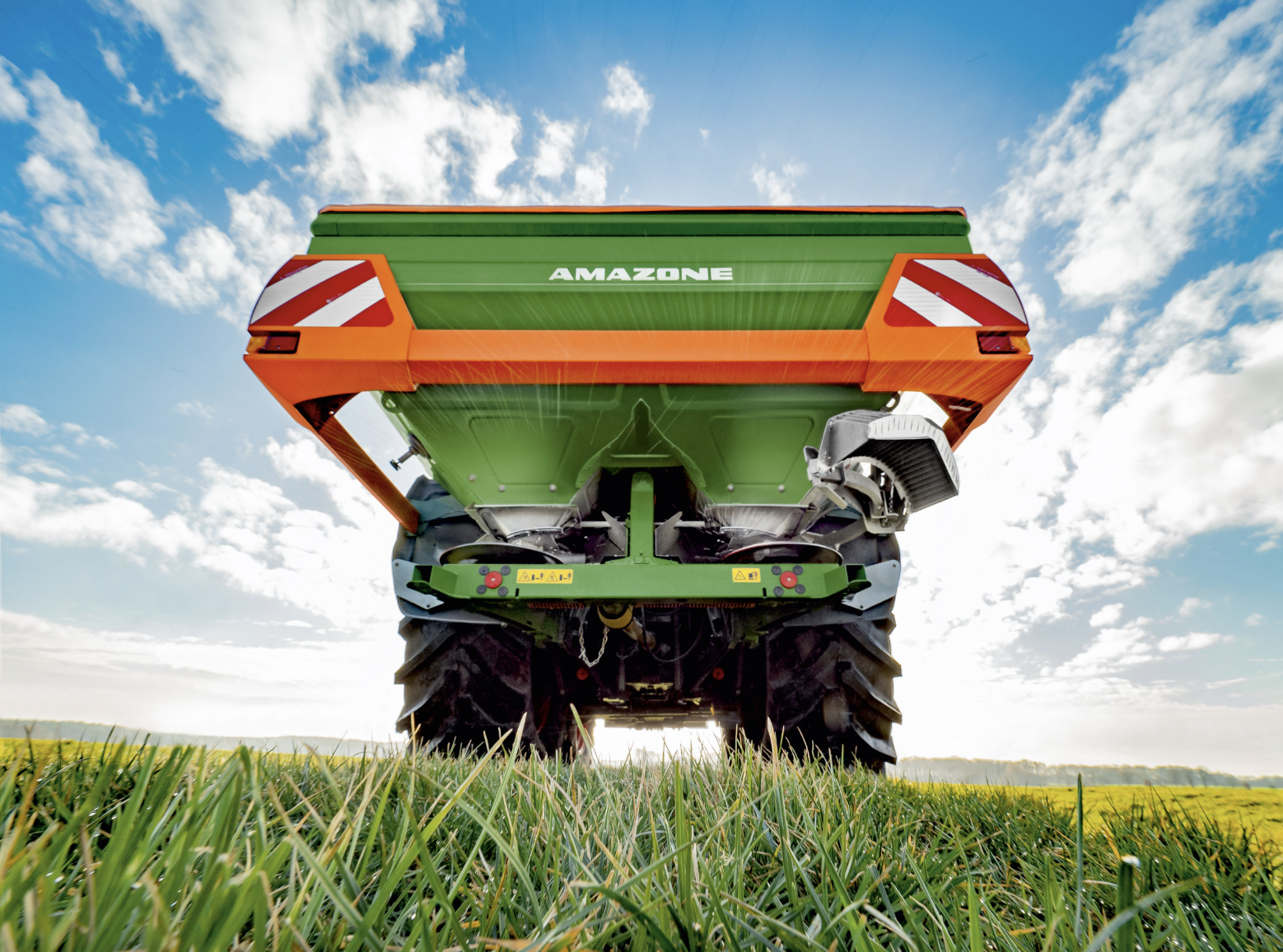
AMAZONE – Precision seeding and spraying for New Zealand farms
Amazone brings advanced seeding and spraying solutions that help New Zealand farmers and contractors maximise yield, efficiency and crop health.
Whether establishing a crop or protecting it, Amazone equipment offers the precision, flexibility and reliability that New Zealand farmers need to make the most of every season.
Seeing is believing
Ask about our latest demonstration programme results and what fuel efficiency could mean for your operation when you visit the Landpower team at Mystery Creek.
Maschio Gasparado
There is a point in any cultivation programme where refinement becomes the priority rather than outright disturbance, and it is in that space that the power harrow continues to hold its place.
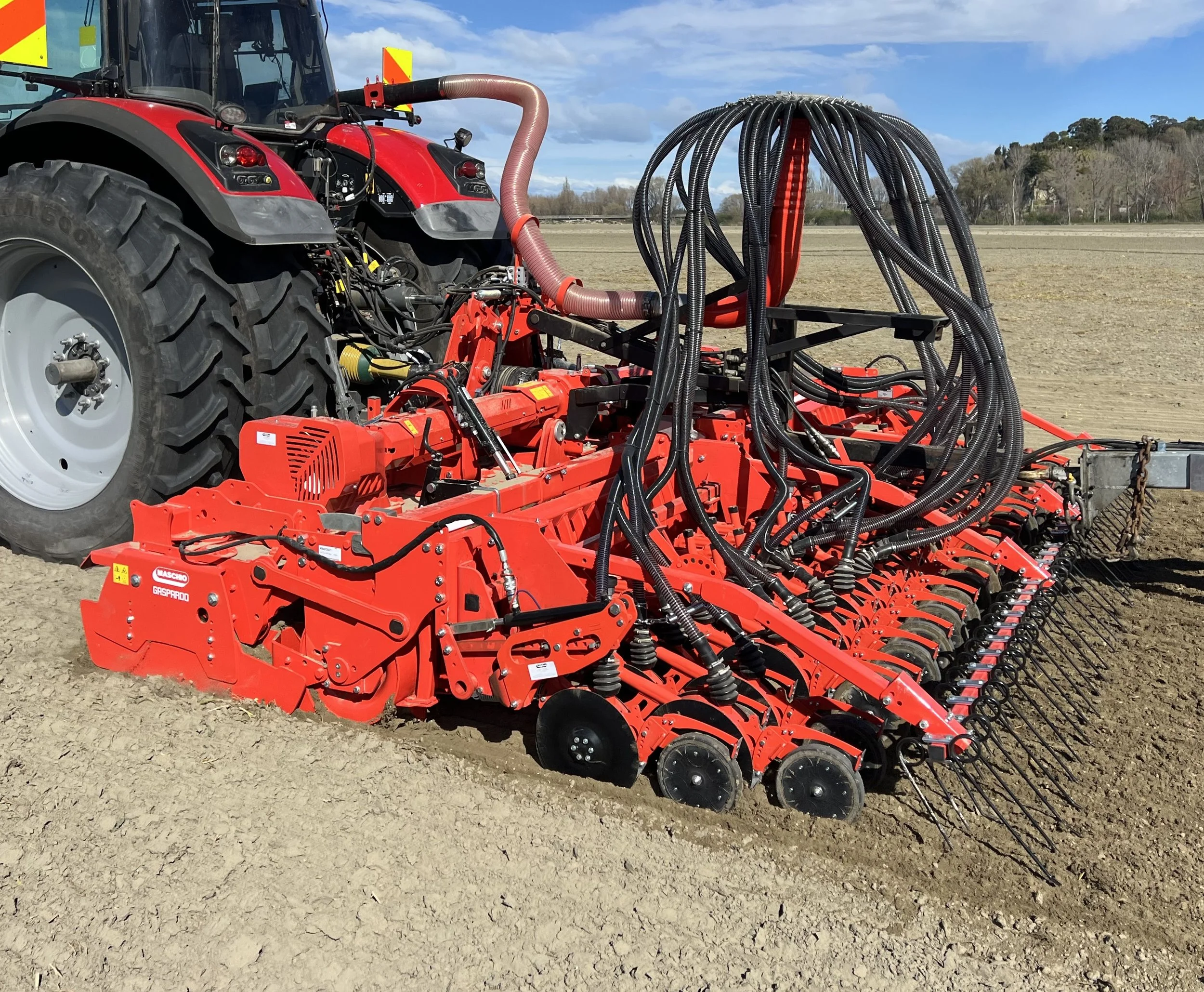
For many operations, particularly those working across mixed soil types or under tighter weather windows, the ability to create a consistent, level seedbed in a single pass remains critical, and it is here that the Maschio Gaspardo Super power harrow range is designed to operate.
At the core of the Super range is a clear focus on strength, driveline efficiency and long-term durability. These are not light-duty implements dressed up for bigger tractors. They are built around a heavy-duty construction philosophy that reflects the increasing horsepower now common across New Zealand fleets, and the expectation that machines will perform consistently under load.
A defining feature across the Super models is the double-skin trough construction, with an internal thickness of around 6 mm and an external skin of approximately 5 mm. This design significantly increases rigidity without a major weight penalty, reducing torsional stress through the frame and allowing the machine to maintain consistent working depth and rotor alignment under pressure.
For operators, that translates directly into a more even finish and less variation across the working width, particularly in harder or variable soils.
The driveline is equally deliberate in its design. Maschio uses large-diameter, case-hardened gears running in an oil bath, with helical gear profiles increasing the contact surface area and reducing backlash within the transmission.
The practical effect of this is smoother power transfer from the PTO to the rotor system, reduced vibration and, importantly, lower parasitic losses. In a working environment where fuel efficiency is increasingly under scrutiny, particularly with diesel costs continuing to fluctuate, that reduction in internal friction is not just theoretical, it contributes to real operational savings.
Rotor stability is another area where the Super range differentiates itself. The use of upper and lower bearing positioning around the gear system spreads load more evenly and reduces stress on individual components.
Combined with rotor shafts forged from a single piece of hardened steel, this creates a system that is designed to handle sustained high loads without premature wear. It also supports consistent tine engagement, which is critical for achieving uniform soil refinement.
Across the range, tine performance is central to the end result. The Super models typically run long forged boron steel tines, often around the 30 cm mark, designed to penetrate and mix soil effectively while maintaining durability.
Options such as tungsten carbide coating extend service life further, particularly in abrasive conditions, while quick-release systems reduce downtime when replacement is required. In a contracting environment where time lost to maintenance can quickly erode margins, that ease of service becomes a practical advantage.
Working depth across the Super range typically extends to around 26–28 cm depending on the model, placing these machines firmly in the category of intensive secondary cultivation. That depth, combined with high rotor speeds, allows for effective clod breakdown and soil levelling, creating a seedbed that supports even germination and crop establishment.
The range itself is broad, covering multiple sizes and power requirements. Models such as the Falco Super sit at the more compact end, with working widths from around 3.6 to 5 m and power requirements in the 110–240 hp bracket, making them suitable for mid-range tractors and mixed farming operations.
Moving up through the range, machines such as the Gabbiano Super and Aquila Super extend working widths to 4–6 m and require up to 350 hp, aligning with larger arable and contracting setups.
At the top end, folding models such as the Toro Super Rapido and Jumbo Super push working widths out to 7–8 m and beyond, with power requirements reaching up to 400 hp and, in some cases, higher.
These machines are clearly designed for large-scale operations where output per hour is critical, and where the ability to cover ground quickly without compromising finish is a key driver.
Folding frame design within the Super range is engineered with both strength and practicality in mind. Additional hinges and reinforced structures are used to prevent long-term deformation, while features such as drainage points reduce soil build-up around key components minimising overheating and maintaining smooth folding operation.
These details contribute to reliability over time, particularly in heavy soils or wet conditions where debris accumulation can become an issue.
Cooling within the driveline is another area of focus, particularly on larger models. Gearbox overheating is a known challenge in high-intensity harrowing, and systems such as integrated cooling fins and optional oil recirculation help manage temperatures under sustained load.
This is less about headline features and more about ensuring the machine can maintain performance across long working days.
Rear roller configuration plays a significant role in finishing quality and the Super range offers a wide selection including cage, packer, combipacker and spiral designs. The choice here allows operators to match the machine to soil type and desired finish, whether that is a finer tilth for small seeds or a more consolidated surface to retain moisture.
Integration with seeding equipment is another practical advantage. Many Super models are designed to operate in combination with seed drills, allowing cultivation and planting to be completed in a single pass.
This reduces fuel use, labour requirements and soil compaction while improving timeliness, all factors that are increasingly important under both cost and environmental pressures.
What becomes clear when looking across the Maschio Gaspardo Super power harrow range is that the focus is not on a single standout feature, but on how each component contributes to overall performance.
Frame strength, driveline efficiency, rotor stability and serviceability are all built into the design, reflecting the realities of modern farming, where machines are expected to work harder, for longer and with greater precision.
In practical terms, that means consistent seedbed preparation, reduced downtime and a machine that can match the capability of today’s higher horsepower tractors.
With a new 2026 model, Aquila Super, set to feature at Fieldays, it also gives contractors and growers the opportunity to get up close with the build quality and engineering detail that underpins that performance and to assess where it fits within their own cultivation systems as pressure continues to build on both cost and efficiency.
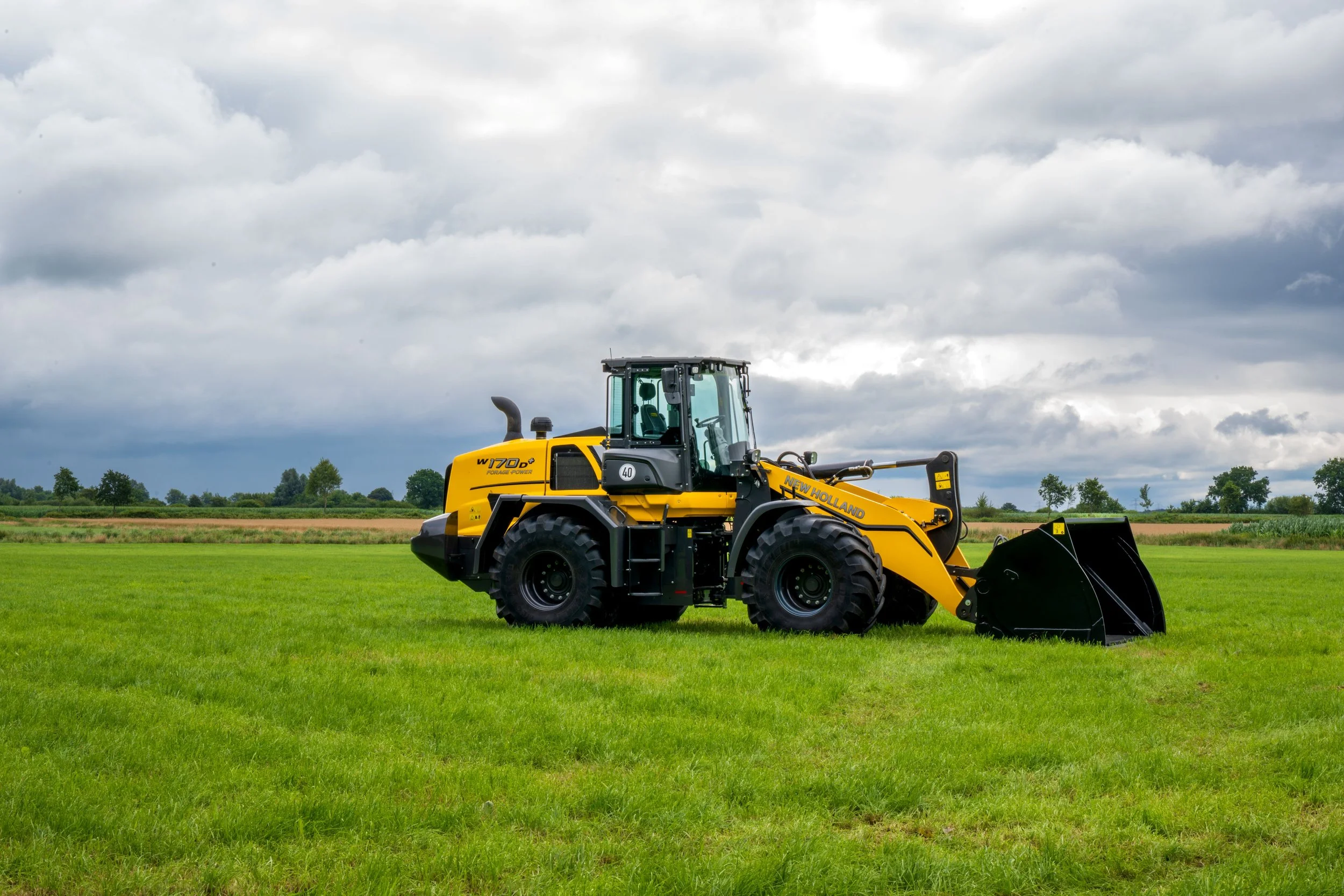
NEW HOLLAND
New Holland Construction will launch a new specialist machine to the New Zealand market at Fieldays 2026, with the New Holland W170D+ Forage Power wheel loader set to make its local debut. Developed specifically for silage clamping and intensive forage and biomass operations,
the model reflects the growing demand for machinery designed around the realities of high output contracting work.
The W170D+ Forage Power is built as an evolution of the established W170D platform, with engineering changes aimed at improving stability, pushing power and fuel autonomy in demanding clamp environments. Powered by a 6.7 L FPT engine producing up to 255 hp, the machine is designed to deliver strong performance at low revs. Its class leading torque of 1300Nm sets a new market benchmark, ensuring exceptional pushing power for demanding clampoperations.
A 400 L fuel tank supports full day operation, while a six speed transmission with lock up from first gear and enhanced axle traction systems help maintain grip on steep or slippery surfaces.
With an operating weight of 16.4 tonnes, a rear mounted engine for natural counterbalancing and one of the longest wheelbases in its class, the W170D+ is built to offer stability when working on tall clamps or uneven ground. The cab has been designed with operator comfort and visibility in mind, featuring a panoramic windscreen, LED lighting, touchscreen display and advanced camera systems. It also offers the largest operator cab in the market, further enhancing comfort during long working days.
The model was developed in response to feedback from contractors seeking machinery better suited to the specific demands of modern forage systems, where long working days, frequent transport between farms and increasingly tall clamp structures are common.
The W170D+ Forage Power was also awarded the Material Handling 2026 award at Agritechnica at its debut, recognising its innovation and performance.
Alongside the wheel loader, New Holland will display a range of machinery and provide visitors with the opportunity to explore the brand’s precision farming tools, including the FieldOps data management platform and an in-cab simulator.
New Holland will be located at Site D99 at Fieldays 2026.
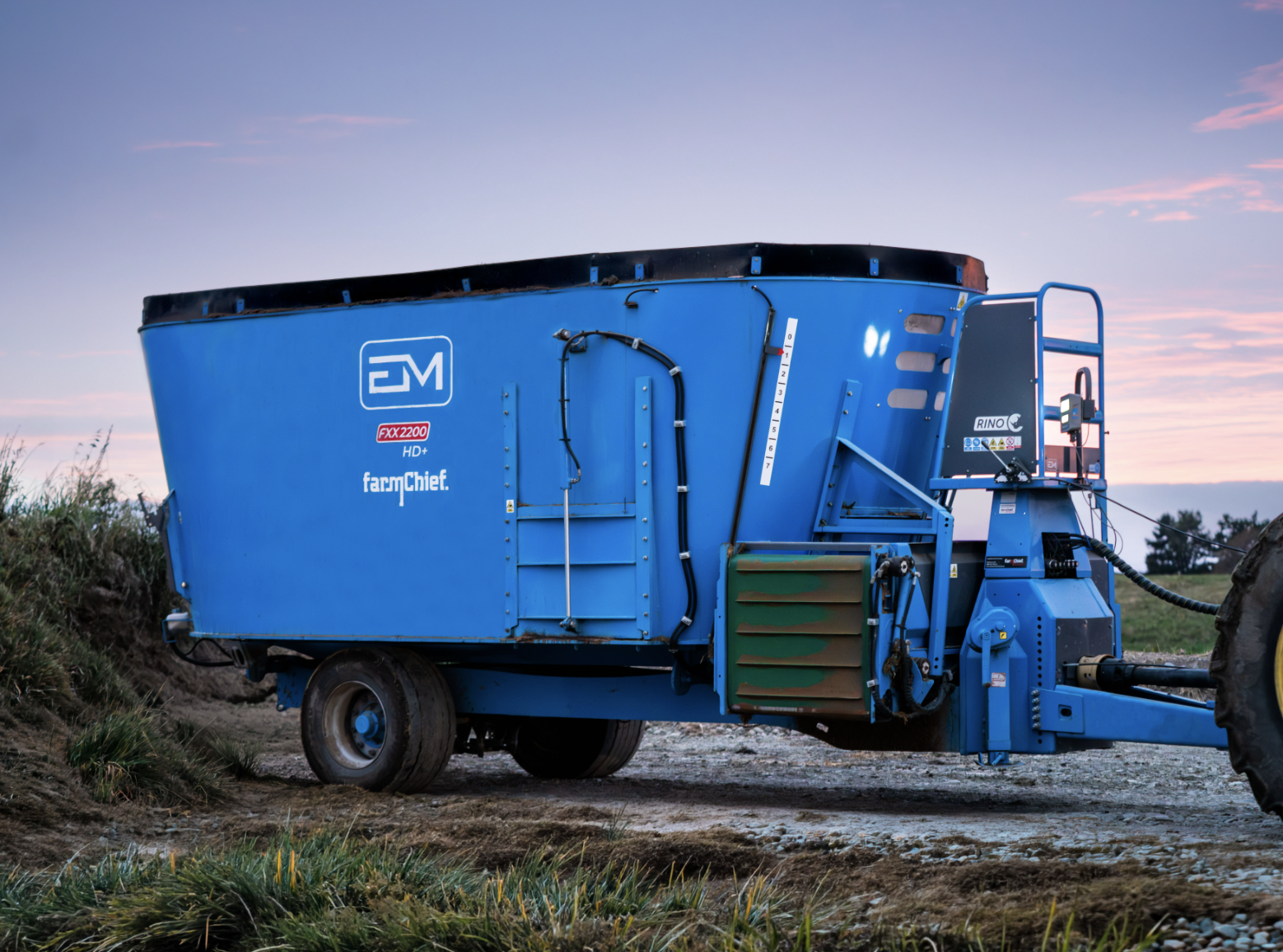
FarmChief Machinery
Rhino Mixer Diet Feeder Wagon
There is a growing expectation in modern livestock systems that feeding is no longer just a daily task, it is a controlled process that directly influences production, efficiency and ultimately profitability. That shift has placed increased focus on mixer feeder wagons, particularly those
capable of delivering consistent, repeatable rations across larger herds and more intensive systems. It is into that space that the FarmChief Rhino diet feeder sits and, as Fieldays approaches, it is a machine that reflects where feedout technology is heading in New Zealand.
Before getting into the mixing system, one of the more practical and immediate advantages of the Rhino sits in its overall design, particularly its height to capacity ratio. This is an area that is often overlooked until it becomes a problem. In many cases operators invest in a high-capacity
wagon only to find that it requires a telehandler to load it effectively, adding another layer of cost to what is already a significant capital investment.
The Rhino addresses that issue directly. Its lower overall height, combined with a wider tub design means it can be loaded using existing equipment, most commonly a tractor with a front-end loader. In practical terms that removes the need for additional machinery purely to support the feedout system, which is a meaningful consideration when total investment is being closely scrutinised.
That design is not accidental. By transporting the wagon in containers on its side, FarmChief has been able to work within shipping constraints while rethinking the proportions of the machine. Shipping containers are taller than they are wide, so positioning the Rhino on its side allows the
tub to be built wider without increasing overall height or extending the length of the wagon. The result is a machine that maintains strong capacity while remaining practical to load and operate within existing farm setups.
Importantly, that approach does not come at the expense of performance. A longer wagon can reduce mixing efficiency, particularly with vertical auger systems, where material needs to be continuously lifted and folded to achieve a consistent ration. By keeping the machine shorter and wider, the Rhino maintains an effective mixing environment, supporting a complete and uniform blend rather than compromising for the sake of volume.
At its core the Rhino is built around one of the most critical elements of any diet feeder, the mixing system. The use of dual vertical augers is not new in itself, but the execution here is clearly aimed at delivering a consistent and aggressive mix across a wide range of feed types.
The augers are designed to process everything from long fibre hay and straw through to baleage and additives, creating a uniform ration that is essential for maintaining animal health and production.
What stands out is the geometry of the augers and the way they move material through the tub. The figure eight mixing action is designed to lift, fold and reintroduce material continuously rather than simply turning it. In practical terms, that means less sorting at the feed face and a
more even intake across the herd. For operations pushing production that consistency is not a nice to have, it is fundamental.
The construction behind that system reinforces the same message. With heavy duty augers built from high grade steel and a reinforced tub structure, the Rhino is clearly designed for longevity in demanding conditions. New Zealand feedout systems are not always gentle environments, with heavy silage, variable material quality and often challenging underfoot conditions. Machines that cannot handle that workload tend to show it quickly, and durability becomes a key part of the equation.
Capacity remains a defining feature, with models extending into the larger cubic metre range, positioning the Rhino firmly within the medium-to large scale-bracket. It is a machine designed for operations where volume matters, but where that volume still needs to be managed efficiently within the constraints of existing infrastructure.
Power requirement is another area where the Rhino shows a clear understanding of the New Zealand market. Despite its capacity and aggressive mixing capability, the machine is designed to operate with relatively modest horsepower. That allows a wider range of tractors to be
utilised, rather than requiring a dedicated high horsepower unit.
That has two immediate benefits. The first is fuel efficiency, particularly over a long feeding season where hours quickly add up. The second is flexibility within a fleet, allowing existing tractors to be used rather than tying up a larger unit. In a contracting environment or larger farming operation, that flexibility can have a direct impact on overall system efficiency.
Feed delivery is equally important, and here the Rhino offers a level of configurability that reflects the variety of feeding systems used across the country. Conveyor options, chute placement and discharge configurations can all be tailored to suit different setups, whether that is feeding into troughs, along feed pads or into more confined areas where access needs to be managed carefully.
The ability to adjust conveyor length and control feedout accurately adds another layer of practicality. It allows operators to place feed where it needs to go without excessive manoeuvring, which in turn reduces time and wear on both the machine and the tractor.
Where the Rhino moves beyond traditional feedout is in the integration of weighing and control systems. Modern diet feeders are as much about data as they are about physical performance, and the inclusion of programmable weighing systems reflects that shift. Operators can set
recipes, monitor ingredient use and track consumption, all of which contribute to more precise feeding and better utilisation of feed resources.
The option to integrate digital control and monitoring further extends that capability. It allows feeding to be managed with a level of oversight that was not possible in older systems, particularly in larger operations where multiple operators may be involved. It also provides a clear record of what has been fed and when, which is becoming increasingly important in both production and compliance contexts.
From a Fieldays perspective, the Rhino sits in a category that continues to gain attention. Feedout is no longer a secondary consideration, it is central to how many farms are managing production, particularly in dairy and intensive livestock systems. The ability to deliver a consistent ration, reduce wastage and improve feed conversion is directly linked to profitability, and that is where machines like this are positioned.
In terms of positioning, the Rhino is not trying to be everything to everyone. It is clearly aimed at medium to larger operations, where the scale of feeding justifies the investment and where the benefits of consistent mixing, efficient loading and practical integration into existing systems
can be fully realised.
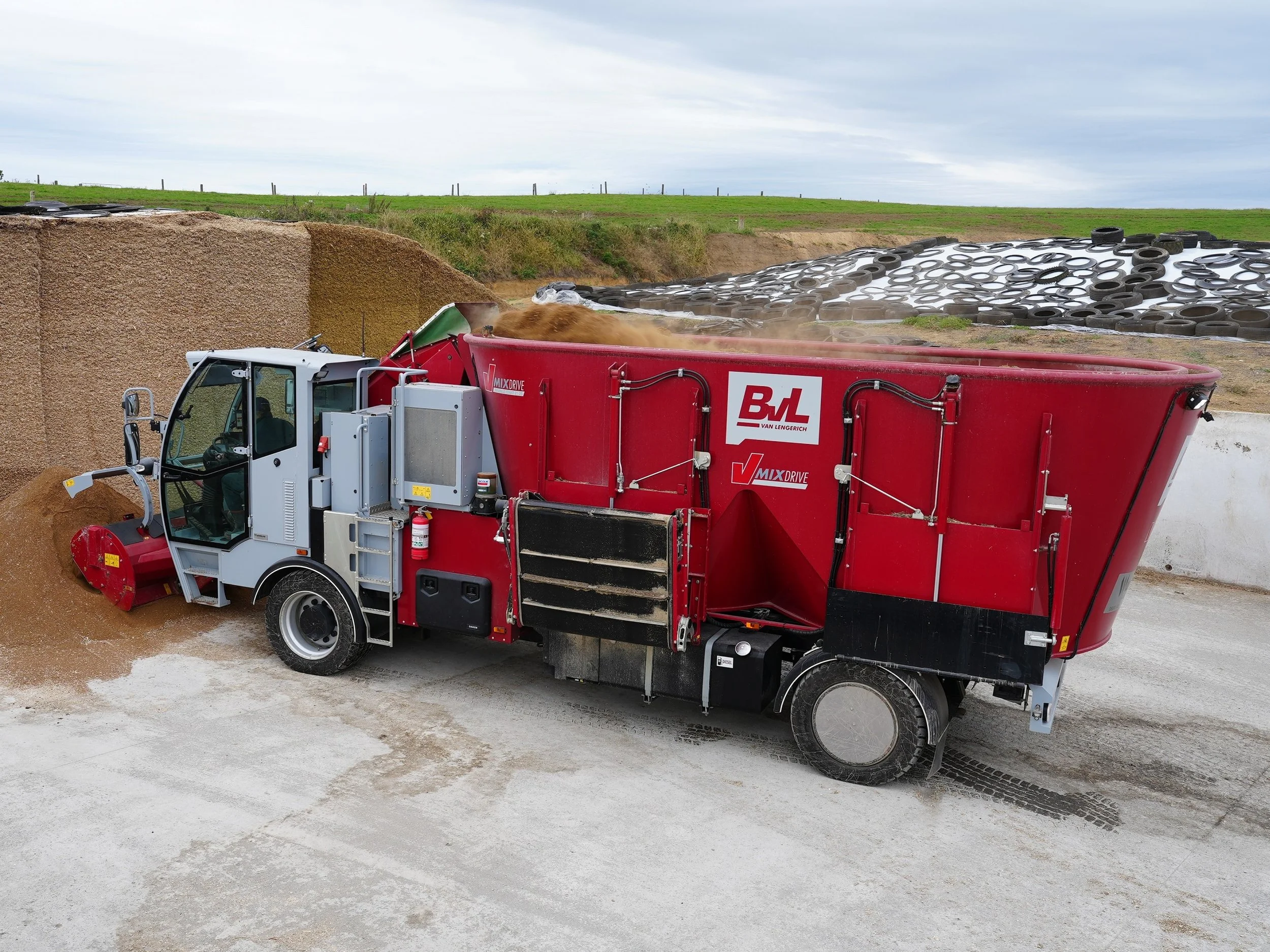
Webbline
When you are visiting Mystery Creek Fieldays 2026, make sure you call by and visit the Webbline stand, site H50, the home of Europe's leading and most durable equipment brands such as Bergmann, BvL, Dieci, Goweil, Herron, Mastek, MDE, ROC, SIP & Wilson Engineering, as well as a full range of crop packaging supplies from Cotesi, Exporplas, Mima Films, and Rani.
BvL Mixer Wagons
If feeding consistency is costing you production, it’s time to take a closer look at the range of BvL mixer wagons – on display at the Webbline stand at Mystery Creek Fieldays.
Engineered in Germany and proven on New Zealand farms, BvL mixer wagons are built for durability where it matters most. A heavy-duty chassis, reinforced floor and sidewalls, and strengthened auger joins all work together to handle high-wear conditions and keep you running
longer between repairs.
But it’s what happens inside the mixer wagon that sets BvL apart.
The unique asymmetrical auger and counter-knife design combined with the optimal auger to bowl height ratio delivers faster, more efficient mixing with lower power demand. The result is a consistently even ration, right down to trace elements, supporting better intake, improved digestion and stronger conversion into milk solids and liveweight gain. This boosts not only animal health and productivity but also profitability across the entire herd.
Smarter feeding with the Dairy Feeder
The BvL Dairy Feeder system turns your mixer into a fully connected feed management tool.
Track on-farm feed inventories in real time, ensuring forward planning is more accurate. Every mix and every load fed out is recorded, creating clear accountability and helping to guarantee consistency across the herd. Farmers can share data instantly with consultants, nutritionists, or
vets, improving collaboration and decision making.
The BvL Dairy Feeder also generates detailed reports on feed costs and feed conversion efficiency, turning raw numbers into actionable insights that drive profitability.
Built for New Zealand farming
The Pro Series retains the same robust build quality as the standard models but adds extra protection where wear hits hardest, with stainless steel auger liners and built-in safety features like a mixing magnet, which captures any stray metal before it can enter the ration, providing an
added safeguard to protect your animals. The BvL Dairy Feeder comes as standard and includes a 12-month subscription.
For larger or higher-demand systems, the self-propelled Maximus takes efficiency further, combining the trusted mixing performance of the standard towed models with the efficiency of a self-loading system. By chopping the feed before it enters the mixing bowl, the Maximus reduces mixing times while also maintaining the quality of the silage face.
The modern cab is equipped with intuitive controls, excellent visibility and modern comfort features, making long feeding runs less tiring for operators. Smart technology integration ensures accurate mixing, feeding precision and full use of the machine’s efficiency gains. For even greater oversight, the Maximus comes with the BvL Dairy Feeder, giving farmers full control of planning, monitoring and reporting across their feeding operation. Don’t miss your chance to be among the first to view the new BvL Maximus.
Diechi Agri Star Mondo Telehandlers
Looking for a telehandler that can keep up with the pace of modern farming? The new Dieci Agri Star Mondo range is built to handle it, and you can see it for yourself at the Webbline stand, at Mystery Creek Fieldays.
Designed for strength without sacrificing manoeuvrability, the Agri Star Mondo models are well-suited to tight yards, sheds and high-demand daily tasks. With lift capacities up to 4,500 kg and reach up to 9.6 m, they cover everything from bale handling to silage and pallet work.
A 125HP FPT engine paired with a precision-controlled two-speed hydrostatic transmission with electronic control for maximum precision gives you smooth, controlled power, even under load. Fast hydraulics and responsive controls mean you can handle multiple movements at once,
improving efficiency across every job.
Long hours are part of the job, so the newly designed cab is designed to reduce fatigue. Increased space, improved soundproofing, advanced suspension and clear all-around visibility create a more comfortable, controlled working environment, whether you’re loading out or stacking high.
From intuitive joystick controls to automatic boom suspension and overload protection, the system is designed to keep operation smooth, precise and safe, without overcomplicating the job.
The result is a telehandler that feels responsive, capable and reliable in real farm conditions.
SIP Star Swatherd
A well-shaped bale starts with a well-formed swath, and the new SIP Star range is built to deliver exactly that.
Webbline will be showcasing the latest SIP Star twin-rotor swathers at Mystery Creek Fieldays, this year. With working widths from 5.8m to 9.3m, the range offers flexibility across everything from smaller operations through to large-scale and contractor systems. The high arch-shaped
chassis ensures sufficient underbody clearance while raking and improved rotor clearance when lifting at headlands, while the impressive +/-77.5 degree steering angle on the two-point linkage ensures maximum manoeuvrability.
The central delivery twin-rotor design ensures controlled crop flow and consistent swath formation, with synchronised rotors and the easily adjustable 420mm cam track, supports accurate forage placement for baling or forage harvesting.
Designed to perform across real paddock conditions, tandem axle rotor systems and advanced mounting allow each rotor to closely follow ground contours independent from the main chassis, maintaining a consistent working height and even swath formation across uneven terrain.
Hydraulic adjustment functions on the larger SIP Star swathers allow operators to fine-tune working width and rotor height from the tractor, keeping operation efficient and straightforward, while the smaller SIP Star swathers offer the ability to manually adjust the rotor width and rotor
height for the perfect swath.
Don’t miss your chance to view these latest product releases - Webbline, Site H50, Mystery Creek Fieldays 2026.