
Final countdown: hedgehog clear out in the Mackenzie Basin
You can count the remaining hedgehogs in 4,000 hectares of Mackenzie Basin high country on one hand. And they are on borrowed time. The Zero Invasive Predator steam is closing in on the last few, with the survivors only temporarily active before winter hibernation sets in.
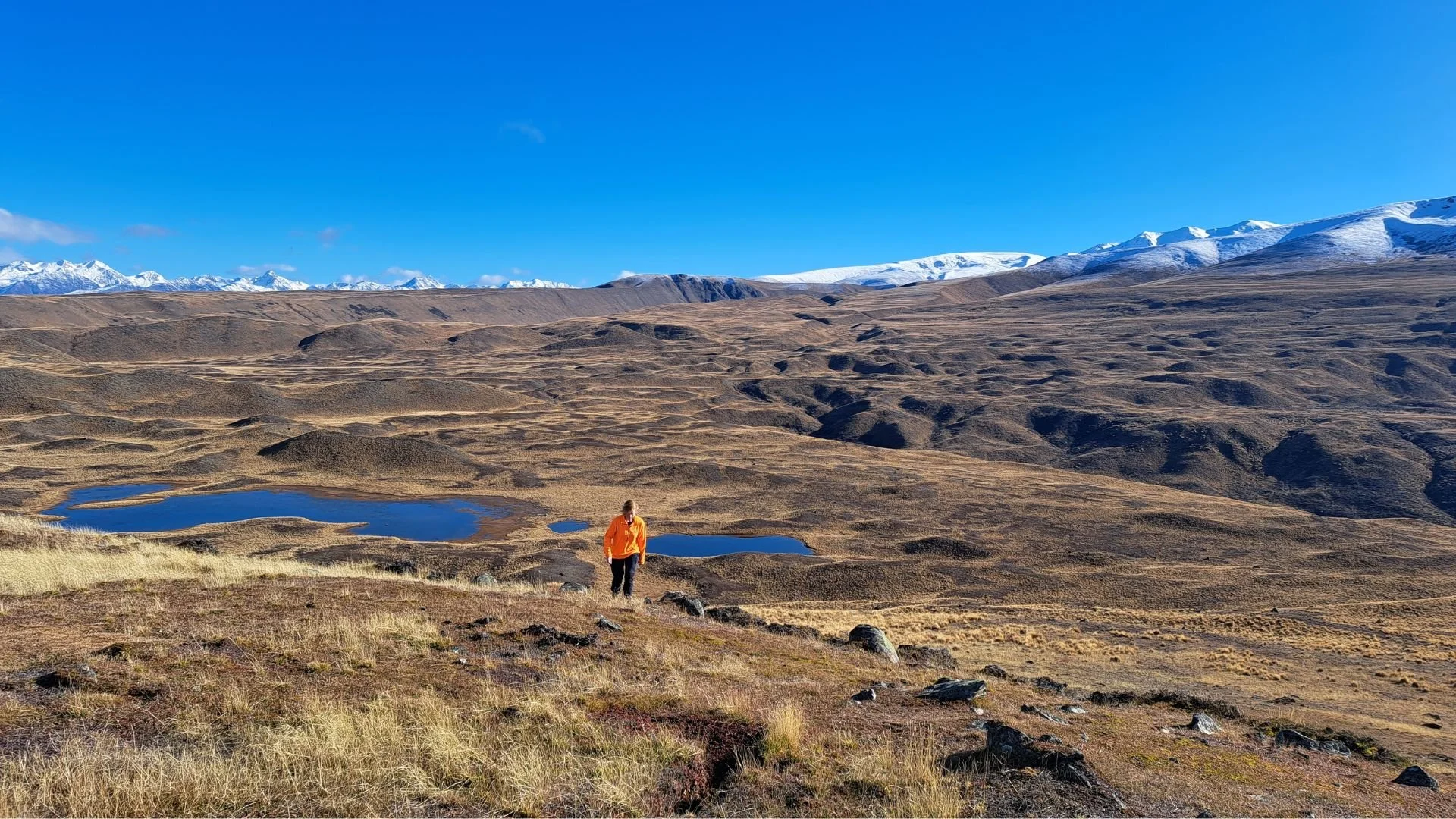
They don’t know it yet, but the handful of remaining hedgehogs within the 4,000-hectare high country farm near Mistake Valley are approaching what is likely to be their final season before winter.
The ecologically important drylands, carpeted in native shrubs and grasses and an almost unknowable number of invertebrates, are beginning to cool as the days shorten and autumn settles across the basin.
But their greatest threat is on the move too, and while few in number, they’re hungry as they build reserves ahead of hibernation.
Thanks to an extensive and systematic trapping and hunting programme, only a handful of hedgehogs remain.
Zero Invasive Predators (ZIP)has removed around 1,300 ofthe prickly predators across 4,000 hectares on a rabbit-proof fenced high-country farm aspart of the wider Te Manahuna Aoraki Project.
With winter hibernation approaching, the window to remove the final few is narrowing.
ZIP predator ecologist NickFoster is confident the job will be completed before winter sets in.
"We’re very excited to be just weeks away from successfully removing this species. If we were to pick any predator to remove from the Mackenzie Basin, it would be hedgehogs by a country mile.”
That’s because hedgehogs cause significant damage to native wildlife and habitats.
In drylands like the Mackenzie Basin, hedgehogs are never short on food or shelter, and they face few competitors or natural predators. A study found hedgehogs were responsible for one in five predator attacks on braided river bird nests in the basin.
The eggs of ground-nesting birds, lizards, skinks and invertebrates are all fair game, while an abundance of dry nesting sites provides shelter for reproduction and waiting out the harsh winter.
“They’re likely exacting the largest toll on biodiversity in this environment, and that’s why they’re in the crosshairs of this project,” Nick explains.
The Te Manhuna Aoraki project area spans alpine ecosystems, tussock grasslands, braided rivers, and a number of high-country farms.
Working with different landowners adds complexity to how removal can be done effectively while making sure it fits around day-to-day farming operations. In these working environments, there are stock, working dogs, staff, visitors, and machinery to consider when planning predator control.
Nick says the team has used layers of techniques and tools to give them the best chance of finally removing a species introduced from Great Britain inthe 1870s.
First, hedgehogs are detected via a network of lured trail cameras, allowing the team to lay clusters of kill traps in strategic locations. To mop up the survivors, drone-guided hunters come next, then thermal cameras.
Although primarily used to detect rabbits and hares, hedgehogs’ distinctive heat signatures make them instantly detectable.
“Hedgehogs absolutely glow on a thermal camera – they don’t have any fur on their back, only spikes. They look like a pinprick of heat, and they’re really easy to find if they’re out in the open,”Nick says.
“It’s very much in hand,” he says. “The team has done this hundreds of times now, and is getting very efficient.”
For even more targeted work, a specially trained detection dog Zach – full name Professor Zachariah Q Wigglebottom for his tendency to wiggle his bottom with excitement when he finds a hedgehog – can be brought in.
With so many proven options at their disposal, Nick remains confident they’ve got the tools and knowledge to get the last remaining hedgehogs.
“Even if we are off in our estimates and more are still active than the handful we know about, we have the capability to detect them and the tools to remove them.”
The breeding season for braided river birds, including the tarāpuka (black billed gull), tarapirohe (black-fronted tern), and the kāki (black stilt), runs through the warmer months. By removing the significant pressure the hedgehogs place on the biodiversity of the Mackenzie Basin, the landscape and wildlife now have a fighting chance to start their recovery after decades of damage.
Without the threat of predation looming over them, the nesting success of braided river birds will initially be the most noticeable change, Nick says.
“Our colleagues at DOC and Manaaki Whenua have shown that lizards bounce back within five years of predator removal.”
It’s unclear what the impact on invertebrates will be, but having a key predator removed from the environment can only be positive.
Before winter arrives, hedgehogs could be gone from this defended site in the Mackenzie Basin, but the lessons learned here may help others do the same.
Even though hedgehogs aren’t officially on the Predator Free 2050 target list, Nick believes groups should include them, and other pest species, as targets if they’re within their management area.
“Te Manahuna Aoraki Project is targeting a wider suite of pest species – nine, including rabbits and hares – to improve the overall integrity of this special environment.“
And we encourage others todo the same,” Nick implores.