
Re-defining cultivation: Why the Kverneland Qualidisc matters for New Zealand soils
Cultivation equipment often sits in the background of farm machinery conversations, yet it plays a critical role in setting up the season before seed ever meets soil. The Kverneland Qualidisc is not a drill or a planter, it is the machine that prepares the soil in a way that respects the unique variability of conditions across New Zealand paddocks - from lighter silts to heavier loams and everything in between. What makes the Qualidisc noteworthy, particularly as it arrives here through Power Farming, is not flash technology for its own sake but a careful balance of aggressive soil engagement with precise control, allowing operators to respond to the real challenges of seedbed preparation without unnecessary compromise.
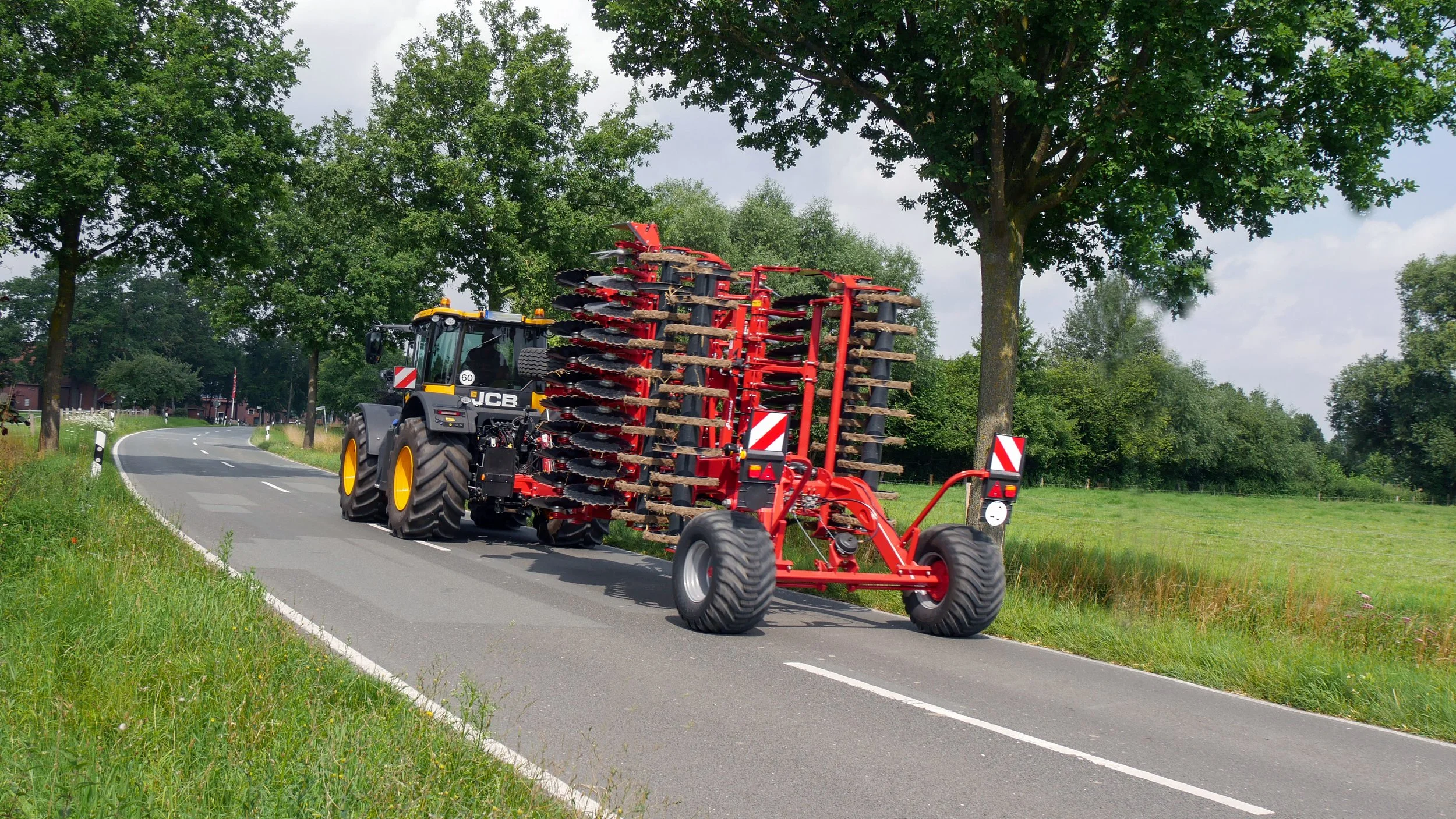
What the Qualidisc does at first glance appears simple enough—cut, mix, and level soil—but the difference lies in how it achieves that outcome consistently across different field conditions. Instead of relying on a single bar or tine arrangement, the machine combines a row of high-strength disc gangs followed by a robust levelling and consolidation system, all mounted on a frame engineered to maintain balance and stability at speed. The initial disc gangs slice through residue and surface soil, breaking crusts and cutting trash so that soil is conditioned rather than torn. This prepares a profile where organic matter is incorporated without smearing, which matters because soil structure deteriorates quickly when shear forces dominate, leading to compaction layers that slow emergence and restrict early root growth.
Adhesion and consistency are perennial challenges in New Zealand cultivation, because moisture levels can vary widely across a paddock after a rain event, and the Qualidisc’s geometry is designed to respond to that. The angled discs work to throw material evenly rather than bank it, reducing the risk of side shearing and uneven surface profiles that cause headaches at planting. What might appear to be a small detail in gang angle or disc size is in fact a significant factor in how uniform the soil profile becomes after a pass, and it is those uniform profiles that give planters and drills a predictable surface to work from.
Another detail that sets the Qualidisc apart is the way the subsequent levelling and rear packer work in harmony with the front discs. Too often cultivators leave a rough surface that drills then must chase, resulting in variable depth and inconsistent seed placement. The Qualidisc’s rear levelling tines and packer take the rough cut from the discs and bring it back to a manageable bed, smoothing wheel tracks and minor undulations so the following seeding equipment can do its job without compensating for micro-terrain. This is not merely convenience, it is agronomic sense: seed depth consistency is directly related to the uniformity of the seedbed and even small irregularities can manifest as patchy emergence when conditions are tight.
Frame strength and machine balance are more than marketing words on a specification sheet, they are real contributors to consistent cultivation. The Qualidisc is built with a robust mainframe and well-engineered articulation points so that the discs run true over uneven ground rather than bouncing or deflecting. That means the aggressive work the gangs are designed to do actually gets done where it should, not just where the machine pitched itself. With working speeds that recognise the need to cover ground without ripping through soil blindly, this combination of strength and controlled engagement is a reminder that good cultivation is as much about mechanical integrity as it is about soil physics.
Another consideration for the New Zealand context is residue management, because increasing adoption of cover crops and residue retention has made the job of a cultivator harder, not easier. The Qualidisc’s design invites residue to be cut cleanly and mixed into the soil profile without building thatch banks or leaving long fibres that wrap on axles and bearings. This is particularly relevant for contractors and mixed farms where rotations vary and a cultivator must work equally well after maize stubble as after ryegrass or brassica residues.
Maintenance, often the unseen side of farm machinery, also gets attention in the Qualidisc’s design. Bearings are well protected, gang alignment is easy to check and adjust. Service points are accessible without undue contortions. In a season where downtime means missed windows and tight margins, ease of maintenance is not a luxury, it is a practical advantage that keeps the machine on the job rather than off it.
What ultimately defines the Qualidisc is not any single feature, but the way those features come together to support a sound agronomic base. It does not try to do everything, but what it does do, it does with a seriousness of purpose that matches the realities of New Zealand soils: variable moisture, mixed residue loads, and the ever-present need to make the most of fleeting seeding windows. Bringing soil to a consistent, workable state before planting is the work that underpins every successful crop, and machines that understand that simple truth tend to be the ones operators return to season after season.
As Power Farming introduces the Qualidisc to growers and contractors here, the conversation will inevitably start with specifications, widths and other options. But for those who spend time behind the wheel, it will be the way the machine handles real soil and real paddocks that defines its value. Because cultivation is not an abstract exercise, it is the quiet work that sets the scene for the rest of the season, and in that role, the Kverneland Qualidisc is a machine designed to get the fundamentals right.