
Holding the line at speed: Why the Kverneland Optima SX with Geoforce raises the bar for precision planting
The arrival of the Geoforce option to the Kverneland Optima SX range in New Zealand will matter for a simple reason that sits behind every good planting job, because once the seed is in the ground you are no longer making decisions, you are living with them and in a season where planting windows can be short and soil conditions can change from one end of a paddock to the other the value is not in clever features for their own sake but in the way a machine holds depth, holds spacing and holds consistency when the easy parts of the field are finished and the real work starts. That is the promise of this planter as it lands through Power farming and it is also the right lens to judge it, not by a brochure line but by how it keeps seed placement stable when ground speed lifts, when wheel tracks firm up the soil and when a contractor has a full day of stops and starts and headlands and mixed residue to deal with.
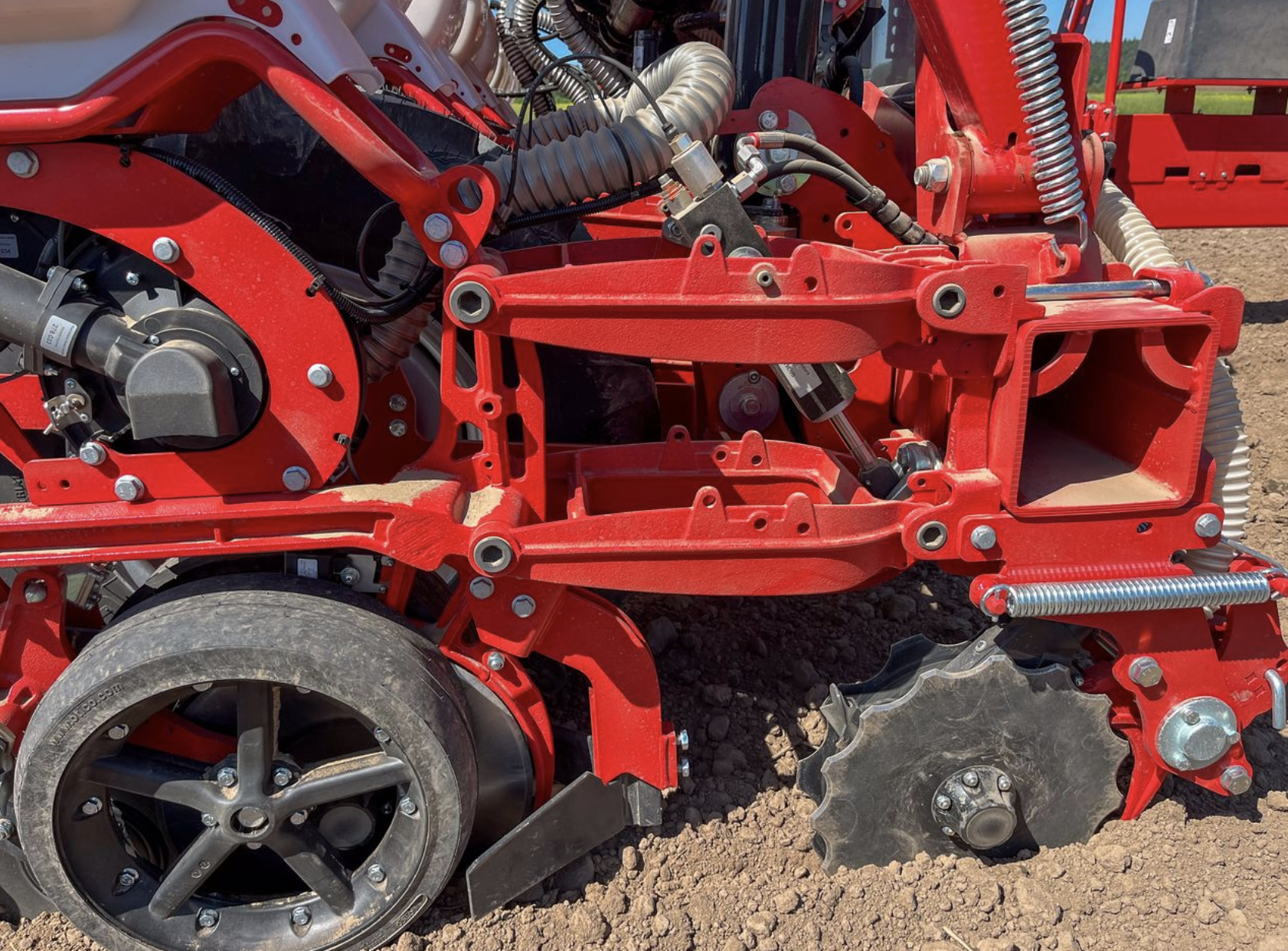
At the centre of the conversation is Geoforce, because depth control is where precision planting either pays off or quietly leaks potential, and the Geoforce system is designed to keep a consistent downforce or pressure release on each row, the opener then stays working at the target depth even when soil resistance changes. The important point here is that it is row by row, so the machine is not making a broad assumption that the whole planter is seeing the same conditions, instead each sowing unit is monitored and adjusted on the move which is exactly what you want when one side of the planter is tracking through a compacted tramline and the other is in looser soil or when a paddock transitions from lighter ground to heavier ground without warning. In practical terms the goal is uniform emergence, because when depth varies you get staggered emergence and staggered maturity and that turns into uneven yield and uneven harvest timing and the best precision planters are the ones that remove that variation without the operator having to chase settings every second pass.
The second pillar is the SX sowing unit itself, which is built around the idea that accuracy should not be sacrificed when speed is required. Kverneland’s SX row unit has been developed for high speed planting with accurate singulation and placement at working speeds up to 18 km/h and that detail is not just about going faster for the sake of it, it is about getting the crop in when the conditions are right because the best planting day is often not the day you have time it is the day the soil temperature, moisture and forecast line up and you have to move. For New Zealand contractors and large-scale growers that reality is familiar and speed only becomes useful when the row unit still follows the ground contour, still controls depth and still places the seed cleanly, which is where the combination of a high speed SX row and Geoforce becomes a practical package rather than two separate ideas.
From a technology standpoint the Optima SX approach is also tied closely to Isobus control and electric drive, and that matters because electric metering opens the door to full section control and row by row management without relying on complex mechanical drives that can wear unevenly or become difficult to calibrate across different seed types. With Isobus integration the planter can work with the well established GEO-CONTROL functions for automatic switching and management and it can also tap into GEOSEED capabilities that focus on spacing accuracy by coordinating seed release against forward speed, which is one of the hidden challenges of high speed planting. If the metering system cannot keep up with changes in speed you end up with doubles and misses and a spacing pattern that looks acceptable from the cab but costs you in crop competition and yield uniformity later so the move to electrically driven rows and integrated control is not a fancy add on, it is the foundation that allows the agronomy goal to be delivered at modern operating speeds.
There is another practical angle here that will appeal to anyone who has spent time maintaining planters and it is that the SX concept is designed to keep the seeding heart efficient, with low friction and modest power demand which supports the wider move toward electrically driven systems without the need for complicated power supply arrangements. In the real world that can translate to simpler operation and fewer points of failure, and while every machine still needs good setup and good maintenance the best technology is the kind that reduces the number of things that must be perfect before you can do a good job.
Where this becomes particularly relevant for New Zealand is the mix of crops and row spacings that operators need to cover, from maize and other row crops through to specialist work and the Optima platform is built as a configurable system with different frames and row configurations to suit different applications. That flexibility matters in a market where the same contractor might plant across multiple regions and crop types in a single season and it also matters because the economics of a precision planter improve when the machine is utilised well, not sitting in a shed waiting for one narrow window of use.
Distribution through Power farming adds another layer of relevance because precision planters are not set and forget machines, they demand calibration, support and parts back up and the value of a sophisticated planter is limited if the support network cannot keep pace with the technology. When a planter is operating at high speed and chasing narrow windows the margin for downtime is small, so local set up knowledge, field support and reliable parts supply become part of the technology story whether we like it or not. The fact this planter is about to land in New Zealand with that dealer backing will be as important to its success as the features on the row unit, because the best planting results come when the machine is properly introduced into real farm systems with real soils and real operators.
In the end the Optima SX with Geoforce package is not trying to reinvent planting, it is trying to remove the reasons planting goes wrong which are nearly always the same, inconsistent depth as conditions change, spacing that drifts as speed changes and systems that are too slow to respond when the paddock is not uniform. If Geoforce can hold depth row by row and if the SX unit can maintain accurate singulation and placement at the speeds modern operators need then the outcome is simple, more uniform emergence and a crop that starts evenly and stays even. That is the kind of progress worth paying attention to because it is not a headline feature, it is the quiet improvement that shows up months later when the stand is consistent and the yield map looks like the job you thought you were doing on planting day.