
Practical cultivation without compromise
When it comes to seedbed preparation that balances strength with finesse, the Rata 812 Trailing Maxitill sits comfortably in territory that suits both contractors and large-scale farmers who need reliable output across changing conditions. It is a machine designed to work hard without overworking the soil, delivering a consistent finish that reflects practical thinking rather than unnecessary complexity. Built with New Zealand conditions firmly in mind, the 812 Trailing Maxitill has developed a reputation for durability, even soil engagement and a finish that sets paddocks up properly for what comes next.
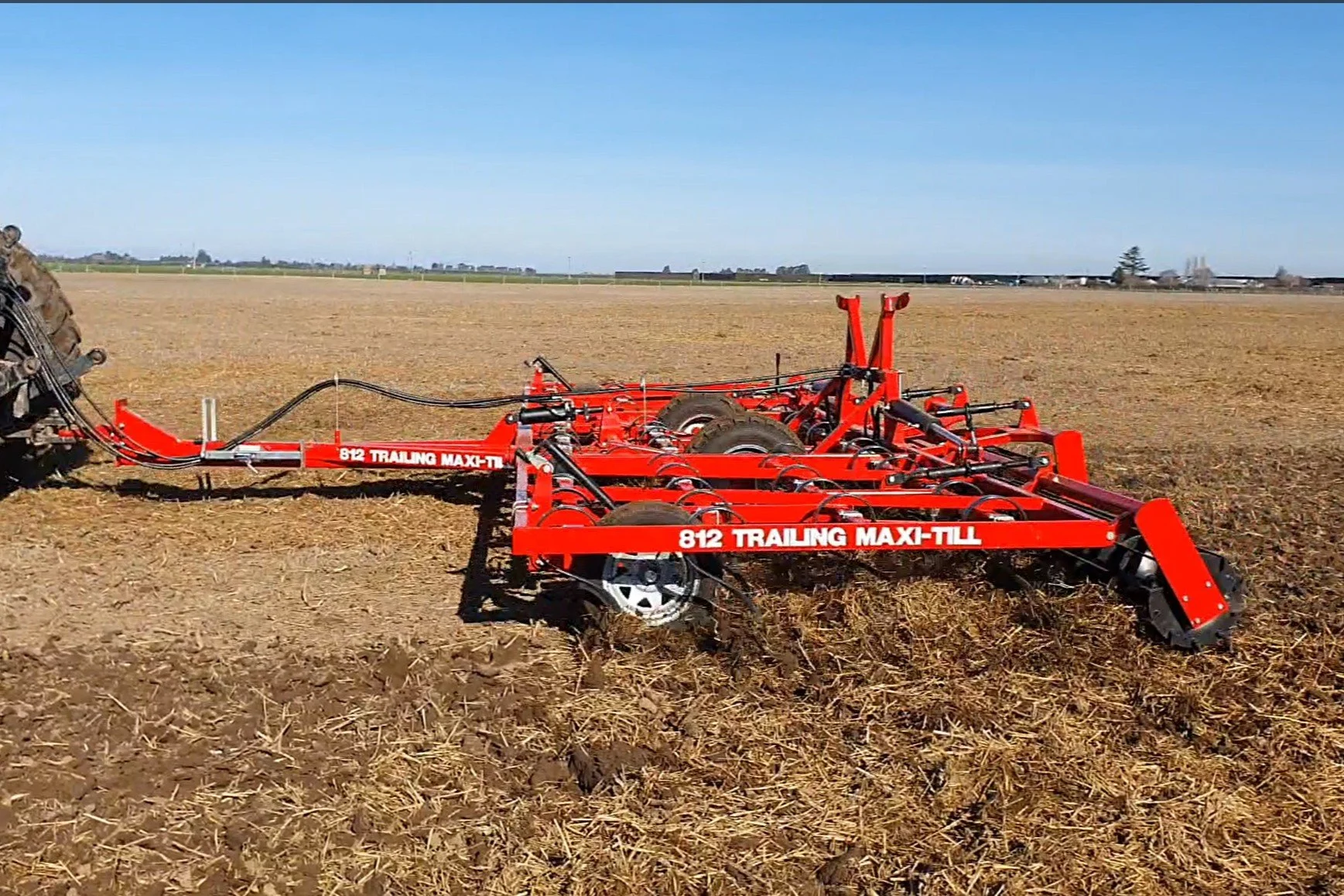
At its core the 812 is a fully trailing, floating tine cultivator intended to handle primary cultivation and seedbed preparation in a single pass. The trailing design allows the machine to follow ground contours accurately, an important consideration in paddocks that are rarely uniform and where maintaining consistent depth across the working width makes a measurable difference to crop establishment. Rather than forcing the soil into submission the Maxitill works with it, loosening and aerating while managing residue and levelling the surface.
The frame and layout reflect a focus on strength where it matters most. High-stress points are heavily built, giving the machine the resilience required for repeated seasons of demanding work. Tine spacing is tight, with closely set tines working the full width to ensure no strip of soil is left untouched. That density of engagement helps avoid ridging and leaves a uniform finish that reduces the need for follow-up passes.
Central to the machine’s performance is the use of vibrating “S” tines, which encourage soil movement rather than brute force. As the tines work through the ground, their natural flex creates a shattering effect that breaks clods and encourages friability without excessive disturbance. This action promotes a fine tilth at the surface while maintaining structure beneath, an outcome that matters when soil moisture retention and root development are part of the bigger picture rather than afterthoughts.
Behind the tines, the rear crumbler rollers play an important role in finishing the job. Their levelling action consolidates the worked soil, leaving a surface that is even and ready for drilling. For operators who understand the cost of uneven seedbeds, this consistency translates directly into better emergence and fewer issues further down the line. The finish is not about appearances but about function, reducing the risk of seed depth variation and ensuring that subsequent operations run smoothly.
One of the strengths of the 812 Trailing Maxitill is its ability to follow contours honestly. Floating wings allow the outer sections of the machine to track the ground independently, maintaining depth across undulations and avoiding the tendency to skim or dig in on uneven paddocks. This becomes particularly valuable on rolling country or where soil types change within a block, giving operators confidence that the machine is doing the same job across its full width.
Depth control is straightforward and practical. Adjustable wing wheels combined with hydraulic depth stops allow working depth to be set accurately and repeated consistently. Once dialled in the machine holds its depth without constant adjustment, reducing operator fatigue and improving productivity. Hydraulic wing lift simplifies transport and headland turns and the layout ensures that all key grease points are accessible when the machine is folded, encouraging regular maintenance rather than making it a chore.
In practical use, the Maxitill’s efficiency shows through in its ability to cover ground without excessive fuel consumption. While results will always depend on soil conditions and tractor match, the design intent is clear. The machine aims to do the job thoroughly in one pass, reducing overlap, rework and unnecessary fuel burn. For contractors balancing hectares per hour against running costs, that efficiency becomes part of the business case rather than a marketing claim.
Working widths are suited to medium and large operations, providing the capacity needed to make the most of suitable weather windows without creating transport headaches. Despite its scale transport width remains manageable, making road moves between paddocks or farms less stressful and more compliant. Optional configurations allow the machine to be tailored to different preferences, whether that is alternative rear finishing systems or additional levelling components to suit specific soil types.
From a workflow perspective, the 812 Trailing Maxitill fits neatly into modern cultivation systems. It leaves a surface that allows drills to run consistently, reducing the need for extra passes and helping keep operations on schedule when time is tight. That reliability matters in seasons where weather windows are short and delays can quickly compound into lost yield potential.
The broader appeal of the machine also reflects confidence in local design and support. Having equipment built for Australasian conditions with parts and backup close at hand, reduces ownership risk and downtime. For many operators that local understanding is just as important as the machine’s performance in the paddock.
Ultimately, the Rata 812 Trailing Maxitill is not about chasing novelty. It is about delivering consistent cultivation season after season, in a way that respects both the soil and the operator’s time. In an environment where fuel costs, soil health and machine reliability all matter, having a cultivator that combines strength, control and finish makes practical sense. It is a tool designed to earn its place on the yard by doing the job properly without fuss, and without compromise.