
Integra: when one roller has to do more than one job
There is a growing expectation in New Zealand farming that machinery should not just do a job, but solve a problem. With tighter weather windows, higher input costs and pressure to minimise passes, establishment equipment is increasingly judged not by how well it performs in perfect conditions but by how effectively it adapts to the realities of the paddock. That shift in thinking sits behind the development of Farmchief’s Integra system, which builds on the proven Rollmax platform but moves the roller drill concept in a more practical direction.
The starting point for the Integra was not engineering theory but farmer feedback. Paddle roller drills have long been valued for their ability to level and prepare a paddock quickly, creating a tidy seedbed and consolidating the soil in a single pass. In areas with reliable rainfall they often deliver strong results, and their role as secondary cultivators makes them particularly useful ahead of sowing programmes where efficiency matters.
Yet operators also identified a consistent frustration. While paddles do an excellent job of preparing the surface, they do not always pull soil back across the seed in the same way harrows do, and that difference can affect strike reliability when conditions are less forgiving. The obvious solution is a harrow roller drill, which does improve seed coverage, but that approach comes with its own compromise. Harrow-only machines tend to become single-purpose tools, losing the broader usefulness of a paddle roller for levelling and preparing paddocks ahead of drilling.
For contractors and mixed farms trying to minimise duplication in the fleet, that trade-off has never been ideal. What many operators wanted was a machine that could retain the paddle roller’s ability to prepare and consolidate ground, while also providing the seed coverage associated with a harrow drill. The Integra is Farmchief’s answer to that request.
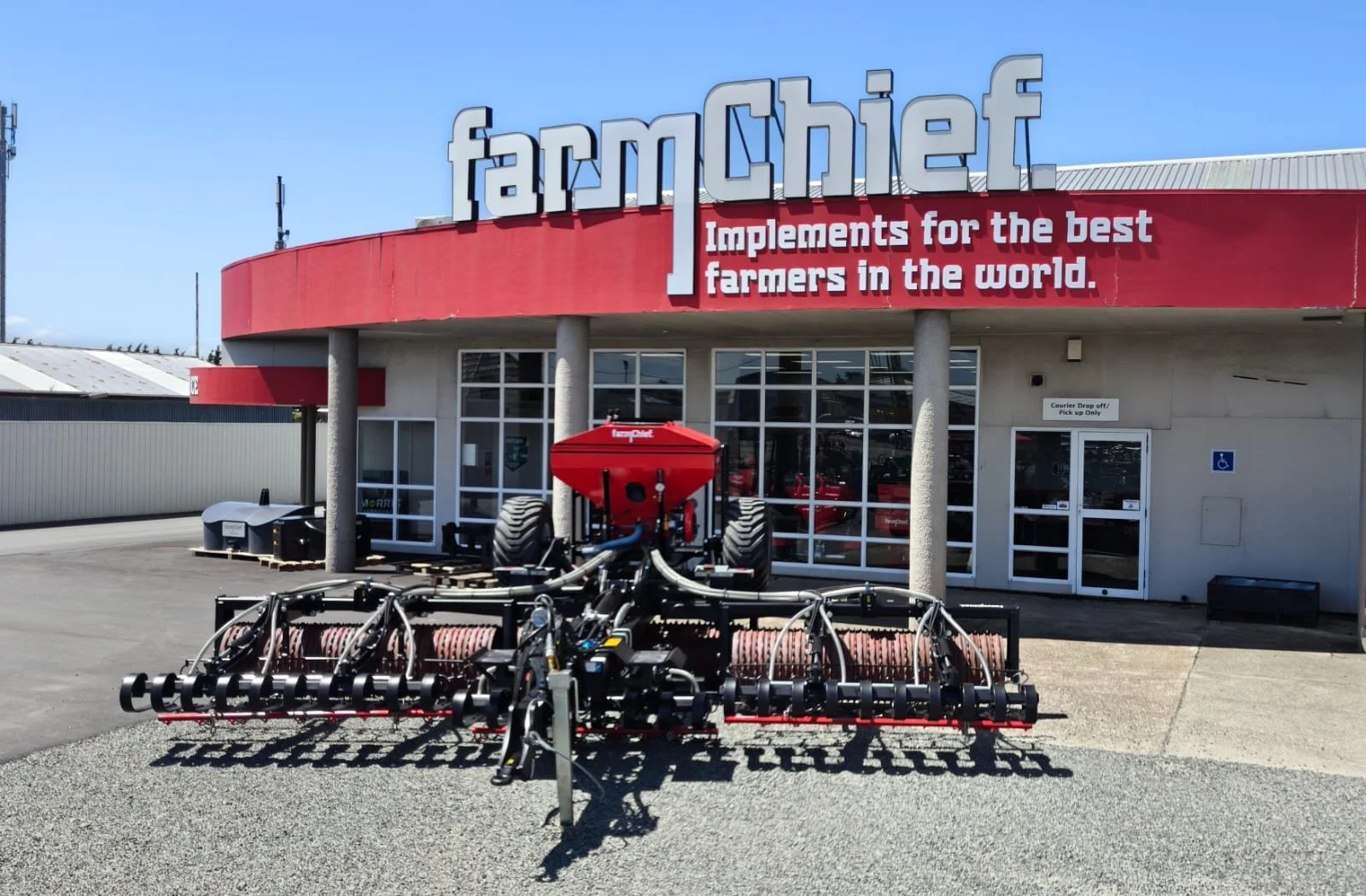
At the heart of the system is the Rollmax hydraulic paddle platform, which uses six synchronised rams to maintain consistent control across the full working width. That gives the operator the same levelling and consolidation performance that has made paddle rollers so effective as secondary cultivators, ensuring paddocks can still be prepared quickly and efficiently ahead of sowing.
Where the Integra moves beyond a standard paddle roller drill is in how it handles the final stage of establishment. Mounted behind the hydraulic paddles are two rows of heavy 12 millimetre chain harrows. Once the seed is applied, those harrows can be brought into play to draw soil back across the seed and improve coverage, helping to deliver a more consistent strike without the need for a separate pass or a dedicated harrow machine.
The effect is to turn what was once a choice between preparation and coverage into a combined operation. The machine can level and consolidate like a paddle roller, then finish and cover like a harrow drill, giving the operator greater control over the seedbed while still maintaining efficiency across the job. In practice that flexibility is what allows the Integra to operate as both a highly effective roller and a dependable roller drill, depending on how it is configured.
For contractors working across multiple farms, that adaptability is particularly valuable. Conditions vary from one property to the next, and the ability to adjust the machine’s role without changing equipment simplifies logistics and reduces downtime. For farmers running mixed operations, it means a single machine can cover preparation and sowing tasks without forcing a compromise in performance.
The Integra also reflects a broader shift in machinery design in New Zealand, where the most successful equipment is often shaped by practical feedback rather than theoretical optimisation. Farms here rarely operate under uniform conditions, and machines that succeed tend to be those that respond to variability rather than expecting standardised layouts or soil types. By combining the levelling strength of the Rollmax paddle system with the seed coverage advantages of harrows, the Integra feels less like a new product and more like a logical evolution of how roller drills should work in local conditions.
In the end, the value of a machine like this is measured not in specifications but in outcomes. When preparation, sowing and finishing can be carried out in one adaptable system, turnaround improves, consistency lifts and the pressure of narrow weather windows becomes easier to manage. That is what turns a piece of machinery from a simple implement into an operational advantage.
For New Zealand farmers and contractors who expect one machine to perform more than one role, the Integra represents a practical response to a familiar challenge. It is not about replacing proven systems but about bringing their strengths together in a way that better reflects how establishment work actually happens in the paddock.