
It pays to get maize to emerge evenly
The platform for a successful maize crop is established in the first few weeks after planting, and one of the biggest factors determining final yield potential is how evenly that crop emerges.
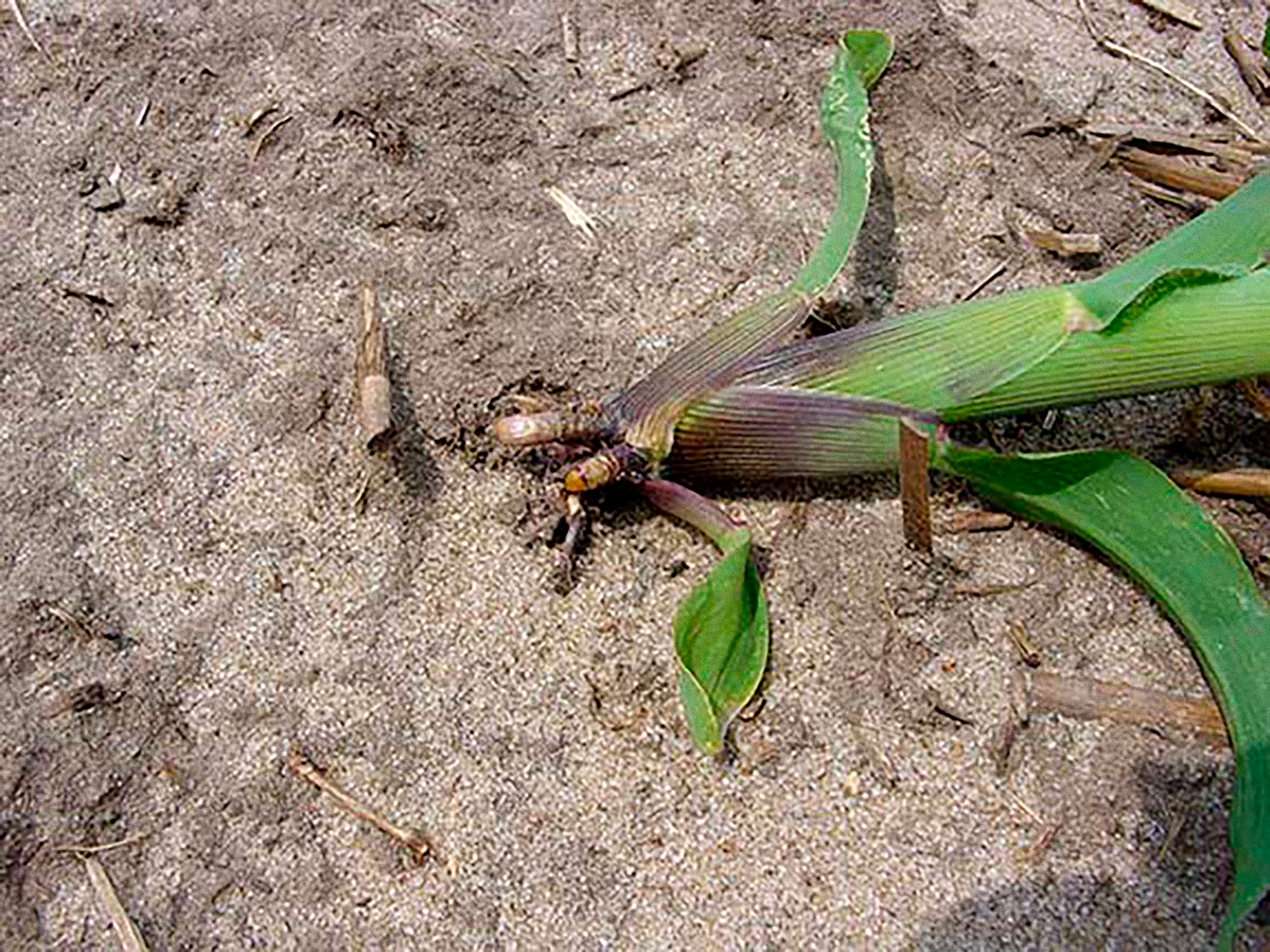
Fertiliser programmes, weed control and hybrid selection all have an important part to play, but establishment effectively sets the architecture of the maize crop for the remainder of the season. Once emergence has taken place, some compensation can occur depending on the timing and extent of stand loss, but there is no opportunity to replace missing plants and little chance of fully recovering lost uniformity.
How evenly seedlings emerge determines how effectively individual plants compete for light, nutrients and moisture and, ultimately, how efficiently the crop converts those resources into grain yield.
Maize is particularly sensitive to uneven emergence. Research and on-farm experience consistently show that plants emerging one or two leaf stages behind neighbouring plants can become more like weeds than productive members of the crop. They continue competing for water, nutrients and sunlight but contribute comparatively little to final yield.
Plants emerging three or more days later than the rest of the crop are less likely to fully compensate, while substantially delayed plants may produce only a small cob or no cob at all. Despite that, they remain part of the plant population and continue competing with productive plants for available resources.
Much of the yield impact comes from the resulting variation in plant size. Plants that emerge first establish an early competitive advantage and can shade weaker neighbours, reducing the ability of the crop canopy to intercept sunlight evenly across the paddock. Later-emerging plants are also placed at a disadvantage when competing for water and nutrients, and once that difference has been established, favourable growing conditions later in the season are unlikely to allow them to completely catch up.
Achieving uniform emergence therefore has benefits beyond simply establishing the desired plant population. It contributes to more consistent cob size and grain fill, more even dry down and better standability as the crop approaches harvest.
While seed quality remains critical, many problems with establishment can be traced back to seedbed conditions or planter set-up. Variable soil moisture, inconsistent planting depth, poor seed-to-soil contact, inadequate residue management, incorrect downforce and excessive ground speed without sufficient row-unit control can all contribute to variation in emergence.
Good establishment starts before the planter enters the paddock. Ideally, the seedbed should be firm underneath, friable on top and consistent across the full working width, giving the planter the best opportunity to maintain depth and seed placement.
Planting depth is particularly important. The objective is to place seed into a consistent soil moisture zone, with the standard recommendation for maize being around 5 cm. In dry conditions, particularly when rain is not forecast within the following few days, planting slightly deeper can be worthwhile because soil moisture variability is generally greatest close to the surface.
Where moisture is adequate and uniform at the target depth, however, planting deeper than 5 cm is unlikely to improve establishment. Under cool conditions it can delay emergence and potentially increase variability, so deeper planting is most useful where moisture is more reliable at depth or surface soil is particularly prone to drying.
Planting shallower than 5 cm in an attempt to speed emergence brings its own risks and is generally not recommended. Nodal roots typically initiate around 2 cm below the soil surface, so shallow planting can position those roots at or near the surface. This increases the risk of rootless corn syndrome later in the season if hot and dry conditions inhibit nodal root development.
Maintaining accurate downforce is another important part of achieving consistent depth. Row units need sufficient pressure to maintain their position in the soil, but excessive downforce can create sidewall compaction and restrict subsequent root growth. Soil conditions can change considerably across a paddock, which is where planter systems capable of automatically adjusting downforce can help maintain more consistent seed depth as conditions vary.
Seed-to-soil contact is equally important. Closing wheels need to close the seed slot firmly enough to provide good contact without unnecessarily compacting the seed zone. Poor closure can leave air gaps around the seed and expose it to variable moisture availability, resulting in delayed or staggered germination.
Ground speed also needs to match both the planter and paddock conditions. Modern planters are capable of operating at considerably higher speeds than earlier machines, but that capability does not mean maximum speed is appropriate in every situation. Excessive speed can compromise row-unit stability, depth control and seed placement accuracy, with each potentially contributing to less uniform emergence.
Residue management is another area where relatively small differences can have a noticeable effect. Uneven residue distribution can create variation in soil temperature and moisture, particularly during early spring when soil warming is important. Effectively clearing residue from the planting row can improve soil warming and help create the conditions required for faster and more uniform emergence.
Technology is increasingly helping operators manage these variables, particularly through improved row-unit control, downforce management and planter monitoring, but it does not replace attention to detail. The most consistent establishment results still come from operators who regularly stop and check what is happening behind the planter, measuring planting depth and spacing and making adjustments as soil and paddock conditions change.