
Keeping the wheels turning: Fern Energy and the value of service in a tight fuel market
There is no escaping the reality that on-farm diesel remains one of the most significant operational costs across New Zealand’s primary industries. Whether it is feeding out, cultivation, transport or contracting work, fuel sits behind almost every task carried out on-farm. While pricing will always fluctuate with global markets, what is becoming increasingly important is how that fuel is supplied, managed and supported at ground level.
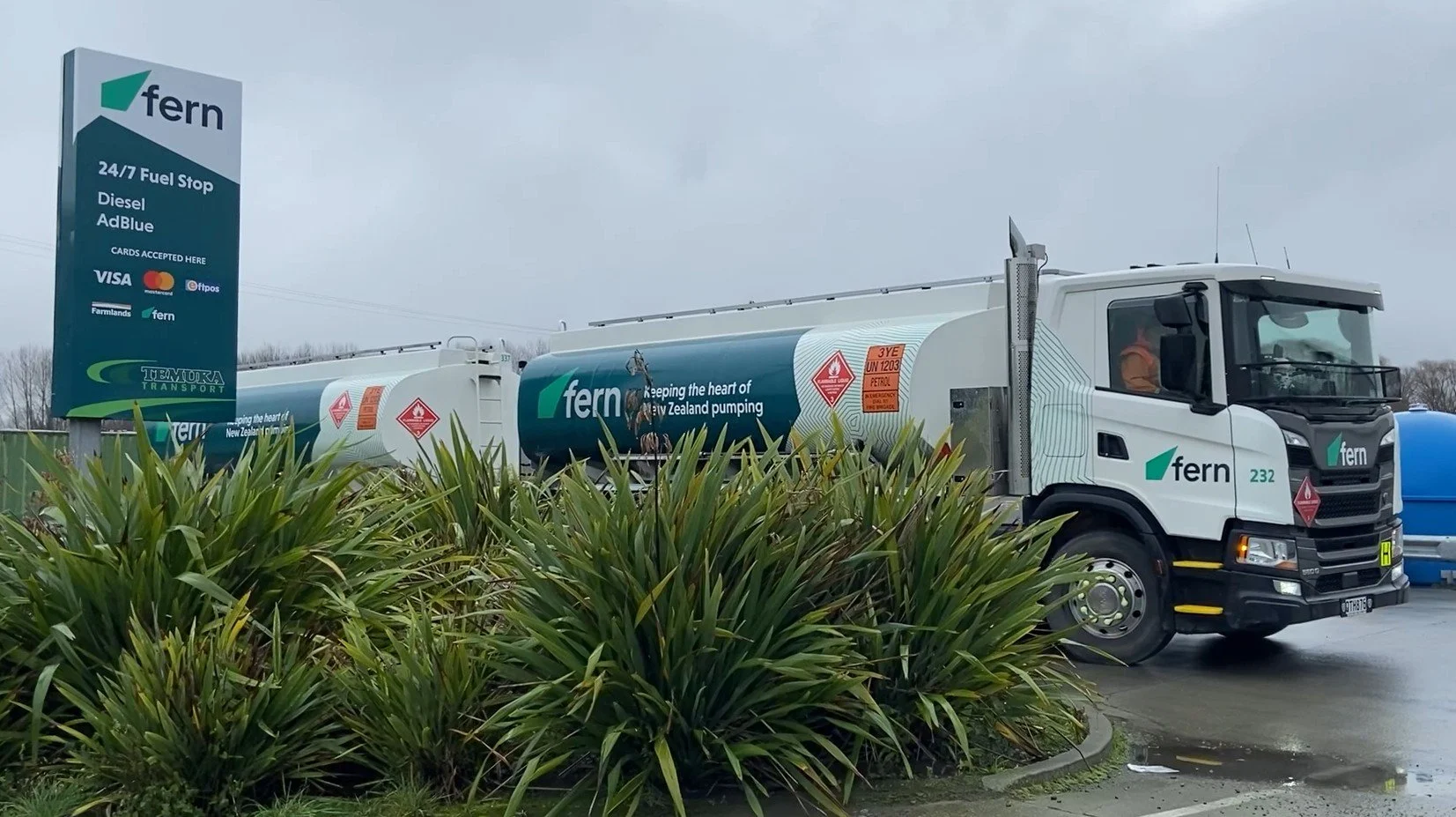
That is where companies like Fern Energy are carving out a clear position. Rather than trying to be all things to all people, Fern has built its model around servicing the practical needs of farmers, contractors and rural businesses, focusing on reliability, accessibility and support rather than simply acting as a fuel supplier.
Fern is a specialist fuel business formed through the combination of two established operators in Farmlands Fuel and Northfuels/Southfuels, bringing together a long history of servicing rural New Zealand. That background matters. It means the business has been built with a clear understanding of how fuel is used in the field, not just how it is distributed.
The foundation of that offering is bulk fuel delivery. For many farming and contracting operations, it is obvious that having fuel delivered directly on-site is not just a convenience, it is a necessity. Fern’s ability to provide regular deliveries of diesel and petrol across a wide range of industries, from agriculture through to civil construction and transport, ensures that customers can maintain continuity in their operations.
But delivery is only part of the equation. Storage and management are just as critical. Fern provides fuel storage solutions that allow operators to hold sufficient fuel on-site, reducing the risk of downtime and providing greater control over how fuel is used. In practical terms, that can mean the difference between a smooth operation and one that is constantly reacting to supply gaps.
That focus on keeping tanks full and operations moving is a consistent theme throughout the business. As the company itself puts it, the aim is simple, providing fuel “when and where you need it” with as little hassle as possible. It is a straightforward proposition, but one that becomes increasingly valuable in a market where time and efficiency are under pressure.
Beyond bulk delivery and storage, Fern’s offering extends into oil and lubricants, fuel cards and 24/7 fuel access points, creating a more complete system around fuel use rather than treating it as a standalone product. That integrated approach is where much of the competitive value sits.
Fuel cards, for example, allow rural businesses to fuel up on the road with discounted prices at the pump at most retail fuel outlets.
Access to 24/7 fuel stops provides flexibility, particularly for operations that run outside standard hours. Harvest, silage and cultivation work rarely fit neatly into a nine-to-five window, and having the ability to refuel when it suits the job rather than the supplier adds another layer of efficiency.
What sets Fern apart, however, is not just the range of services but the way those services are delivered. The business has the largest network of regional sales and support staff across the country, ensuring that customers are dealing with people who understand local conditions and requirements. In rural New Zealand, that local connection remains a key part of how business is done.
It also feeds into after-sales support. Fuel supply is one of those areas where problems tend to arise at the worst possible time, during peak workload periods when machinery cannot afford to stop. Having access to responsive support, whether that is arranging an urgent delivery or resolving an issue on-site, is often what separates a supplier from a partner.
That partnership approach is increasingly important, as farming and contracting businesses become more complex. Machinery fleets are larger, workloads are more concentrated and the margin for error is smaller. Fuel supply needs to keep pace with that change not just in volume, but in reliability and service.
There is also a broader element to how Fern positions itself within the rural sector. Through initiatives such as its Fuel for Schools programme, the company is actively investing back into rural communities, providing more than $2 million in resources to rural schools. While not directly related to fuel supply, it reflects a business that sees itself as part of the wider rural economy rather than operating alongside it.
From a competitive standpoint, this combination of service, infrastructure and local knowledge is what gives Fern their edge. In a market where fuel itself is largely a commodity, the difference often comes down to how that fuel is delivered, supported and integrated into a customer’s operation.
For farmers and contractors, the decision is rarely based on a single factor. It is about reliability during peak periods, flexibility when conditions change and confidence that support is available when it is needed. It is also about working with a supplier that understands the realities of the job, from long hours to unpredictable weather and everything in between.
That is the space Fern Energy is operating in. Not chasing headlines, not competing purely on price but building a service around the needs of the people who rely on fuel every day to keep their operations moving.