
Mixing efficiency into modern feeding systems
There is a point in every livestock system where feeding becomes the single biggest driver of both performance and cost, and it is in that space that mixer wagons have moved from being a convenience to becoming a core piece of infrastructure. Across New Zealand’s dairy, beef and mixed farming systems, the shift towards more controlled feeding through total mixed rations has placed a premium on machines that can deliver consistency, efficiency and reliability every day of the season. The Seko and Kongskilde mixer wagon range, distributed by NC Equipment, sits firmly in that space, but, importantly, it does so through two distinct mixing approaches that reflect the different ways modern farms operate.
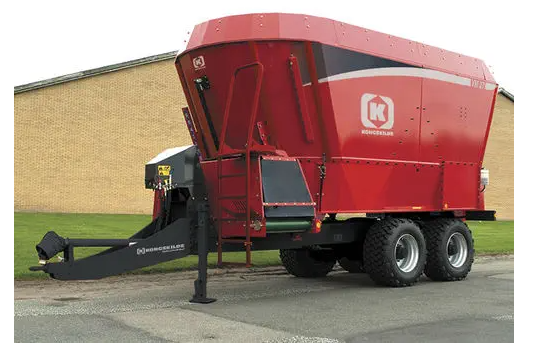
At a high level, both systems are working towards the same outcome, a consistent, well-balanced ration delivered efficiently and with minimal waste. Where they differ is in how that ration is created, and that difference matters when it comes to matching a machine to a farming system.
Kongskilde’s vertical mixer wagons are built around the vertical auger concept, a system that has become widely adopted where bale-based feeding remains a core part of the operation. The vertical auger lifts and folds material through the chamber, creating a rolling mixing action that is effective without being overly aggressive. This allows the machine to process whole bales, breaking them down while maintaining fibre length and structure within the ration.
That balance is critical in ruminant systems where effective fibre plays a direct role in rumen health and animal performance. By preserving that structure while still achieving a homogeneous mix, vertical systems are well suited to operations relying heavily on silage, hay and straw as the foundation of the diet. The ability to load whole bales directly into the wagon also simplifies the feeding process, reducing the need for pre-processing and keeping labour requirements down.
In contrast, the Seko range uses a horizontal mixing system, with augers and cutting knives moving feed laterally through the chamber. This creates a controlled cutting and blending action that enables the machine to break down a wide range of feed materials, including whole bales, while producing a consistent, well-integrated ration. The horizontal design is particularly effective at rapidly combining multiple ingredients into a uniform mix, making it well suited to systems where processing efficiency, consistency and blend quality are the priority.
That distinction becomes increasingly relevant in higher input systems where precision feeding is a priority. With greater control over ingredient size and mix consistency, horizontal mixers allow operators to fine-tune rations to meet specific production targets. Faster mixing times also support higher throughput, which can be an advantage in larger operations where feeding efficiency is closely tied to labour availability and time management.
Neither system is inherently better than the other. The decision comes down to how the farm operates. Bale-heavy systems with a focus on fibre and minimal pre-processing will often lean towards vertical mixers, while operations working with chopped silage, concentrates and more complex rations may find a better fit with horizontal technology. In many cases, the choice reflects not just feed type, but the overall feeding strategy and how tightly that process is managed.
Across both ranges, capacity and scalability remain central considerations. Mixer wagons are available in a variety of sizes, allowing farmers and contractors to match machine capacity to herd size and daily feed requirements. That flexibility is important in a New Zealand context where farm systems vary widely, from smaller owner-operated units through to large-scale, high-output enterprises.
Efficiency in the feeding cycle is another common thread. Regardless of mixing system, the ability to load, mix and distribute feed quickly and consistently has a direct impact on daily operations. Reducing the time spent feeding not only lowers labour demand but also frees up resources for other tasks, something that is becoming increasingly important as labour constraints continue to tighten across the sector.
Accuracy also plays a key role. Consistent ration delivery reduces selective feeding, improves intake and supports more stable production. Over time, that consistency contributes to better feed utilisation and improved cost control, outcomes that carry real weight in an environment where margins are under constant pressure.
Durability and reliability underpin all of this. Mixer wagons operate in a demanding environment, handling heavy loads and abrasive materials on a daily basis. Both Seko and Kongskilde machines are built with that reality in mind, focusing on robust construction and practical design that keeps machines working through the busiest periods of the season. In feeding systems where there is little room for downtime, that reliability is critical.
There is also a broader shift taking place in how feeding is viewed within the overall farm system. It is no longer just about delivering feed, but about delivering it in a controlled, repeatable way that supports both animal performance and operational efficiency. Mixer wagons are central to that shift, acting as the link between feed supply and feed utilisation.
For contractors, the role is similar. The ability to offer efficient, consistent feed preparation as part of a wider service adds value for clients while improving productivity on the ground. As farm systems continue to evolve, that level of integration is becoming more important.
Ultimately, the Seko and Kongskilde mixer wagon range reflects the diversity of modern farming rather than trying to force a single solution. By offering both horizontal and vertical mixing technologies, it allows farmers and contractors to choose a system that aligns with how they work, not the other way around.