
National scheme aims to tackle rural plastic waste
New Zealand farmers have become increasingly reliant on plastic, from bale wrap and silage covers through to agrichemical containers, fertiliser bags and bulk packaging, but dealing with that material once it has served its purpose has remained a persistent problem.
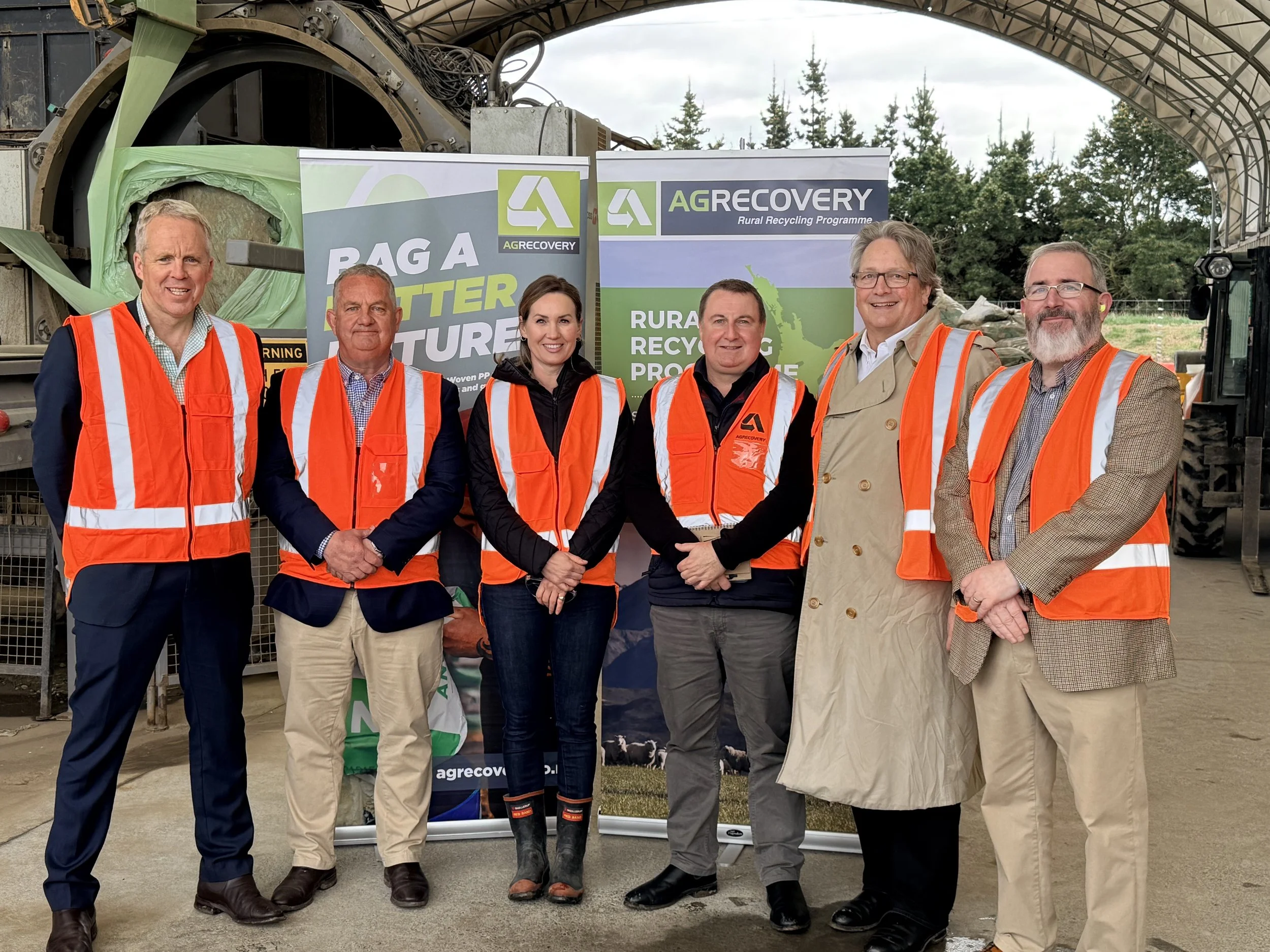
A new nationwide Rural Recycling Scheme confirmed by the Government this week is intended to change that by bringing much of the plastic commonly used on farms into a regulated product stewardship system from March 1, 2027.
The scheme will be operated by the not-for-profit Agrecovery Foundation and will initially cover agrichemicals and eligible plastic containers and drums up to 1,000 L, bale wrap and silage sheet, small agricultural product bags between 16 kg and 40 kg and bulk woven polypropylene bags over 40 kg.
Environment Minister Nicola Grigg says the scheme has been developed with industry and responds to calls from farmers and growers for a more straightforward way of dealing with rural plastics.
“We’ve listened to feedback from farmers and growers who wanted a simple take-back system that is easy to use and can take all the usual plastic farm products into one recycling system,” says Grigg.
It represents an important shift from the voluntary recycling programmes that have operated in the rural sector for almost 20 years.
Agrecovery and Plasback have provided recycling options for farmers, but Grigg says the existing voluntary approach is collecting less than half of the plastic products that will fall within the new system.
“The voluntary schemes, operated by Agrecovery and Plasback, currently collect under half of the in-scope plastics that farmers and growers use,” says Grigg.
“The new national system will significantly increase recycling and recovery, and reduce the quantity of farm plastics going to landfills, being buried or burnt on farms.”
The new scheme attempts to address that by putting responsibility for funding recycling further up the supply chain.
From March next year, producers and importers responsible for placing regulated products on the New Zealand market may be required to register, report the quantities they supply and pay stewardship fees based on those volumes. Those fees will fund the nationwide take-back and recycling network.
For farmers, growers and contractors, participation will remain voluntary and there will be no direct charge for returning eligible and correctly prepared material through the core take-back service.
That does not mean the recycling system comes without a cost to agriculture. The stewardship fees are paid by obligated producers and form part of the supply chain for the affected products, with Agrecovery’s own explanation of the scheme showing the fee being passed on when the product is purchased.
The fees generally represent less than one percent of product cost, although the proportion varies between products.
Bale wrap and silage sheet will attract a stewardship fee of $462.02 per tonne. Agrecovery estimates that this equates to about 52 cents for the plastic associated with a wrapped bale costing between $30 and $60.
A small feed or fertiliser bag will carry a 20-cent fee, while a large woven polypropylene bag will attract a $3.58 fee. A 20 L container of a Group 2 agrichemical provides another example, attracting a combined chemical and packaging stewardship fee of $2.60.
The trade-off is intended to be a more accessible recycling network and removal of the direct recycling charge when eligible material is returned through the core scheme.
The existing regional network of around 240 take-back sites will be expanded to cope with the anticipated increase in material.
“Recycling services will operate in tandem with collection services for agrichemicals, making it easier to safely manage unused end-of-life products,” says Grigg.
The national network will include confirmed collection sites, rural retail locations, recycling events and approved collection partners, although the services available will depend on the product and region. Agrecovery says further details will be released before the scheme begins.
Importantly, eligible plastic already being stored on farms will also be accepted once the scheme begins, provided it falls within the regulated categories and meets the required preparation and presentation standards.
That could provide an avenue for dealing with material that has accumulated on properties where convenient recycling options have previously been limited.
However, the scheme should not be mistaken for a solution to every form of agricultural plastic waste.
Baling twine, netting, irrigation pipe, plant pots, shrink wrap and tunnel covers are among the products outside the four initial regulated categories. These materials will continue to require other recycling or disposal options unless they are covered by separate programmes.
Preparation will also remain important. Agrecovery says dirt, stones, moisture, organic material, chemical residue and mixed plastics can prevent material from being recycled, meaning farmers and contractors will still have a responsibility to present eligible material in an acceptable condition.
The organisation already has considerable experience in rural recycling. Agrecovery says it has recycled more than five million kilograms of plastic since 2007 and currently operates a network of more than 200 fixed collection sites for agrichemical containers, drums, IBCs and small agricultural bags.
The move to a regulated scheme is intended to build on that existing infrastructure while establishing a nationally coordinated funding system rather than relying on individual brands choosing to participate in voluntary programmes.
For farmers and contractors, the practical success of the scheme is likely to depend heavily on how convenient the collection network becomes.
Farm plastic is bulky and generated across widely dispersed properties. If recycling involves significant additional transport, storage or handling, participation will inevitably become more difficult regardless of whether there is a direct charge at the collection point.
The new system at least attempts to address one of the longstanding weaknesses of rural recycling by establishing a nationally funded network and placing responsibility for the lifecycle of these products across the supply chain.
Existing Agrecovery and Plasback services will continue in the meantime, with farmers advised to keep using current programmes until the regulated Rural Recycling Scheme begins on March 1, 2027.
The real measure of success will come after that date. If the scheme can make returning agricultural plastic sufficiently straightforward, it has the potential to provide farmers and contractors with a practical alternative to landfilling, storing, burying or burning a waste stream that has become an unavoidable part of modern agricultural production.