
Record meals underline a growing need
There is an uncomfortable contradiction sitting at the heart of New Zealand’s food system. We are one of the world’s great food-producing nations, exporting high-quality meat and dairy products around the globe, yet an increasing number of New Zealand families are finding those same foods difficult to put on their own tables.
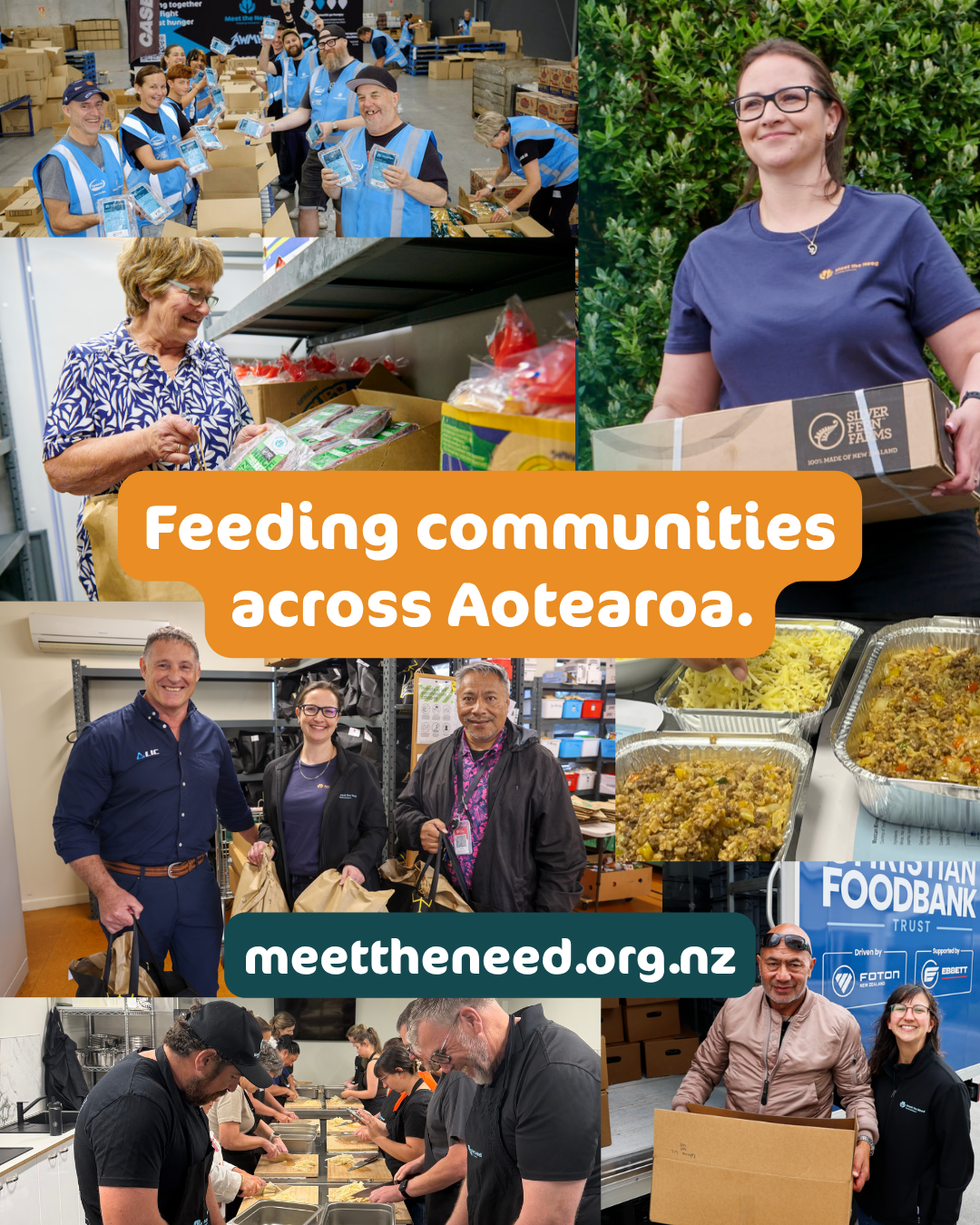
Meet the Need’s latest Impact Report puts some fairly stark numbers around that contradiction. During the 2025/26 year the rural charity delivered 1,277,241 meals to people experiencing food insecurity, including 429,662 mince meals and 798,792 milk meals. That was 81,605 more meals than the previous year and takes the organisation beyond 4.2 million meals delivered since it began in 2020. Meet the Need also regularly supported 148 foodbanks, up from 135 a year earlier.
Those are impressive numbers and they demonstrate what can happen when farmers, processors, rural businesses, transport operators, volunteers and foodbanks work together. But there is another number in the report that perhaps matters even more. One in three New Zealand households experienced some level of food insecurity during the past year, and 68% of those households said they had only begun struggling to afford enough food during the previous 12 months.
Meet the Need General Manager Zellara Holden says there has been a noticeable change in the people now seeking food support.
“These aren't just the families people might traditionally expect to need food support. They're working families, rural households and people who have never had to ask for help before.”
That is significant because it tells us food insecurity is no longer an issue that can simply be attributed to a small or easily defined section of society. The report says 83% of affected households cited high costs as a reason for their situation, while 30% of full-time workers were unable to consistently afford enough food. Beef mince had also increased 23.2% year-on-year to $24.46/kg.
“The cost of living continues to put enormous pressure on household budgets, and nutritious protein is often one of the first things families stop buying. That's why the work we do has never been more important,” Holden says.
There is an important distinction here because a food parcel containing plenty of calories is not necessarily the same thing as a nutritious diet. Foodbanks can often source bread, canned goods, pasta and other staples reasonably well, but meat and dairy are considerably harder to obtain consistently. Temuka Combined Churches Food Bank describes Meet the Need’s support as a vital source of protein because much of the food donated through conventional channels does not contain the protein provided by milk and meat.
Meet the Need was established to tackle precisely that problem, and there is a very agricultural practicality to the way it works. Farmers donate livestock or milk, processors turn those donations into food parcel-ready mince and milk products and the resulting food moves through a nationwide distribution network to foodbanks and ultimately families.
Despite delivering a record number of meals, however, the organisation is finding that demand is growing even faster.
“The reality is that while we've increased our impact, the need has grown even faster,” Holden says.
“Every meal delivered is only possible because of the generosity of New Zealand farmers, our corporate and community partners, volunteers and individual donors. This report is a celebration of what we've achieved together, but it's also a reminder that our work is far from over.”
Perhaps one of the best summaries of why Meet the Need has resonated so strongly with the agricultural sector comes from Chair Nick Fisher.
“New Zealand grows enough food to feed everyone. The challenge isn't supply, it's connection. Meet the Need exists to bridge that gap, ensuring quality New Zealand protein reaches families who otherwise couldn't afford it.”
That connection is illustrated particularly well by Ōhaupō farmer Simon Boshier. Farming 20 ha and running 150 head of beef each year, Boshier has donated an animal to Meet the Need every year for the past six years. His involvement began after visiting The Village Community Services Trust and seeing a woman arrive with her five children. Her reaction to receiving mince made the issue very real for him.
Boshier’s message to other farmers is characteristically straightforward. With strong beef and milk prices, he believes farmers who are in a position to contribute should consider doing so. Importantly, that does not necessarily mean donating an entire animal. Meet the Need allows farmers to donate a portion of a beast, meaning participation can be scaled to what an individual farming business can reasonably afford.
The organisation is also increasingly being supported beyond the farm gate. It now has 29 partners and processors behind its work, although the report records 511 donors during the year, down from 659 previously. Case IH is donating $50 from every new tractor sold, an auction at the 2025 Groundspread New Zealand conference raised more than $61,000 and the Rabobank Waimate Golf Day generated the equivalent of more than 18,000 meals. Meet the Need also appointed award-winning dairy farm manager Ben Purua as its first ambassador.
But the most powerful part of the Impact Report is not really found in the big numbers. It is in the stories from the other end of the supply chain.
One family featured in the report had steady employment, a home and savings. They were doing what most New Zealand families try to do, working, paying their way and planning ahead. A combination of illness, injury, unexpected expenses and redundancy gradually stripped that security away. Eventually their savings were exhausted and nutritious food became unaffordable. Turning to a foodbank was something they never imagined they would need to do, but the parcel they eventually received included Meet the Need meat and milk and gave the family some breathing space while they began rebuilding.
Foodbanks around the country are reporting similar experiences. Te Aroha Community Foodbank says some clients have been unable to buy meat for weeks, while Winton Community Support says some families have stopped buying meat altogether because their budgets simply do not stretch that far. The scale of unmet demand is perhaps best illustrated by another figure buried in the report. Meet the Need supplied 148 foodbanks during the year, but another 158 were still waiting for support.
That puts the record 1.27 million meals into perspective. Meet the Need has grown substantially, but the problem it is trying to address is growing faster.
For the rural sector there is something particularly compelling about this charity. Farmers spend their working lives producing food, and there is a natural connection between that work and making sure New Zealanders can eat well. Meet the Need provides the infrastructure that turns goodwill at the farm gate into something useful at the family table.
“Our mission is simple,” Holden says.
“Together, we can ensure more Kiwi families have access to nutritious protein during some of the hardest times in their lives. With demand continuing to grow, we need more people alongside us to make that happen.”
There should be considerable pride in more than 4.2 million meals delivered since 2020, but perhaps not too much satisfaction just yet. In a country capable of producing enough food for millions of people beyond our shores, having families at home who cannot afford meat or milk should bother us.
Meet the Need has demonstrated that agriculture can be part of the answer. The challenge now is getting more farmers, rural businesses and New Zealanders alongside it because, despite a record year of giving, the need is showing no sign of getting smaller.