
Safety data sheets an essential part of farm chemical safety
Chemicals are part of everyday farming. Herbicides, pesticides, fertilisers, fuels and other hazardous substances allow farmers and contractors to carry out jobs efficiently, but they also bring responsibilities that extend well beyond simply storing a container securely in the chemical shed.
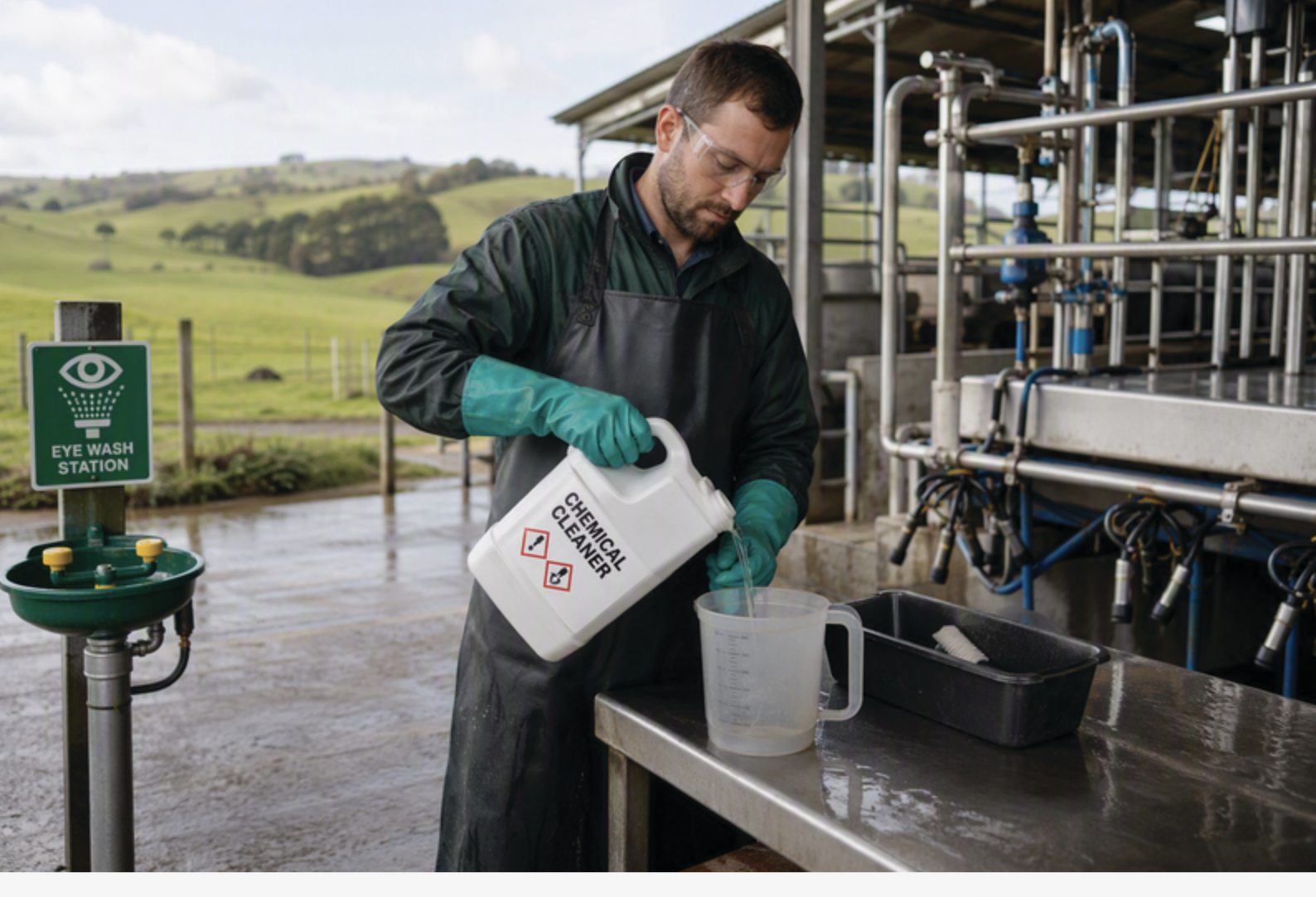
Responsible Care New Zealand says visits by workplace inspectors to 680 farms found a concerning lack of chemical inventories and supporting Safety Data Sheets (SDSs). For an industry where potentially hazardous products are routinely transported, stored, mixed and applied, that creates an unnecessary risk for farmers, employees, families and the wider environment.
An SDS is essentially the instruction manual for safely handling a chemical. It identifies the hazards associated with the product and provides information covering personal protection, first aid, storage, spills and emergency response.
The example supplied by Responsible Care New Zealand demonstrates how much information can sit behind a product label. The SDS identifies the product and supplier before setting out its Globally Harmonised System of Classification and Labelling of Chemicals (GHS) hazard classification, hazard pictograms, health and environmental risks, precautions, emergency responses and storage requirements.
Responsible Care New Zealand Chief Executive Barry Dyer says good chemical management on farm requires four basic components: an accurate inventory of hazardous substances, readily accessible and compliant SDSs, appropriate training and personal protective equipment for those using the products and suitable supervision.
The key is not simply having an SDS somewhere on the property. It needs to be readily available when something goes wrong.
Chemical exposure can happen quickly and the first few minutes following an incident can be important. If somebody gets a product in their eyes, inhales spray or is accidentally exposed while mixing a chemical, the SDS provides the first aid information needed while professional medical assistance is being sought.
The example SDS supplied with this article shows just how specific those instructions can be. Depending on the type of exposure, directions include immediately contacting the National Poisons Centre or a doctor, washing skin with soap and water, moving someone affected by inhalation to fresh air or rinsing eyes carefully with water.
That is why relying solely on the label attached to a chemical container is not enough. Labels can become damaged, dirty or difficult to read, particularly after products have spent time in a working farm chemical store.
The SDS also identifies the personal protective equipment (PPE) required for a particular product. Depending on the chemical, that could include suitable gloves, protective clothing, eye or face protection and respiratory equipment. Importantly, PPE requirements need to reflect the actual hazard rather than relying on a generic set of overalls and gloves for every product.
Spill management is another area where having the correct information immediately available matters. An accidental release in a chemical shed is one thing, but a spill near a drain, waterway or other sensitive area can quickly become an environmental issue. The SDS provides information about containing and dealing with the product while limiting further contamination.
Storage presents its own challenges because not every chemical sitting in the shed should necessarily be sitting beside another. Incompatible substances can require segregation and storage according to their hazard classification. Responsible Care New Zealand points to the GHS as the basis for identifying those requirements.
The organisation provides an industry storage code designed to make segregation requirements easier to understand, but maintaining an accurate inventory remains the starting point. It is difficult to safely manage a chemical store without knowing exactly what is in it.
There is also a responsibility to ensure the SDS itself is current and appropriate for New Zealand. Responsible Care New Zealand says SDSs must reflect GHS classifications and be no more than five years from its last review. A compliant SDS is legally available free from the product supplier and businesses are legally required to have one for every chemical product in the workplace.
Historically, Responsible Care New Zealand, then the New Zealand Chemical Industry Association, worked with agricultural retailers, including Farmlands and PGG Wrightson, to introduce point-of-sale prompts. These initiatives help ensure purchasers of chemical products have the necessary qualification and possession of a compliant SDS.
Today, sheets are commonly available through suppliers’ websites. That sounds straightforward until an emergency occurs somewhere with poor connectivity or somebody has to search through a website on their phone while another person is waiting for first aid.
For that reason, Responsible Care New Zealand recommends thinking practically about what “readily accessible” means on an individual farm. Strategically positioned hard copies may remain the simplest solution in some workplaces, while electronic copies stored locally on a phone, tablet or other portable device can provide another option.
Training is equally important. Having a folder containing every SDS on the farm achieves relatively little if nobody knows where it is or what to do with the information.
Workers should understand the hazard profile of the products they are using, the PPE required and where to find emergency information. That becomes particularly important where language or literacy difficulties exist.
Responsible Care New Zealand also recommends basic chemical emergency response and first aid training for workers, supervisors and managers. Even relatively simple exercises can expose problems before a genuine emergency does. Asking someone to consider how they would reach an emergency shower if temporarily blinded by chemical exposure, for example, can reveal whether the current layout and procedures actually work.
None of this needs to turn chemical management into another complicated layer of farm administration. Responsible Care New Zealand is proposing collaboration with WorkSafe NZ and leading agchem suppliers to inform farmers of this important compliance obligation.
At its core, the system is straightforward. Know what chemicals are on the property, keep current SDSs somewhere they can be accessed immediately, make sure people understand the products they are using and provide the correct protective and emergency equipment.
Farm chemicals are valuable tools and modern agriculture could not operate effectively without many of them. The objective is not to make their use unnecessarily difficult, but to ensure the people handling them have the information needed to do so safely. Non-compliance exposes the employer to prosecution.
When something does go wrong, that information needs to be available in seconds rather than buried in a filing cabinet, hidden somewhere online or printed on a label that can no longer be read.