
Word of mouth drives strong growth for Samasz mowers
Samasz mower sales in New Zealand have increased 54% during the past 12 months, with distributor FarmShop putting much of that growth down to farmers and contractors sharing their experiences with the machinery.
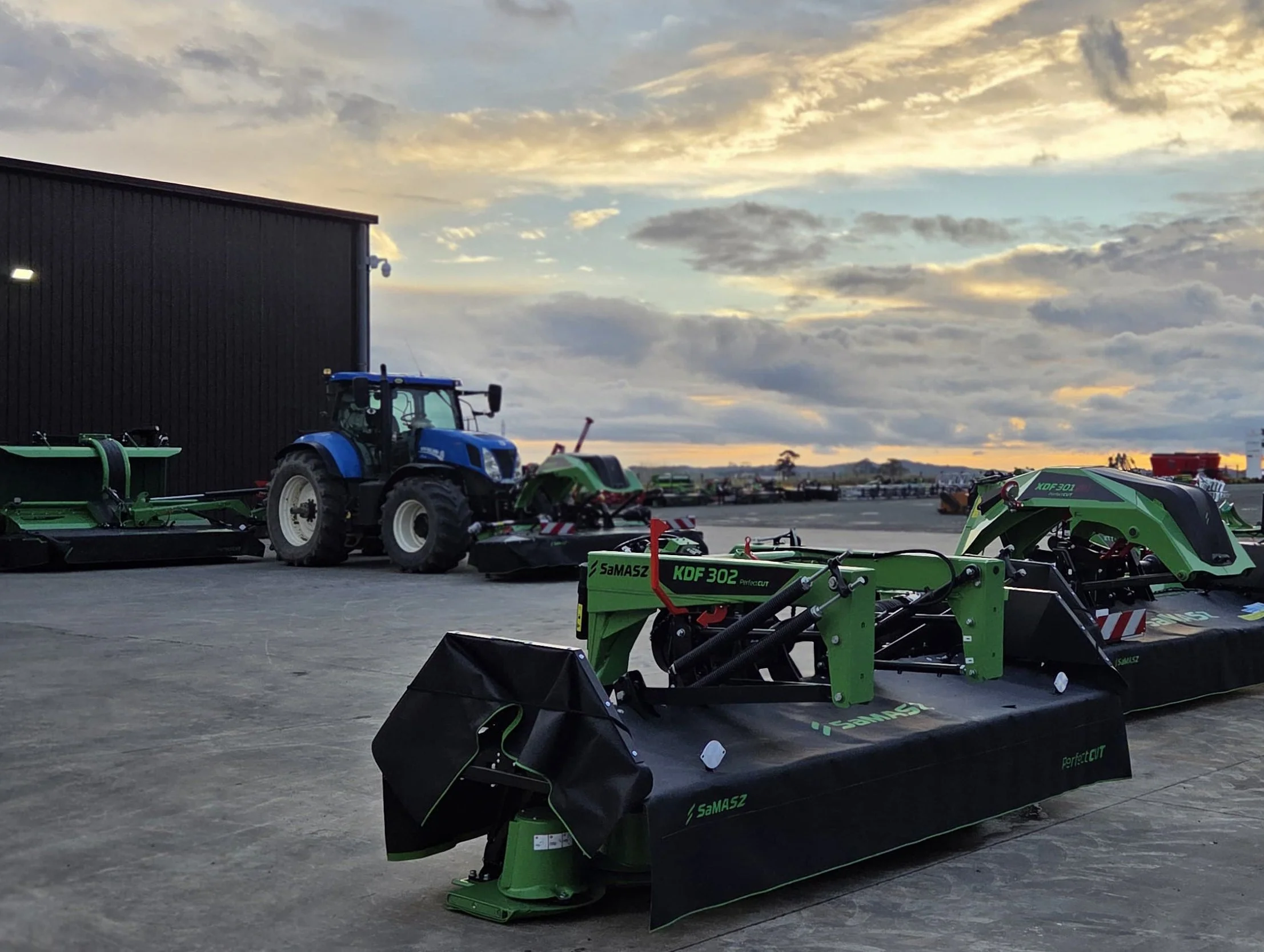
Sales between September 2025 and August 2026 were 54% ahead of the previous 12 months and, measured over two years, FarmShop says sales have increased 216%.
The company believes word of mouth has become an important part of building the Samasz brand in New Zealand, particularly as more machines accumulate seasons of work and farmers and contractors are able to compare their experiences.
Growth has been recorded across the country, with Southland proving particularly strong. FarmShop credits Service Agent Charlie Milne of Thornlie Park with helping build the profile of Samasz throughout the region, while nationally the KDF 302 front mower and KT 341 rear mower have been the most popular models during the past 12 months.
At the same time, FarmShop is seeing increasing interest in larger mowing combinations as farmers and contractors look for greater daily output.
Omakau farmer Andrew Manson recently moved from another brand of double mowers into a Samasz triple mower combination after comparing the economics and deciding the larger setup offered greater efficiency for his operation.
Fellow Omakau contractor Pete Shaw has considerably more experience with the brand, having bought his first set of Samasz triples a decade ago.
“I bought a set of Samasz triples in 2016. They haven’t missed a beat and are still going strong. I wouldn’t look at anything else,” says Shaw.
That experience has led Shaw to purchase an additional set of Samasz triples for the coming season.
The longevity of machines already operating in the region is also being noticed by the people servicing them. Central Engineering in Omakau is one of the newer additions to the Samasz service network and, despite having considerable experience working on mowers, FarmShop says the workshop has been surprised by how little repair work it sees on Samasz machines.
Built for New Zealand conditions
FarmShop believes another factor behind the brand’s growth has been Samasz’s willingness to respond to feedback from New Zealand operators and modify its machinery for local conditions.
The Polish manufacturer has been producing hay equipment for more than 40 years and its representatives visit New Zealand annually, including attending Fieldays and meeting farmers, contractors and the people servicing its machinery.
Some of the feedback gathered during those visits has resulted in changes to production machines.
One example is the conditioner tine FarmShop refers to as the Bear Claw. Heavy irrigated crops in the South Island were causing premature wear on the previous conditioner design, with feedback from New Zealand operators passed back to Samasz in Poland.
The manufacturer subsequently changed the shape and mounting of the conditioner tines, producing a more aggressive design intended to cope better with the conditions being encountered here.
Stony South Island paddocks highlighted another issue. Blades could become dislodged from their holders after striking foreign objects, leading Samasz to redesign the blade holder and pressure plate. The revised design incorporates an off-centre hook intended to retain the blade more securely following an impact.
FarmShop says the significant aspect of the development was not only that the feedback resulted in a production change, but the speed of the response, with the redesigned blade holder developed within four weeks.
Service is half the sale
Supporting a growing population of machines has required FarmShop to develop the service network alongside mower sales, with 16 Samasz dealers and service agents now operating around New Zealand.
FarmShop Sales Manager Harrison Wearmouth says having people who can support customers locally is an important part of establishing the brand for the longer term.
“Service is half the sale. Being able to look after people once they own the machine is hugely important,” says Wearmouth.
FarmShop recently brought members of the network together at its Kaiwaka headquarters for its second dedicated Samasz Service Agent Day, with the focus on getting technicians working directly with the machinery rather than simply taking them through product information.
Agents dismantled cutterbars, changed keyways and modules and discussed machine setup and servicing techniques while also examining some of the engineering behind the mower range. FarmShop says several of the newer agents commented on the construction of the machines after seeing the components stripped down.
The day also provided an opportunity for service agents to share techniques developed through their own workshop experience. Southland’s Charlie Milne, for example, pressure-tests the cutterbar on every used mower he works on, a practice that prompted interest from other agents looking to incorporate the same procedure into their own servicing.
For FarmShop, that exchange of practical knowledge is an important part of developing the network, allowing experience gained in one region to be shared with technicians supporting machines elsewhere in the country.
Adding AI to the toolbox
FarmShop is also looking at how technical support can be made available when a dealer or service technician is not immediately on hand, particularly when an operator encounters a problem in the paddock outside normal working hours.
Its recently released FarmFix system is an AI-powered support tool developed in-house for Samasz machinery. It is designed to answer technical questions and direct operators towards relevant information and instructional videos when carrying out jobs such as replacing a breakaway key.
The system was demonstrated to service agents during the Kaiwaka training day, giving the people who regularly work on the machines an opportunity to use the technology and assess how it could complement conventional workshop and dealer support.
FarmShop's challenge now is to maintain the support network as the number of Samasz machines working around the country increases. A 54% increase in sales in one year represents considerable growth, but the stronger measure of the brand's progress may be the experience of the farmers and contractors already running the machines.
With FarmShop ultimately aiming to establish Samasz as New Zealand's leading hay mower brand, those owners, and what they tell the next potential customer, are likely to remain an important part of whether that ambition is achieved.