
Still adapting to change
Still adapting to change is a phrase that has followed CMC Contracting for decades, not because the business has ever lacked direction but because adaptation has always been central to its survival and success.
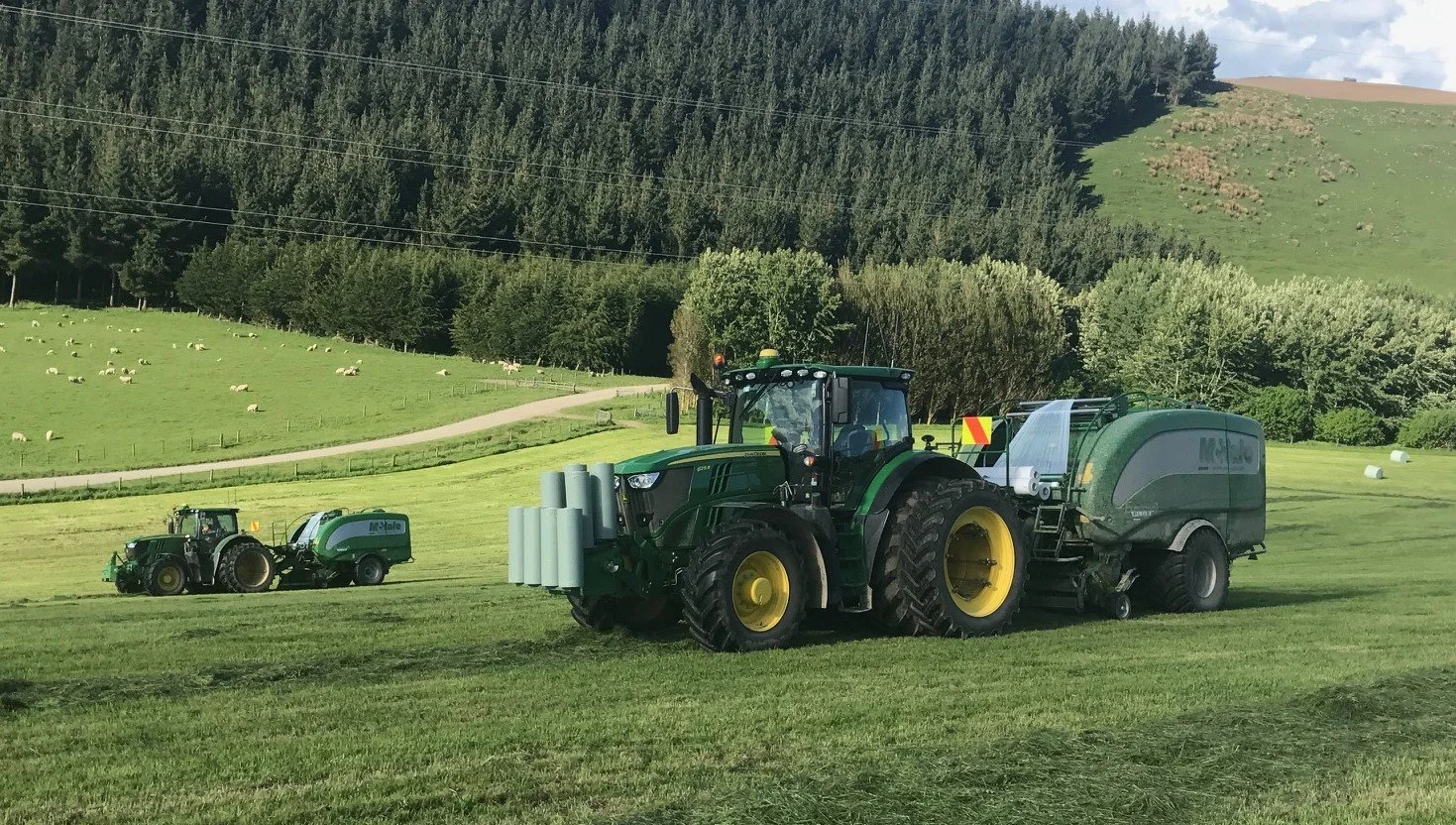
When this magazine last featured CMC Contracting in 2022 the focus was on a business marking more than forty years in contracting while still investing, still evolving and still questioning how best to operate in a landscape that rarely stands still.
Viewed again today, that story feels less like a milestone and more like a continuation because the defining characteristic of CMC Contracting has never been longevity alone but a willingness to respond honestly to pressure, whether economic, environmental, technological or human.
The origins of the business sit firmly in the upheaval of the 1980s, a decade that reshaped farming and contracting across New Zealand.
Peter and Julie Chisholm were farming sheep and beef at Kaiwera, southeast of Gore when interest rates soared and government support for farming was stripped away. For many, those years forced difficult decisions and in some cases the end of long-held family operations.
For Peter and Julie the response was not to retreat but to diversify, taking skills already embedded in their farming operation and applying them to contracting work that could support both cashflow and resilience.
The contracting business began modestly with a single round baler servicing local farmers, but even in those early years the underlying approach was clear.
Contracting was not viewed as a sideline but as a professional service that needed to be reliable, well organised and financially sound.
Leigh McHaffie entered the picture soon after, initially through family connection and shared work and eventually as a business partner alongside his wife Trudi. The name CMC reflects that partnership, with Chisholm and McHaffie families equally invested in the direction and future of the business.
Those early years demanded adaptability in its purest form.
Machinery was simpler, margins were tight and the workload was heavy, but the pressures also created clarity. Every investment had to earn its place. Every hour on the tractor had to count. That discipline has never left the business, even as the scale and complexity of operations have increased dramatically.
Over time contracting work expanded beyond baling into cultivation, planting and a growing range of services that mirrored changes in Southland farming systems.
The relationship between Peter and Leigh evolved alongside the business itself. For many years responsibilities were clearly divided, with Peter largely focused on baling while Leigh handled cultivation and seeding.
That division of labour was not just about efficiency but about maintaining balance, ensuring that one of them was always available to manage the farming operation that continued alongside the contracting work.
It was a practical arrangement shaped by necessity, but it also laid the groundwork for how the business would later adapt to greater scale.
As contracting demands increased and farming systems intensified, CMC Contracting found itself at the intersection of multiple pressures.
Clients wanted more precision, tighter timing and greater accountability. Machinery costs rose, labour became harder to secure and compliance requirements expanded steadily.
Rather than resisting those changes Peter and Leigh leaned into them, recognising early that success would depend on understanding not just how to do the work but how to measure, manage and price it accurately.
Today the leadership structure reflects how the business has matured.
Leigh McHaffie, as owner and shareholder now oversees and advises across both the agricultural contracting operation and the dairy farm while continuing to run the runoff and beef systems.
Peter Chisholm also an owner and shareholder, focuses on the financial side of the business and is heavily involved in the recycling operation, as well as increasingly active in the political and regulatory discussions shaping the future of rural recycling.
Supporting them is a management team that reflects the scale the business has reached, with Adam McIntyre managing the agricultural operation, Cory Stevens responsible for the dairy farm and Karina Clement overseeing the recycling division.
One of the clearest expressions of that thinking is CMC Go, a cloud-based job management system developed in partnership with Dunedin technology company Logic Studio.
While many contracting businesses talk about digital transformation CMC Go emerged from a practical need to reduce paperwork, improve visibility and create a single source of truth for jobs, machinery and staff.
The system sends jobs directly to operators, records work completed and integrates with Xero while also housing health and safety plans, farm maps and maintenance records.
For drivers, the system is deliberately simple.
When they arrive on a job they log the tractor and implement they are using and the system begins recording automatically. It prompts them to notify the farmer when they arrive and when they leave, creating a clear record without the burden of manual reporting.
For Peter, the value lies in visibility. He can see exactly where machines have been, how much work they have done and what each unit is earning.
That level of detail allows decisions to be made with confidence rather than intuition.
Understanding true operating costs has become increasingly important as diesel prices fluctuate and machinery investments grow.
CMC Go allows Peter to see precisely when pricing needs to change and by how much, based on real data rather than estimates.
It also provides clarity around efficiency, helping answer questions that matter when capital expenditure is on the line.
Does a wider power harrow deliver enough additional return to justify its cost. Is a newer baler earning its keep.
Those decisions are no longer guesswork, and that clarity has become a competitive advantage.
The people side of the business has evolved just as deliberately.
CMC Contracting typically takes on one or two trainees each year, often young people who have already spent time on farms and developed basic tractor skills.
That preference reflects both pragmatism and philosophy.
High-value machinery requires experienced hands, particularly when seasonal windows are tight and the margin for error is small.
Over the years, many trainees have spent six or seven seasons with CMC before returning to family farms, taking skills and experience back into the wider industry.
International staff have also become part of the mix, particularly over the past fifteen years with operators from Ireland and the United Kingdom joining the team during New Zealand’s peak season.
Peter sees this exchange as beneficial on multiple levels.
Northern Hemisphere staff bring different perspectives and experience, while New Zealand operators who head overseas return with broader skills and confidence.
The arrangement also helps address seasonal labour shortages, a challenge that was thrown into sharp relief during the Covid-19 border closures.
Today, CMC Contracting employs nine staff year-round and brings on an additional seven during the season, alongside three or four people working on the dairy farm.
Julie and Trudi both work off-farm, although Trudi continues to support the business when needed particularly during busy periods and when additional administrative or on-farm help is required.
That blend of roles reflects the reality of many family businesses where lines between home, farm and contracting yard remain fluid.
Family members also work within the business from time to time.
The farming operation itself remains closely tied to the contracting business.
The dairy farm and runoff total around 600 hectares at Popotunoa and are majority owned by the McHaffie family, with the original 161 hectares held in family ownership for more than a century.
Additional land has been added over time, including a 200-hectare block through Tunoa Downs in which Peter and family hold a shareholding, along with leased land and a dedicated cut-and-carry block.
Wintering is carried out in-house and a small beef operation remains part of the system.
CMC’s yard at Pukerau, positioned on State Highway 1 provides practical access to clients across a 50-kilometre radius and includes a fuel stop leased to Fern.
The client base is predominantly dairy and sheep and beef, with a smaller number of deer farms and terrain varies from flat to steep.
That variation has a direct influence on machinery selection, particularly for baling and cultivation work where horsepower requirements increase significantly on hill country.
Machinery standardisation has become an important part of managing complexity.
In the early days, the fleet was eclectic reflecting opportunity rather than strategy.
Today, CMC runs a largely John Deere tractor fleet spanning high-horsepower units through to loader tractors, a move that simplifies parts supply, servicing and operator familiarity.
Current tractors include models such as the 8R280, 7R230, multiple 6R-series tractors including tracked variants and loader-equipped machines that allow the fleet to shift easily between contracting and farm work.
Infinitely variable transmissions on the larger machines have improved ease of operation, particularly for baling where maintaining consistent speed is critical.
Peter values strong dealer relationships but is candid about frustrations when known faults are not disclosed upfront.
For a business running high-value equipment, transparency matters because unexpected issues can quickly erode profitability.
That practical realism extends across the cultivation fleet, which now includes multiple Kverneland six-furrow vari-width ploughs, Grizzly primary discs, Kuhn power harrows in several working widths and supporting cultivators, rollers and ripping equipment.
These tools allow the business to adjust soil preparation strategies according to conditions rather than forcing a single method across all paddocks.
Baling remains a cornerstone of the business, with McHale round balers forming the core of the operation.
The fleet now includes multiple Fusion combination baler-wrapper units as well as several V660 variable chamber balers capable of producing bales from 0.6 to 1.68 metres.
In addition, CMC operates a Massey Ferguson large square baler and continues to provide small square baling where required.
The appeal lies in durability and consistency, with technology embraced where it improves efficiency and rejected where it complicates reliability.
Fusion balers allow CMC to reduce labour requirements by combining baling and wrapping in a single pass, while film-on-film wrapping delivers tighter bales and improved feed preservation.
Peter is pragmatic about bale quality, acknowledging that different systems deliver different outcomes and that client preference plays a role.
Film-on-film appeals to some, while others remain committed to net wrap.
The V660s are used primarily for hay but also feed into the tube-wrapping system, which handles a significant share of total bale volume particularly on larger sheep and beef properties and runoff blocks.
Wrapping capacity includes both a Goweil individual wrapper and an Anderson tube wrapper capable of handling both round and square bales, allowing CMC to match wrapping systems to storage and feeding requirements.
Mowing equipment is shared across the farm and contracting business, with Claas units forming the backbone alongside a Claas front mower.
Conditioners are used strategically, proving their worth in wet spring conditions while being avoided in dry seasons where moisture retention is critical.
Raking is handled primarily by a Pottinger rake supported by additional units, with the simplicity of the V-rake valued as a reliable backup.
Tedding capacity through Pottinger and Krone units allows drying windows to be extended when required.
Precision planting has been another area where CMC Contracting moved early.
The business operates multiple precision planters, including Kverneland and Vaderstad Tempo units with fertiliser capability each selected to suit particular crops and soil conditions.
Experience with fodder beet has tempered early enthusiasm, with Peter now viewing it as one tool among many rather than a silver bullet.
He is clear about the risks particularly around transition management, nutrient balance and pugging and values its consistency of metabolisable energy alongside a realistic assessment of its limitations.
Sugar beet planting has also found a place, supported by a Grimme Rootster harvester that allows CMC to provide a full service from planting through to harvest.
Direct drilling is handled with a Taege air seeder and roller drill system known for penetration in hard conditions, while grass and small seed applications are covered by additional air seeding capacity.
Cultivation equipment includes ploughs, power harrows and primary discs with Kuhn power harrows favoured for their durability in rocky conditions.
A Sumo GLS subsoiler and James mole plough are used to improve drainage and soil aeration, particularly on the dairy platform while muck spreading is carried out with a Richard Western spreader delivering consistent application.
Cartage has grown steadily, supported by a fleet of Hubbard and Farmec tipping trailers used to move bales, rock and crop products alongside a digger and telehandler engaged in track work and farm maintenance.
These services reflect a broader trend toward versatility, allowing CMC to support clients across multiple aspects of their operation.
Environmental responsibility has become a more visible part of the business through CMC’s role as Plasback contractor for Southland, South Otago and parts of Central Otago.
Taking over the service as the previous contractor retired, CMC now collects silage wrap, Ecolab containers and a growing range of farm plastics and materials from a large client base processing and transporting material for recycling.
Under Karina Clement’s management the recycling arm has expanded to service both farms and commercial clients, reflecting the growing expectation that rural businesses take responsibility for waste streams as well as production.
Investment in specialised trucks and handling systems reflects the scale and commitment involved.
The Plasback service adds complexity but aligns with CMC’s practical approach to responsibility.
Silage wrap is a challenging material to recycle, requiring volume and specialised processing but the end products create tangible outcomes from what was once waste.
For CMC, it is another example of adapting operations to meet changing expectations while maintaining commercial viability.
More than forty years on CMC Contracting remains defined not by a single service or machine, but by its capacity to adjust, reassess and move forward.
The partnership between Peter and Leigh has evolved, roles have shifted and systems have been refined but the core approach remains grounded in realism, discipline and respect for the work.
In an industry shaped by constant change, that steady adaptability may be the most valuable asset of all.